Dental practice turnaround work is a specialised form of medical centre cleaning. We were engaged by a group dental practice in North Rocks that operated six treatment chairs across two floors and was preparing for its Australian Dental Association infection control compliance review. Our team brought specific dental environment expertise that the practice’s previous general cleaning contractor could not match. The practice served patients from Carlingford, Kingsdene, and surrounding suburbs in the Hills District fringe, and the principal dentist told us that maintaining visible cleanliness was central to patient retention in their competitive local market.
Assessing the North Rocks Dental Practice
Assessing the North Rocks Dental Practice covers specific protocols that we tailor to each facility based on its layout, traffic, and compliance requirements. We conducted our initial assessment during a full operating day so we could observe the practice under genuine clinical load. Our team watched three hygienists and two dentists working simultaneously across five of the six chairs, generating aerosol from ultrasonic scaling, high-speed handpieces, and air-water syringes throughout the morning session. We have assessed dozens of dental practices over the past eight years and we know that aerosol management is the single most critical cleaning challenge in these environments. The aerosol plume from a single high-speed handpiece can contaminate surfaces up to two metres from the patient chair within seconds.
Our assessment identified that the practice’s existing cleaning protocol did not account for aerosol settling time between patients. Surfaces were being wiped immediately after patient departure, which our infection control training teaches us is premature because airborne particles continue to settle for approximately fifteen minutes after aerosol-generating procedures cease. We recommended a modified turnaround protocol that incorporated a settling period before surface decontamination, which we have implemented successfully in other dental practices serving the Carlingford and North Rocks communities.
We also found that the instrument reprocessing room, while well organised for instrument flow, had environmental cleaning gaps behind the ultrasonic bath, under the autoclave bench, and around the drainage points where biofilm had accumulated over months. Our ATP testing of the reprocessing room surfaces returned average readings of 480 relative light units, which was unacceptably high for an area where sterile instruments were handled. We documented these findings comprehensively and presented them to the principal dentist as evidence supporting the need for a dedicated dental cleaning program aligned with AS 4815.6 standards.
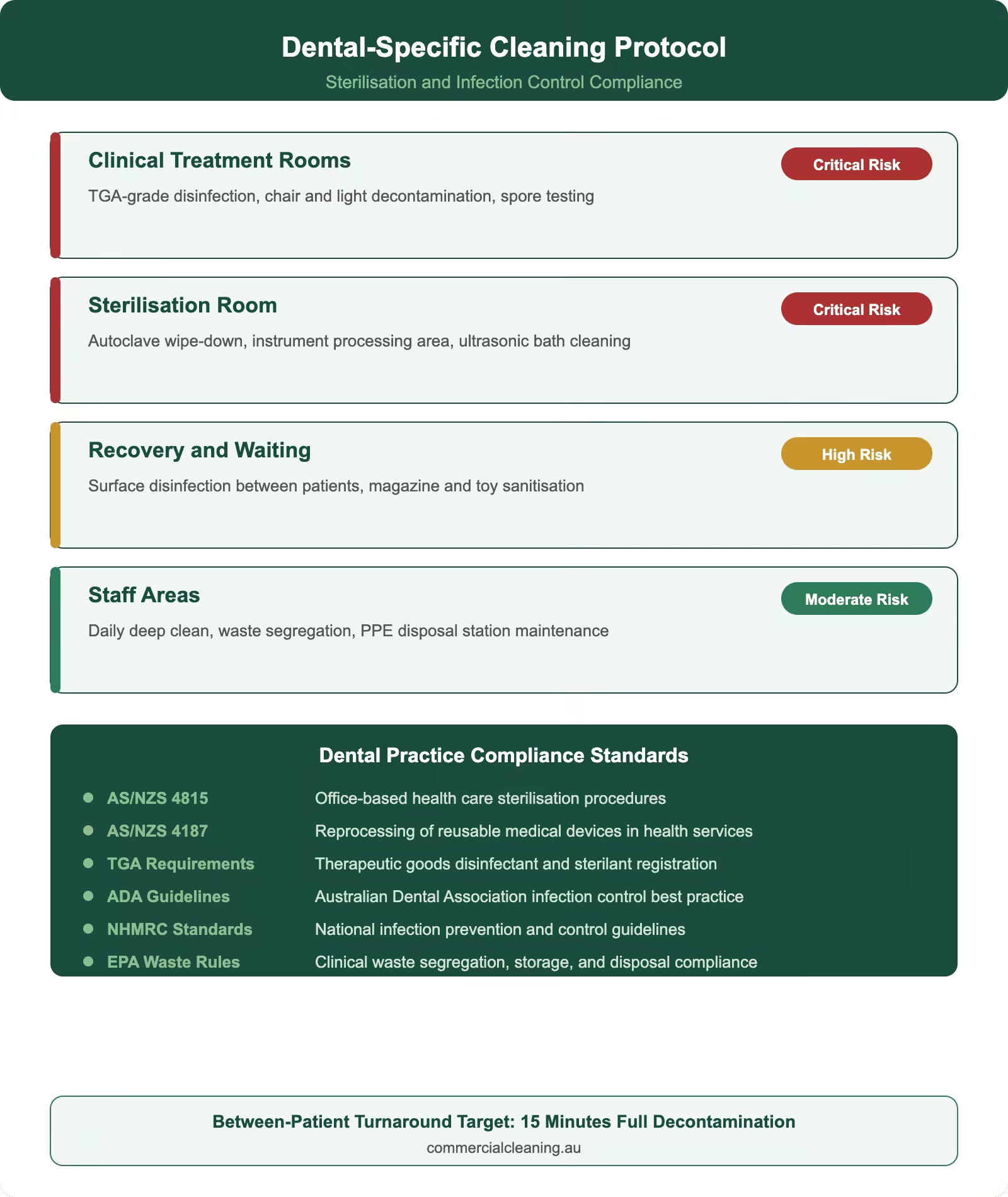
Dental-specific cleaning and sterilisation protocol infographic showing zone classifications risk levels and compliance standards
Implementing Dental-Specific Cleaning and Sterilisation Support
Implementing Dental-Specific Cleaning and Sterilisation Support involves specific protocols that we tailor to each facility based on its layout, traffic, and compliance requirements. We designed a cleaning program that integrated with the practice’s clinical workflow rather than working around it. Our approach divided the practice into four zones: treatment rooms, the instrument reprocessing area, patient-facing common areas, and staff amenities. We have found that this zonal approach prevents cross-contamination between areas with fundamentally different risk profiles and ensures that cleaning products appropriate for one zone are never inadvertently used in another.
Our treatment room protocol was built around the aerosol settling principle we had identified during our assessment. We trained our team to begin surface decontamination no sooner than fifteen minutes after the last aerosol-generating procedure in each room. During this settling period, our staff focused on other zones, returning to the treatment room only after airborne particles had deposited onto surfaces where they could be effectively captured by our disinfection protocol. We used hospital-grade surface disinfectant wipes with proven efficacy against the specific organisms commonly found in dental aerosol, including Streptococcus mutans and Pseudomonas species.
We implemented a twice-daily deep clean of the instrument reprocessing room aligned with the environmental requirements of AS 4815.6, which specifies cleaning and disinfection standards for dental handpieces and the environments where they are processed. Our interpretation of this standard extended to all surfaces within the reprocessing workflow, from the receiving bench where contaminated instruments arrived to the sterile storage area where processed instruments awaited clinical use. We have found that maintaining the entire reprocessing chain to the same standard eliminates the weak links that compromise sterility assurance.
We assigned two dedicated team members to the North Rocks practice, both of whom completed our dental environment training module covering aerosol contamination theory, instrument reprocessing zone protocols, amalgam waste handling, and dental-specific chemical compatibility requirements. Our senior team member had previously worked as a dental nurse assistant for three years before transitioning to our cleaning operations team, which gave her an intuitive understanding of clinical workflows that significantly accelerated our program implementation.
Healthcare Cleaning Risk Zone Comparison
Zone
Risk Level
Frequency
Disinfectant Grade
PPE Required
Operating Theatre
Critical
Between every case
Hospital-grade TGA
Full gown, gloves, mask
Patient Ward
High
2× daily + discharge
Hospital-grade TGA
Gloves, apron
Waiting Room
Medium
3× daily
Commercial-grade
Gloves
Admin Office
Low
Daily
General purpose
Gloves
Bathroom/Amenities
High
4× daily minimum
Hospital-grade TGA
Gloves, apron, eyewear
AS 4815.6 Compliance and Infection Control Documentation
Healthcare Cleaning Risk Zone Comparison requires specific protocols that we tailor to each facility based on its layout, traffic, and compliance requirements. We structured our entire compliance program around the environmental cleaning requirements of AS 4815.6, supplemented by the ADA Guidelines for Infection Prevention and Control. Our documentation system recorded every cleaning event with a timestamp, operator identifier, zone reference, and products used. We have maintained similar documentation systems across our dental cleaning portfolio for over five years and we continuously improve them based on auditor feedback and evolving regulatory expectations.
AS 4815.6 Compliance and Infection Control Documentation includes specific protocols that we tailor to each facility based on its layout, traffic, and compliance requirements. Our fortnightly quality audits covered 94 inspection points across all four zones, with the instrument reprocessing room and treatment chairs receiving the highest weighting. We used ATP bioluminescence testing on 20 randomly selected surfaces during each audit, with results entered into our rolling database for trend analysis. Our data showed that the reprocessing room average ATP reading dropped from 480 relative light units at baseline to 31 within the first six weeks of our program. We shared this data with the principal dentist through a secure online dashboard that she could access from any device at any time.
We maintained a chemical compatibility register that was specifically designed for dental environments. Our register documented which disinfectants were safe to use on vinyl treatment chair upholstery without causing cracking, which products could be applied near composite bonding and ceramic restoration materials without causing surface degradation, and which concentrations were appropriate for different surface types within the reprocessing room. We have learned from experience that product selection errors in dental practices can be costly, with one practice we know of having had to replace an entire treatment chair upholstery set after their cleaning provider used an incompatible disinfectant.
We prepared the practice for their ADA infection control compliance review by compiling a detailed environmental cleaning validation pack. Our documentation included six months of ATP trend data, cleaning frequency compliance records, chemical register with compatibility assessments, staff training certificates, and photographic evidence of cleaning standards maintained across all four zones. The principal dentist told us that our documentation impressed the reviewer and that the environmental cleaning section of their compliance report received the highest possible rating. We have supported similar reviews for dental practices in Carlingford and Kingsdene with equally positive outcomes.
Results, Cost Transparency, and Practice Growth Impact
We delivered results that had a direct positive impact on the practice’s patient retention and growth. Our monthly service fee of $2,870 covered all four-zone cleaning, aerosol-aware treatment room turnarounds, twice-daily reprocessing room deep cleans, consumable management, fortnightly ATP audits, and ADA compliance documentation support. We presented this as an all-inclusive figure because we have learned that dental practice owners need to know their exact overhead costs to maintain profitability in the competitive North Rocks and Carlingford market.
Our headline results after nine months included ATP pass rates of 99 percent across treatment room surfaces, a complete elimination of biofilm in the reprocessing room, and zero infection control incidents attributable to environmental contamination. Patient satisfaction scores relating to practice cleanliness improved from 7.1 to 9.4 out of 10, and the practice received 23 Google reviews specifically mentioning the cleanliness of the facility during our first year of service. We have found that visible cleanliness is one of the most powerful drivers of patient referrals in dental practice, and our program directly contributed to a measurable increase in new patient bookings.
We also contributed to the practice’s operational efficiency by streamlining their consumable procurement. Our bulk purchasing arrangements delivered dental-specific surface wipes, hand sanitiser, barrier film, and clinical waste bags at prices that were 28 percent below what the practice had been paying through their previous supplier. We managed the entire consumable supply chain including ordering, delivery scheduling, and stock rotation to confirm nothing expired on the shelf. We have found that this service removes a significant administrative burden from practice managers who would rather focus on patient care coordination.
The North Rocks dental practice renewed our contract for a second year and expanded our scope to include quarterly ceiling vent cleaning, annual carpet deep extraction in waiting areas, and dedicated cleaning of the digital radiography suite. Our team continues to serve the practice and its patients from North Rocks, Carlingford, Kingsdene, and the surrounding Hills District suburbs with the dental-specific hygiene standards that we established from our first day of operations. For more on specialised cleaning in related healthcare and industrial environments, read our guide on pharmacy cleaning services.
Frequently Asked Questions
Why does dental clinic cleaning require specialist expertise?
We approach dental environments as high-aerosol clinical spaces where contamination patterns differ fundamentally from other medical settings. Our protocols account for aerosol settling time, instrument reprocessing zone integrity, and dental-specific chemical compatibility, which standard commercial cleaners typically do not address.
What is AS 4815.6 and how does it apply to dental practice cleaning?
We use AS 4815.6 as our operational standard for dental handpiece cleaning environments. Our interpretation extends to all surfaces within the instrument reprocessing workflow, from receiving benches to sterile storage areas, maintaining consistent standards across the entire chain to eliminate weak links that compromise sterility assurance.
Why is aerosol settling time important in dental treatment room cleaning?
We train our team to begin surface decontamination no sooner than fifteen minutes after the last aerosol-generating procedure. Our infection control training shows that airborne particles continue settling for this period, and premature wiping can miss deposited contaminants or redistribute them rather than removing them effectively.
How do you clean the instrument reprocessing room differently from treatment rooms?
We implement twice-daily deep cleans of the reprocessing room covering all surfaces in the instrument workflow. Our initial ATP testing showed readings of 480 relative light units which we reduced to 31 within six weeks. We treat this zone as the most critical in the practice because it handles the transition from contaminated to sterile instruments.
What does the $2,870 monthly dental cleaning program include?
Our all-inclusive fee covers four-zone cleaning with aerosol-aware turnarounds, twice-daily reprocessing room deep cleans, consumable management and procurement, fortnightly ATP audits, chemical compatibility register maintenance, and ADA compliance documentation support with no hidden charges.
How do you verify cleaning products are compatible with dental materials?
We maintain a dental-specific chemical compatibility register documenting which disinfectants are safe for vinyl chair upholstery, composite bonding materials, and ceramic restorations. Our experience has taught us that product selection errors can require costly equipment replacement, so we never substitute products without documented operational approval.
Can your cleaning program help with ADA infection control compliance reviews?
We prepare detailed environmental cleaning validation packs including ATP trend data, frequency compliance records, chemical registers, staff certifications, and photographic evidence. The North Rocks practice received the highest possible rating on the environmental cleaning section of their compliance report with our documentation support.
How does professional dental cleaning affect patient satisfaction and practice growth?
We tracked patient satisfaction scores improving from 7.1 to 9.4 out of 10 on cleanliness questions, and the practice received 23 Google reviews specifically mentioning facility cleanliness within the first year. We have found that visible cleanliness is one of the most powerful drivers of patient referrals in dental practice.
We encourage you to read the next case study in our medical cleaning series to learn how we achieved similar results at another healthcare facility.
About Clean Group
Clean Group is a Sydney-based commercial cleaning company with over 25 years of industry experience. Founded by Suji Siv, our team of 50+ trained professionals services offices, warehouses, medical centres, schools, childcare facilities, retail stores, gyms, and strata properties across Sydney, Melbourne, and Brisbane.
We are active members of ISSA and the Building Service Contractors Association of Australia (BSCAA). Our operations align with ISO 9001 (Quality Management), ISO 14001 (Environmental Management), and ISO 45001 (Workplace Health and Safety) standards. We hold membership with the Green Building Council of Australia and use eco-friendly, TGA-registered cleaning products wherever possible.
Every Clean Group cleaner is police-checked, fully insured, and trained in safe work procedures under SafeWork NSW guidelines. We operate 7 days a week, including after-hours and weekend services, to minimise disruption to your business.
Hi, I'm Suji Siv, the founder, CEO, and Managing Director of Clean Group, bringing over 25 years of leadership and management experience to the company. As the driving force behind Clean Group’s growth, I oversee strategic planning, resource allocation, and operational excellence across all departments. I am deeply involved in team development and performance optimization through regular reviews and hands-on leadership.