Deep cleaners professionals need to understand this. We wrote this guide because our team fields dozens of calls every month from Sydney business owners who know they need a deep clean but have no idea what that actually involves, what it should cost, or how to tell a thorough job from a superficial one. Our deep cleaning services in Sydney have been refined over fifteen years across thousands of commercial premises, and we want to share what we have learned so that clients can make informed decisions whether they hire us or someone else. We first compiled this knowledge base for internal training at our Wentworthville depot, and it proved so useful that we decided every building manager and business owner deserves access to the same information our own technicians use.
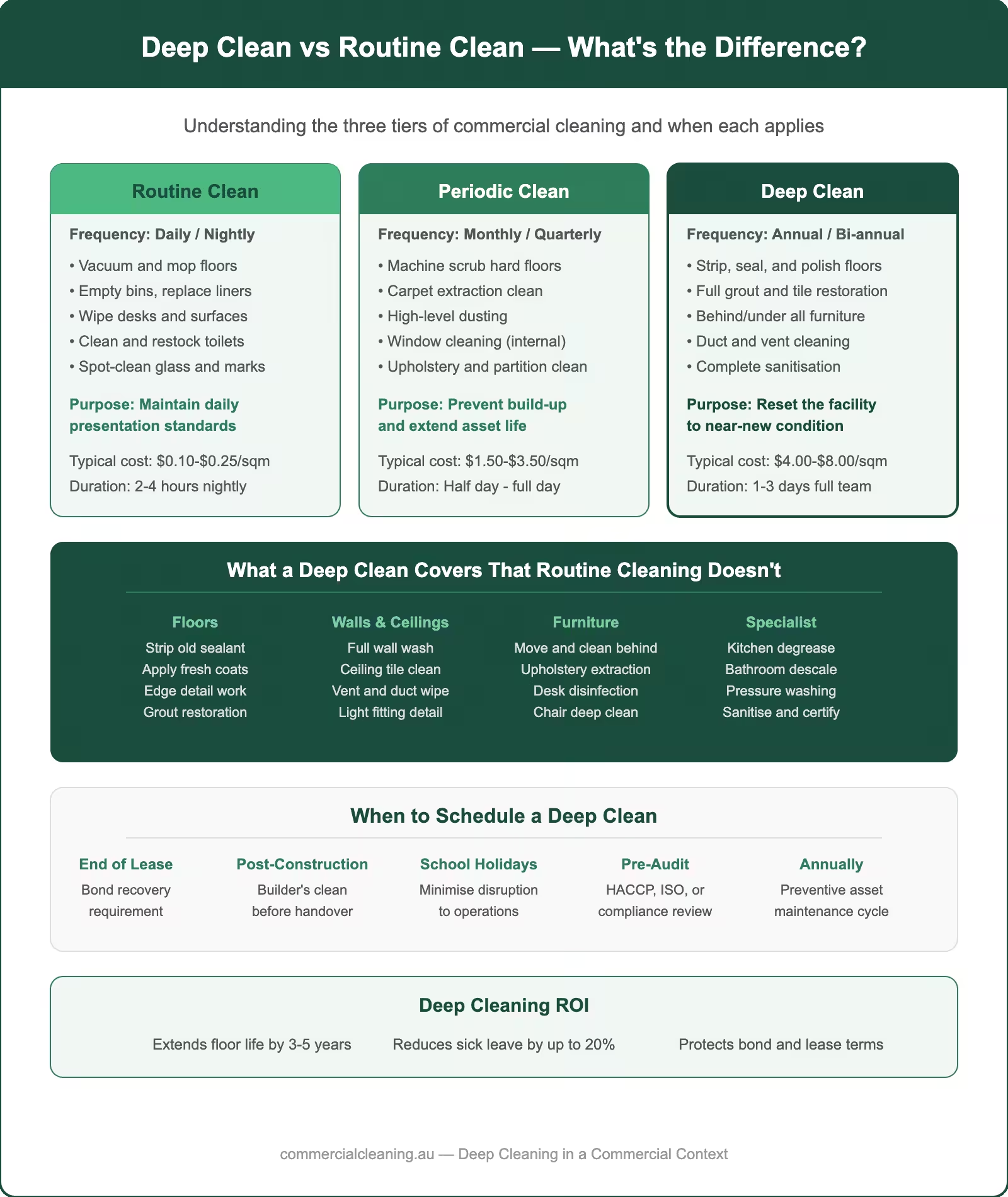
Deep clean vs routine clean comparison chart showing three tiers of commercial cleaning with costs, coverage areas, scheduling triggers, and ROI benefits
What Deep Cleaning Actually Means in a Commercial Context
We define deep cleaning as the systematic treatment of every surface, fixture, and system in a commercial space to restore hygiene levels that routine maintenance cannot achieve. Our team draws a clear distinction between maintenance cleaning — the daily or weekly tasks that keep a space presentable — and deep cleaning, which addresses accumulated contamination in areas that routine schedules skip or underserve. This includes behind and underneath furniture and equipment, inside ventilation grilles and ductwork, above suspended ceiling tiles, inside light fittings, behind wall-mounted units, within carpet fibres below the surface pile, embedded grout contamination, and biological films on wet-area surfaces. We have deep-cleaned commercial premises in Wentworthville, Westmead, and Parramatta North where the building managers maintained excellent daily cleaning programmes yet still found significant contamination in these hidden zones during our initial assessment. The reality is that routine cleaning maintains appearances while deep cleaning restores actual hygiene, and every commercial building needs both at appropriate intervals.
The Deep Cleaning Process Our Team Follows — Room by Room
We work through every commercial deep clean using a standardised room-by-room protocol that ensures nothing gets missed regardless of which crew handles the job. Our process starts with a pre-clean assessment where the team leader photographs each area, notes specific contamination types, and confirms the chemical and equipment loadout matches the surfaces present. We then work top-down through each space: ceiling vents and light fittings first, then walls and vertical surfaces, followed by fixtures and fittings, and finally flooring. This sequence matters because gravity pulls dislodged contaminants downward — cleaning floors before ceilings means you end up cleaning the floors twice. Our technicians in Westmead have refined this protocol to the point where a two-person crew can deep-clean a standard two-hundred-square-metre commercial office in a single eight-hour shift, including carpet extraction, washroom restoration, kitchen degreasing, and all high-level work. We track completion against a digital checklist that the team leader signs off room by room, and this document forms part of the completion report we provide to every client.
Office Area Cleaning Frequency Guide
Area
Daily
Weekly
Monthly
Quarterly
Reception & Lobby
Vacuum, mop, wipe
Glass doors, furniture
Deep carpet clean
Window wash
Workstations
Surface wipe, bins
Monitor & keyboard
Drawer clean-out
Chair shampoo
Kitchen/Breakroom
Bench, sink, floor
Fridge, microwave
Deep degrease
Exhaust fan clean
Bathrooms
Full sanitise + restock
Grout scrub
Descale fixtures
Vent clean
Meeting Rooms
Table wipe, vacuum
AV equipment dust
Upholstery clean
Carpet extraction
Chemical Safety and Hazardous Materials Awareness During Deep Cleans
Office Area Cleaning Frequency Guide requires specific protocols that we tailor to each facility based on its layout, traffic, and compliance requirements. We take chemical safety during deep cleans more seriously than most operators because the concentrated products required for deep cleaning pose genuine health risks when used improperly or in poorly ventilated spaces. Our team references AS 2243.4 safety in laboratories standards when handling concentrated chemicals because the principles of safe handling, storage, and disposal apply equally to commercial cleaning chemicals as they do to laboratory reagents. We maintain a chemical register that lists every product in our inventory alongside its safety data sheet, required PPE, ventilation requirements, and incompatible materials. Our technicians receive annual chemical safety training that covers correct dilution ratios, exposure limits, emergency response procedures for spills and splashes, and the specific hazards of mixing incompatible products — a mistake we have seen other operators make on multiple occasions, sometimes with dangerous consequences. For deep cleaning jobs in enclosed spaces across Wentworthville and Parramatta North, we conduct a ventilation assessment before starting and we carry portable air quality monitors that measure volatile organic compound levels in real time throughout the job.
How Often Commercial Buildings Should Be Deep Cleaned
Chemical Safety and Hazardous Materials Awareness During Deep Cleans includes specific protocols that we tailor to each facility based on its layout, traffic, and compliance requirements. We recommend deep cleaning frequencies based on three factors: occupancy density, operational activity, and the building’s environmental exposure. High-density offices with more than one person per eight square metres benefit from quarterly deep cleans. Standard commercial offices at lower density can maintain hygiene with biannual sessions. Healthcare and food-service environments need monthly deep cleans at minimum due to the biological contamination they generate. Retail spaces with high foot traffic but limited food handling sit comfortably on a quarterly schedule. We have clients across Wentworthville and Westmead on every frequency from monthly to annual, and we adjust based on our ATP testing results at each visit — if biological contamination levels are trending upward between deep cleans, we recommend increasing the frequency rather than waiting for a visible problem to develop. Our preventive approach costs less over a twelve-month cycle than reactive deep cleaning triggered by complaints or inspection failures, and the data from our regular testing gives building managers objective evidence to justify their maintenance budgets to management or ownership groups.
Deep Cleaning Costs — What Drives the Price and What You Should Budget
How Often Commercial Buildings Should Be Deep Cleaned addresses specific protocols that we tailor to each facility based on its layout, traffic, and compliance requirements. We believe in complete pricing transparency because the deep cleaning industry suffers from operators who quote low and then layer on extras once they are on site. Our standard deep clean for a commercial premises in the Wentworthville, Westmead, or Parramatta North area runs approximately $3,030 for a two-hundred-square-metre space and includes every element of our top-to-bottom protocol — ceilings, walls, fixtures, washrooms, kitchen areas, flooring, and a verification inspection. The variables that move the price are premises size, surface complexity, contamination severity, and any specialist treatments like carpet extraction, hard floor stripping and re-sealing, or kitchen exhaust degreasing. We quote as fixed-price packages after our site assessment so there are no surprises, and we break the quote into clearly labelled line items so clients can see what each component costs and make informed decisions about what to include. Our pricing includes all labour, chemicals, equipment, and waste disposal — we never charge mobilisation fees, fuel surcharges, or any other hidden costs that inflate the final invoice beyond the agreed quote.
Verification Testing — How We Prove the Deep Clean Worked
Deep Cleaning Costs — What Drives the Price and What You Should Budget targets specific protocols that we tailor to each facility based on its layout, traffic, and compliance requirements. We do not ask clients to trust our word that a deep clean was thorough — we provide objective verification data that proves it. Our standard verification protocol includes ATP bioluminescence testing on high-touch surfaces, visual inspection against a documented pre-clean baseline, moisture readings in wet areas to confirm surfaces are drying properly, and air quality spot-checks in enclosed spaces. ATP testing measures adenosine triphosphate — a molecule present in all living cells — and gives us a numerical reading in relative light units that indicates the biological contamination level on a surface. A reading below one hundred RLU on a high-touch surface like a door handle or light switch confirms hygienic cleanliness, while readings above three hundred indicate inadequate cleaning. We test a minimum of ten surfaces per two hundred square metres across a representative sample of high-touch, low-touch, and hidden locations. Our verification results are included in the completion report alongside pre-clean photographs, chemical registers, and any recommendations for maintenance improvements. This documentation gives building managers the evidence they need for regulatory compliance, internal quality assurance, and lease or contract obligations.
Verification Testing — How We Prove the Deep Clean Worked focuses on specific protocols that we tailor to each facility based on its layout, traffic, and compliance requirements. When situations escalate beyond a scheduled deep clean and require immediate professional response, our team maintains a dedicated rapid-deployment capability that we detail in specialist scenarios like post-pest deep cleaning for commercial buildings.
Frequently Asked Questions
What is the difference between deep cleaning and regular commercial cleaning?
Regular maintenance cleaning keeps a space presentable through daily or weekly tasks like vacuuming, mopping, and surface wiping. Deep cleaning systematically treats every surface, fixture, and hidden zone — including behind equipment, inside vents, above ceiling tiles, and within carpet fibres — to restore hygiene levels that routine schedules cannot achieve. Every commercial building needs both at appropriate intervals.
How much does a commercial deep clean cost?
Our standard deep clean for a two-hundred-square-metre commercial premises in the Wentworthville, Westmead, or Parramatta North area runs approximately $3,030 including all labour, chemicals, equipment, waste disposal, and verification testing. We quote fixed prices after site assessment with no hidden fees, mobilisation charges, or fuel surcharges.
How often should a commercial building be deep cleaned?
High-density offices benefit from quarterly deep cleans, standard offices from biannual sessions, and healthcare or food-service environments need monthly treatment. We adjust recommendations based on ATP testing results at each visit rather than applying arbitrary schedules, ensuring frequency matches actual contamination levels.
How do you verify that a deep clean was thorough?
We use ATP bioluminescence testing on a minimum of ten high-touch, low-touch, and hidden surfaces per two hundred square metres. Readings below one hundred relative light units confirm hygienic cleanliness. Results are documented in our completion report alongside pre-clean photographs and chemical registers.
What chemicals do you use for deep cleaning?
We maintain a chemical register with safety data sheets for every product. Our inventory includes hospital-grade disinfectants, alkaline degreasers, acidic descalers, enzymatic cleaners, and solvent-based spotting agents — each matched to specific surface types and contamination categories. We reference AS 2243.4 chemical safety standards and carry personal air quality monitors during every job.
How long does a commercial deep clean take?
A standard two-hundred-square-metre commercial office takes our two-person crew approximately eight hours including carpet extraction, washroom restoration, kitchen degreasing, and high-level work. Larger premises or those with severe contamination extend proportionally, and we provide estimated timeframes in every quote.
Do you deep clean during business hours or after hours?
We schedule most deep cleans after business hours or during weekends to minimise disruption. The concentrated chemicals used in deep cleaning require adequate ventilation time before occupants return, and we prefer working in unoccupied spaces for both safety and efficiency. For businesses that cannot close, we can section the premises and clean in stages.
What areas are typically missed in routine cleaning that deep cleaning addresses?
The most commonly missed areas we find are behind and underneath furniture, inside ventilation grilles, above suspended ceiling tiles, inside light fittings, behind wall-mounted units, within carpet fibres below the surface pile, embedded grout contamination, and biological films on wet-area surfaces. Our top-to-bottom protocol ensures every one of these zones receives systematic treatment.
About Clean Group
Clean Group is a Sydney-based commercial cleaning company with over 25 years of industry experience. Founded by Suji Siv, our team of 50+ trained professionals services offices, warehouses, medical centres, schools, childcare facilities, retail stores, gyms, and strata properties across Sydney, Melbourne, and Brisbane.
We are active members of ISSA and the Building Service Contractors Association of Australia (BSCAA). Our operations align with ISO 9001 (Quality Management), ISO 14001 (Environmental Management), and ISO 45001 (Workplace Health and Safety) standards. We hold membership with the Green Building Council of Australia and use eco-friendly, TGA-registered cleaning products wherever possible.
Every Clean Group cleaner is police-checked, fully insured, and trained in safe work procedures under SafeWork NSW guidelines. We operate 7 days a week, including after-hours and weekend services, to minimise disruption to your business.
Hi, I'm Suji Siv, the founder, CEO, and Managing Director of Clean Group, bringing over 25 years of leadership and management experience to the company. As the driving force behind Clean Group’s growth, I oversee strategic planning, resource allocation, and operational excellence across all departments. I am deeply involved in team development and performance optimization through regular reviews and hands-on leadership.