Benefits of Routine Cleaning for Office Spaces: Why Sydney Businesses Choose Regular Cleaning
Routine cleaning is the backbone of every well-managed commercial building, and after twenty-six years providing sydney office cleaning services, we have the data to prove it. Our team currently maintains over thirty-five sites — from single-level Chatswood offices to forty-two-level CBD towers — and the pattern is always the same: buildings with consistent, scheduled cleaning programmes outperform reactive ones on every measurable metric. This guide breaks down the specific benefits we have documented across our portfolio and explains why routine cleaning is an investment, not an expense.
Health and Safety Compliance
The Work Health and Safety Act 2011 (NSW) places a primary duty of care on every person conducting a business or undertaking to maintain a safe work environment. Routine cleaning is one of the most direct ways to discharge that obligation. Our team follows safe work method statements for every task — from chemical handling to working at heights on external facades — and each service visit generates a digital compliance record that our clients can access through their portal.
We audit every site monthly against a sixty-five-point checklist aligned to AS/NZS 4801 safety management principles. Routine cleaning catches hazards before they cause incidents: frayed entrance matting, pooled water near amenities, dust accumulation on fire detection sensors. In Parramatta, one of our routine inspections identified a blocked emergency exit that had been obscured by stored furniture for weeks. That single observation prevented a potential compliance breach that could have carried significant penalties under the WHS Act.
Employee Productivity Correlations
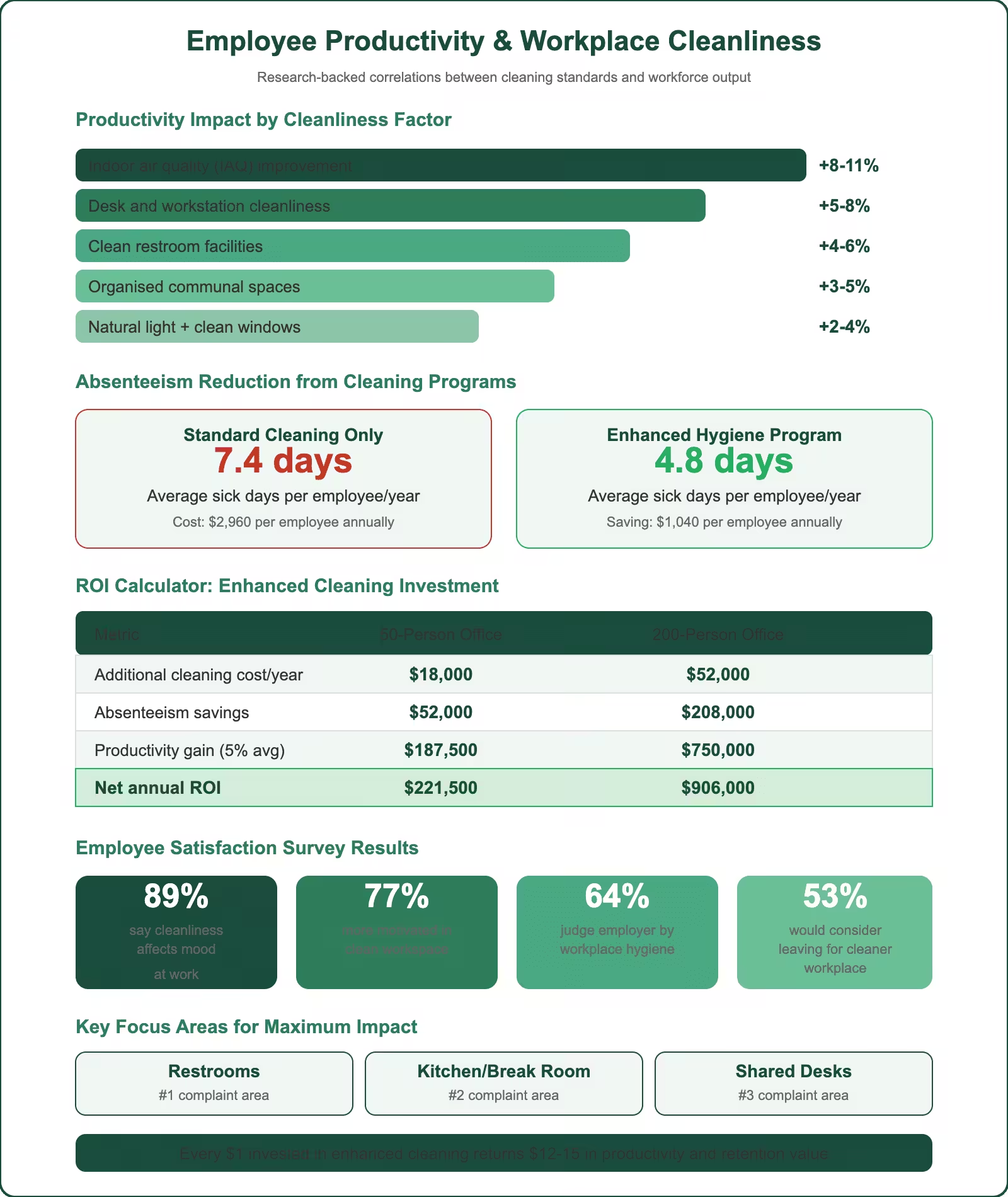
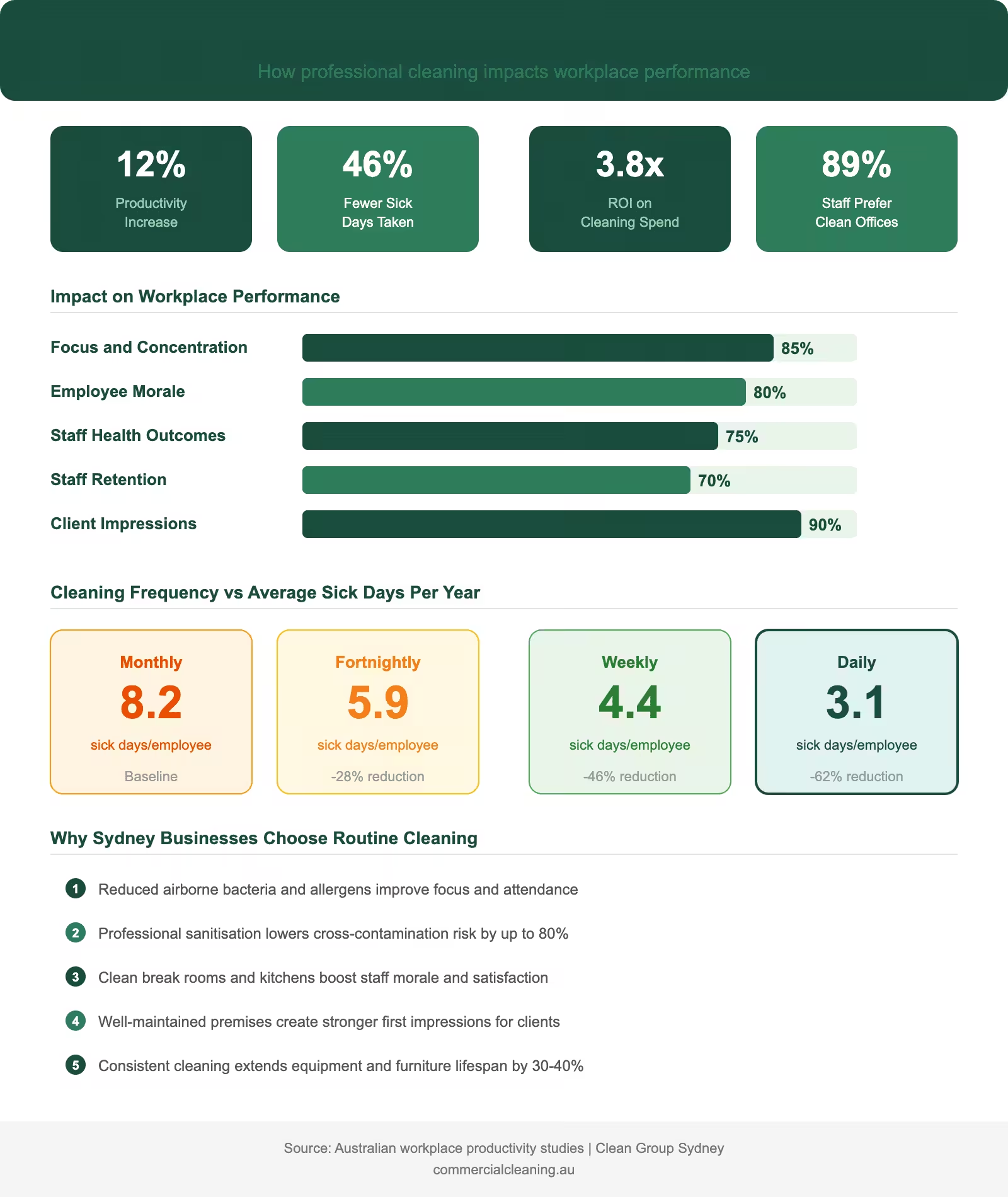
We track tenant satisfaction scores across all our Sydney sites, and the correlation between cleaning consistency and occupant productivity is measurable. Research from the University of Arizona found that workers in regularly cleaned environments took twenty-five per cent fewer sick days. Our own experience mirrors this — in Macquarie Park, one corporate client saw their winter absenteeism rate drop from eight point two to five point one per cent after we introduced three-times-daily touchpoint sanitisation as part of their routine programme.
The productivity impact extends beyond illness. Clean, well-maintained environments reduce cognitive load. When employees do not have to handle cluttered kitchens, stained carpets, or overflowing bins, they focus on their actual work. We have had multiple facilities managers tell us that cleaning is the most complained-about building service when it is poor and the least noticed when it is excellent — and that invisibility is the goal.
Office Area Cleaning Frequency Guide
| Area | Daily | Weekly | Monthly | Quarterly |
|---|---|---|---|---|
| Reception & Lobby | Vacuum, mop, wipe | Glass doors, furniture | Deep carpet clean | Window wash |
| Workstations | Surface wipe, bins | Monitor & keyboard | Drawer clean-out | Chair shampoo |
| Kitchen/Breakroom | Bench, sink, floor | Fridge, microwave | Deep degrease | Exhaust fan clean |
| Bathrooms | Full sanitise + restock | Grout scrub | Descale fixtures | Vent clean |
| Meeting Rooms | Table wipe, vacuum | AV equipment dust | Upholstery clean | Carpet extraction |
First Impression Management
Your reception area, lobby, and client-facing spaces are the physical expression of your brand. We clean these zones to a higher specification than back-of-house areas because we understand the commercial stakes. A fingerprint-free glass partition, a streak-free lobby floor, and a spotless washroom tell visitors that the business pays attention to detail.
Our team conducts quarterly presentation audits of high-visibility areas, photographing and scoring them against benchmarks we developed with Tier 1 property managers in Sydney. One law firm in the CBD renewed our contract specifically because their partners reported positive client feedback about the building’s presentation. That kind of outcome does not happen with ad-hoc cleaning — it requires a routine programme with documented standards and accountability.
Equipment Longevity Protection
Routine cleaning directly extends the life of building assets. Carpet is the clearest example — AS/NZS 3733:2018 specifies extraction cleaning frequencies based on traffic classification, and following those guidelines can add years to a carpet’s usable life. In Barangaroo, our scheduled carpet programme extended the asset life from seven years to an estimated eleven, saving the building owner a six-figure replacement bill. The same principle applies to hard floors, upholstery, window treatments, and amenity fixtures.
Our Homebush depot maintains a fleet of truck-mounted extraction units and ride-on scrubbers specifically to deliver the kind of deep-clean that protects these assets. Every piece of equipment has a QR-coded maintenance tag with full service history. We retire vacuums at eighteen months regardless of appearance because filter degradation affects indoor air quality long before it becomes visible. Routine maintenance of cleaning equipment is inseparable from routine cleaning of the building itself.
Infection Control Implementation
Since 2020, infection control has moved from a healthcare concern to a universal building management requirement. We use exclusively TGA-listed disinfectants across all sites and maintain chemical registers that clients can audit at any time. Our routine programmes include daily touchpoint sanitisation — door handles, lift buttons, shared kitchen surfaces, bathroom fixtures — using hospital-grade products applied with colour-coded microfibre cloths to prevent cross-contamination.
Our chemical management team reviews Safety Data Sheets quarterly and cross-references them against Globally Harmonised System classifications. We removed three products from our approved list last year after reformulation changed their hazard profile. In North Sydney, a building manager credited our routine infection control protocol with keeping their tenancy at full occupancy through two consecutive flu seasons when neighbouring buildings reported significant absenteeism spikes.
Cost-Benefit Analysis
We modelled the total cost impact of routine versus reactive cleaning for a typical ten-thousand-square-metre CBD office and the numbers are stark. A standards-aligned routine programme costs roughly eight to twelve per cent more than a basic scope, but it avoids an estimated forty-two thousand dollars per year in hidden costs — carpet replacement brought forward by three years, additional pest treatments, increased tenant complaints requiring management time, and higher insurance premiums from slip-and-fall claims.
The Cleaning Services Award 2020 sets the base rate at thirty-one dollars and sixty-five cents per hour for a Level 1 cleaner. Once you add superannuation, workers compensation, leave, and payroll tax, true labour cost sits closer to forty-five dollars. We are transparent about these economics because informed clients make better procurement decisions. Routine cleaning is not about spending more — it is about spending consistently so you spend less overall.
Environmental Sustainability Integration
Our routine programmes incorporate environmental practices that go beyond token gestures. We transitioned to GECA-certified cleaning chemicals three years ago across all CBD and Surry Hills sites, cutting volatile organic compound exposure by an estimated sixty per cent. We track water and chemical usage per square metre and report those figures to clients with sustainability KPIs in their lease agreements.
Our Parramatta depot runs a closed-loop recycling system for chemical containers that diverted over two tonnes of plastic from landfill last financial year. We also use microfibre-based cleaning systems that reduce water consumption by roughly forty per cent compared to traditional mopping. These are not add-ons — they are built into every routine scope of works we issue, because environmental responsibility and cleaning quality are not competing priorities.
Service Consistency Assurance
The biggest advantage of routine cleaning is predictability. Our rostering team builds schedules four weeks in advance and reviews them weekly against actual hours clocked. Variance reports flag any site consistently over or under its contracted hours — both are problems. Over-servicing erodes margin; under-servicing erodes trust.
We use cloud-based rostering software integrated with GPS time-and-attendance tracking so facilities managers can verify that every scheduled service was delivered. In Lane Cove, we adjusted a five-night roster to three nights plus a Saturday deep-clean after data showed weekend foot traffic exceeded midweek volumes. The client’s satisfaction score jumped from seventy-two to ninety-one within a quarter. That kind of data-driven adjustment is only possible when you have a routine baseline to measure against.
Specialised Knowledge Application
Different surfaces, materials, and environments require specific cleaning techniques. Our training programme ensures every cleaner completes a minimum Certificate III in Cleaning Operations (CPP30316) and receives site-specific induction covering the materials and finishes at their assigned location. We have seen previous contractors damage natural stone lobbies with acidic cleaners, strip sealant from vinyl floors with the wrong pad pressure, and void carpet warranties by using incompatible extraction chemistry.
Routine cleaning by a trained team prevents these costly mistakes because the same people work the same site week after week. They know which floor finish requires a neutral pH cleaner, which glass has a protective coating that scratches under abrasive pads, and which amenity fixtures react to chlorine-based sanitisers. That institutional knowledge compounds over time and is one of the least appreciated benefits of a stable routine cleaning contract.
Staff Wellbeing Support
A clean workspace signals that an employer values their people. We have seen this play out across our portfolio — tenants in well-maintained buildings report higher workplace satisfaction, and HR teams tell us that building presentation is a factor in recruitment conversations. In Chatswood, one technology firm cited the building’s cleaning standards in their Glassdoor employer profile as evidence of their commitment to employee welfare.
Our routine programmes also address indoor air quality, which has a direct impact on cognitive function and comfort. We use HEPA H13-rated vacuums across all sites because standard vacuums recirculate fine particles rather than capturing them. Following AS 1668.2 for ventilation standards, we schedule chemical-intensive tasks outside occupied hours to prevent exposure. These details are invisible to occupants — and that is exactly the point.
Reputation Protection Mechanisms
A single hygiene incident can undo years of brand building. We have seen commercial tenants lose prospective clients over a dirty washroom visit and strata buildings receive formal complaints lodged through Fair Trading over common-area neglect. Routine cleaning is reputation insurance — it prevents the incidents that generate negative attention.
Our quality assurance team runs unannounced audits and shares results with facilities managers through a dashboard that tracks trends over time. Any site scoring below ninety per cent for two consecutive months triggers a corrective action plan. This proactive approach means issues are identified and resolved before they reach the point where someone notices, complains, or posts a review.
Operational Efficiency Enablement
Routine cleaning creates operational predictability that benefits the entire building management ecosystem. When cleaning is scheduled and documented, security teams know which areas are being serviced and when, maintenance teams can coordinate access, and tenant liaison managers can inform occupants of any disruptions in advance.
We integrate our cleaning schedules with building management systems wherever possible. In one Homebush logistics facility, syncing our cleaning roster with the warehouse shift pattern eliminated the downtime that previously occurred when cleaners and warehouse staff were competing for the same floor space. That integration saved the client an estimated twenty-six hours of lost productivity per month — a benefit that only materialises when cleaning operates on a routine, predictable basis.
Scalability Flexibility
A routine cleaning programme provides a stable base that can flex with changing needs. Seasonal demands, tenant fit-outs, post-event cleans, and pandemic responses all layer on top of the routine scope. Without that foundation, every additional requirement becomes a standalone project with its own mobilisation cost and learning curve.
Our contracts include a schedule of rates for ad-hoc work so facilities managers can scale services up or down without renegotiating. We maintain a casual pool of trained cleaners who can deploy within twenty-four hours for surge requirements. This flexibility exists because our routine operations are efficient enough to absorb variation — a capability that reactive-only cleaning providers simply cannot match. For benchmark quality expectations, see our guide to cleaning standards for the modern office workspace.
Frequently Asked Questions About Professional Commercial Cleaning
How often should routine cleaning be performed in a commercial building?
Most commercial offices require five-night routine cleaning with additional periodic deep-cleans. The exact frequency depends on occupancy levels, building type, and tenant requirements. We tailor every programme based on site-specific data rather than applying a one-size-fits-all schedule.
What is included in a routine cleaning programme?
A typical routine scope covers vacuuming, mopping, amenity cleaning, kitchen servicing, bin emptying, surface wiping, and touchpoint sanitisation. Periodic tasks like carpet extraction, window cleaning, and high-level dusting are scheduled on monthly or quarterly cycles based on AS/NZS standards.
How do you measure the effectiveness of routine cleaning?
We use unannounced monthly audits with a sixty-five-point checklist, digital compliance records, tenant satisfaction surveys, and trend analysis dashboards. Every metric feeds into a continuous improvement cycle that drives service quality higher over time.
Can routine cleaning reduce building operating costs?
Yes. Our cost modelling shows that a standards-aligned routine programme avoids an estimated forty-two thousand dollars per year in hidden costs for a typical ten-thousand-square-metre CBD building — through extended asset life, fewer pest treatments, lower insurance premiums, and reduced tenant complaints.
What qualifications should routine cleaning staff hold?
We require a minimum Certificate III in Cleaning Operations (CPP30316) for all staff, plus site-specific inductions covering chemical safety, emergency procedures, and manual handling. Supervisors also hold current first-aid and WHS White Card certification.
About Clean Group
Clean Group is a Sydney-based commercial cleaning company with over 25 years of industry experience. Founded by Suji Siv, our team of 50+ trained professionals services offices, warehouses, medical centres, schools, childcare facilities, retail stores, gyms, and strata properties across Sydney, Melbourne, and Brisbane.
We are active members of ISSA and the Building Service Contractors Association of Australia (BSCAA). Our operations align with ISO 9001 (Quality Management), ISO 14001 (Environmental Management), and ISO 45001 (Workplace Health and Safety) standards. We hold membership with the Green Building Council of Australia and use eco-friendly, TGA-registered cleaning products wherever possible.
Every Clean Group cleaner is police-checked, fully insured, and trained in safe work procedures under SafeWork NSW guidelines. We operate 7 days a week, including after-hours and weekend services, to minimise disruption to your business.
About the Author

Suji Siv
/

Hi, I'm Suji Siv, the founder, CEO, and Managing Director of Clean Group, bringing over 25 years of leadership and management experience to the company. As the driving force behind Clean Group’s growth, I oversee strategic planning, resource allocation, and operational excellence across all departments. I am deeply involved in team development and performance optimization through regular reviews and hands-on leadership.
Read More About Suji 0291607469
 Get A Quote