We have encountered asbestos-related hazards on post-construction cleaning projects more often than most people would expect, and our team takes this responsibility with the utmost seriousness because the health consequences of mishandling asbestos-containing materials are severe and irreversible. Our crews have worked on renovation cleanups in Engadine where older building materials were disturbed during the construction process, and we know from direct experience that identifying and managing asbestos contamination requires specialist knowledge that goes well beyond standard cleaning competence. When you engage a professional after builders cleaning Sydney company with asbestos awareness training, you are protecting the long-term health of everyone who will use the building.
Why Asbestos Awareness Matters During Post-Construction Cleaning
We have learned through nearly two decades of construction cleaning work that asbestos-containing materials are present in a significant proportion of Australian buildings constructed before 1990. Our experience on renovation projects in Heathcote has shown us that builders do not always identify every asbestos-containing element before commencing work, and we have encountered situations where our pre-clean walkthrough was the first time anyone recognised that disturbed materials might contain asbestos fibres. We take this possibility seriously on every older building we clean because we know that even brief exposure to airborne asbestos fibres can contribute to serious diseases including mesothelioma, asbestosis, and lung cancer.
We have found that the most common asbestos-containing materials we encounter during post-construction cleaning include fibro sheeting, vinyl floor tiles and their adhesive backing, insulation around pipes and ducts, and textured ceiling coatings. Our crews are trained to recognise these materials visually, but we never rely on visual identification alone because we know that asbestos fibres are microscopic and the only definitive way to confirm their presence is through laboratory testing. Our protocol requires that any suspected material be treated as asbestos-containing until proven otherwise.
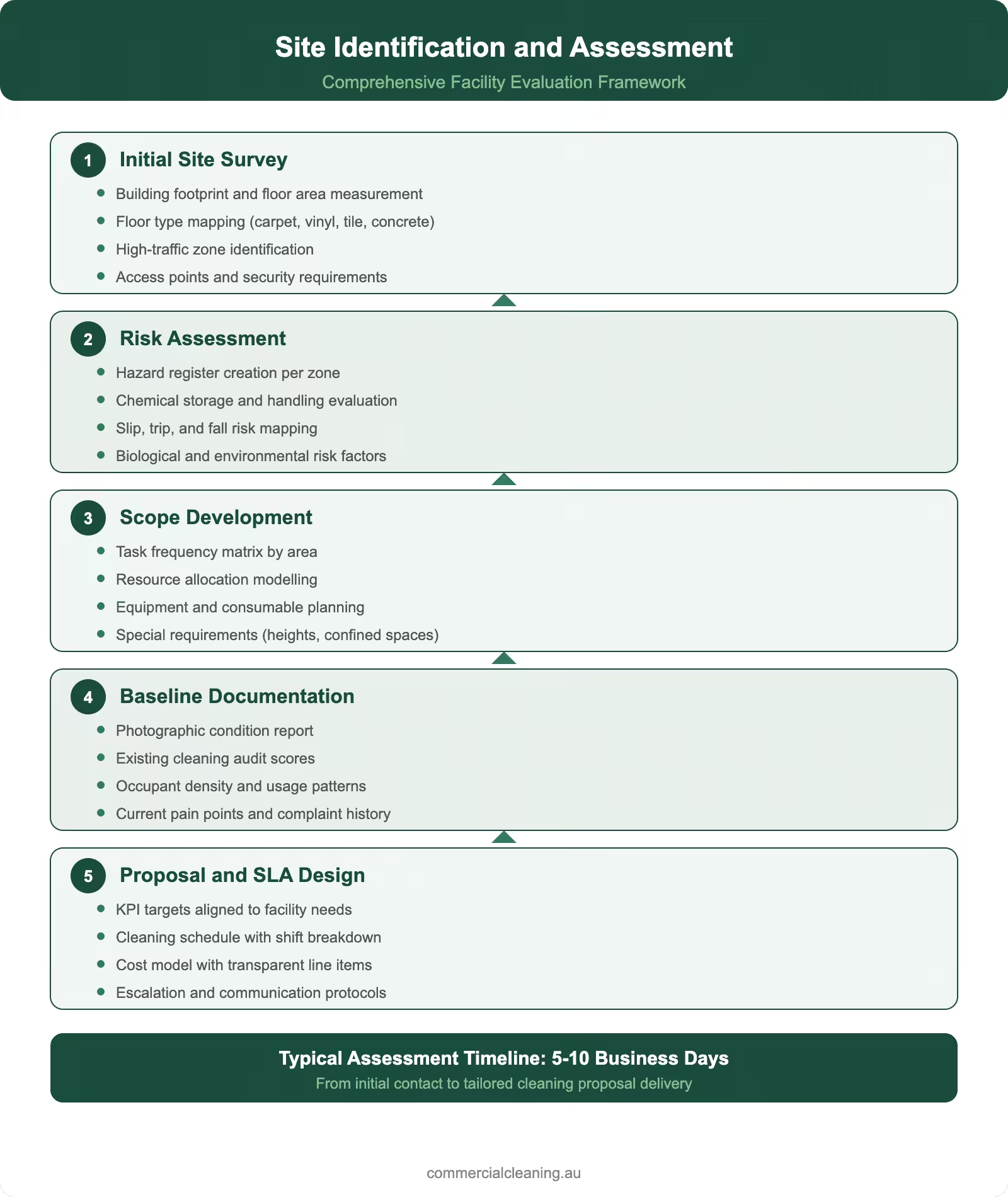
Site identification and assessment process infographic showing five-phase facility evaluation framework from survey to SLA design
Our Identification and Assessment Process
Our Identification and Assessment Process involves specific protocols that we tailor to each facility based on its layout, traffic, and compliance requirements. We conduct a thorough hazard assessment on every post-construction cleaning project involving buildings constructed before 1990. Our assessors look for materials that may have been disturbed during the renovation, including pipe lagging, ceiling tiles, wall sheeting, and floor coverings. We reference AS 4964, the Australian Standard for the qualitative identification of asbestos in bulk samples, because this standard defines the laboratory testing methodology that provides definitive confirmation of asbestos presence. We have arranged testing through accredited laboratories on numerous occasions when our visual assessment raised concerns, and we know that the turnaround time for results is typically two to three business days.
We document our assessment findings in a detailed report that maps the location of any suspected or confirmed asbestos-containing materials within the building. Our reports include photographs, location descriptions, and condition assessments that help our clients understand the extent of any contamination and the appropriate management response. We have found that this documentation is invaluable for building owners because it creates a permanent record that informs future maintenance and renovation decisions.
Post-Construction Cleaning Stage Guide
Stage
When
Scope
Equipment
Time per 100 m²
Rough Clean
During build
Debris, rubble, dust
Skip bins, brooms, shovels
2–4 hrs
Builders Clean
After fit-out
Plaster dust, paint spots, labels
Scrapers, HEPA vac, chemicals
4–8 hrs
Final / Sparkle Clean
Pre-handover
All surfaces to move-in standard
Full commercial kit
6–12 hrs
External Clean
Pre-handover
Fascia, windows, paths, car park
Pressure washer, cherry picker
3–6 hrs
Defect Rectification
Post-inspection
Touch-ups, missed areas
As needed
1–3 hrs
Safe Cleaning Protocols Around Asbestos
Post-Construction Cleaning Stage Guide requires specific protocols that we tailor to each facility based on its layout, traffic, and compliance requirements. We want to be absolutely clear that our team does not perform asbestos removal. Our role is to identify potential asbestos hazards during our pre-clean assessment, manage contamination risks during our cleaning work, and coordinate with licensed asbestos removalists when removal is required. We have established relationships with several accredited removal contractors across Sydney because we have learned that rapid coordination is necessary when asbestos is discovered unexpectedly on a project site.
We follow strict protocols when cleaning in areas where asbestos-containing materials are present but undisturbed. Our crews use wet-cleaning methods exclusively in these zones because we know that dry methods can generate airborne fibres. We deploy HEPA-filtered vacuum extractors rated for asbestos-class filtration, and we confirm that all waste materials from these areas are double-bagged in labelled asbestos waste bags for proper disposal. Our experience on projects in Waterfall has reinforced the importance of these protocols because we have seen the consequences of less rigorous approaches on sites cleaned by other companies.
What Happens When Asbestos Is Found Unexpectedly
What Happens When Asbestos Is Found Unexpectedly addresses specific protocols that we tailor to each facility based on its layout, traffic, and compliance requirements. We have a documented procedure for situations where our crews discover suspected asbestos-containing materials during the cleaning process. Our first step is always to stop work immediately in the affected area and establish a temporary exclusion zone. We then notify our client and arrange for a licensed assessor to inspect and, if necessary, collect samples for laboratory analysis. We have found that this decisive response prevents the situation from escalating and demonstrates to our clients that we prioritise safety over schedule pressure.
We maintain our crews on standby during the assessment period and redirect them to unaffected areas of the building so that the overall project timeline is impacted as little as possible. Our project managers communicate proactively with our clients throughout this process because we have learned that clear, honest communication is required when dealing with asbestos discoveries. We never downplay the significance of a positive identification, and we always verify our clients understand their legal obligations as building owners regarding asbestos management.
Costs and Project Planning
We factor asbestos awareness procedures into our pricing for all projects involving older buildings because we know from experience that the assessment and management costs are an needed component of safe post-construction cleaning. Our records show that the average cost for a post-construction clean with detailed asbestos awareness protocols on a mid-sized commercial project in the Engadine, Heathcote, and Waterfall area sits around $1,270. We have found that this cost represents excellent value considering the health protection and legal compliance it provides.
We recommend that our clients discuss asbestos management with their builder during the planning phase of any renovation project involving a pre-1990 building. Our experience has shown us that proactive identification and management of asbestos-containing materials before construction begins is always more cost-effective and less disruptive than dealing with unexpected discoveries during the cleanup phase. We are happy to participate in pre-construction planning meetings to advise on asbestos-related cleaning considerations.
We encourage anyone managing a renovation or construction project to take asbestos awareness seriously and make sure their cleaning contractor has the training and protocols to handle these situations safely. Our team services all suburbs across southern Sydney including Engadine, Heathcote, and Waterfall. For a closely related crystalline-dust hazard that frequently surfaces on the same sites, read our guide on guide on silica dust procedures for post-construction cleanup. procedures for post-construction cleanup.
Frequently Asked Questions
Why is asbestos awareness important for post-construction cleaners?
We have encountered asbestos-containing materials on numerous renovation projects involving pre-1990 buildings. Our pre-clean assessments have identified hazards that builders missed, and we know that even brief exposure to airborne asbestos fibres can contribute to serious diseases including mesothelioma and asbestosis.
What is AS 4964 and how is it used in asbestos identification?
We reference AS 4964, the Australian Standard for qualitative identification of asbestos in bulk samples, because it defines the laboratory testing methodology that provides definitive confirmation of asbestos presence. Visual identification alone is insufficient, and laboratory testing through accredited facilities is the only reliable method.
What common building materials may contain asbestos?
We most frequently encounter asbestos in fibro sheeting, vinyl floor tiles and their adhesive backing, pipe and duct insulation, and textured ceiling coatings. Our crews are trained to recognise these materials but treat any suspected material as asbestos-containing until laboratory testing confirms otherwise.
Do you remove asbestos during post-construction cleaning?
We do not perform asbestos removal. Our role is to identify potential hazards, manage contamination risks during cleaning, and coordinate with licensed asbestos removalists when removal is required. We have established relationships with accredited removal contractors across Sydney for rapid response.
What happens if asbestos is discovered during cleaning?
We immediately stop work in the affected area, establish a temporary exclusion zone, notify the client, and arrange licensed assessment and sampling. Our crews redirect to unaffected areas to minimise project timeline impact while maintaining strict safety protocols.
How much does asbestos-aware post-construction cleaning cost?
We have found that a post-construction clean with detailed asbestos awareness protocols on a mid-sized commercial project in the Engadine, Heathcote, and Waterfall area typically costs around $1,270. This includes assessment, documentation, and safe cleaning procedures.
Should asbestos be addressed before or during the renovation?
We strongly recommend addressing asbestos during the planning phase before construction begins. Proactive identification and management is always more cost-effective and less disruptive than dealing with unexpected discoveries during the cleanup phase.
Do you provide asbestos awareness cleaning in the Sutherland Shire?
We service all suburbs across the Sutherland Shire including Engadine, Heathcote, and Waterfall. Our team has extensive experience with older commercial and industrial buildings in this area and provides detailed asbestos awareness protocols on every applicable project.
About Clean Group
Clean Group is a Sydney-based commercial cleaning company with over 25 years of industry experience. Founded by Suji Siv, our team of 50+ trained professionals services offices, warehouses, medical centres, schools, childcare facilities, retail stores, gyms, and strata properties across Sydney, Melbourne, and Brisbane.
We are active members of ISSA and the Building Service Contractors Association of Australia (BSCAA). Our operations align with ISO 9001 (Quality Management), ISO 14001 (Environmental Management), and ISO 45001 (Workplace Health and Safety) standards. We hold membership with the Green Building Council of Australia and use eco-friendly, TGA-registered cleaning products wherever possible.
Every Clean Group cleaner is police-checked, fully insured, and trained in safe work procedures under SafeWork NSW guidelines. We operate 7 days a week, including after-hours and weekend services, to minimise disruption to your business.
Hi, I'm Suji Siv, the founder, CEO, and Managing Director of Clean Group, bringing over 25 years of leadership and management experience to the company. As the driving force behind Clean Group’s growth, I oversee strategic planning, resource allocation, and operational excellence across all departments. I am deeply involved in team development and performance optimization through regular reviews and hands-on leadership.