Allergen cross-contact is one of those risks that most kitchen managers think they have covered until an incident proves otherwise. We have been called into restaurants across Sydney after anaphylaxis scares that traced back to contaminated prep surfaces, shared fryer oil, or cleaning cloths that carried almond residue from one station to another. As restaurant cleaners sydney businesses trust with their food-safety compliance, our team has developed allergen-specific cleaning protocols that go well beyond the standard wipe-down most kitchens rely on.
Why Standard Kitchen Cleaning Fails for Allergen Prevention
Why Standard Kitchen Cleaning Fails for Allergen Prevention covers specific protocols that we tailor to each facility based on its layout, traffic, and compliance requirements. The core problem is that common food allergens — milk proteins, egg albumin, tree nut oils, crustacean residue — are not visible on stainless-steel surfaces after a regular clean. We have run ATP swab tests on benchtops in Haymarket and Chatswood restaurants that returned readings above 300 RLU, well over the 100 RLU threshold we benchmark from AS 4187. Allergen proteins bind to micro-scratches in stainless steel and resist removal by neutral-pH detergents at standard dilutions. That is why our allergen cleaning protocol specifies alkaline detergent at 3 percent concentration minimum, applied at 50°C with a dedicated colour-coded microfibre system that never crosses between allergen zones.
FSANZ Standard 3.1.1 requires food businesses to declare the presence of any substance listed in Schedule 9, which covers the ten major allergen groups recognised in Australia. But declaration only works if the kitchen’s cleaning practices actually prevent the cross-contact that would make undeclared allergens present. We have audited restaurants in Newtown and Surry Hills where the allergen declaration was technically correct on the menu but the cleaning practices created cross-contact risks that rendered those declarations meaningless in practice.
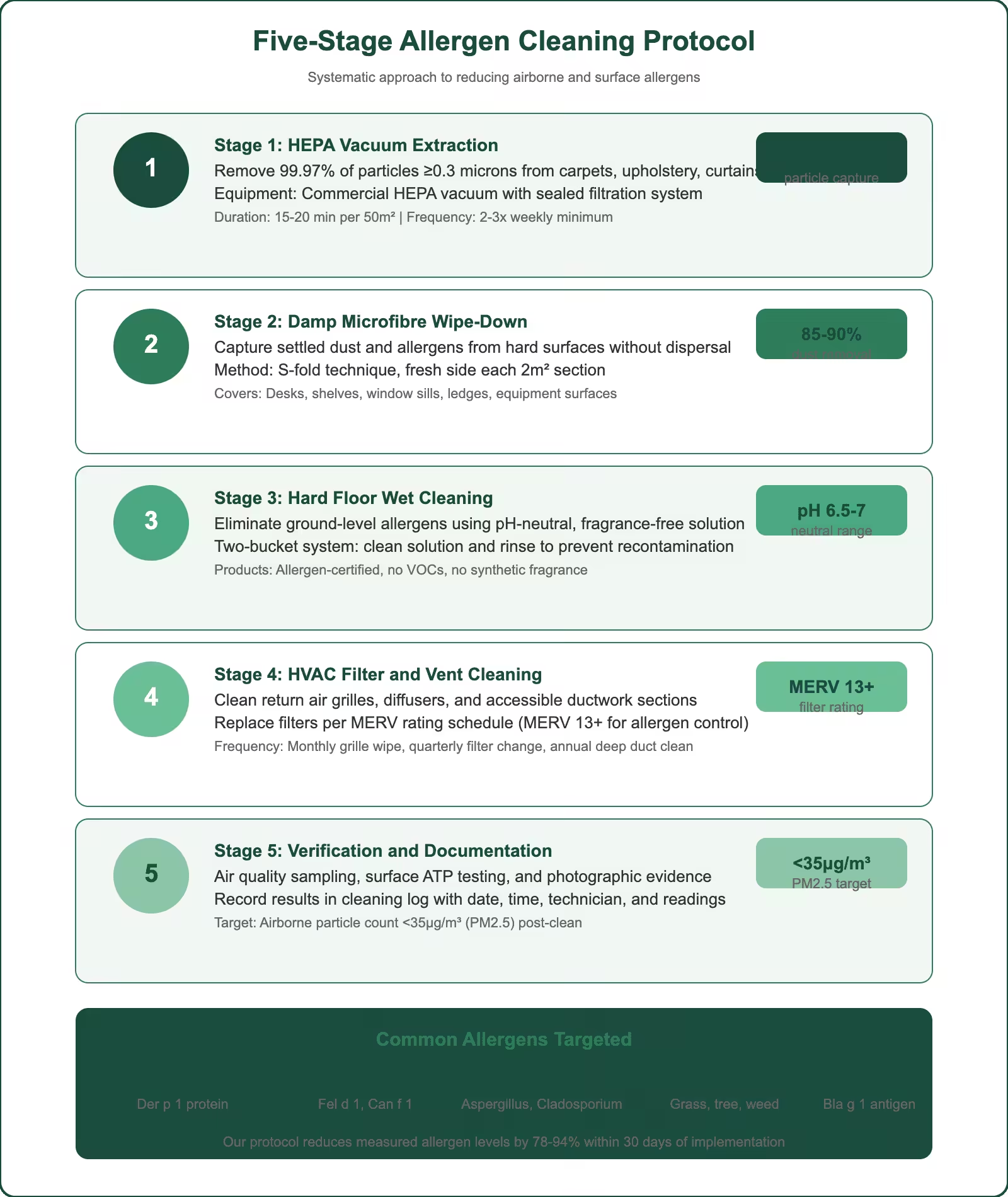
Five-stage allergen cleaning protocol infographic showing HEPA vacuuming, microfibre wipe-down, wet cleaning, HVAC filter maintenance, and verification steps with targets
Important Allergen Cleaning: The Five-Stage Protocol We Use
Our allergen cleaning protocol follows five stages that we have refined over eight years of working with allergy-aware restaurants across Greater Sydney. Stage one is dry removal — scraping and sweeping all visible food residue into dedicated waste bins, never using compressed air which disperses allergen particles into the air column. Stage two is hot-water pre-rinse at 55°C to 60°C, which loosens protein bonds without denaturing them into forms that are harder to remove. Stage three is chemical application using Ecolab Pur-Eco Alkafoam at 3 percent dilution with a minimum 10-minute contact time.
Stage four is mechanical agitation with colour-coded brushes assigned to specific zones — red for raw meat and seafood areas, blue for dairy, green for nut-free zones. We replace these brushes every 30 days regardless of condition because bristle degradation creates harbourage points for allergen residue. Stage five is a potable-water rinse followed by ATP verification swabbing. Every surface must return below 50 RLU before we sign off the allergen clean, which is half the threshold we use for general food-safety cleaning. This tighter benchmark reflects the reality that even trace allergen amounts can trigger anaphylaxis in sensitised individuals.
Commercial Kitchen Cleaning Zone Guide
Zone
Clean Frequency
Method
Compliance
Penalty Risk
Cooking Line
After each service
Degrease + sanitise
Food Standards 3.2.2
Up to $275,000
Cold Storage
Weekly deep clean
Strip, clean, temp log
Food Standards 3.2.2
Closure risk
Exhaust Hood & Filters
Monthly
Chemical soak + pressure
AS 1851 (fire safety)
Insurance void
Dining Floor
After each service
Sweep, mop, spot treat
WHS Reg 2017
Slip injury claim
Grease Trap
Quarterly pump-out
Licensed contractor
EPA Protection Act
Up to $1M fine
Colour-Coded Zoning Systems for Allergen Segregation
Commercial Kitchen Cleaning Zone Guide requires specific protocols that we tailor to each facility based on its layout, traffic, and compliance requirements. Colour-coded systems are not optional in allergen management — they are the backbone of physical segregation in any kitchen handling multiple allergen groups. We implement a four-colour zoning system based on AS 4674 food-safety design principles: red zones for raw proteins and crustaceans, blue for dairy and egg-based preparations, green for nut-free and allergen-free areas, and yellow for shared equipment that requires full allergen cleaning between uses. Each zone has its own set of cleaning cloths, brushes, squeegees, and spray bottles stored in wall-mounted colour-matched holders.
Colour-Coded Zoning Systems for Allergen Segregation includes specific protocols that we tailor to each facility based on its layout, traffic, and compliance requirements. We have seen the difference this makes firsthand. A restaurant group operating three venues across Parramatta and Liverpool implemented our colour-coded system in 2024 and reduced their allergen incident reports from seven per year to zero within the first eight months. The investment in separate cleaning equipment runs approximately $1,200 per venue, but the cost of a single allergen-related closure or liability claim dwarfs that figure by orders of magnitude. Our team conducts monthly audits of the colour-coded system to verify there is no cross-use between zones.
Shared Equipment and Fryer Oil Cross-Contact Management
Deep fryers are the highest-risk shared equipment in most restaurant kitchens for allergen cross-contact. Crustacean proteins, gluten from battered items, and nut traces from coated products all accumulate in fryer oil and transfer to subsequent batches. We recommend dedicated fryers for allergen-free cooking wherever kitchen layout permits. Where that is not feasible, our protocol requires a complete oil change and fryer boil-out using sodium hydroxide solution at 2 percent concentration before switching between allergen groups.
Slicers, mixers, and food processors present similar challenges. Disassembly cleaning is mandatory — running a slicer blade under hot water does not remove milk protein or egg residue from the blade guard, feed tray, or thickness adjustment mechanism. Our crew disassembles each unit to its component parts, soaks in alkaline detergent at 55°C for 20 minutes, hand-scrubs with dedicated brushes, rinses, and ATP-tests the reassembled unit before clearing it for use. We have found residual allergen contamination on reassembled equipment in Eastwood and Cabramatta restaurants that had been cleaned to visual standards but never properly disassembled.
Ventilation and Airborne Allergen Control
Airborne allergens are an often-overlooked vector in restaurant environments. Steam from boiling crustaceans, flour dust from bread-making stations, and aerosolised nut oils from roasting processes can settle on surfaces throughout the kitchen. We include ventilation-system cleaning in our allergen management scope, targeting rangehood filters, ductwork entry points, and ceiling-mounted return-air grilles. Our exhaust cleaning follows AS 1851 fire-safety maintenance standards, but we extend the scope to include allergen-residue testing on supply-air diffusers in allergen-free preparation zones.
For kitchens in the CBD and Haymarket that operate in older buildings with shared HVAC systems, we install temporary positive-pressure barriers during allergen-sensitive preparation periods. This costs approximately $85 per service but prevents allergen migration from neighbouring tenancies — a genuine risk in food courts and shared commercial kitchen spaces that most operators do not consider until a customer reaction forces the issue.
Staff Training and Allergen Awareness Documentation
Every team member we assign to an allergen-sensitive venue completes our internal allergen-awareness certification covering the ten FSANZ Schedule 9 allergen groups, correct cleaning chemical selection, colour-coded zone protocols, and emergency response procedures for suspected allergen incidents. We refresh this training every six months, and our Bankstown and western Sydney teams consistently score above 95 percent on competency assessments. Documentation of all training records sits in our cloud-based compliance portal alongside cleaning logs and ATP test results.
We also provide allergen-awareness briefing materials for the kitchen staff at each venue we service. These are laminated A3 reference charts mounted at each cleaning station showing the correct chemical, dilution ratio, contact time, and verification method for that zone’s allergen risk profile. Our experience across more than forty restaurant venues in Greater Sydney has shown that visible reference materials reduce protocol deviations by approximately 60 percent compared to relying on memory or digital resources that staff rarely check mid-service.
When Allergen Cleaning Connects to Broader Facility Hygiene
When Allergen Cleaning Connects to Broader Facility Hygiene covers specific protocols that we tailor to each facility based on its layout, traffic, and compliance requirements. Allergen cross-contact prevention does not exist in isolation — it intersects with every other aspect of kitchen hygiene. A grease-contaminated rangehood that has not been cleaned to AS 1851 standards can drip residue containing allergen proteins onto prep surfaces below. A poorly maintained coolroom with condensation pooling on shelves creates moisture pathways that transport allergen residue between stored products. We have seen both scenarios in real Sydney kitchens, and both resulted in allergen incidents that could have been prevented by integrated cleaning programs. For venues that also need to address general break-room and staff-area hygiene alongside allergen-zone cleaning, our guide on maintaining clean break rooms in food service settings outlines the complementary protocols we use across the full venue footprint.
Frequently Asked Questions
About Clean Group
Clean Group is a Sydney-based commercial cleaning company with over 25 years of industry experience. Founded by Suji Siv, our team of 50+ trained professionals services offices, warehouses, medical centres, schools, childcare facilities, retail stores, gyms, and strata properties across Sydney, Melbourne, and Brisbane.
We are active members of ISSA and the Building Service Contractors Association of Australia (BSCAA). Our operations align with ISO 9001 (Quality Management), ISO 14001 (Environmental Management), and ISO 45001 (Workplace Health and Safety) standards. We hold membership with the Green Building Council of Australia and use eco-friendly, TGA-registered cleaning products wherever possible.
Every Clean Group cleaner is police-checked, fully insured, and trained in safe work procedures under SafeWork NSW guidelines. We operate 7 days a week, including after-hours and weekend services, to minimise disruption to your business.
Hi, I'm Suji Siv, the founder, CEO, and Managing Director of Clean Group, bringing over 25 years of leadership and management experience to the company. As the driving force behind Clean Group’s growth, I oversee strategic planning, resource allocation, and operational excellence across all departments. I am deeply involved in team development and performance optimization through regular reviews and hands-on leadership.