Your office carpet looks reasonably clean. Desks are tidy. The bins are empty. But beneath the surface—in your air vents, under furniture, and deep within carpet fibres—sits months of accumulated dust, allergens, and bacteria. A standard weekly clean won’t touch it. That’s where office cleaning specialising in deep cleaning comes in. A true office deep clean goes far beyond daily maintenance, targeting the hidden grime that affects air quality, employee health, and the longevity of your furnishings.
For Sydney office managers, understanding when and why to invest in deep cleaning is important to maintaining a truly hygienic workspace. This guide breaks down what a deep clean actually involves, how often your office needs one, and how to prepare your team for the process.
What’s the Difference Between Regular Cleaning and Deep Cleaning?
What’s the Difference Between Regular Cleaning and Deep Cleaning? covers specific protocols that we tailor to each facility based on its layout, traffic, and compliance requirements. Daily and weekly office cleaning keeps your space presentable. Your team vacuums, wipes desks, cleans bathrooms, and removes rubbish. But regular maintenance focuses on visible dirt and high-traffic surfaces. Deep cleaning targets what’s been accumulating.
Regular Cleaning (Weekly/Daily)
Regular cleaning covers dust and debris removal, vacuuming carpeted areas, mopping hard floors, wiping desks and tables, disinfecting bathrooms, and emptying waste. It keeps your office looking and smelling fresh. In our experience, offices that skip regular cleaning deteriorate quickly—but those that rely only on regular cleaning without periodic deep cleans often find their carpets wear faster and allergen levels spike during spring.
Deep Cleaning (Quarterly/Biannually)
Deep cleaning tackles what regular cleaning misses: carpet extraction with hot water, shampooing upholstery, cleaning behind and under furniture, descaling bathrooms to remove mineral buildup, degreasing kitchen surfaces and vents, cleaning air ducts and light fixtures, and disinfecting baseboards and door frames from top to bottom.
Key Differences at a Glance
Task
Regular Cleaning
Deep Cleaning
Carpet vacuuming
Surface level
Hot water extraction (HWE)
Upholstery
Usually skipped
Steam cleaned or encapsulation treated
High surfaces
Dusted occasionally
Thoroughly cleaned (vents, lights, tops of cabinets)
Bathrooms
Disinfected and swept
Descaled, grout cleaned, all fixtures stripped
Kitchen
Counters wiped, floor mopped
Hoods, vents, and appliances degreased
Frequency
Weekly or daily
Every 3–6 months
Time to complete (500 sqm office)
4–6 hours
12–18 hours
The investment in deep cleaning pays dividends. We’ve found that offices that deep clean quarterly report fewer sick days, better employee morale, and cleaner-smelling spaces year-round.
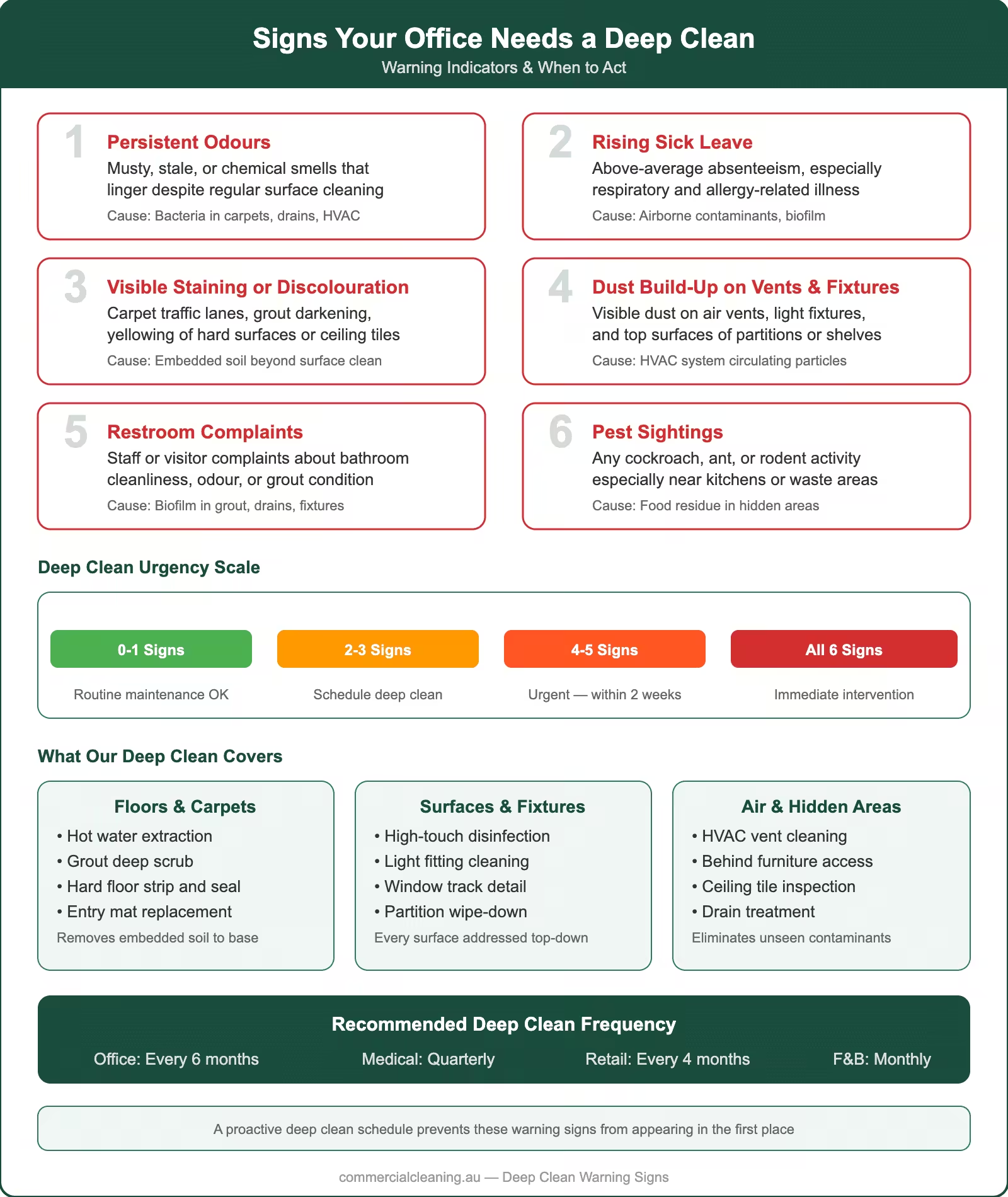
Six warning signs your office needs a deep clean with urgency scale, deep clean scope breakdown, and recommended frequency by setting
Signs Your Office Needs a Deep Clean
Signs Your Office Needs a Deep Clean involves specific protocols that we tailor to each facility based on its layout, traffic, and compliance requirements. How do you know when it’s time? Watch for these warning signs.
Visible Grime and Odours
If you notice carpet stains that won’t come out with spot-cleaning, musty smells near air vents, or sticky residue on kitchen surfaces, your office is overdue. Our team at a Surry Hills office recently discovered that what the property manager thought was a persistent odour issue was actually mould growing inside the air return vents—a monthly deep-duct clean solved it.
Rising Allergy and Illness Complaints
Employees start sneezing more in spring, or seasonal allergies hit harder than they should? Dust, pollen, and allergens accumulate in carpets and ventilation systems. A deep clean with HEPA H13 filtration-grade equipment can capture particles as small as 0.3 microns, dramatically improving indoor air quality.
Carpet Showing Signs of Wear
Carpets that aren’t regularly deep cleaned deteriorate faster. Dirt particles act like sandpaper on fibres. If your carpet looks matted, discoloured, or worn in high-traffic areas, it’s time for professional hot water extraction (HWE) treatment. According to AS/NZS 3733, carpet cleaning standards recommend extraction cleaning at least twice yearly for medium-traffic office spaces.
Visible Dust on High Surfaces
When you notice dust on top of ceiling vents, light fixtures, or door frames within a week of regular cleaning, buildup has reached a critical level.
Bathroom Grout and Fixtures Are Discoloured
Soap scum, mineral deposits, and mildew that regular wiping doesn’t remove signal it’s time for descaling and grout restoration.
What Does a Professional Office Deep Clean Actually Include?
What Does a Professional Office Deep Clean Actually Include? requires specific protocols that we tailor to each facility based on its layout, traffic, and compliance requirements. Understanding what you’re paying for helps you assess quotes and make sure you’re getting true deep cleaning, not just a premium version of regular cleaning.
Carpet Extraction and Treatment
Professional hot water extraction (HWE) injects hot water and eco-friendly cleaning solution deep into carpet fibres, then extracts the mixture along with embedded dirt, dust mites, and allergens. In our experience across office buildings in Barangaroo and Macquarie Park, this process alone extends carpet life by 2–3 years. Some deep cleans also include encapsulation cleaning, where a polymer solution encases soil particles, making them easier to vacuum after drying.
Upholstery Steam Cleaning
Office chairs, reception sofas, and meeting-room furniture collect dust, skin cells, and food particles. Steam cleaning removes these contaminants. This is especially important in high-use areas where staff eat lunch at desks or clients sit in waiting areas.
High Dusting and Vent Cleaning
Your cleaners reach ceiling corners, light fixtures, air return vents, and the tops of cabinets—areas normal cleaning ignores. Air vents are critical; dust accumulation reduces HVAC efficiency and degrades indoor air quality. Cleaning them out with HEPA-filtered vacuum equipment ensures dust doesn’t simply get blown elsewhere.
Kitchen Deep Degrease
Oven hoods, range tops, and ventilation systems in office kitchens collect grease. A deep clean includes degreasing these surfaces with appropriate degreasers (GECA-certified eco-safe products are standard for quality operators). SafeWork NSW guidelines require that kitchen areas in shared spaces be sanitised to prevent food-borne contamination, so thorough degrease is a compliance necessity.
Bathroom Descaling and Restoration
Hard water deposits, soap scum, and mildew get scrubbed away. Grout is cleaned and, if needed, treated to prevent mould regrowth. Toilet bowls, sinks, and mirrors are restored to showroom condition.
Baseboards, Door Frames, and Mouldings
These surfaces are dusted and wiped down top to bottom. Over months, they collect fingerprints, dust, and grime that becomes stubborn if left untreated.
Floor Care
Hard floors receive deep cleaning with appropriate solutions for the material (tile, timber, polished concrete). Some offices also benefit from floor burnishing or stripping and sealing, depending on wear and traffic patterns.
ATP Testing for Hygiene Validation
Best-practice operators now include ATP bioluminescence testing as part of their deep clean. This hygiene verification method measures the presence of organic matter on surfaces. A result below 100 RLU (relative light units) indicates the surface meets food-safety and hygiene standards. Our team uses ATP testing regularly when servicing medical offices and workplaces in North Sydney with strict hygiene requirements.
How Often Should Your Sydney Office Be Deep Cleaned?
How Often Should Your Sydney Office Be Deep Cleaned? includes specific protocols that we tailor to each facility based on its layout, traffic, and compliance requirements. The answer depends on your office type, foot traffic, and employee health priorities.
Standard Office Environments
Most office buildings should be deep cleaned every three to six months. This keeps carpets fresh, air quality high, and allergen levels low. We recommend quarterly (every 12 weeks) for medium-sized offices with 20–50 staff.
High-Traffic Offices
If your office has 100+ staff, hosts frequent client meetings, or has an open-plan layout, monthly deep cleans or bimonthly deep cleans are worthwhile. Traffic accelerates dirt accumulation and spread of airborne allergens.
Medical, Dental, and Healthcare Offices
Compliance with WHS Act 2011 and SafeWork NSW standards means healthcare workplaces must maintain heightened hygiene. Deep cleans should occur at least monthly, with additional spot-cleaning of high-risk areas. TGA-approved disinfectants must be used. After servicing over 300 medical facilities across Sydney, we’ve learned that quarterly isn’t enough—monthly ensures compliance and patient safety.
Post-Renovation or Construction
After any renovation, refit, or construction work, a deep clean is non-negotiable. Construction leaves behind drywall dust, adhesive residue, and fine particles that settle into carpet and ventilation. A post-construction deep clean also confirms work quality and prepares the space for occupancy. We schedule these within 48 hours of final inspections to minimise downtime.
Seasonal Deep Cleaning
Spring (August–September in Australia) is peak allergy season. A deep clean in late winter or early spring removes accumulated winter dust before allergens spike. Autumn is also a good time to clean air vents and prepare for winter heating season, which can stir up dust.
Many forward-thinking Sydney offices in suburbs like Chatswood, Parramatta, and Epping now schedule deep cleans around these seasons plus one more in winter—three per year—to combat seasonal respiratory complaints.
The Office Deep Cleaning Checklist by Area
When requesting quotes or planning your deep clean, make sure this checklist is covered:
Reception and Lobby
Vacuum carpets with hot water extraction
Clean windows, frames, and sills
Dust light fixtures, vents, and air returns
Wipe baseboards and door frames
Sanitise door handles and light switches
Clean under seating and behind furniture
Open-Plan and Workstations
Hot water extraction of all carpeted areas
Wipe and disinfect all surfaces (desks, shelves, monitors, phones)
Dust and wipe high shelving and top of cabinets
Clean under desks and in cable troughs
Vacuum office chairs and upholstery
Clean air vent grilles
Meeting Rooms and Boardrooms
Carpet extraction and spot-stain removal
Polish or steam-clean meeting tables
Wipe whiteboards and glass partitions
Dust ceiling fixtures and air returns
Clean upholstered meeting chairs
Kitchen and Breakroom
Degrease oven and range hood
Clean and sanitise all benchtops and appliances
Scrub interior of microwave, fridge, and sink
Degrease ventilation ductwork
Mop and disinfect floors thoroughly
Sanitise rubbish bins and recycling
Bathrooms
Descale and scrub toilets, sinks, and taps
Clean tile grout with scrubbing (and mould prevention treatment if needed)
Polish mirrors and fixtures
Mop and sanitise floors
Disinfect all stall doors and handles
Clean exhaust vents
Corridors and Stairwells
Vacuum or mop thoroughly
Dust all high surfaces and light fixtures
Wipe handrails and bannisters
Clean windows and skylights if present
How Long Does a Professional Deep Clean Take?
How Long Does a Professional Deep Clean Take? targets specific protocols that we tailor to each facility based on its layout, traffic, and compliance requirements. Time depends on office size, condition, and crew size. A typical 500-square-metre office requires 12–18 hours of labour. This is often split across two to three days to minimise disruption. We recommend scheduling deep cleans after-hours or over a weekend for offices with active operations. Our team operates seven days a week, including weekends and after-hours, specifically to accommodate Sydney businesses in busy areas like Surry Hills and Barangaroo.
Larger facilities (2,000+ sqm) may take three to five days. The crew size and team efficiency matter too; a well-coordinated team with proper equipment can work faster than poorly organised crews.
How to Prepare Your Office for a Deep Clean
A little preparation ensures your deep clean is efficient and thorough.
Clear Clutter
Remove items from desks, storage shelves, and the floor. This allows cleaners to access every surface and corner. Ask staff to take personal items home or secure them in lockable drawers.
Move Light Furniture
Chairs, small tables, and storage units should be moved or stacked so cleaning teams can access floors and walls. If items are too heavy or valuable, note which ones and clarify with your cleaning provider—they may include furniture moving in their service.
Advise Your Team
Let staff know the date, time, and duration. They’ll need to protect open food, devices, and documents from water spray. If the deep clean is scheduled after-hours, make sure building access is arranged and security is informed.
Empty Bins and Remove Waste
Do a quick tidy the day before. Remove rubbish, old papers, and items destined for disposal so cleaning teams focus on deep cleaning, not removing junk.
Confirm Chemicals and Methods
Before the clean, confirm that your provider uses GECA-certified or TGA-approved disinfectants. If your office has policies around chemical use (e.g., fragrance-free, pet-safe, or eco-friendly), communicate this. Quality operators like those aligned with ISO 14001 environmental standards will accommodate these requests.
Deep Cleaning Costs and Budget Considerations
Deep Cleaning Costs and Budget Considerations covers specific protocols that we tailor to each facility based on its layout, traffic, and compliance requirements. Pricing varies by region and provider. In Sydney, deep cleaning typically costs between $400–$1,500 per visit for a small office (under 200 sqm) and $2,000–$5,000+ for larger facilities. Costs depend on current condition, special requirements (e.g., carpet stain removal, duct cleaning), and labour rates.
Rather than seeing deep cleaning as an expense, view it as preventative maintenance. Quarterly deep cleans extend carpet life by 2–3 years, reduce replacement costs, improve employee health and productivity, and demonstrate workplace care that affects retention. For offices in competitive sectors in Macquarie Park or the Sydney CBD, a visibly clean, fresh-smelling office is a competitive asset.
Post-Deep-Clean Care and Maintenance
After your office deep clean, maintain cleanliness with disciplined regular cleaning:
Continue weekly vacuuming and mopping. Spot-treat carpet stains immediately—dried stains are harder to remove and may set permanently. Wipe down high-touch surfaces (door handles, light switches, shared desks) daily. Disinfect bathroom areas at least three times weekly. Address spills and mess promptly so they don’t harden or attract pests.
Schedule deep cleans on a calendar and stick to the frequency you’ve determined. Many offices now book their deep cleans 12 months in advance to secure preferred dates and make sure consistency.
Why Professional Deep Cleaning Beats DIY
Some office managers consider renting carpet cleaning equipment and tackling deep cleaning in-house. This rarely works. Professional-grade equipment delivers higher water temperature, suction power, and HEPA filtration than consumer rentals. Professional cleaners have trained eyes to spot mould, water damage, or pest signs. They’re insured against damage and liability. And they complete the work in a fraction of the time, minimising office disruption.
Our team has seen the aftermath of botched DIY deep cleans: over-wet carpets that take days to dry and develop mildew, incomplete chemical removal that causes allergic reactions, and furniture accidentally damaged by inexperienced handling. Professional operators carry insurance, use proper techniques, and guarantee results.
Choosing the Right Deep Cleaning Provider
Choosing the Right Deep Cleaning Provider includes specific protocols that we tailor to each facility based on its layout, traffic, and compliance requirements. When evaluating providers, ask about their:
Experience with office-sized facilities in your industry. Credentials: ISO certifications (9001 for quality, 14001 for environmental, 45001 for safety). Chemical standards: GECA certification, TGA registration, and commitment to eco-friendly products. Insurance and bonding to protect your assets. Staff training and police checks (non-negotiable for access to offices). References from similar-sized offices. Whether they offer ATP testing for hygiene verification. Flexibility with scheduling to minimise disruption.
In Sydney, reputable providers are members of ISSA (International Sanitary Supply Association) and the Building Service Contractors Association of Australia (BSCAA). These memberships indicate professionalism and commitment to industry standards.
Compliance and Workplace Safety in Office Deep Cleaning
Office deep cleaning isn’t just about appearance; it’s a WorkSafe obligation. Under the WHS Act 2011, employers must provide a safe and healthy workplace. Cleanliness is part of that duty. Dust, allergens, and uncontrolled mould pose respiratory risks. Slippery floors from inadequate drying pose slip hazards.
Proper deep cleaning demonstrates due diligence and reduces workplace incident claims. SafeWork NSW inspectors routinely assess office cleanliness as part of workplace audits. If your office is involved in food handling, healthcare, or other regulated industries, hygiene standards are legally mandated.
Documentation matters too. Keep records of deep cleans, including dates, areas covered, and any findings (e.g., mould discovered and remediated). This evidence shows regulators and insurers that you take workplace safety seriously.
For offices requiring the highest standards, look for providers offering post-clean certification via ATP testing and documentation. This creates an audit trail that proves hygiene compliance to SafeWork NSW and supports ISO 45001 certification claims.
Special Cases: Post-Renovation and Seasonal Deep Cleans
Post-Renovation Deep Clean
Special Cases: Post-Renovation and Seasonal Deep Cleans targets specific protocols that we tailor to each facility based on its layout, traffic, and compliance requirements. After fit-outs, office refurbishment, or major construction, construction dust penetrates everywhere. Drywall dust, adhesive particles, paint overspray, and plaster silts accumulate in carpets, vents, and on all surfaces. A post-renovation deep clean scheduled within 48 hours of project completion removes these contaminants and restores the office to full operational standard. This is non-negotiable if employees have respiratory conditions or allergies.
Seasonal Cleaning for Allergy Sufferers
In spring (August–September), pollen levels spike. Offices with employees suffering from hay fever or seasonal allergies benefit greatly from a deep clean timed for late winter. A winter deep clean targets dust accumulation from heating season when windows stay closed and air circulates the same indoor air repeatedly. Offices in suburbs like Epping and Chatswood, which have older housing stock and more trees, often request spring and winter deep cleans.
Technology and Monitoring: ATP Testing and Beyond
Technology and Monitoring focuses on specific protocols that we tailor to each facility based on its layout, traffic, and compliance requirements. Modern deep cleaning includes hygiene verification. ATP bioluminescence testing measures adenosine triphosphate (a chemical present in organic matter) on surfaces. Results under 100 RLU indicate excellent hygiene; above 300 RLU suggests further cleaning is needed.
Quality providers now offer post-clean ATP reports, especially for medical offices, food-service facilities, and other high-compliance sectors. This gives you objective proof that your deep clean met hygiene targets.
Some offices also request before-and-after air quality testing (measuring particulates and allergens) to validate the improvement a deep clean delivers. This is particularly valuable when building the business case for deep cleaning investment with cost-conscious stakeholders.
The Bigger Picture: Deep Cleaning and Office Culture
The Bigger Picture: Deep Cleaning and Office Culture covers specific protocols that we tailor to each facility based on its layout, traffic, and compliance requirements. An overlooked benefit of regular deep cleaning is its effect on employee morale and retention. Staff working in visibly clean, fresh-smelling offices report higher job satisfaction. It signals that management cares about their health and wellbeing. In competitive labour markets—especially in Sydney’s CBD and northern suburbs—these intangibles influence whether talented staff stay or leave.
We’ve spoken with office managers who noticed drop in sick leave and uptick in morale within weeks of starting quarterly deep cleans. The psychological impact of a truly clean environment is real.
If you’re considering adopting a thorough deep cleaning program, there are several proven approaches: Quarterly schedule for standard offices with 20–50 staff. Monthly for high-traffic or healthcare environments. Post-renovation cleans plus seasonal (spring and winter) for offices with allergy-prone staff. And year-round maintenance cleaning to maximise the benefit of deep cleans.
Deep cleaning combined with regular maintenance, proper ventilation, and staff education about cleanliness habits creates a truly healthy workplace. This combination is what forward-thinking organisations across Sydney—from boutique law firms in North Sydney to tech startups in Surry Hills—are now putting in place to stay competitive and keep staff healthy.
When you’re ready to discuss your office’s specific deep cleaning needs, get expert advice from providers who understand the nuances of different industries and comply fully with SafeWork NSW and WHS Act 2011 standards. Understanding the benefits and the investment required will help you make the right decision for your workplace. For more insights on maintaining workplace safety standards, read about our office decluttering strategies for a cleaner workspace.
Frequently Asked Questions
How long does carpet take to dry after hot water extraction?
Typically 4–8 hours in well-ventilated spaces with air conditioning. Our team uses high-powered extraction equipment that minimises water retention, speeding drying time. To avoid mould or mildew, make sure air circulation; open windows and run HVAC during drying. Avoid walking on wet carpet in that window.
Will deep cleaning damage my carpet or furniture?
When performed by trained professionals using appropriate methods, deep cleaning extends the life of carpet and upholstery. Hot water extraction removes embedded dirt that acts like sandpaper on fibres. Professional cleaners test solutions on inconspicuous areas first and adjust pressure and temperature to suit the material. Damage is rare with reputable providers; always verify insurance and ask for references.
Can we stay in the office while deep cleaning happens?
Partial occupancy is possible if you plan well. After-hours and weekend cleaning minimises disruption. If cleaning must occur during business hours, close off the cleaned section, make sure good ventilation, and allow at least 4 hours drying time before reopening areas to foot traffic. We recommend scheduling deep cleans outside operating hours whenever possible.
What if we discover mould or damage during the deep clean?
Professional cleaners are trained to spot mould, water damage, and pest evidence. On discovery, they’ll alert you immediately. Don’t ignore mould; it’s a WHS issue under SafeWork NSW. Most standard deep cleans don’t include mould remediation (it’s a specialist job), but your cleaner should recommend a remediation provider. Address it quickly to prevent spread and health impacts.
How do I know if a deep clean actually happened?
Ask your provider for a completion checklist and, ideally, before-and-after photos of key areas. ATP testing provides objective proof of hygiene improvement. Reputable providers also provide itemised reports listing areas deep cleaned. If you’re unsure, spot-check by looking behind furniture, under desks, and inside vents—genuine deep cleaning leaves no dust or grime.
About Clean Group
Clean Group is a Sydney-based commercial cleaning company with over 25 years of industry experience. Founded by Suji Siv, our team of 50+ trained professionals services offices, warehouses, medical centres, schools, childcare facilities, retail stores, gyms, and strata properties across Sydney, Melbourne, and Brisbane.
We are active members of ISSA and the Building Service Contractors Association of Australia (BSCAA). Our operations align with ISO 9001 (Quality Management), ISO 14001 (Environmental Management), and ISO 45001 (Workplace Health and Safety) standards. We hold membership with the Green Building Council of Australia and use eco-friendly, TGA-registered cleaning products wherever possible.
Every Clean Group cleaner is police-checked, fully insured, and trained in safe work procedures under SafeWork NSW guidelines. We operate 7 days a week, including after-hours and weekend services, to minimise disruption to your business.
Hi, I'm Suji Siv, the founder, CEO, and Managing Director of Clean Group, bringing over 25 years of leadership and management experience to the company. As the driving force behind Clean Group’s growth, I oversee strategic planning, resource allocation, and operational excellence across all departments. I am deeply involved in team development and performance optimization through regular reviews and hands-on leadership.