Most office managers mix up these terms, thinking a quick wipe-down with disinfectant spray covers everything. The truth is different. Cleaning and disinfecting serve two distinct purposes, and most Sydney workplaces need both—but at different times and with different products. Our office cleaners guide significant time educating clients about this distinction because it directly affects workplace health, staff comfort, and regulatory compliance under the Work Health and Safety Act 2011.
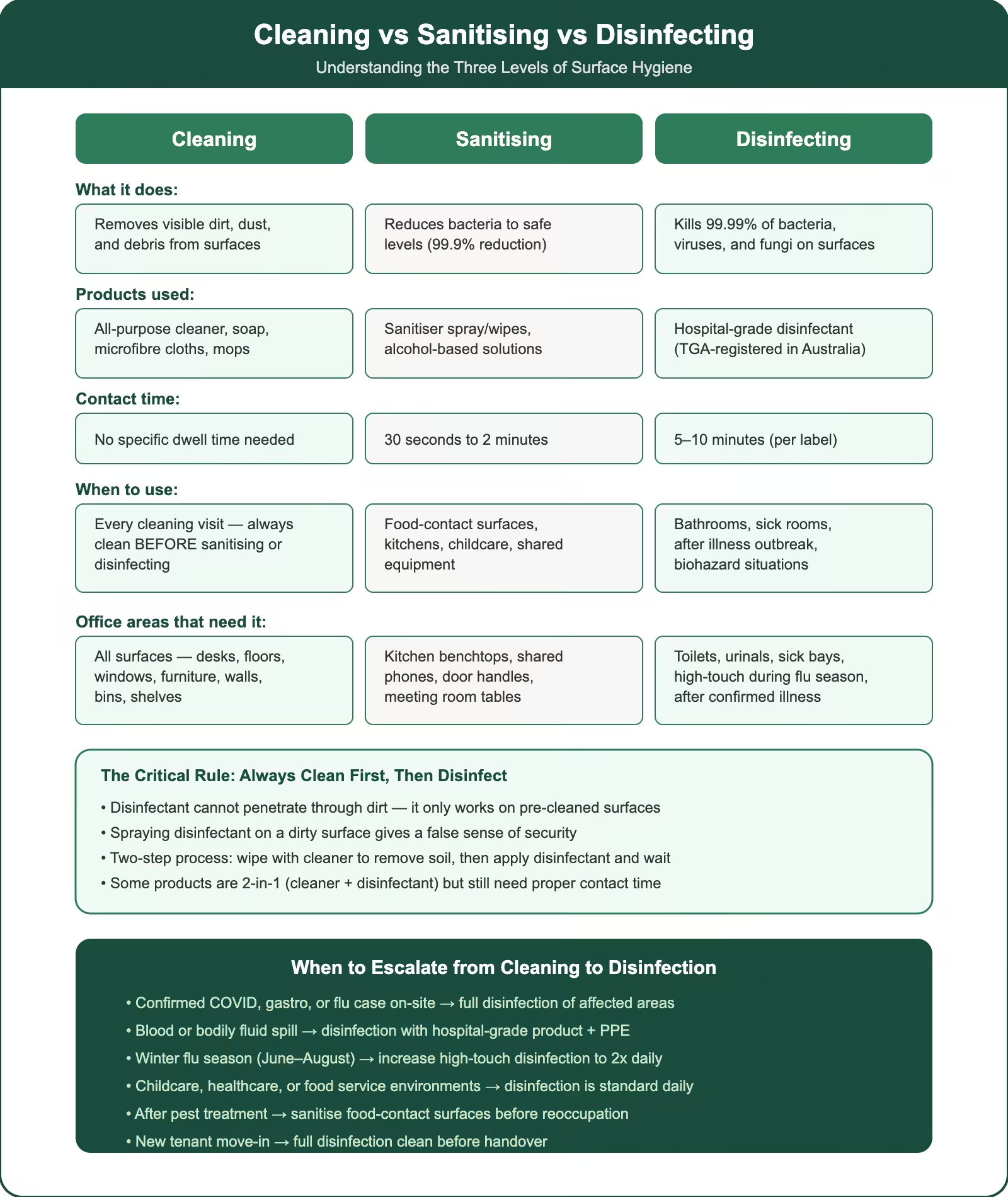
Cleaning versus sanitising versus disinfecting comparison chart showing products, contact times, when to use each, and escalation triggers for offices
What’s the Actual Difference Between Cleaning and Disinfecting
What’s the Actual Difference Between Cleaning and Disinfecting covers specific protocols that we tailor to each facility based on its layout, traffic, and compliance requirements. Cleaning removes visible dirt, dust, and organic matter from surfaces. Disinfecting kills microorganisms—bacteria, viruses, and fungi—that remain after cleaning. They’re sequential steps, not interchangeable ones. Think of cleaning as preparation and disinfecting as the medical intervention.
When you spray a dusty desk with disinfectant without cleaning first, you’re coating dirt with antimicrobial solution. The disinfectant can’t penetrate the debris to reach the pathogens underneath. In our experience across Sydney’s CBD offices, this misunderstanding wastes product and leaves staff exposed to the very germs it was meant to eliminate. Disinfectants work on clean surfaces. Cleaners prepare those surfaces. You need both, in order. Skipping either step defeats the purpose of the entire process.
When Cleaning Alone Is Enough for Your Office
Daily office cleaning—vacuuming carpets, wiping desks, emptying bins—controls dust, allergens, and general grime. For most Sydney offices operating normally (no illness outbreaks, no immunocompromised staff), regular cleaning maintains a healthy workspace. Many office managers assume they need weekly disinfection, but this creates unnecessary costs and chemical exposure for staff without corresponding health benefits.
We’ve found that offices in Parramatta, Chatswood, and the Eastern Suburbs often don’t need full disinfection schedules. Standard cleaning protocols—HEPA-filtered vacuuming, microfibre cloth cleaning, touch-point wiping—protect staff when illness is absent. The cost difference is significant: professional cleaning runs roughly half the price of combined cleaning and disinfection routines. Many office managers don’t realise this savings opportunity until after they’ve invested in expensive disinfection cycles. Once they understand the tiered approach, most adopt the cost-effective model.
However, a single confirmed case of illness (COVID, influenza, gastroenteritis) changes this equation entirely. The moment illness is confirmed, the strategy shifts from maintenance to intervention. At that point, disinfection becomes your priority.
When Disinfecting Is Required
TGA-Approved Disinfectants for Offices
When Disinfecting Is Required requires specific protocols that we tailor to each facility based on its layout, traffic, and compliance requirements. Australia’s Therapeutic Goods Administration (TGA) maintains a register of disinfectants proven to kill pathogens. Many commercial disinfectant sprays don’t appear on this list. We use only TGA-approved products in our Sydney office cleaning contracts because they’re the only products with verified kill times and efficacy rates. Generic supermarket disinfectants lack this validation and create legal exposure.
The difference matters legally. Under the Work Health and Safety Act 2011, employers have a duty to provide a safe workplace. Using unproven disinfectants puts this duty in question and creates liability if illness occurs afterward. TGA-registered products provide documented proof of your compliance effort. If an outbreak occurs and you can demonstrate that you used registered disinfectants with proper contact times, you’ve protected your company from negligence claims. Without this documentation, you’re vulnerable to legal action and workers’ compensation claims.
Contact Time and Application Standards
Disinfectants aren’t spray-and-leave products. Each one requires a specific contact time—usually 10 minutes for human norovirus or influenza on hard surfaces. If you spray at 9 a.m. and staff enter at 9:05 a.m., you haven’t disinfected anything. The microscopic pathogens still live on the surface, protected by insufficient contact time.
SafeWork NSW guidelines specify that disinfection procedures must account for contact time, drying time, and surface type. Porous surfaces (carpet, fabric) need different products and longer contact times than hard surfaces. In our experience managing office deep cleans across Darlinghurst and Marrickville, we schedule disinfection during office hours when we can maintain uninterrupted contact time and proper ventilation. Attempting disinfection while staff are working defeats the purpose—foot traffic breaks contact, people touch wet surfaces, and air conditioning disrupts the chemical environment needed for the disinfectant to work effectively.
The 3-Step Process — Clean, Sanitise, Disinfect
Professional cleaning follows this hierarchy, not just one step. Each stage serves a distinct function in reducing contamination and protecting your workforce.
Cleaning removes visible contamination. Our crews start with vacuuming (HEPA-filtered for allergen control), then wipe all touch points with detergent solution—desks, door handles, light switches, kitchens, bathrooms. This physically removes dirt and reduces the microbial load. Without cleaning first, disinfectants are wasted on surfaces they can’t penetrate. Visible debris shields bacteria from chemical action.
Sanitising reduces microorganisms to a safe level (not elimination, reduction). We use EPA-registered sanitisers for intermediate contamination areas. This step bridges general cleaning and full disinfection, costing less than disinfection but more than cleaning alone. Many offices maintain this standard weekly or biweekly. Sanitising is effective for normal operations when no outbreak is present. It’s your baseline protection during regular business periods.
Disinfecting kills 99.99% of specified pathogens on hard surfaces. This requires TGA-approved products, proper contact time, and documented procedures. We employ this after illness outbreaks or in high-risk areas like medical offices and healthcare facilities. Disinfection is your last line of defence when illness has already reached the workplace. It’s the most aggressive intervention in the cleaning hierarchy.
Products We Use and Why
Products We Use and Why addresses specific protocols that we tailor to each facility based on its layout, traffic, and compliance requirements. Our product selection reflects Australian standards and our 20+ years of managing Sydney office hygiene. The table below shows the products we recommend for different situations:
Product Type
TGA Registered
Best For
Contact Time
Cost (per application)
Neutral pH Detergent
N/A (detergent)
Daily cleaning, all surfaces
Spray and wipe immediately
$
Quaternary Ammonium Sanitiser
Yes
Weekly touch-point sanitising
5 minutes
$$
Sodium Hypochlorite (Bleach 0.5%)
Yes
Hard surface disinfection, bathroom focus
10 minutes
$$
Quaternary + Isopropyl Disinfectant
Yes
Office-wide disinfection, post-illness
10 minutes
$$$
Hydrogen Peroxide (3%)
Yes
Eco-friendly disinfection option
5-10 minutes
$$
All our products carry SDS sheets and are compliant with AS/NZS 1391:2007 (safety labelling and storage requirements). We train our crews to apply them correctly, respecting contact times and surface compatibility. Each product is chosen for specific applications based on its kill spectrum and surface safety profile.
Common Mistakes Offices Make With Disinfecting
Common Mistakes Offices Make With Disinfecting targets specific protocols that we tailor to each facility based on its layout, traffic, and compliance requirements. We’ve cleaned up after dozens of DIY disinfection attempts gone wrong. The pattern is always the same, and it stems from misunderstanding the process. These mistakes are costly and dangerous.
Skipping the cleaning step. Staff spray disinfectant over dust and spills, creating a patchy film that doesn’t kill anything underneath. The surface looks clean but isn’t. Dirt particles shield bacteria from the chemical, rendering disinfection ineffective. No penetration means no pathogen kill.
Using wrong products. Household bleach (5% sodium hypochlorite) is too strong for office surfaces and damages materials. Disinfectant sprays from supermarkets often lack TGA registration. Both waste money and create chemical hazards. Staff inhale fumes from unproven products, and materials degrade from harsh chemicals.
Not waiting long enough. Staff apply disinfectant, let it dry in 2 minutes, and call it done. No contact time means no kill. TGA products are tested with specified contact times for a reason. The chemical reaction that destroys pathogens takes time—rushing this step defeats the entire purpose. Impatience undermines safety.
Over-disinfecting. Some offices disinfect every surface daily, wasting product and creating chemical exposure. Unless there’s an illness outbreak, this is overkill. Daily cleaning with weekly sanitising covers 99% of office hygiene needs. Over-disinfection increases staff respiratory issues without additional health benefit and wastes your budget.
How We Apply This in Sydney Offices
How We Apply This in Sydney Offices focuses on specific protocols that we tailor to each facility based on its layout, traffic, and compliance requirements. Our cleaning team in Penrith, Parramatta, and the Inner West follows a tiered approach. We assess each office’s needs—staff count, turnover rates, building ventilation, any known health issues—then recommend a cleaning schedule that balances cost with safety. This personalised approach means you’re not paying for unnecessary services.
For most Sydney offices, we provide weekly cleaning with daily touch-point sanitising. During winter months (April–September) or if illness is reported, we shift to twice-weekly sanitising or full disinfection cycles. This flexibility keeps costs down in healthy periods and protects staff when needed. We adjust schedules in real time based on outbreak announcements and staff illness reports.
We document all procedures using our cloud-based system. Every cleaning includes a checklist (cleaning only) or disinfection log (with contact times recorded). If SafeWork NSW ever audits your office, you have proof of your hygiene protocols. This record-keeping is as important as the actual cleaning—it demonstrates compliance and protects your company legally. For a related topic, see our guide on return to office cleaning preparation.
Frequently Asked Questions
Can I use the same disinfectant spray every day without harming my office?
No. Daily disinfection with strong chemicals creates staff exposure to volatile organic compounds (VOCs) and can damage surfaces. Unless you’re managing an active outbreak, daily cleaning with weekly sanitising is the right standard. Most disinfectants aren’t designed for repeated daily use in occupied spaces. Extended exposure causes headaches, respiratory irritation, and material degradation.
Does COVID still require office disinfection in 2024?
COVID transmission is primarily airborne, not surface-based, according to current epidemiological evidence. However, if a confirmed case occurs in your office, a single disinfection cycle is prudent for staff confidence and to manage any rare surface transmission. We recommend it as a one-time measure, not an ongoing protocol. The evidence has shifted significantly since 2020.
What’s the difference between a disinfectant and a sanitiser?
Sanitisers reduce microorganisms to acceptable levels; disinfectants kill 99.99% of specified pathogens. Sanitisers are gentler and cheaper, suitable for ongoing use. Disinfectants are stronger and reserved for outbreak response or high-risk areas. Think of sanitising as maintenance; disinfecting as emergency response.
Is bleach safe to use in an office?
Bleach at 0.5% (diluted) is safe for hard surfaces with proper ventilation and glove protection. However, professional disinfectants are formulated for office use and damage fewer materials. We avoid bleach in most offices because safer, more targeted products exist. Bleach also leaves residue that can trigger respiratory reactions in sensitive staff.
Should we disinfect after every staff illness?
Not after minor illnesses like colds. Disinfection makes sense after confirmed cases of serious illnesses (norovirus, influenza, COVID-19) that pose workplace health risks. A single post-illness disinfection is usually enough, followed by normal cleaning schedules. Reserve disinfection for illnesses that spread rapidly and cause workplace disruption.
Ready to get your office cleaning approach right? Our team across the greater Sydney region handles everything from standard cleaning to specialised disinfection. For more information on how cleaning and disinfection fit into your relocation strategy, explore our office relocation cleaning services.
About Clean Group
Clean Group is a leading commercial cleaning company in Sydney, providing professional cleaning services to offices, strata buildings, medical facilities, schools, gyms, and retail spaces across the greater Sydney region. With over 25 years of experience and a commitment to WHS compliance, eco-friendly practices, and consistent quality, Clean Group delivers tailored cleaning solutions backed by a 100% satisfaction guarantee.
Hi, I'm Suji Siv, the founder, CEO, and Managing Director of Clean Group, bringing over 25 years of leadership and management experience to the company. As the driving force behind Clean Group’s growth, I oversee strategic planning, resource allocation, and operational excellence across all departments. I am deeply involved in team development and performance optimization through regular reviews and hands-on leadership.