We have used every type of carpet cleaning equipment on the market over the past decade, and the differences in performance are far greater than most facility managers realise. The equipment a cleaning company uses determines the quality of the result more than the chemicals, the technique, or the operator experience. Our carpet cleaning sydney team invests heavily in commercial-grade machinery because we have learned through costly experience that consumer and semi-professional equipment simply cannot deliver the results our clients across Leichhardt, Annandale, and Stanmore expect. We wrote this guide to help building managers understand what equipment their cleaning provider should be using and why it matters.
We also want to address a common frustration we hear from facility managers — they cannot tell the difference between a cleaning company that owns professional equipment and one that turns up with a hired portable unit from a hardware store. Our team has been called in to reclean carpets after other companies left them soaking wet and still dirty, and in every case the root cause was inadequate equipment. We believe transparency about equipment standards serves our industry and helps clients make better purchasing decisions.
We consider truck-mounted hot water extraction the gold standard for commercial carpet cleaning and our fleet runs dedicated units in every service vehicle. These systems generate water temperatures above seventy degrees Celsius, vacuum levels exceeding fifteen inches of mercury, and water flow rates that portable machines cannot approach. Our team has measured the performance difference directly — truck-mounted systems remove up to forty percent more soil per pass and recover ninety-five percent of injected moisture compared to sixty to seventy percent with portable extractors.
We have invested in truck-mounted equipment despite the significant capital cost because the operational benefits justify the expenditure many times over. Our systems maintain consistent temperature and suction throughout a multi-hour job, whereas portable units degrade in performance as their heating elements struggle and waste tanks fill. We service large commercial floors in Leichhardt where a single job might take four to five hours, and our truck-mounted system performs identically at hour five as it did at hour one. This consistency is what delivers uniform results across an entire floor plate.
We also value the waste water capacity of truck-mounted systems. Our tanks hold several hundred litres of recovery water, which means we clean continuously without stopping to empty collection containers. We follow the same equipment reliability principles that AS 3547 applies to electrical infrastructure — consistent, rated performance under sustained load conditions. Our team has found that the uninterrupted workflow enabled by large-capacity systems reduces total job time by roughly twenty percent compared to portable equipment that requires multiple emptying stops.
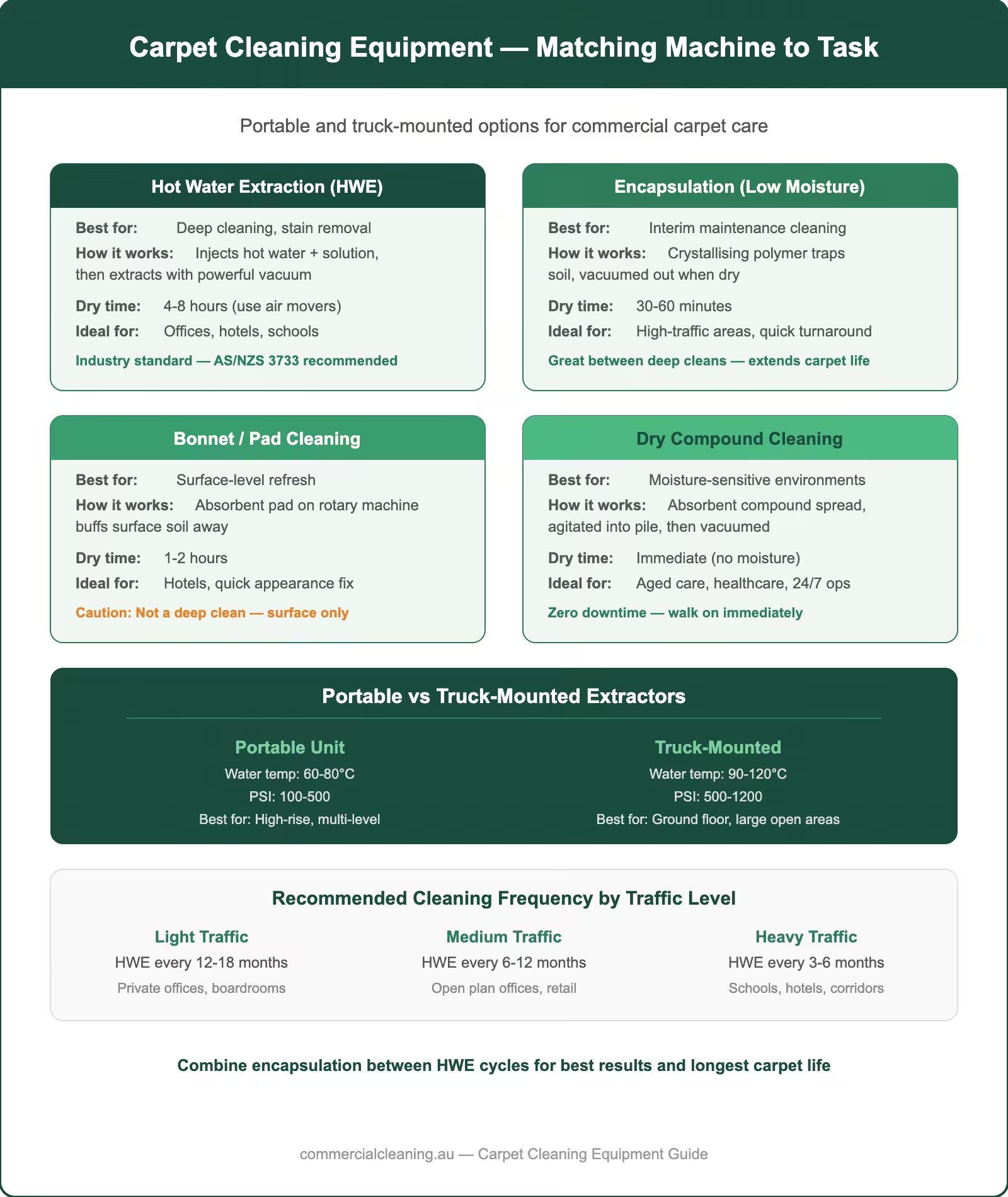
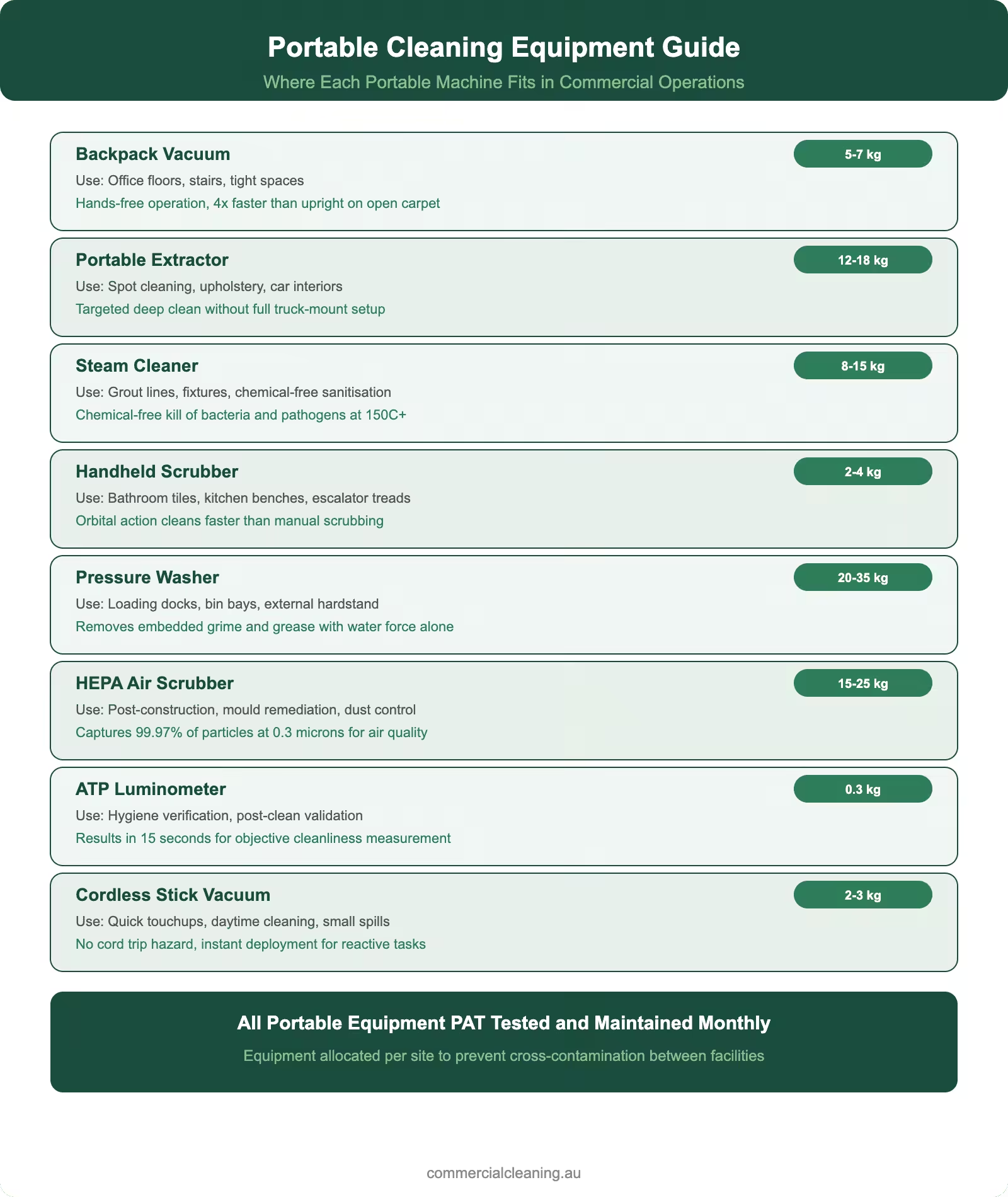
Carpet cleaning equipment guide showing hot water extraction, encapsulation, bonnet, and dry compound methods with portable vs truck-mounted comparison and frequency recommendationsPortable cleaning equipment guide infographic showing eight equipment types with uses advantages and weights
Portable Equipment and Where It Fits in Our Operations
Portable Equipment and Where It Fits in Our Operations involves specific protocols that we tailor to each facility based on its layout, traffic, and compliance requirements. We do own portable extraction units for situations where truck-mounted access is not possible. Multi-storey buildings in Annandale with no ground-floor hose access, heritage buildings with narrow stairwells, and basement car park offices all require portable equipment because we cannot run hoses from the truck to the work area. Our team selects commercial-grade portable extractors that deliver the highest performance available in their category, and we accept the performance limitations rather than decline jobs that need our expertise.
We also use portable machines for small spot treatment jobs where deploying the truck-mounted system would be disproportionate. Our team carries a compact spotter in every vehicle for emergency stain treatment calls, and it handles individual stains and small areas efficiently. We are transparent with clients about when we are using portable equipment and why, because we believe they deserve to know what they are paying for and what results to expect.
Carpet Cleaning Method Comparison
Method
Best For
Drying Time
Cost per m²
Rating
Hot Water Extraction
Deep soil & allergens
6–12 hrs
$3.50–$5.50
★★★★★
Dry Compound
Low-moisture zones
30–60 min
$2.80–$4.20
★★★
Encapsulation
Maintenance cleans
20–45 min
$2.00–$3.50
★★★★
Bonnet Cleaning
Surface refresh
1–2 hrs
$1.80–$3.00
★★
Shampooing
Heavy staining
8–24 hrs
$3.00–$4.80
★★★
Dry Cleaning and Encapsulation Machines We Use
We use counter-rotating brush machines for dry compound cleaning that generate controlled agitation across the carpet surface. Our team operates machines with adjustable brush pressure and speed settings because different carpet types require different levels of mechanical action. We have found that loop pile carpet needs gentler agitation than cut pile to avoid snagging and distorting the pile direction, and our adjustable machines allow us to fine-tune the process for each surface we encounter across our Stanmore and inner west clients.
We also use low-moisture encapsulation machines that apply crystallising polymer solutions through a controlled spray system followed by cylindrical brush agitation. Our team has tested multiple encapsulation systems and standardised on units that deliver consistent chemical coverage and drying times under thirty minutes. We have found that the quality of the application equipment directly affects encapsulation performance — uneven spray distribution creates patches of over-wet and under-treated carpet, which defeats the purpose of choosing a low-moisture method.
We maintain every machine in our fleet on a strict preventive maintenance schedule because equipment performance degrades gradually in ways that operators may not notice but that affect cleaning results. Our team services vacuum motors, replaces worn brushes, calibrates spray systems, and tests suction performance quarterly. We have found that a well-maintained machine in its fifth year of service outperforms a neglected machine in its first year. Equipment investment for a full commercial carpet cleaning operation capable of servicing the Leichhardt area typically represents around $1,260 in annual maintenance costs per vehicle, which we absorb to confirm consistent quality. For guidance on selecting the right machine for your facility, read our next guide in our carpet cleaning series.
Frequently Asked Questions
What is the best carpet cleaning machine for commercial use? We consider truck-mounted hot water extraction the best option for commercial carpet cleaning based on our performance testing. Our team has measured soil removal rates forty percent higher and moisture recovery ninety-five percent compared to sixty-seventy percent with portable units.
Can portable carpet cleaners match truck-mounted results? We have found that even the best portable extractors cannot match truck-mounted performance in soil removal or moisture recovery. Our team uses portable units only when access constraints prevent truck-mounted deployment, and we adjust client expectations accordingly.
What equipment should I look for when hiring a carpet cleaner? We recommend asking whether the company uses truck-mounted extraction equipment, what vacuum levels their machines generate, and how they manage drying. Our team believes equipment specifications are the single most reliable indicator of cleaning quality.
How often does commercial carpet cleaning equipment need servicing? We service our equipment quarterly including vacuum motor maintenance, brush replacement, spray calibration, and performance testing. Our team has found that preventive maintenance ensures consistent results and prevents the gradual performance degradation that affects cleaning quality.
Do you use different machines for different carpet types? We adjust machine settings and attachments for each carpet type rather than switching machines. Our team uses adjustable brush pressure for dry cleaning, modified wand techniques for extraction, and specific vacuum settings for loop pile versus cut pile to optimise results without risking carpet damage.
What does professional carpet cleaning equipment cost? We invest significantly in commercial-grade machinery with annual maintenance costs of approximately $1,260 per vehicle. Our team absorbs these costs because the performance difference between professional and consumer equipment directly determines the quality of results we deliver to our clients.
Can I rent commercial carpet cleaning equipment? We advise against rental equipment for commercial carpet maintenance because rental machines are typically consumer-grade with limited suction, inconsistent heating, and poor moisture recovery. Our team has frequently been called to reclean carpets after rental machine attempts left them wet and still dirty.
What is encapsulation cleaning equipment? We use specialised encapsulation machines that spray a crystallising polymer solution through a controlled system followed by cylindrical brush agitation. Our team has standardised on units that deliver consistent chemical coverage and drying times under thirty minutes for effective interim maintenance.
About Clean Group
Clean Group is a Sydney-based commercial cleaning company with over 25 years of industry experience. Founded by Suji Siv, our team of 50+ trained professionals services offices, warehouses, medical centres, schools, childcare facilities, retail stores, gyms, and strata properties across Sydney, Melbourne, and Brisbane.
We are active members of ISSA and the Building Service Contractors Association of Australia (BSCAA). Our operations align with ISO 9001 (Quality Management), ISO 14001 (Environmental Management), and ISO 45001 (Workplace Health and Safety) standards. We hold membership with the Green Building Council of Australia and use eco-friendly, TGA-registered cleaning products wherever possible.
Every Clean Group cleaner is police-checked, fully insured, and trained in safe work procedures under SafeWork NSW guidelines. We operate 7 days a week, including after-hours and weekend services, to minimise disruption to your business.
Hi, I'm Suji Siv, the founder, CEO, and Managing Director of Clean Group, bringing over 25 years of leadership and management experience to the company. As the driving force behind Clean Group’s growth, I oversee strategic planning, resource allocation, and operational excellence across all departments. I am deeply involved in team development and performance optimization through regular reviews and hands-on leadership.