We get asked by facility managers regularly how to choose a carpet cleaning machine, and our first question back is always the same — are you planning to clean in-house, or are you evaluating what your cleaning contractor should be using? The answer fundamentally changes the advice we give. Our carpet cleaning team has operated every major brand and type of commercial carpet cleaning machine on the Australian market, and we have strong opinions about what works and what does not. We service buildings across Newtown, Enmore, and Erskineville where carpet types range from industrial loop pile in warehouses to premium cut pile in design studios, and each environment demands different machine capabilities.
We wrote this selection guide because the marketing from equipment manufacturers rarely tells the full story. Our team has purchased machines based on catalogue specifications that looked impressive on paper but failed to perform in real commercial environments. We have also found hidden gems — machines that are not heavily marketed but deliver outstanding results because their engineering prioritises function over features. We share our operational experience here so that anyone buying or evaluating carpet cleaning equipment can make a decision based on real-world performance rather than sales brochures.
Commercial carpet cleaning machine guide comparing hot water extraction, encapsulation, bonnet, and vacuum with specs, costs, and recommended schedule
Key Specifications That Actually Matter covers specific protocols that we tailor to each facility based on its layout, traffic, and compliance requirements. We evaluate carpet cleaning machines on four specifications that our testing has shown to correlate directly with cleaning performance. The first is vacuum water lift, measured in inches of mercury or millibars. Our team has found that machines generating below twelve inches of mercury cannot achieve adequate moisture recovery on commercial carpet, which leads to extended drying times and potential mould risk. We run machines at fifteen inches or above because this level extracts over ninety percent of injected moisture during a single slow pass.
The second specification is water temperature at the cleaning head, not at the machine. Our team has measured temperature drops of up to twenty degrees between the heating unit and the carpet surface in machines with long hose runs. We prefer machines that maintain delivery temperature above sixty degrees because our testing shows a significant improvement in soil dissolution above this threshold. This is particularly relevant for greasy soil in Newtown food service areas and Enmore creative studios where adhesive residue is common.
The third specification is solution flow rate, measured in litres per minute. Our team has learned that flow rate must be matched to vacuum recovery — a machine that injects more water than it can extract creates the over-wetting problems that damage carpet and subfloors. We follow the building material assessment principles outlined in AS 2601 to evaluate equipment performance under operational conditions, ensuring that our machines deliver balanced injection and recovery across all carpet types we encounter.
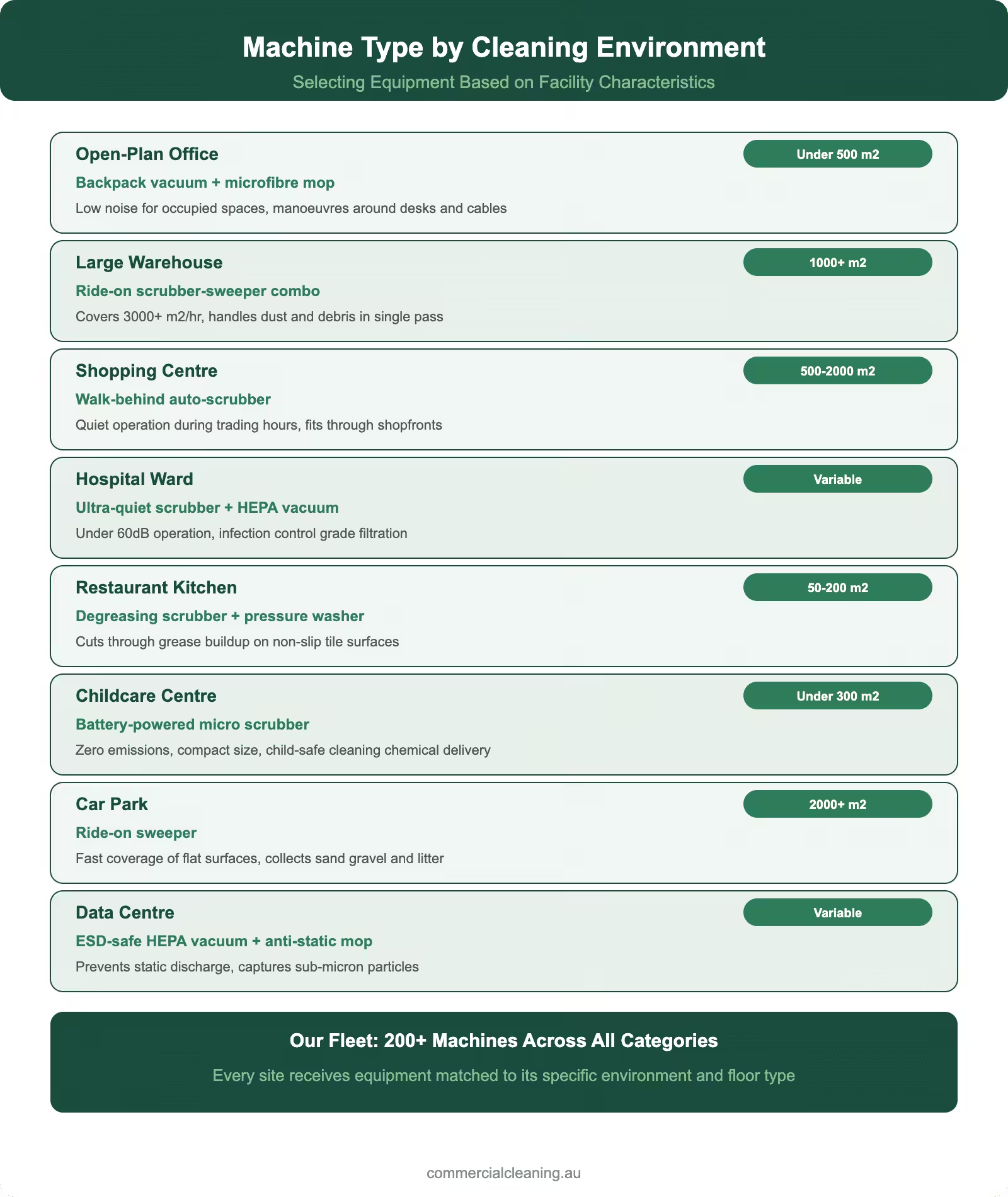
Machine type by cleaning environment infographic showing eight facility types with recommended equipment and area guidelines
Matching Machine Type to Your Cleaning Environment
We recommend different machine configurations based on the specific demands of each commercial environment. For large open-plan offices in Erskineville with carpet tile flooring, our team uses wide-path extraction wands that cover more area per pass and reduce total cleaning time. For narrow corridors and partitioned offices in Newtown, we switch to standard twelve-inch wands that offer better manoeuvrability around furniture and tight corners. The wand width decision seems minor, but our team has measured a thirty percent reduction in total job time when the correct wand is matched to the floor layout.
We also consider noise output when selecting equipment for occupied or sensitive environments. Our team services medical practices and recording studios in Enmore where noise levels must remain below specific thresholds during operating hours. We maintain a quiet-operation portable extractor specifically for these environments that produces less than sixty-five decibels at operating distance. It sacrifices some performance compared to our truck-mounted systems, but the noise reduction makes daytime cleaning possible in environments where our standard equipment would be disruptive.
We factor durability and serviceability into every purchase decision because downtime costs money. Our team has experienced machine failures on site that forced us to reschedule jobs and disappoint clients, and those experiences shaped our equipment selection criteria. We now purchase only machines with readily available spare parts, local service support, and proven track records in commercial environments. We have found that machines designed for the rental market may look similar to professional units but use lighter components that fail under the sustained daily use that commercial cleaning demands.
Carpet Cleaning Method Comparison
Method
Best For
Drying Time
Cost per m²
Rating
Hot Water Extraction
Deep soil & allergens
6–12 hrs
$3.50–$5.50
★★★★★
Dry Compound
Low-moisture zones
30–60 min
$2.80–$4.20
★★★
Encapsulation
Maintenance cleans
20–45 min
$2.00–$3.50
★★★★
Bonnet Cleaning
Surface refresh
1–2 hrs
$1.80–$3.00
★★
Shampooing
Heavy staining
8–24 hrs
$3.00–$4.80
★★★
Common Machine Selection Mistakes We See
Carpet Cleaning Method Comparison requires specific protocols that we tailor to each facility based on its layout, traffic, and compliance requirements. We encounter three recurring mistakes when facility managers attempt to purchase cleaning equipment for in-house use. The first is buying based on price alone. Our team has assessed in-house programs where the facility manager purchased a consumer-grade machine expecting commercial results. These machines lack the suction, temperature, and flow rate to clean effectively, and the carpet deteriorates despite regular cleaning efforts. We have calculated that the carpet replacement cost attributable to inadequate cleaning equipment far exceeds the premium for a commercial-grade machine.
Common Machine Selection Mistakes We See includes specific protocols that we tailor to each facility based on its layout, traffic, and compliance requirements. The second mistake is over-specifying equipment for the actual need. Our team has seen facilities purchase truck-mounted systems when their cleaning requirements could be met with a quality portable extractor. The truck system sits underutilised while the capital expenditure earns no return. We advise matching equipment investment to actual cleaning volume — a facility that needs quarterly deep cleaning is better served by a professional contractor with dedicated equipment than by an in-house system that operates four times per year.
The third mistake is neglecting training. Our team has inherited clients who owned excellent equipment but achieved poor results because their operators had never been trained on proper technique. We offer equipment training as a standalone service because we believe that every commercial carpet cleaning machine, regardless of quality, requires trained operation to deliver its designed performance. A typical professional-grade portable extractor suitable for in-house commercial cleaning in the Erskineville area costs around $1,390 when properly specified for the intended application. For a detailed comparison of extraction versus encapsulation technology, read our next guide in our carpet cleaning series.
Frequently Asked Questions
What vacuum level should a commercial carpet cleaner have? We recommend a minimum of twelve inches of mercury water lift for commercial use, with fifteen inches or above for best moisture recovery. Our team has found that machines below this threshold leave excessive moisture in the carpet, extending drying times and increasing mould risk.
Is water temperature important in carpet cleaning machines? We have measured a significant improvement in soil dissolution above sixty degrees Celsius at the carpet surface. Our team tests temperature at the cleaning head rather than the machine because heat loss through hose runs can reduce delivery temperature by up to twenty degrees.
Should I buy or hire a carpet cleaning machine? We recommend purchasing only if your facility needs cleaning more than monthly. Our team advises that facilities requiring quarterly deep cleaning are better served by professional contractors with dedicated equipment than by in-house machines that sit idle most of the year.
What wand width is best for commercial carpet cleaning? We use wide-path wands for open-plan offices and standard twelve-inch wands for partitioned spaces. Our team has measured a thirty percent reduction in job time when the correct wand width is matched to the floor layout, making this selection an important efficiency consideration.
How much does a good commercial carpet cleaning machine cost? We have found that a properly specified professional-grade portable extractor for commercial use costs approximately $1,390. Our team advises against consumer-grade machines that appear cheaper because their inadequate performance leads to carpet deterioration and higher long-term replacement costs.
Do operators need training on carpet cleaning machines? We strongly recommend formal training for anyone operating commercial carpet cleaning equipment. Our team has inherited clients with excellent machines achieving poor results due to untrained operators. We offer standalone training services because technique matters as much as equipment quality.
How do I evaluate my carpet cleaner contractor equipment? We recommend asking about vacuum levels, water temperature at the cleaning head, and moisture recovery rates. Our team believes these three specifications are the most reliable indicators of cleaning quality and should be part of any contractor evaluation process.
What maintenance does commercial carpet cleaning equipment need? We service our machines quarterly including motor maintenance, brush replacement, and performance calibration. Our team has found that neglected equipment degrades gradually in ways operators may not notice but that measurably affect cleaning results over time.
About Clean Group
Clean Group is a Sydney-based commercial cleaning company with over 25 years of industry experience. Founded by Suji Siv, our team of 50+ trained professionals services offices, warehouses, medical centres, schools, childcare facilities, retail stores, gyms, and strata properties across Sydney, Melbourne, and Brisbane.
We are active members of ISSA and the Building Service Contractors Association of Australia (BSCAA). Our operations align with ISO 9001 (Quality Management), ISO 14001 (Environmental Management), and ISO 45001 (Workplace Health and Safety) standards. We hold membership with the Green Building Council of Australia and use eco-friendly, TGA-registered cleaning products wherever possible.
Every Clean Group cleaner is police-checked, fully insured, and trained in safe work procedures under SafeWork NSW guidelines. We operate 7 days a week, including after-hours and weekend services, to minimise disruption to your business.
Hi, I'm Suji Siv, the founder, CEO, and Managing Director of Clean Group, bringing over 25 years of leadership and management experience to the company. As the driving force behind Clean Group’s growth, I oversee strategic planning, resource allocation, and operational excellence across all departments. I am deeply involved in team development and performance optimization through regular reviews and hands-on leadership.