How to Remove Limescale in Commercial Spaces and Keep it Away
![How to Remove Limescale and Keep it Away[Cleaning Tips]](https://commercialcleaning.au/wp-content/uploads/2021/07/How-to-Remove-Limescale-and-Keep-it-Away-1.avif)
We have battled limescale in commercial buildings across Sydney for over fifteen years, and if there is one thing our team knows for certain it is that limescale never stops forming — you either stay ahead of it with a disciplined prevention programme or you pay significantly more to chisel it off after it has calcified. Our Sydney commercial cleaning services treat limescale removal as a chemistry problem rather than a brute-force exercise, because aggressive scraping and strong acids cause more damage to fixtures and surfaces than the limescale itself. We developed our current protocol after a washroom renovation job in Sutherland where the previous cleaners had used concentrated hydrochloric acid on chrome tapware — the limescale came off but so did the chrome plating, and the entire fitout needed replacement at a cost that dwarfed what proper descaling would have run.
What Limescale Actually Is and Why Sydney Water Creates So Much of It
What Limescale Actually Is and Why Sydney Water Creates So Much of It covers specific protocols that we tailor to each facility based on its layout, traffic, and compliance requirements. We explain limescale chemistry to every new client because understanding the enemy makes prevention much easier to justify financially. Limescale is primarily calcium carbonate deposited when dissolved calcium and magnesium in hard water precipitate out as water evaporates or is heated. Sydney’s water supply varies in hardness depending on the catchment — we have measured total dissolved solids ranging from eighty to over two hundred parts per million across different suburbs, with the Sutherland, Engadine, and Heathcote corridor consistently sitting at the higher end due to the geological profile of the Woronora catchment. Our team uses handheld TDS meters to assess water hardness at each commercial site because this reading directly predicts how aggressive our descaling schedule needs to be. Buildings on harder water supplies can develop visible limescale deposits on glass shower screens within two weeks of cleaning, while softer-water areas might go six to eight weeks between treatments.
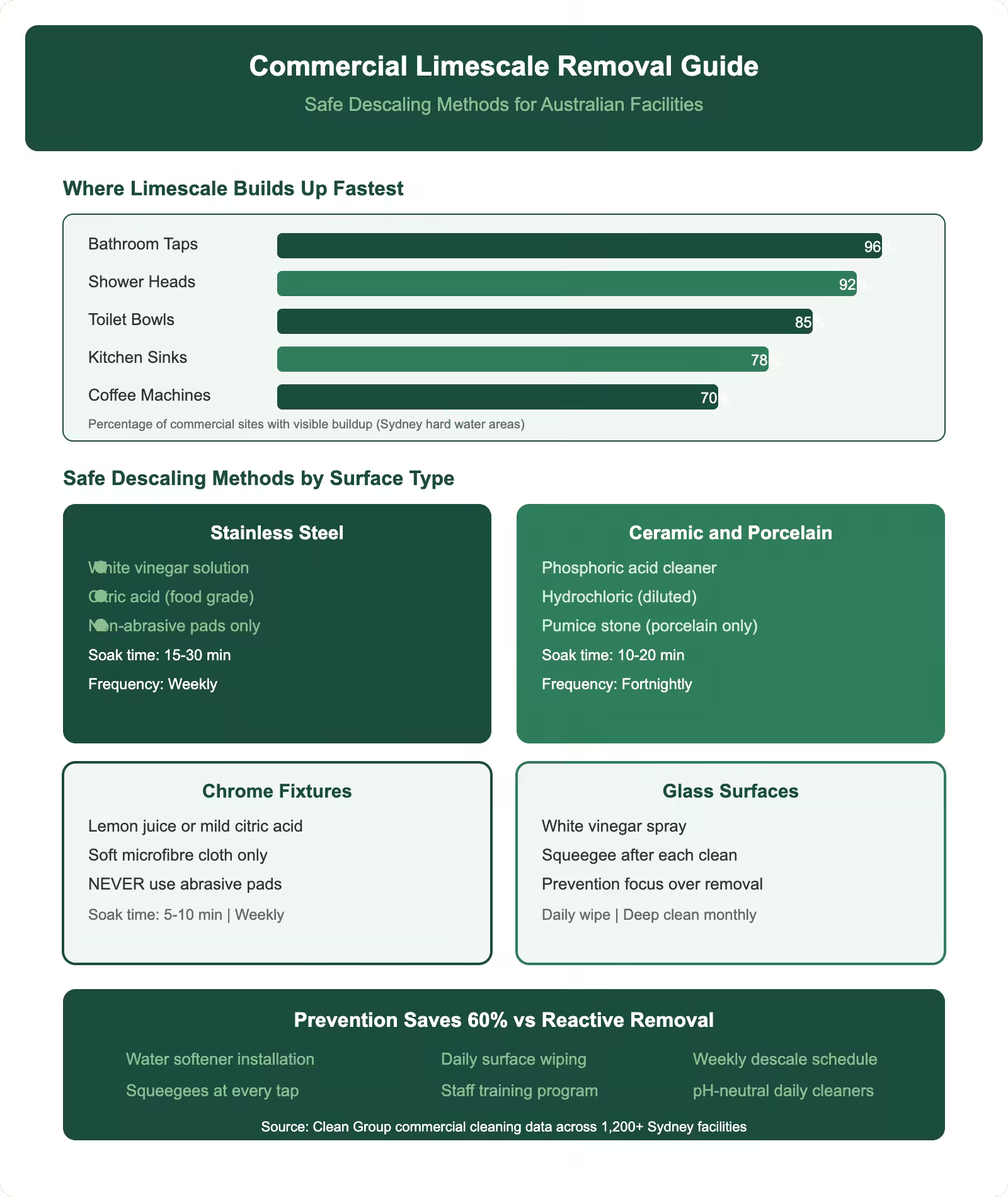
Safe Descaling Methods for Different Commercial Surfaces
We maintain four different descaling formulations in our inventory because no single acid works safely across all surfaces. For ceramic tile and porcelain fixtures, our team uses phosphoric acid at five to ten percent concentration — strong enough to dissolve calcium carbonate efficiently but gentle enough to leave glazed surfaces and grout intact. Stainless steel fixtures get a citric acid treatment that dissolves limescale without pitting or discolouring the metal. Glass shower screens and partitions receive a glycolic acid application that breaks down mineral deposits while leaving silicone seals unaffected — a critical consideration that cheaper operators routinely ignore. Chrome and brass tapware requires the most careful approach because acidic products strip protective platings; we use a chelating agent based on EDTA that sequesters calcium ions without attacking the metal substrate. Our technicians reference AS 2243.8 safety protocols when handling concentrated acid solutions in enclosed spaces like commercial washrooms, because ventilation requirements change dramatically when you are working with volatile compounds in a tiled room with limited airflow.
Office Area Cleaning Frequency Guide
| Area | Daily | Weekly | Monthly | Quarterly |
|---|---|---|---|---|
| Reception & Lobby | Vacuum, mop, wipe | Glass doors, furniture | Deep carpet clean | Window wash |
| Workstations | Surface wipe, bins | Monitor & keyboard | Drawer clean-out | Chair shampoo |
| Kitchen/Breakroom | Bench, sink, floor | Fridge, microwave | Deep degrease | Exhaust fan clean |
| Bathrooms | Full sanitise + restock | Grout scrub | Descale fixtures | Vent clean |
| Meeting Rooms | Table wipe, vacuum | AV equipment dust | Upholstery clean | Carpet extraction |
The Prevention Side — Water Treatment Options That Actually Work
Office Area Cleaning Frequency Guide requires specific protocols that we tailor to each facility based on its layout, traffic, and compliance requirements. We have installed or recommended water treatment systems for over thirty commercial premises across the Sutherland Shire, and the results consistently justify the upfront investment. Electronic water conditioners use electromagnetic fields to alter the crystalline structure of dissolved calcium so it forms aragonite rather than calcite — aragonite does not adhere to surfaces and flushes away with normal water flow. Our team has monitored buildings in Engadine where electronic conditioners reduced visible limescale formation by roughly seventy percent over twelve months. For premises with extremely hard water, we recommend inline water softeners that use ion-exchange resin to physically remove calcium and magnesium from the supply. The resin requires periodic regeneration with salt, but the ongoing cost is modest compared to the labour savings on descaling. We also advise clients on simple behavioural changes — squeegee protocols for glass surfaces after each use, regular wipe-down of tapware, and temperature management in hot water systems since higher temperatures accelerate limescale precipitation dramatically.
Heavy Limescale Removal — When Standard Descaling Is Not Enough
The Prevention Side — Water Treatment Options That Actually Work includes specific protocols that we tailor to each facility based on its layout, traffic, and compliance requirements. We encounter severely calcified fixtures in buildings where maintenance has been neglected for years, and these jobs require a staged approach that goes well beyond spray-and-wipe descaling. Our team applies a poultice of concentrated descaling gel wrapped in cling film to maintain wet contact with the deposit for extended periods — typically four to eight hours for moderate buildup and up to twenty-four hours for severe calcification. Between poultice cycles, we use plastic scrapers and nylon brushes to remove softened deposits without scratching the underlying surface. On a recent job in Heathcote, we restored a set of commercial basin mixers that the building manager had scheduled for replacement — the limescale was over three millimetres thick in places, but three poultice cycles over two days brought the tapware back to factory appearance at roughly fifteen percent of the replacement cost. We document before-and-after conditions with photographs for every heavy descaling job because the visual transformation often convinces facility managers to commit to preventive maintenance contracts that keep the problem from recurring.
Limescale in Commercial Kitchen Equipment and Hot Water Systems
Heavy Limescale Removal — When Standard Descaling Is Not Enough addresses specific protocols that we tailor to each facility based on its layout, traffic, and compliance requirements. We see the worst limescale damage inside equipment that most people never think to inspect — commercial dishwashers, steam ovens, instantaneous hot water units, and cooling towers. Internal limescale buildup reduces heating efficiency, increases energy consumption, and eventually causes catastrophic equipment failure. Our team descales commercial kitchen equipment on a quarterly schedule for most clients, using food-safe citric acid solutions that comply with AS 2243.8 handling requirements for chemicals in food preparation environments. We have seen commercial dishwashers in Sutherland restaurants where the heating elements were completely encased in limescale — the machines were drawing forty percent more electricity than their rated consumption and producing visibly cloudy glassware. A single professional descaling cycle restored normal operation and the energy savings alone paid for our service within two months. We recommend that every commercial kitchen in the Sutherland, Engadine, and Heathcote area budget for quarterly descaling as a non-negotiable maintenance item, especially given the harder water profile in this corridor.
Cost of Professional Limescale Removal and Ongoing Maintenance
Limescale in Commercial Kitchen Equipment and Hot Water Systems targets specific protocols that we tailor to each facility based on its layout, traffic, and compliance requirements. We structure our limescale services into two pricing tiers: reactive removal and preventive maintenance. A reactive deep descaling session for a standard commercial washroom facility in the Sutherland, Engadine, or Heathcote area typically costs around $2,950 and covers a full assessment, multi-surface treatment, fixture restoration, and a written condition report. Our preventive maintenance contracts run at roughly forty percent of that reactive cost per visit because the deposits never accumulate to a level requiring heavy intervention. We schedule preventive descaling monthly for high-traffic facilities with hard water, bimonthly for moderate usage, and quarterly for lower-volume buildings. Our team tracks limescale progression through photographic records at each visit, and we adjust frequencies based on actual deposit rates rather than arbitrary schedules. We have clients in the Sutherland Shire who started on monthly descaling and moved to bimonthly after we installed electronic water conditioners that reduced formation rates enough to safely extend the interval — saving them roughly twenty-five percent on annual maintenance costs while maintaining the same visual standard.
Common Mistakes We See Building Managers Make with Limescale
Cost of Professional Limescale Removal and Ongoing Maintenance focuses on specific protocols that we tailor to each facility based on its layout, traffic, and compliance requirements. We encounter the same handful of errors repeatedly across commercial buildings, and each one makes the limescale problem worse rather than better. Using abrasive scouring pads on glass and chrome creates micro-scratches that give limescale more surface area to grip, accelerating future buildup. Applying undiluted hydrochloric acid destroys grout, corrodes metal fixtures, and releases toxic fumes that violate workplace exposure standards. Mixing different descaling products creates unpredictable chemical reactions — we responded to a call in Engadine where a cleaner mixed a phosphoric acid descaler with a bleach-based bathroom cleaner and produced chlorine gas that evacuated an entire floor of a commercial building. Our team also sees building managers who apply descaler and rinse it off within thirty seconds, which barely begins to dissolve established deposits — most effective descaling requires a minimum of fifteen to twenty minutes contact time, and heavy deposits need hours. We created a one-page guide for our clients’ cleaning staff that covers the five most common limescale mistakes and the correct alternative approach for each.
Common Mistakes We See Building Managers Make with Limescale covers specific protocols that we tailor to each facility based on its layout, traffic, and compliance requirements. When mineral deposits like limescale become the primary stain concern in your facility, our team has developed specialist approaches for tackling stubborn stains professionally across every surface type.
Frequently Asked Questions
What causes limescale buildup in commercial buildings?
Limescale forms when dissolved calcium and magnesium in hard water precipitate as calcium carbonate when water evaporates or is heated. Sydney water hardness varies by catchment — we have measured total dissolved solids from eighty to over two hundred parts per million, with the Sutherland, Engadine, and Heathcote corridor consistently at the higher end due to the Woronora catchment geology.
What is the safest way to remove limescale from chrome fixtures?
We use a chelating agent based on EDTA that sequesters calcium ions without attacking the chrome plating. Acidic products strip protective platings from chrome and brass tapware, which is why we never use phosphoric or hydrochloric acid on plated surfaces. Our team learned this lesson early when acid-damaged fixtures needed complete replacement on a job in Sutherland.
How much does professional limescale removal cost?
A reactive deep descaling session for a standard commercial washroom in the Sutherland area typically costs around $2,950 covering assessment, multi-surface treatment, fixture restoration, and a condition report. Preventive maintenance contracts run at roughly forty percent of that per visit since deposits never reach levels requiring heavy intervention.
Can water treatment systems prevent limescale from forming?
We have installed electronic water conditioners that reduce visible limescale formation by roughly seventy percent over twelve months. For extremely hard water, inline water softeners using ion-exchange resin physically remove calcium and magnesium. We have monitored buildings in Engadine where these systems allowed us to extend descaling intervals and save clients twenty-five percent on annual maintenance.
How often should commercial washrooms be descaled?
We schedule monthly descaling for high-traffic facilities with hard water, bimonthly for moderate usage, and quarterly for lower-volume buildings. Our team tracks limescale progression through photographs at each visit and adjusts frequencies based on actual deposit rates. Some clients have safely extended intervals after installing water conditioners that reduced formation rates.
Why should I avoid using hydrochloric acid on limescale?
Undiluted hydrochloric acid destroys grout, corrodes metal fixtures, and releases toxic fumes that violate workplace exposure standards under AS 2243.8. We responded to a call in Engadine where mixing a phosphoric acid descaler with bleach produced chlorine gas that evacuated an entire commercial floor. Our team uses surface-appropriate acids at controlled concentrations with proper ventilation protocols.
Can severely calcified fixtures be restored or do they need replacement?
We have restored fixtures that building managers had scheduled for replacement using staged poultice applications over twenty-four to forty-eight hours. On a recent job in Heathcote, we brought basin mixers with limescale over three millimetres thick back to factory appearance at roughly fifteen percent of the replacement cost. We document before-and-after conditions photographically for every heavy descaling job.
Does limescale affect commercial kitchen equipment performance?
Internal limescale buildup reduces heating efficiency, increases energy consumption by up to forty percent, and eventually causes equipment failure. We have seen commercial dishwashers completely encased in limescale producing cloudy glassware and drawing far more electricity than rated. Quarterly descaling with food-safe citric acid solutions restores normal operation and the energy savings typically pay for the service within two months.
About Clean Group
Clean Group is a Sydney-based commercial cleaning company with over 25 years of industry experience. Founded by Suji Siv, our team of 50+ trained professionals services offices, warehouses, medical centres, schools, childcare facilities, retail stores, gyms, and strata properties across Sydney, Melbourne, and Brisbane.
We are active members of ISSA and the Building Service Contractors Association of Australia (BSCAA). Our operations align with ISO 9001 (Quality Management), ISO 14001 (Environmental Management), and ISO 45001 (Workplace Health and Safety) standards. We hold membership with the Green Building Council of Australia and use eco-friendly, TGA-registered cleaning products wherever possible.
Every Clean Group cleaner is police-checked, fully insured, and trained in safe work procedures under SafeWork NSW guidelines. We operate 7 days a week, including after-hours and weekend services, to minimise disruption to your business.
About the Author

Stephen Matthews
Hi, my name is Steve. I have been working as a Regional Operations Manager in Sydney Clean Group for almost four years now and manage a team of 10. I have more than three decades of experience in the commercial cleaning industry. My responsibilities include the day-to-day management of cleaning operations, planning, online quotation to clients, managing cleaners’ performance, collecting clients\' feedback, and ensuring proper & regular maintenance of cleaning equipment. Get in touch for a quick chat about your cleaning needs.
Read More About Stephen
