We have developed cleaning checklists for childcare centres across Sydney for over a decade, and we can tell you that the difference between a centre with structured daily, weekly, and monthly routines and one that cleans reactively is dramatic and measurable. Our team manages cleaning programmes for dozens of early childhood facilities, and the centres that follow our checklist framework consistently achieve higher National Quality Standard ratings for their physical environment assessments. As childcare centre cleaning specialists, we designed our checklist system specifically for the Australian childcare context — addressing the unique hygiene challenges that arise when you have infants, toddlers, and preschoolers sharing spaces throughout the day. We recently implemented our full checklist programme at a centre in Lidcombe, and their compliance audit scores improved from sixty-eight percent to ninety-four percent within the first quarter.
Our checklist approach is built on the principle that childcare cleaning must be predictable, documented, and verifiable. We have seen too many centres where cleaning happens inconsistently — a bathroom gets a thorough clean one day and a cursory wipe the next, or outdoor play equipment goes weeks without disinfection because nobody is tracking the schedule. We eliminated this variability by creating structured checklists that specify exactly what gets cleaned, how it gets cleaned, what products are used, and how completion is verified. Our Auburn and Berala childcare clients tell us that having this structure gives their educators confidence that the environment is safe, which allows them to focus on their primary role of supporting children’s learning and development.
Download Your Childcare Centre Cleaning Checklist (PDF) A printable daily, weekly, and monthly checklist covering bathrooms, nappy areas, kitchens, play equipment, rest mats, and compliance documentation. Download PDF Checklist
Daily Cleaning Checklist for Childcare Centres
We structure our daily childcare cleaning checklist around the rhythm of the centre’s operating day because different tasks need to happen at different times to be effective. Our pre-opening checklist covers bathroom sanitisation, nappy change area disinfection, kitchen and food preparation surface cleaning, and a walkthrough inspection of all rooms to identify any overnight issues like pest activity or water ingress. We complete these tasks before the first child arrives because starting the day with verified-clean surfaces establishes the hygiene baseline that all subsequent cleaning maintains throughout the day.
Our during-the-day checklist addresses the continuous contamination that occurs when children are present. We schedule bathroom checks and cleaning every ninety minutes, nappy change station disinfection after every use, high-touch surface wipe-downs at morning tea, lunch, and afternoon tea transitions, and immediate spot cleaning for any spills or bodily fluid incidents. We have found that the ninety-minute bathroom cycle is critical in centres with toilet-training toddlers — our Lidcombe clients discovered that extending this interval to two hours resulted in visibly soiled bathroom surfaces that created both hygiene and slip risks.
Our end-of-day checklist is the most detailed daily task set and covers full-room cleaning of every occupied space. We vacuum or mop all floors, disinfect all high-touch surfaces including door handles, light switches, and furniture, clean and sanitise all bathroom fixtures, empty and reline all waste receptacles, and clean the kitchen to food-safe standards. We also conduct a daily compliance check against AS 4586, which establishes slip resistance requirements for pedestrian surfaces — we verify that all floor surfaces are dry, free from contamination, and meeting the slip resistance standards that protect small children who are still developing their balance and coordination. Our operatives in Auburn complete the full end-of-day checklist in approximately ninety minutes for a standard four-room centre.
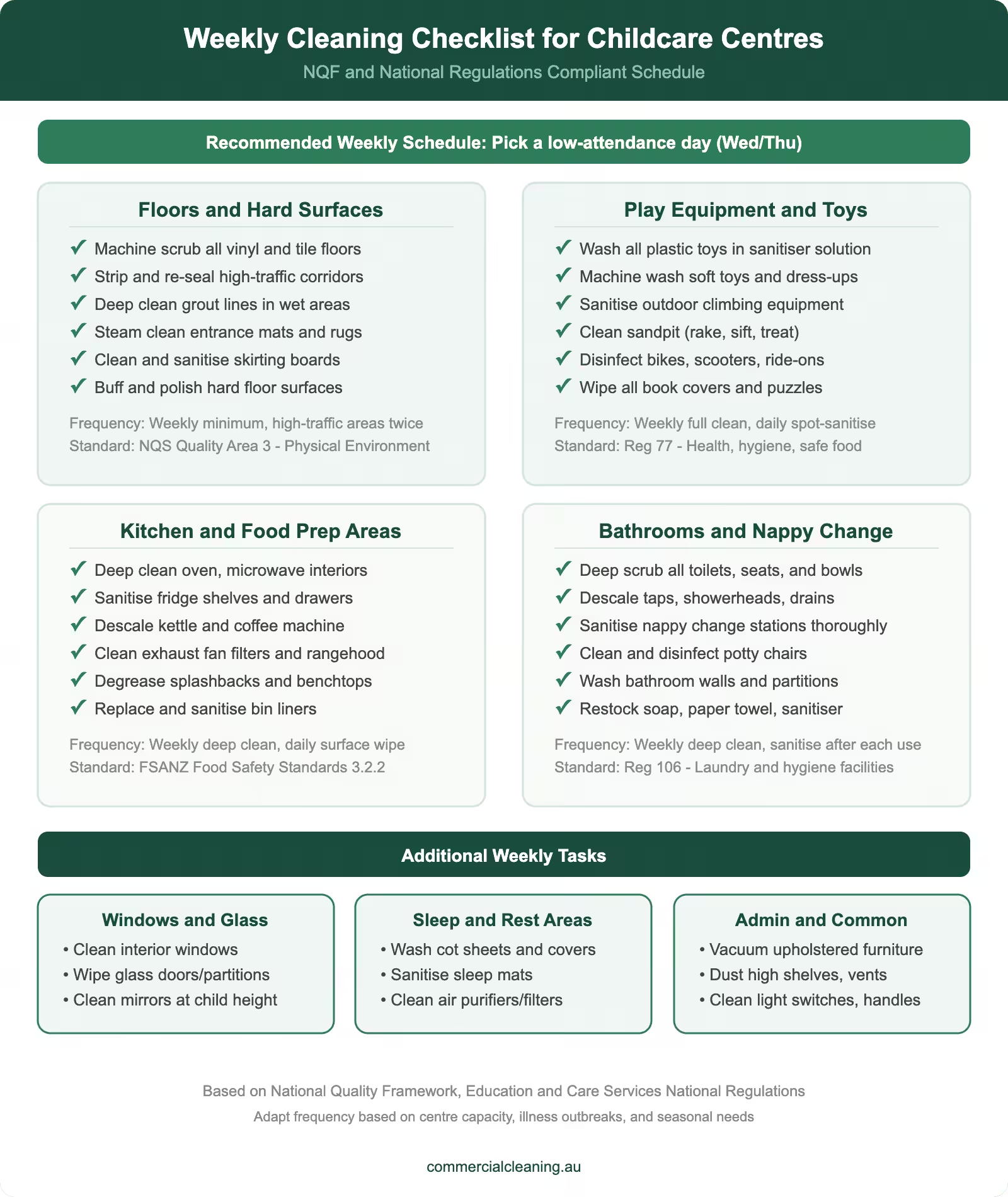
Weekly cleaning checklist infographic for childcare centres showing NQF compliant tasks for floors toys kitchen bathrooms and common areas
Weekly Cleaning Checklist for Childcare Centres
We schedule weekly tasks for cleaning activities that maintain facility standards beyond what daily cleaning can achieve but do not require the intensity of monthly deep cleaning. Our weekly childcare checklist includes thorough cleaning of all soft furnishings — cushions, fabric mats, and reading corner textiles — using either steam cleaning or approved fabric sanitiser spray. We also schedule weekly cleaning of toy storage bins and shelving, window sill dusting and cobweb removal, detailed cleaning of kitchen appliances including microwaves, ovens, and refrigerator interiors, and a detailed outdoor play equipment wipe-down covering slides, climbing frames, sandpit surrounds, and ride-on toys.
We have found that outdoor play equipment cleaning is one of the most commonly neglected weekly tasks in childcare centres, yet these surfaces accumulate significant contamination from multiple sources — bird droppings, insect activity, environmental pollutants, and the children themselves. Our Berala childcare clients were shocked when we conducted ATP testing on their outdoor climbing frame and recorded readings three times higher than their indoor bathroom door handles. We now include outdoor equipment disinfection as a non-negotiable weekly item, and our teams use UV-stable disinfectant products that maintain efficacy despite sun exposure between cleaning cycles.
Our weekly checklist also includes a facility condition inspection where our team leader walks through every room and outdoor area looking for maintenance issues that could affect hygiene or safety. We check for peeling paint, damaged flooring, leaking taps, broken fixtures, and any structural issues that could harbour pests or create cleaning difficulties. We report findings to centre management within twenty-four hours with photographs and recommended actions. Our Lidcombe clients have told us that this proactive identification system catches maintenance issues weeks before they would otherwise be noticed, preventing small problems from becoming expensive repairs.
Childcare Centre Cleaning Schedule
Area
After Each Use
Daily
Weekly
Required Standard
Nappy Change Station
Full sanitise
Deep clean + restock
Replace liners
National Reg 106
Play Equipment
Wipe high-touch
Full disinfect
Soak clean small items
AS/NZS 4422
Kitchen/Food Prep
Bench sanitise
Full deep clean
Appliance strip-down
Food Standards Code
Sleep/Cot Room
Linen change
Vacuum + mop
Mattress sanitise
National Reg 110
Bathroom (Child)
After group use
3× deep sanitise
Grout + tile scrub
National Reg 106
Monthly Deep Cleaning Checklist for Childcare Centres
Childcare Centre Cleaning Schedule requires specific protocols that we tailor to each facility based on its layout, traffic, and compliance requirements. We design our monthly deep cleaning programme to address the accumulated contamination that daily and weekly cleaning cannot fully resolve. Our monthly childcare checklist includes full carpet extraction cleaning in carpeted rooms, hard floor stripping and resealing where floor condition warrants, deep cleaning of all ventilation grilles and ceiling fans, detailed window cleaning inside and out, mattress and rest mat sanitisation, and thorough cleaning of storage areas and cupboard interiors that are not part of daily or weekly schedules.
Monthly Deep Cleaning Checklist for Childcare Centres includes specific protocols that we tailor to each facility based on its layout, traffic, and compliance requirements. We treat rest mat and mattress sanitisation as one of the most important monthly tasks because these items have prolonged direct contact with children’s skin and respiratory zones during sleep periods. Our sanitisation protocol involves vacuuming both sides of every mat, applying hospital-grade disinfectant spray to all surfaces, allowing full contact time, and then wiping with clean microfibre cloths. We inspect every mat for damage during this process and flag any mats with torn covers or compromised waterproofing for replacement because damaged mats harbour bacteria in places that surface disinfection cannot reach. Our monthly mat sanitisation programme across our Auburn contracts processes between forty and sixty mats per centre.
We also conduct monthly deep cleaning of sandpits, which requires raking and turning the sand to expose subsurface contamination, removing any foreign objects or contaminated material, and applying approved sand sanitiser that eliminates bacterial and fungal growth without creating chemical residues that could affect children’s skin. We invested approximately $1,720 in specialist sandpit maintenance equipment across our Lidcombe, Auburn, and Berala childcare contracts — an investment that allows us to maintain sandpit hygiene at a level that satisfies the most stringent health inspector expectations.
Checklist Documentation and Compliance Verification
We document every checklist completion in our digital system because childcare centres face rigorous regulatory scrutiny and need verifiable cleaning records to demonstrate compliance during assessment visits. Our digital checklists capture operative identity, task completion timestamps, product batch numbers, and any exceptions or deviations from standard procedure. We retain these records for seven years and make them available to centre management through our secure client portal. We have supported multiple centres through National Quality Standard assessments where our cleaning documentation was specifically cited as evidence of exceeding the quality standard for physical environment management.
Our verification system goes beyond checklist completion to include periodic objective testing that confirms cleaning outcomes match expected standards. We conduct monthly ATP bioluminescence testing on a random sample of surfaces from each checklist category, and we benchmark our results against published early childhood environment hygiene standards. We share these results with centre directors in our monthly performance reports alongside checklist compliance rates, ensuring complete transparency about both the process and the outcomes of our cleaning programme. For more on how often different centres should be cleaned, read our guide on cleaning frequency planning.
Frequently Asked Questions
What should be included in a daily childcare cleaning checklist?
We include pre-opening bathroom and nappy change area sanitisation, kitchen surface cleaning, ninety-minute bathroom cleaning cycles during operating hours, high-touch surface disinfection at meal transitions, immediate spot cleaning for spills, and detailed end-of-day room cleaning covering floors, surfaces, bathrooms, waste receptacles, and kitchen areas.
How often should outdoor play equipment be cleaned?
We clean outdoor play equipment weekly at minimum, using UV-stable disinfectant products that maintain efficacy between cleaning cycles. Our ATP testing has shown outdoor climbing frames carry contamination levels three times higher than indoor bathroom door handles, making regular disinfection necessary for child safety.
What AS standards apply to childcare centre cleaning?
We reference AS 4586 for slip resistance requirements on pedestrian surfaces, which is particularly important in childcare settings where young children are developing balance and coordination. We verify that all floor surfaces meet slip resistance standards as part of our daily compliance checks after cleaning.
How do you handle rest mat and mattress sanitisation?
We sanitise rest mats monthly by vacuuming both sides, applying hospital-grade disinfectant with full contact time, and wiping with clean microfibre cloths. We inspect every mat for damage during this process and flag any with torn covers or compromised waterproofing for replacement since damaged mats harbour bacteria that surface disinfection cannot reach.
How much does a structured childcare cleaning programme cost?
We price childcare cleaning programmes based on centre size, number of rooms, and service level requirements. We invested approximately $1,720 in specialist equipment across our Lidcombe, Auburn, and Berala contracts for items like sandpit maintenance tools and steam cleaning equipment. We provide itemised quotes that allow centre directors to select service levels matching their budget and compliance requirements.
How do your checklists help with NQS assessments?
Our digital checklists capture operative identity, completion timestamps, product batch numbers, and any exceptions, retained for seven years. Multiple centres have had our documentation specifically cited during National Quality Standard assessments as evidence of exceeding the quality standard for physical environment management.
What happens if a cleaning task is missed?
Our digital system flags incomplete checklist items in real time and escalates missed tasks to our supervisor immediately. We investigate every missed task to determine whether it was a scheduling issue, resource constraint, or training gap, and we implement corrective action within twenty-four hours. We report any missed tasks and their resolution to centre management transparently.
Can your checklists be customised for our centre?
We customise every checklist to match the specific layout, room configuration, and operational requirements of each centre. We conduct a detailed facility assessment before building the checklist, mapping every room, surface, and fixture to determine appropriate cleaning frequencies and methods. We review and update checklists annually or whenever the centre’s physical environment changes.
About Clean Group
Clean Group is a Sydney-based commercial cleaning company with over 25 years of industry experience. Founded by Suji Siv, our team of 50+ trained professionals services offices, warehouses, medical centres, schools, childcare facilities, retail stores, gyms, and strata properties across Sydney, Melbourne, and Brisbane.
We are active members of ISSA and the Building Service Contractors Association of Australia (BSCAA). Our operations align with ISO 9001 (Quality Management), ISO 14001 (Environmental Management), and ISO 45001 (Workplace Health and Safety) standards. We hold membership with the Green Building Council of Australia and use eco-friendly, TGA-registered cleaning products wherever possible.
Every Clean Group cleaner is police-checked, fully insured, and trained in safe work procedures under SafeWork NSW guidelines. We operate 7 days a week, including after-hours and weekend services, to minimise disruption to your business.
Hi, I'm Suji Siv, the founder, CEO, and Managing Director of Clean Group, bringing over 25 years of leadership and management experience to the company. As the driving force behind Clean Group’s growth, I oversee strategic planning, resource allocation, and operational excellence across all departments. I am deeply involved in team development and performance optimization through regular reviews and hands-on leadership.