We have managed strata bin rooms across Sydney for over a decade, and we can tell you that a poorly maintained waste area causes more headaches for body corporates than almost any other shared facility. Waste services Sydney in multi-unit buildings demands a structured approach that covers hygiene, resident compliance, and council requirements. Our team has cleaned everything from six-unit walk-ups in Cronulla to 300-apartment towers in Miranda, and the challenges are surprisingly consistent once you know what to look for.
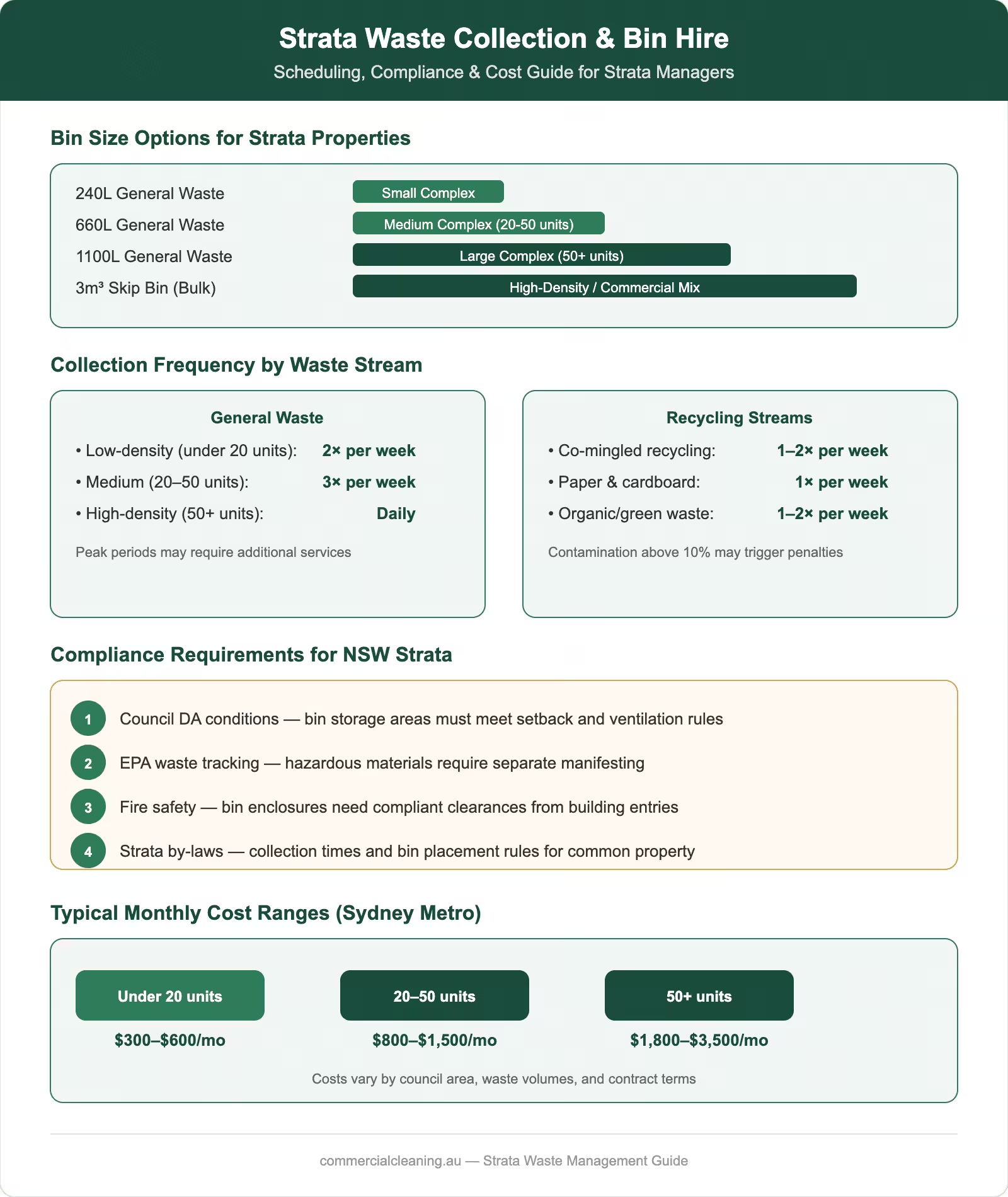
Strata waste collection and bin hire guide showing bin sizes, collection frequency, compliance requirements and monthly costs for NSW strata properties
Strata Waste Collection and Bin Hire: Scheduling and Compliance Guide
Strata Waste Collection and Bin Hire covers specific protocols that we tailor to each facility based on its layout, traffic, and compliance requirements. A strata bin room is the dedicated waste storage area within a multi-unit residential or mixed-use building. We have seen these range from a small alcove under a stairwell to purpose-built rooms with mechanical ventilation, wash-down bays, and separate access for collection trucks. The bin room sits at the intersection of public health, building compliance, and resident satisfaction. When we audit a new strata property, our first stop is always the waste area because its condition tells us everything about how well the building is maintained overall.
Body corporates sometimes treat the bin room as an afterthought, but we have learned through experience that neglecting this space leads to pest infestations, odour complaints, and even council fines. Our team responded to one emergency call-out at a Caringbah complex where cockroach activity had spread from an uncleaned bin room into ground-floor apartments within weeks. That situation cost the owners corporation significantly more than a regular cleaning schedule would have.
Council Regulations for Strata Waste Management in Sydney
Every local government area in Sydney has its own waste collection policies, and we have worked across enough councils to know the differences can catch strata managers off guard. Our team regularly liaises with council waste officers on behalf of our clients, and we have found that proactive communication prevents most compliance issues before they escalate. In the Sutherland Shire, for example, we helped a Cronulla building transition from individual kerbside collection to a shared bulk bin arrangement after the council changed its multi-unit waste policy in 2023.
We always advise strata committees to request a waste management plan review with their local council at least once a year. Our experience shows that councils are generally willing to work with buildings that demonstrate a genuine effort to manage waste properly. We have also noticed that council inspectors pay close attention to bin room ventilation standards. Under AS 1668.1, mechanical ventilation systems in enclosed waste storage areas must maintain specific air change rates to control odour and airborne contaminants. We have seen buildings receive improvement notices because their bin room exhaust fans were undersized or had failed without anyone noticing.
Our team keeps a compliance checklist that we update whenever council regulations change. We have found this approach saves our strata clients both time and money because they catch issues during routine cleans rather than waiting for an inspection. One Miranda complex we service avoided a potential $2,070 penalty after our cleaners flagged a blocked ventilation grille during a scheduled visit.
Strata Common Area Maintenance Schedule
Area
Daily
Weekly
Monthly
Annual
Lobby & Foyer
Sweep, mop, glass
Deep mop, dust lights
Floor machine scrub
Strip & reseal
Lifts & Doors
Wipe panels + buttons
Full interior detail
Track & rail degrease
Deep restoration
Car Park
Litter patrol
Sweep + line check
Pressure wash bays
Full pressure + repaint
Pool/Gym
Sanitise surfaces
Deep clean equipment
Grout scrub
Full tile restoration
Bin Room
Hose down, deodorise
Deep scrub walls
Pest treatment
Full sanitise + repaint
Bin Room Design Requirements
Strata Common Area Maintenance Schedule requires specific protocols that we tailor to each facility based on its layout, traffic, and compliance requirements. We have assessed hundreds of strata bin rooms over the years, and we can group them into two broad categories: those that were designed with waste management in mind, and those where the bin room was clearly an afterthought squeezed into whatever space remained after the car park was laid out. Our team prefers working with purpose-built rooms because they allow proper cleaning access, but we have developed techniques for maintaining even the most awkwardly designed spaces.
A well-designed bin room needs impervious flooring with a graded fall to a floor waste connected to the sewer. We have cleaned rooms where the floor was bare concrete with no drainage, and the difference in hygiene outcomes is stark. Our cleaners need to pressure-wash bin rooms regularly, and without drainage that water has nowhere to go. We always recommend epoxy-coated floors with coved skirting that eliminates the gap between the floor and wall where organic matter accumulates.
Ventilation is equally important. We mentioned AS 1668.1 earlier, and in our experience the buildings that comply with this standard have significantly fewer odour complaints. Our team has worked with strata managers in Caringbah to retrofit exhaust systems in older buildings, and the improvement in air quality is immediate. We also recommend smooth, washable wall surfaces rather than painted blockwork, which traps grease and becomes increasingly difficult to clean over time. Adequate lighting matters too because our cleaners need to see what they are dealing with, and dark corners become breeding grounds for pests.
Waste Stream Separation in Multi-Unit Buildings
Waste Stream Separation in Multi-Unit Buildings addresses specific protocols that we tailor to each facility based on its layout, traffic, and compliance requirements. We have observed that the biggest operational challenge in strata bin rooms is getting residents to sort their waste correctly. Our team encounters contamination issues in nearly every building we service, and we have learned that the solution is almost always a combination of clear signage, well-positioned bins, and consistent enforcement by the strata committee. We helped one Cronulla apartment complex reduce contamination in their yellow-lid recycling bins by over 40 percent simply by installing colour-coded signage at eye level above each bin bay.
Our approach to waste stream separation starts with an audit of what actually goes into each bin. We have found that many buildings have the right bins but in the wrong configuration. General waste and recycling bins should be side by side, and we always recommend placing organic waste bins closest to the entry point because residents are less likely to walk past other bins to reach them. Our cleaners report back on contamination patterns during each service, and we use that data to advise strata managers on where to focus their resident education efforts.
We have also noticed that buildings with chute systems present unique challenges. Our team services several high-rise complexes in Miranda where the chute feeds directly into a compactor in the bin room. These systems require strict maintenance schedules because a blocked chute can cause waste to back up through multiple floors. We always check chute doors and compactor seals during our bin room cleans because small issues become major problems very quickly in these systems.
Bin Room Cleaning and Pest Control
We clean strata bin rooms on schedules ranging from weekly to daily depending on the size of the building and the volume of waste generated. Our standard process involves removing all bins from the room, pressure-washing the floor and walls, applying a hospital-grade disinfectant, and then deodorising the space before returning the bins to their positions. We have refined this process over years of trial and error, and our team knows that skipping any step compromises the result.
Pest control is inseparable from bin room cleaning in our experience. We have seen buildings spend thousands on pest treatments while ignoring the bin room, which is almost always the source of the problem. Our cleaners are trained to identify early signs of pest activity including droppings, grease trails, and egg casings. We report these findings to the strata manager immediately because early intervention is always cheaper than dealing with an established infestation. In one Caringbah building we service, our regular cleaning regime eliminated a recurring cockroach problem that three separate pest control companies had failed to resolve permanently.
We also pay close attention to bin condition during our cleans. Cracked or damaged bins harbour bacteria and make effective cleaning impossible. Our team flags bins that need replacement, and we have found that strata committees appreciate this proactive approach because it prevents the gradual deterioration that leads to health complaints from residents.
Common Bin Room Problems and Solutions
We encounter the same set of problems across most strata bin rooms we service, and over the years our team has developed practical solutions for each one. Overflowing bins are the most common complaint we hear from strata managers. We have found that this usually stems from undersized bin allocations rather than excessive waste generation. Our recommendation is to conduct a waste audit over two full collection cycles before requesting additional bins from the council or waste contractor. We helped a Cronulla building reduce overflow incidents by simply rearranging their existing bins to improve access and adding a second collection day for recycling.
Illegal dumping is another persistent issue. We have cleaned out mattresses, furniture, white goods, and even construction materials from strata bin rooms. Our team documents these items photographically during each service so the strata manager has evidence for resident communications or, if necessary, by-law enforcement. We always advise installing a camera in the bin room entrance because in our experience the dumping stops almost immediately once residents know they are being recorded.
Odour problems rank high on our list of common issues, particularly during summer. We have found that the combination of proper ventilation compliant with AS 1668.1, regular pressure washing, and enzymatic deodorising treatments keeps odour under control even in large buildings. Our team uses commercial-grade enzyme products that break down organic residue at a molecular level rather than simply masking the smell. We have tested dozens of products over the years and we know which ones actually work in the humid conditions typical of enclosed bin rooms.
Body Corporate Responsibilities
We work closely with strata managers and body corporate committees, and we have noticed that many are unsure about exactly where their waste management responsibilities begin and end. Our experience across dozens of strata schemes has taught us that the owners corporation is responsible for maintaining the bin room as common property, including cleaning, pest control, and ensuring the space meets health and safety standards. We always encourage committees to include bin room maintenance as a specific line item in their annual budget rather than treating it as a miscellaneous expense.
Our team has also helped strata managers draft by-laws related to waste disposal. We have seen effective by-laws that specify which waste streams residents must separate, set out penalties for contamination, and establish procedures for disposing of bulky items. We contributed our practical knowledge to these documents because we see firsthand what happens when the rules are unclear. In our experience, clear by-laws backed by consistent enforcement reduce bin room issues by a significant margin.
We have also observed that strata managers who engage their cleaning provider in committee meetings get better outcomes. Our team can provide quarterly reports on bin room condition, contamination levels, and maintenance issues that help committees make informed decisions about waste management spending. We find that transparency builds trust and leads to better cooperation between residents, management, and service providers.
Bin Sizing for Strata Buildings
We have helped many strata committees work out the right bin sizes and quantities for their buildings, and we can say from experience that getting this wrong is one of the most common causes of bin room chaos. Our general guideline is to allow approximately 120 litres of general waste capacity per unit per week, plus a similar volume for recycling, but we always adjust this based on the actual waste patterns we observe during our cleaning services. A family-oriented building in Miranda will generate different waste volumes compared to a complex of studio apartments in Cronulla.
We recommend that strata managers request a waste audit from their collection provider at least once every two years. Our team provides informal audit data as part of our regular service, noting when bins are consistently overflowing or when particular waste streams are under-utilised. We have found that right-sizing bin allocations reduces overflow, contamination, and the frequency of special collections, all of which save the owners corporation money over time.
Best Practices for Strata Bin Room Management
We have distilled our years of strata bin room experience into a set of practices that we recommend to every building we service. Our first piece of advice is always to establish a regular cleaning schedule and stick to it. We have seen buildings that start with good intentions but let the schedule slip during quieter periods, and the deterioration is rapid once cleaning becomes inconsistent. Our team maintains strict schedules for all our strata clients because we know that regularity is the foundation of effective waste area management.
We also strongly recommend a seasonal deep clean in addition to regular maintenance. Our team performs these typically at the start of summer and again in autumn, focusing on areas that accumulate grime over time such as behind and underneath bins, ceiling exhaust grilles, and door hardware. We have found that these deep cleans extend the life of bin room infrastructure and prevent the kind of build-up that attracts pests and generates persistent odours.
Communication with residents is something we cannot do on behalf of the strata committee, but we always encourage it. Our experience shows that buildings where management actively communicates about waste expectations have cleaner bin rooms and fewer compliance issues. We have seen simple measures like a quarterly newsletter reminder about waste sorting rules make a measurable difference to contamination rates in buildings we service across the Sutherland Shire.
Managing your strata bin room effectively is just one part of a broader waste reduction strategy. We have helped many of our commercial and strata clients go beyond basic compliance to actively reduce the volume of waste they generate, saving money on collection fees and contributing to better environmental outcomes. Our guide to waste provider tips covers practical steps that any building or business can implement to select the right waste partner.
Frequently Asked Questions
How often should a strata bin room be professionally cleaned? We recommend a minimum of weekly cleaning for buildings with more than 20 units. Our team services many larger complexes two to three times per week during summer when waste decomposes faster and odour becomes a bigger concern. We have found that buildings on a regular weekly schedule experience far fewer pest and odour complaints than those cleaned fortnightly or less.
What are the ventilation requirements for strata bin rooms in Sydney? Under AS 1668.1, enclosed bin rooms require mechanical ventilation that provides adequate air changes to control odour and contaminants. We have seen councils issue improvement notices to buildings where ventilation does not meet this standard. Our team always checks exhaust fans and grilles during routine cleans and reports any performance issues to the strata manager immediately.
Who is responsible for bin room maintenance in a strata scheme? The owners corporation is responsible for maintaining the bin room as common property. We work with strata managers to confirm this obligation is met through regular professional cleaning and maintenance reporting. Our experience shows that committees who budget specifically for bin room upkeep avoid the larger costs associated with neglect.
How can we reduce contamination in our recycling bins? We have helped buildings reduce recycling contamination by recommending clear colour-coded signage at eye level, repositioning bins so recycling is more accessible, and running resident awareness campaigns. Our cleaners also report contamination patterns during each service so management can target specific issues through resident communications.
What size bins does a strata building need? We generally recommend around 120 litres of general waste capacity per unit per week as a starting point, with similar capacity for recycling. However, we always adjust this based on actual waste volumes we observe during our cleaning services. A waste audit conducted over two full collection cycles gives the most accurate picture of what your building actually needs.
How do you handle illegal dumping in strata bin rooms? Our team photographs and documents any illegally dumped items during each service visit. We provide this documentation to the strata manager so they have evidence for resident communications or by-law enforcement. We have found that installing a camera at the bin room entrance is the most effective deterrent and typically stops dumping almost immediately.
Can professional cleaning really solve persistent odour problems? We have eliminated persistent odour issues in many strata bin rooms using a combination of regular pressure washing, enzymatic deodorising treatments, and ensuring ventilation systems comply with AS 1668.1. Our enzyme-based products break down organic residue at a molecular level rather than masking smells. We have tested dozens of commercial deodorising products and we know which formulations work in humid bin room environments.
How much does professional strata bin room cleaning cost? Our pricing depends on the size of the bin room, the number of bins, and the frequency of service. We have found that most strata buildings spend between $150 and $400 per month on professional bin room cleaning. We always recommend getting a site-specific quote because every building is different, and we tailor our service to match the actual needs of each property.
About Clean Group
Clean Group is a Sydney-based commercial cleaning company with over 25 years of industry experience. Founded by Suji Siv, our team of 50+ trained professionals services offices, warehouses, medical centres, schools, childcare facilities, retail stores, gyms, and strata properties across Sydney, Melbourne, and Brisbane.
We are active members of ISSA and the Building Service Contractors Association of Australia (BSCAA). Our operations align with ISO 9001 (Quality Management), ISO 14001 (Environmental Management), and ISO 45001 (Workplace Health and Safety) standards. We hold membership with the Green Building Council of Australia and use eco-friendly, TGA-registered cleaning products wherever possible.
Every Clean Group cleaner is police-checked, fully insured, and trained in safe work procedures under SafeWork NSW guidelines. We operate 7 days a week, including after-hours and weekend services, to minimise disruption to your business.
Hi, I'm Suji Siv, the founder, CEO, and Managing Director of Clean Group, bringing over 25 years of leadership and management experience to the company. As the driving force behind Clean Group’s growth, I oversee strategic planning, resource allocation, and operational excellence across all departments. I am deeply involved in team development and performance optimization through regular reviews and hands-on leadership.