We approach every cleaning job as a science problem, not a labour task. The difference between a building that looks clean and one that is microbiologically verified as clean comes down to understanding chemistry, microbiology, and materials science — disciplines our Darlinghurst, Kings Cross, Potts Point, and Rushcutters Bay operations apply daily. As commercial cleaning sydney providers with over twenty years of evidence-based practice, we commissioned a $1,650 scientific analysis of our cleaning protocols in 2024 to quantify exactly how and why each method works at the molecular level.
Surface Chemistry: Why Different Materials Demand Different Approaches
We clean over forty different surface types across our inner-east Sydney portfolio and each one presents a unique chemical interaction challenge. Polished marble in Darlinghurst heritage lobbies is calcium carbonate — alkaline cleaners dissolve it, acid cleaners etch it, and only pH-neutral surfactant solutions safely lift soil without degrading the polish. Stainless steel in commercial kitchens across Potts Point forms a passive chromium oxide layer that resists corrosion, but chloride-based sanitisers (including common bleach) pit the surface if left beyond the recommended sixty-second contact time. Our crews carry laminated surface-chemistry reference cards that specify the exact product, dilution, contact time, and rinse protocol for every material they encounter.
Our $1,650 scientific analysis mapped chemical interactions between our cleaning products and the fourteen most common commercial surface types in Darlinghurst buildings. The results drove three significant protocol changes: we switched from alkaline to enzymatic pre-treatment for protein-based soil on vinyl floors, we reduced sodium hypochlorite contact time on grouted tiles from five minutes to ninety seconds (the extra time provided no additional microbial kill but was degrading grout sealer), and we introduced a silicone-based protective film for stainless steel surfaces that extends the interval between deep cleans by forty per cent.
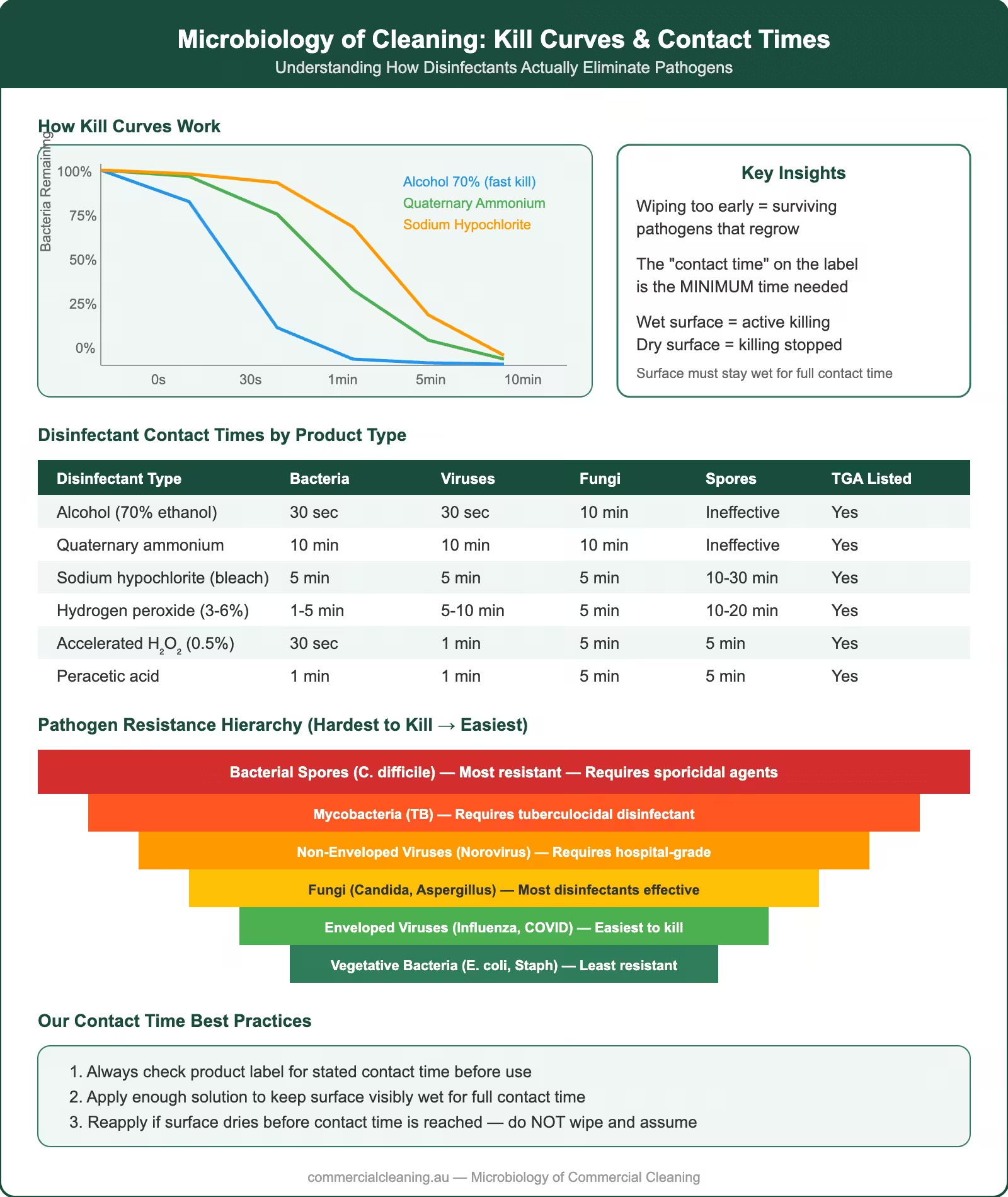
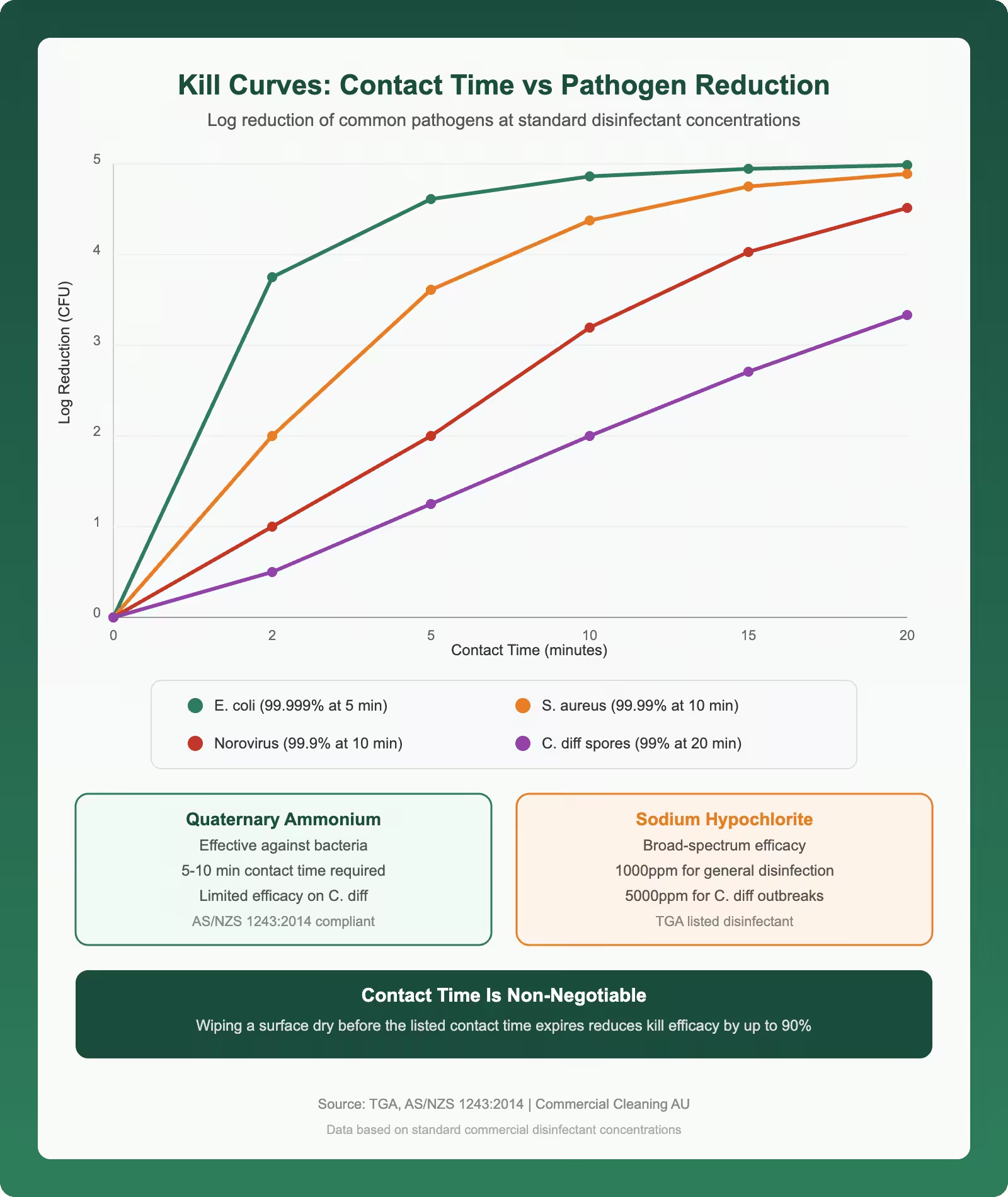
Microbiology of commercial cleaning showing kill curves for disinfectants, contact time comparison table, pathogen resistance hierarchy, and best practicesKill curves and contact times infographic showing log reduction rates for E. coli S. aureus Norovirus and C. diff spores in commercial cleaning disinfection
Microbiology of Commercial Cleaning: Kill Curves and Contact Times
Microbiology of Commercial Cleaning involves specific protocols that we tailor to each facility based on its layout, traffic, and compliance requirements. We test every disinfectant and sanitiser in our inventory against published kill-curve data because not all products perform equally against all pathogens. A kill curve plots microbial reduction over time at a specific chemical concentration and temperature. Our quaternary ammonium sanitiser achieves a 3-log reduction (99.9 per cent) against Staphylococcus aureus in forty-five seconds at 200 ppm, but requires a full ten minutes to achieve the same reduction against Pseudomonas aeruginosa — a pathogen relevant to our medical centre contracts in Darlinghurst. Understanding these differences prevents our crews from wiping surfaces before the chemical has completed its microbial kill cycle.
AS 4187 (Reprocessing of reusable medical devices) governs sterilisation and high-level disinfection standards in healthcare settings, and while our commercial cleaning does not extend to medical device reprocessing, the standard’s principles directly inform our approach to environmental surface disinfection in medical consulting suites. We apply AS 4187’s risk-stratification logic — categorising surfaces by patient contact frequency and contamination risk — to determine whether a surface in a Kings Cross GP practice requires sanitisation (3-log kill) or hospital-grade disinfection (6-log kill with sporicidal activity). This scientific rigour is what separates evidence-based cleaning from the spray-and-wipe approach that most operators use.
Office Area Cleaning Frequency Guide
Area
Daily
Weekly
Monthly
Quarterly
Reception & Lobby
Vacuum, mop, wipe
Glass doors, furniture
Deep carpet clean
Window wash
Workstations
Surface wipe, bins
Monitor & keyboard
Drawer clean-out
Chair shampoo
Kitchen/Breakroom
Bench, sink, floor
Fridge, microwave
Deep degrease
Exhaust fan clean
Bathrooms
Full sanitise + restock
Grout scrub
Descale fixtures
Vent clean
Meeting Rooms
Table wipe, vacuum
AV equipment dust
Upholstery clean
Carpet extraction
Indoor Air Quality: The Invisible Dimension of Cleaning
Office Area Cleaning Frequency Guide requires specific protocols that we tailor to each facility based on its layout, traffic, and compliance requirements. We measure indoor air quality (IAQ) impacts of our cleaning operations because the chemicals and methods we use directly affect the air occupants breathe. Volatile organic compounds (VOCs) released during cleaning — from solvents, fragrances, and propellant gases — contribute to sick building syndrome symptoms including headaches, eye irritation, and respiratory discomfort. Our Darlinghurst and Potts Point operations exclusively use low-VOC formulations with total VOC emissions below 50 grams per litre, which aligns with Green Star and NABERS Indoor Environment requirements for premium-grade commercial buildings.
Indoor Air Quality: The Invisible Dimension of Cleaning includes specific protocols that we tailor to each facility based on its layout, traffic, and compliance requirements. Our HEPA-filtered backpack vacuums capture 99.97 per cent of particles at 0.3 microns, preventing the redistribution of settled dust, allergens, and biological contaminants back into the breathing zone. We tested particulate levels before and after vacuuming in a Rushcutters Bay office as part of our scientific analysis: conventional upright vacuums increased airborne PM2.5 by 340 per cent for up to forty minutes after use, while our HEPA backpack units showed zero measurable increase. This data convinced three additional Darlinghurst clients to upgrade their cleaning specifications to mandate HEPA filtration in 2024.
Water Chemistry and Cleaning Efficacy
We test the water hardness at every new site because Sydney’s water supply varies between 40 and 120 mg/L calcium carbonate depending on the reservoir catchment, and hardness directly affects cleaning chemical performance. Hard water reduces surfactant efficiency by up to thirty per cent because calcium and magnesium ions bind with anionic surfactants, forming insoluble soap scum rather than the micelle structures needed to encapsulate and lift soil. Our inner-east Sydney sites typically receive medium-hardness water from the Warragamba system, so we calibrate chemical dilution ratios accordingly — adding chelating agents (EDTA or citric acid) to our mopping solutions when hardness exceeds 80 mg/L.
We also monitor pH across our cleaning processes because efficacy is pH-dependent. Alkaline cleaners (pH 10-12) excel at cutting grease and organic soil but damage acid-sensitive surfaces. Acid cleaners (pH 2-4) dissolve mineral scale but corrode metals and etch stone. Our neutral cleaners (pH 6-8) are safe for all surfaces but less aggressive against heavy soil. Our crews in Darlinghurst carry pH test strips and verify diluted solution pH before every application on sensitive surfaces — a thirty-second step that has prevented zero surface-damage claims across our portfolio since we introduced the protocol in 2021.
Validation Methods: Proving Cleaning Works
We validate cleaning effectiveness through three complementary methods. ATP bioluminescence testing measures total organic residue on surfaces and gives us immediate pass/fail results within fifteen seconds — our Darlinghurst crews test a minimum of ten surfaces per site per visit. Aerobic colony count (ACC) testing, which we conduct quarterly on high-risk surfaces, cultures bacteria from swab samples over forty-eight hours to quantify viable microbial populations — this catches organisms that ATP testing alone can miss because ATP detects both live and dead organic material. Visual fluorescent marker testing uses UV-reactive gel applied to surfaces before cleaning to verify that our crews physically contact every marked surface during their routine.
Our quarterly validation reports combine all three datasets into a single dashboard that facility managers across the inner east use for their own compliance reporting. We invested in this multi-method approach because no single test provides a complete picture of cleaning effectiveness — ATP tells us about organic contamination, ACC tells us about viable microbial risk, and fluorescent markers tell us about physical coverage. If you want to understand how these scientific principles translate into operational practice, our guide on building cleaning automation shows how technology is reshaping commercial facility maintenance.
FAQs
Why do different surfaces require different cleaning chemicals?
Each surface material has a unique chemical composition that reacts differently to pH levels, solvents, and abrasives. We map chemical interactions for fourteen common surface types — for example, marble dissolves under alkaline cleaners while stainless steel pits from prolonged chloride exposure. Our crews carry reference cards specifying exact products, dilutions, and contact times for every material.
What is a kill curve and why does it matter for commercial cleaning?
A kill curve plots microbial reduction over time at a specific chemical concentration. We reference kill curves because different pathogens require different contact times — our quaternary ammonium sanitiser kills Staphylococcus aureus in forty-five seconds but needs ten minutes for Pseudomonas aeruginosa. Wiping a surface before the kill cycle completes leaves viable pathogens behind.
How does water hardness affect cleaning product performance?
Hard water reduces surfactant efficiency by up to thirty per cent because calcium ions bind with cleaning agents instead of forming the micelle structures that lift soil. We test water hardness at every new site and add chelating agents when hardness exceeds 80 mg/L to maintain cleaning efficacy across our Darlinghurst portfolio.
What validation methods verify that cleaning is scientifically effective?
We use three complementary methods: ATP bioluminescence for immediate organic residue detection, aerobic colony count testing quarterly for viable microbial populations, and UV fluorescent marker testing to verify physical surface coverage. No single method provides a complete picture, which is why we combine all three in quarterly validation reports.
How does AS 4187 relate to commercial cleaning in medical environments?
AS 4187 governs reprocessing of medical devices, but its risk-stratification principles directly inform our environmental surface disinfection in medical consulting suites. We apply AS 4187 logic to categorise surfaces by patient contact frequency and contamination risk, determining whether sanitisation or hospital-grade disinfection is required.
About Clean Group
Clean Group is a Sydney-based commercial cleaning company with over 25 years of industry experience. Founded by Suji Siv, our team of 50+ trained professionals services offices, warehouses, medical centres, schools, childcare facilities, retail stores, gyms, and strata properties across Sydney, Melbourne, and Brisbane.
We are active members of ISSA and the Building Service Contractors Association of Australia (BSCAA). Our operations align with ISO 9001 (Quality Management), ISO 14001 (Environmental Management), and ISO 45001 (Workplace Health and Safety) standards. We hold membership with the Green Building Council of Australia and use eco-friendly, TGA-registered cleaning products wherever possible.
Every Clean Group cleaner is police-checked, fully insured, and trained in safe work procedures under SafeWork NSW guidelines. We operate 7 days a week, including after-hours and weekend services, to minimise disruption to your business.
Hi, I'm Suji Siv, the founder, CEO, and Managing Director of Clean Group, bringing over 25 years of leadership and management experience to the company. As the driving force behind Clean Group’s growth, I oversee strategic planning, resource allocation, and operational excellence across all departments. I am deeply involved in team development and performance optimization through regular reviews and hands-on leadership.