Office restrooms are one of the most critical areas in any commercial facility, yet they’re frequently underestimated in cleaning planning. Restrooms present unique hygiene challenges: high-touch surfaces, moisture exposure, and the potential for cross-contamination make them necessary to any WHS (Work Health and Safety) program. Our office cleaning services sydney team provides restroom hygiene protocols that include specialised restroom protocols that protect occupant health while maintaining professional standards. Let’s explore what professional restroom cleaning entails and why standards matter.
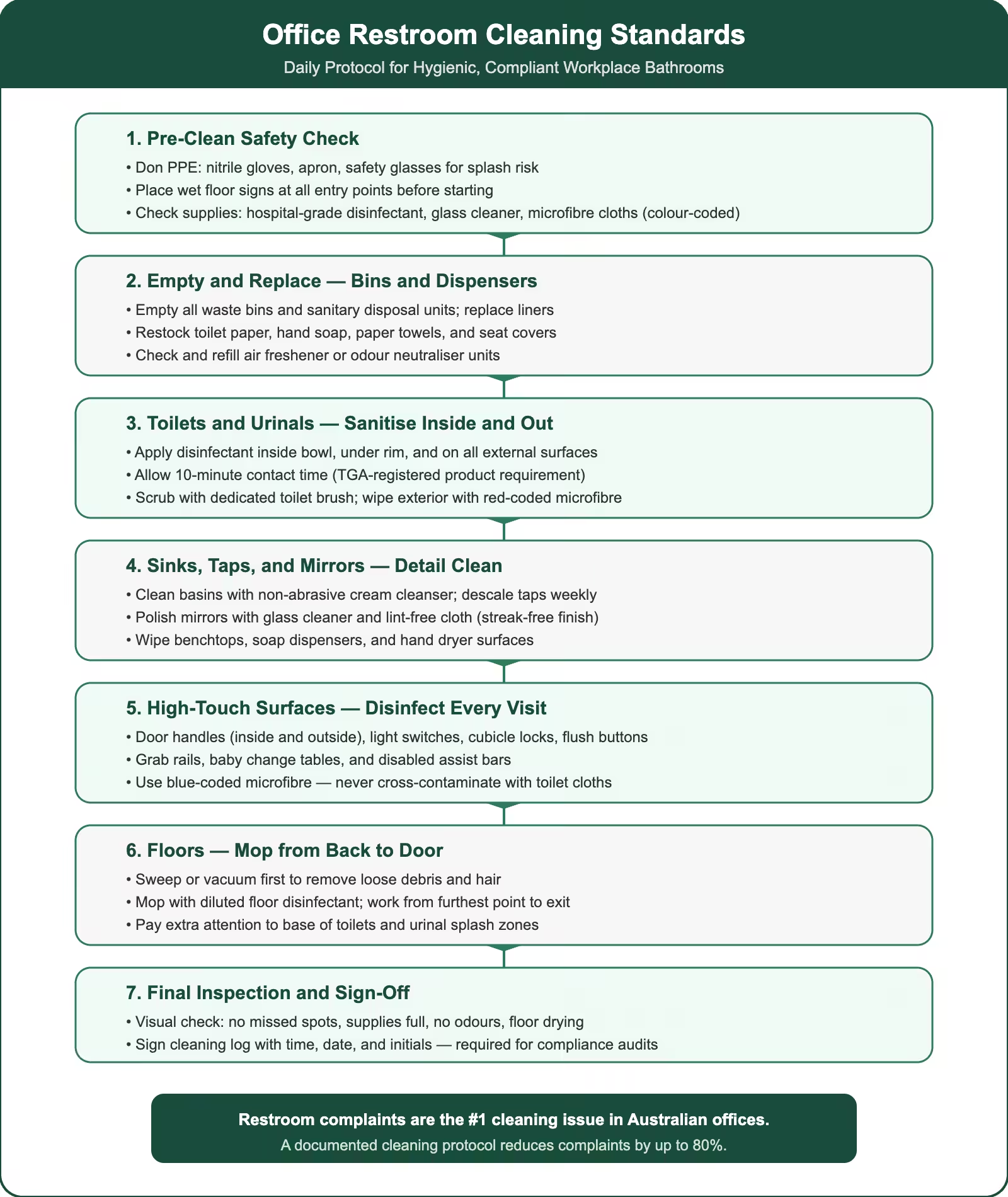
Office restroom cleaning standards showing 7-step daily protocol from safety checks through sanitisation to final inspection and sign-off
Why Restroom Cleaning Is Critical
Why Restroom Cleaning Is Critical covers specific protocols that we tailor to each facility based on its layout, traffic, and compliance requirements. Restrooms are where microorganism transmission is most likely. Bathrooms combine moisture (promoting bacterial growth), high-touch surfaces (door handles, flush buttons, taps), and organic material that creates perfect conditions for pathogens. The Work Health and Safety Act 2011 explicitly requires employers to maintain clean, sanitary facilities to protect worker health.
Poorly maintained restrooms lead to:
Disease transmission: Norovirus, influenza, gastroenteritis, and other illnesses spread rapidly in inadequately cleaned bathrooms
Occupant complaints: Restroom quality affects satisfaction and workplace culture. Poor restrooms are frequent complaint sources.
Regulatory issues: SafeWork NSW audits can flag inadequate restroom cleaning as a WHS non-compliance
Reputation damage: Unclean restrooms damage your facility’s professional image and tenant confidence
Liability exposure: If illness outbreaks are traced to inadequate sanitation, your organisation faces legal and insurance implications
Professional Restroom Cleaning Standards
Professional restroom cleaning goes far beyond a quick sweep and mop. It involves systematic disinfection of all surfaces, proper waste management, and documented procedures.
High-Touch Surface Disinfection
Door handles, tap handles, flush buttons, and light switches are bacteria hotspots. These surfaces must be disinfected multiple times daily in high-traffic facilities. We apply hospital-grade disinfectants that meet Australian Standards AS/NZS 4815 (healthcare-associated infection prevention standards), even in non-medical offices.
Fixture Cleaning and Sanitisation
Toilets, urinals, basins, and mirrors require different cleaning approaches:
Toilets: Remove visible soilage, apply bowl cleaner, allow dwell time (typically 10 minutes), scrub with toilet brush, flush thoroughly
Mirrors and glass: Use glass cleaner (ammonia-free to prevent streaking), wipe with microfiber cloth to eliminate streaks
Floor and Wall Cleaning
Restroom floors are exposed to moisture and organic material. We vacuum first to remove debris, then damp mop with disinfectant solution. Tile grout lines accumulate dirt and bacteria; we address these with targeted scrubbing or steam cleaning quarterly. Walls should be spot-cleaned regularly and deep-cleaned monthly to remove splashes and dust accumulation.
Waste and Bin Management
Sanitary bins and general waste bins must be emptied daily. We replace liners, sanitise bin exteriors, and manage waste in accordance with local council regulations. For medical or higher-risk waste, we follow specific protocols compliant with SafeWork NSW requirements.
Restroom Cleaning Frequency Standards
Facility Type
Recommended Frequency
Peak Hours Detail
High-Touch Surface Attention
General office (low traffic)
Daily end-of-day clean
Spot-cleaning during business hours
At least twice daily
Medium office (50-150 people)
Morning + end-of-day cleans
Mid-morning spot check and refresh
Three times daily
High-traffic office (150+ people)
Multiple times daily
Mid-morning and mid-afternoon checks
Continuous (4+ times daily)
Medical facility
Multiple times daily, post-patient
Continuous monitoring
Between every patient; hospital-grade protocol
Educational facility
Multiple times daily
Post-lunch deep clean, mid-afternoon refresh
At least four times daily, child-safe disinfectants
Restroom Disinfection Best Practice
Restroom Cleaning Frequency Standards requires specific protocols that we tailor to each facility based on its layout, traffic, and compliance requirements. Effective disinfection requires understanding contact time. Most disinfectants need 5-10 minutes of wet contact to kill pathogens. Simply spraying and immediately wiping is ineffective. Our protocols specify:
Apply disinfectant and allow dwell time (contact time) according to product specifications
Wipe with disposable cloths or paper towels (not cloth rags that harbour bacteria between uses)
Replace cloths frequently to prevent cross-contamination
Document each cleaning with time stamps to demonstrate compliance
Rotate products periodically to prevent bacterial resistance
Restroom Cleaning and Infection Prevention
Restroom Disinfection Best Practice includes specific protocols that we tailor to each facility based on its layout, traffic, and compliance requirements. Professional restroom cleaning is a foundation of infection prevention. COVID-19 accelerated awareness of this, but the principle applies to all respiratory and gastrointestinal illnesses. Regular disinfection, adequate ventilation, and access to hand-washing supplies form a complete system. Our team works with your facility’s health and safety protocols to confirm restrooms support rather than undermine your infection control strategy.
We’ve managed restroom cleaning across Sydney healthcare facilities, corporate offices, and educational institutions. We maintain compliance with Australian Standards AS/NZS 4815, SafeWork NSW requirements, and the Work Health and Safety Act 2011. Our documented procedures satisfy regulatory audits and demonstrate due diligence in managing occupant health risks.
Common Restroom Cleaning Mistakes to Avoid
Common Restroom Cleaning Mistakes to Avoid targets specific protocols that we tailor to each facility based on its layout, traffic, and compliance requirements. Using general-purpose cleaner instead of disinfectant: Cleaning removes visible dirt. Disinfection kills pathogens. You need both. General-purpose cleaners don’t disinfect; they must be followed by hospital-grade disinfectant on high-touch surfaces.
Inadequate contact time: Spraying disinfectant and immediately wiping defeats the purpose. The chemical needs minutes to work. Specify dwell times in your cleaning procedures.
Using cloth rags repeatedly: Cloth rags become bacteria harbours. Each use spreads bacteria to the next surface. Disposable paper towels or microfiber cloths laundered after each use are required.
Ignoring ventilation: Restrooms must be ventilated. Poor ventilation promotes mould growth and traps moisture. Verify exhaust fans operate during and after cleaning.
Skipping grout and corners: These areas accumulate dirt and bacteria. Regular detailed scrubbing or periodic steam cleaning of grout lines is needed.
No documentation: Without cleaning logs, you can’t prove restrooms were maintained. Document times, cleaner name, and any issues found. This satisfies compliance audits and protects against liability.
Restroom Amenities and Occupant Satisfaction
Beyond cleaning, restroom satisfaction requires adequate amenities. Soap dispensers must be filled, paper towels available, and toilet paper stocked. We monitor these items during cleaning visits and alert management when restocking is needed. Small investments in quality soap, moisturiser, and air freshener improve occupant perception and satisfaction.
For facilities aiming to exceed baseline standards, we can implement touchless fixtures (reducing contact transmission), install air purifiers, and provide premium amenities. These upgrades, combined with professional cleaning, create restroom experiences that enhance facility reputation.
Restroom Cleaning and Your Broader Facility Strategy
Restroom cleaning is one element of thorough facility hygiene. It integrates with overall cleaning specifications, occupant health programs, and WHS compliance. Professional restroom management demonstrates that your organisation takes occupant wellbeing seriously—an important message in the current health-conscious environment.
Coordinating restroom protocols with your periodical cleaning program ensures complete facility coverage. We develop integrated schedules that address restroom deep cleaning, general office maintenance, and specialist services including pest prevention in a coordinated approach that maximises efficiency and consistency.
Frequently Asked Questions
How often should restrooms be cleaned in an office?
Minimum daily end-of-day clean plus lunchtime spot-check. High-traffic facilities benefit from multiple daily cleans. We recommend assessing your facility’s usage and scheduling accordingly.
What disinfectant should be used in office restrooms?
Hospital-grade disinfectants meeting Australian Standards AS/NZS 4815 are recommended. These eliminate bacterial, viral, and fungal pathogens. We select products appropriate for your facility type and any specific health requirements.
Is daily restroom cleaning enough for hygiene?
For low-traffic offices, daily cleaning plus spot-checks is adequate. Medium and high-traffic facilities need multiple daily cleans, particularly during business hours when surfaces become contaminated again immediately after cleaning.
Should restrooms be cleaned during business hours?
Spot-checking and quick touch-surface disinfection during business hours is beneficial. However, deep cleaning (grout scrubbing, wall cleaning) is best done after hours to avoid disruption and allow disinfectants to work effectively.
How do you prevent cross-contamination in restroom cleaning?
Use disposable cloths or single-use paper towels, never cloth rags. Clean high-touch surfaces after fixtures (which are generally less contaminated). Wash hands between areas. Document procedures to make sure consistency.
About Clean Group
Clean Group is a leading commercial cleaning company in Sydney, serving offices, strata properties, medical centres, schools, and industrial facilities across the greater Sydney region. With over 25 years of experience and a team of fully trained, insured cleaners, we deliver consistent results backed by a 100% satisfaction guarantee. Our services are tailored to your schedule, your budget, and your industry’s compliance requirements.
Hi, I'm Suji Siv, the founder, CEO, and Managing Director of Clean Group, bringing over 25 years of leadership and management experience to the company. As the driving force behind Clean Group’s growth, I oversee strategic planning, resource allocation, and operational excellence across all departments. I am deeply involved in team development and performance optimization through regular reviews and hands-on leadership.