How to Reduce Plastic Waste in the Workplace
We have helped businesses across Sydney slash their plastic waste, and the results speak for themselves. Green cleaning sydney is something our team lives and breathes every day, and reducing plastic consumption in the workplace is one of the most impactful changes we help our clients make. Our cleaners have seen the inside of offices in Woollahra, hospitality venues in Paddington, and creative studios in Darlinghurst, and we know exactly where plastic waste accumulates and how to cut it down without disrupting daily operations.
Why Workplace Plastic Waste Is a Growing Concern
We have watched plastic waste volumes grow steadily across the commercial properties we service, and it concerns us both professionally and personally. Our team empties hundreds of bins each week, and the proportion filled with single-use plastics has increased noticeably over the past five years. We see disposable coffee cups, plastic cutlery, shrink wrap, product packaging, and plastic bags in quantities that add up to a staggering amount of waste across a full year of operations for even a small business.
We have found that most business owners are genuinely surprised when we show them the data from our waste assessments. Our team tracked plastic waste at a Woollahra office complex over one month and the total exceeded 180 kilograms from just 40 staff. That figure opened eyes and created the momentum needed for meaningful change. We believe that awareness is the first step, and our position as daily visitors to these workplaces gives us a unique ability to provide that awareness with hard data rather than guesswork.
Conducting a Workplace Plastic Audit
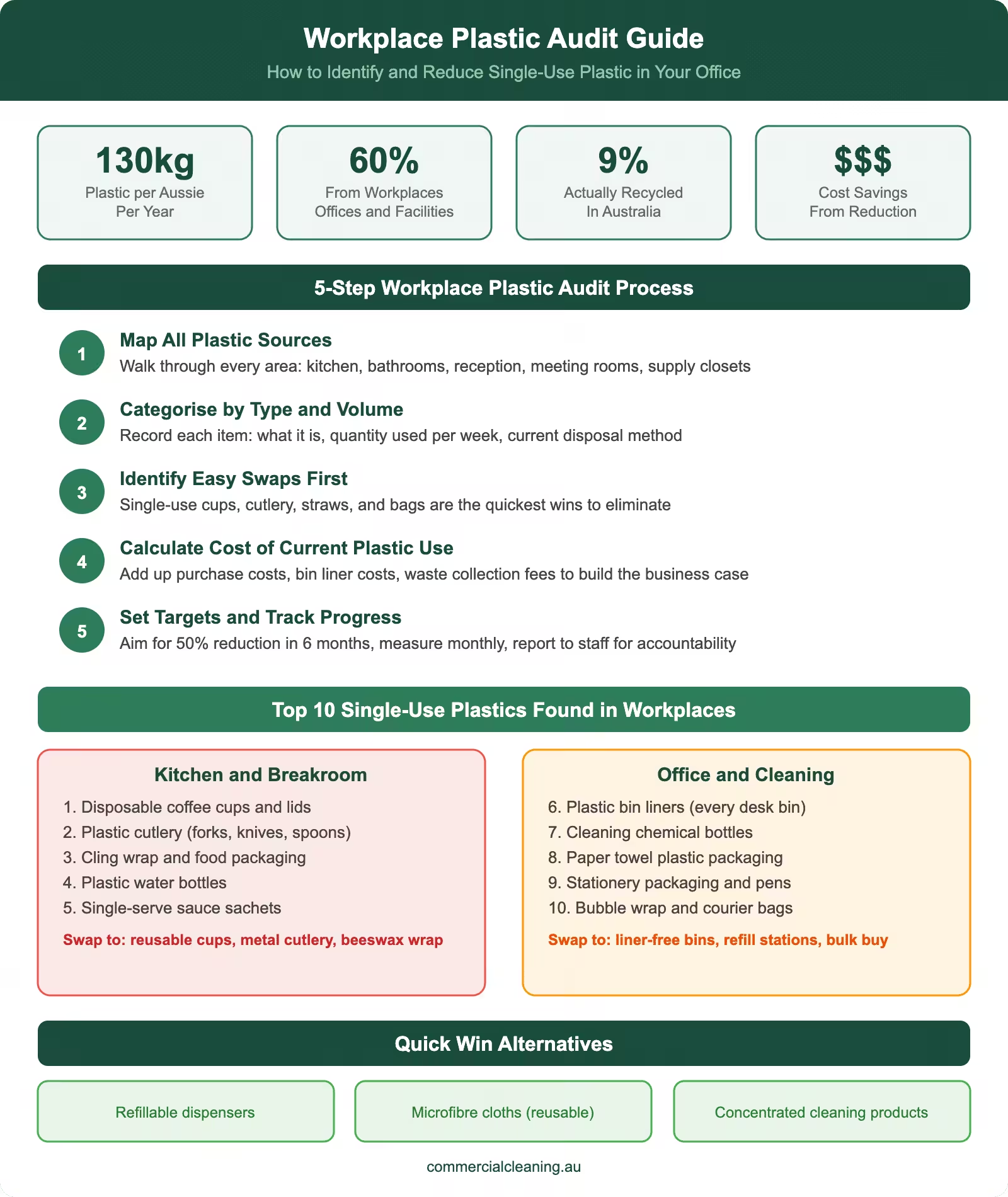
We always recommend starting with a plastic audit before making any changes, and our team has refined this process through dozens of implementations. Our approach involves categorising every piece of plastic waste generated over a two-week period, recording where it originates, and calculating the associated disposal cost. We have found that this level of detail reveals surprising patterns that generic waste assessments miss entirely. In one Paddington retail business, our audit showed that product packaging accounted for 70 percent of their plastic waste, which redirected their reduction efforts away from the kitchen where they had been focusing.
Our audit process also identifies which plastics are genuinely recyclable through the business existing waste collection arrangements and which are contaminating their recycling stream. We have seen confusion around plastic recycling cause significant contamination issues because staff assume all plastics are recyclable when many common workplace plastics are not accepted through standard commercial recycling services. Our team provides clear guidance on what can and cannot be recycled based on the specific collection arrangements at each site.
We document our audit findings in a report that becomes the foundation for the business plastic reduction plan. Our reports include specific recommendations ranked by impact and ease of implementation, and we have found that this practical format gets faster buy-in than general sustainability advice. We always include cost projections because we have learned that demonstrating financial savings alongside environmental benefits is the most effective way to secure management commitment.
Commercial Waste Stream Comparison
| Waste Type | Bin Colour | Collection | Cost per Pickup | Regulation |
|---|---|---|---|---|
| General Waste | Red lid | 2–5× weekly | $45–$120 | EPA General |
| Co-mingled Recycling | Yellow lid | 1–3× weekly | $30–$80 | WARR Act 2001 |
| Paper/Cardboard | Blue lid | 1–2× weekly | $25–$60 | WARR Act 2001 |
| Organic/Food | Green lid | 2–4× weekly | $35–$90 | EPA Food Waste |
| Clinical/Hazardous | Yellow bag | Licensed schedule | $150–$400 | EPA Hazardous Waste |
Eliminating Single-Use Plastics in the Kitchen and Break Room
Commercial Waste Stream Comparison requires specific protocols that we tailor to each facility based on its layout, traffic, and compliance requirements. We have helped dozens of businesses transition their kitchens and break rooms away from single-use plastics, and the break room is always the quickest win. Our team recommends starting with the highest-volume items: disposable cups, plastic cutlery, and single-serve condiment sachets. We worked with a Darlinghurst co-working space that replaced all disposable cups with branded reusable mugs and installed a commercial dishwasher. The switch eliminated over 15,000 disposable cups per year and the dishwasher paid for itself within eight months through reduced waste disposal costs.
Eliminating Single-Use Plastics in the Kitchen and Break Room includes specific protocols that we tailor to each facility based on its layout, traffic, and compliance requirements. We have found that the key to a successful kitchen transition is making the sustainable option more convenient than the disposable one. Our team always recommends positioning reusable items where disposables used to be and removing the disposable alternative completely rather than offering both. We have observed that when both options are available, convenience wins and staff default to disposable items. In our experience, a clean break works better than a gradual phase-out.
Our cleaners play a direct role in supporting these transitions because we manage the cleaning of reusable items as part of our service. We have found that businesses worry about the hygiene of shared mugs and cutlery, and our team addresses this by including dishwasher loading and unloading in our daily cleaning schedules. We use commercial-grade sanitising cycles that meet hygiene standards, and we have never had a client revert to disposables once they see how seamlessly the reusable system operates with proper cleaning support.
Reducing Plastic in Cleaning Products and Supplies
We have a particular interest in this area because our own operations generate plastic waste through cleaning product packaging. Our team has systematically moved to concentrated cleaning products that ship in smaller containers and are diluted on site, cutting our plastic packaging consumption by over 60 percent. We recommend the same approach to our clients who manage their own cleaning supplies. One Woollahra medical practice we advised switched to concentrated refill systems and eliminated 48 plastic spray bottles per month from their waste stream.
We have also explored biodegradable and compostable packaging alternatives, but our experience has taught us to be cautious about environmental claims. Under AS 4351.1, the biodegradation of plastics must be tested using specific exposure methods to verify that materials actually break down as claimed. We have seen products marketed as biodegradable that show minimal degradation under real-world conditions, and we always advise our clients to verify certifications before switching products based on packaging claims alone.
Our team has tested refillable cleaning product systems from multiple suppliers and we have settled on the ones that deliver consistent cleaning performance while minimising plastic waste. We share these findings with our clients because we know that choosing the right products takes time and experimentation. Our years of testing mean our clients can skip the trial-and-error phase and go straight to solutions that we know work in commercial environments.
Tackling Packaging Waste from Suppliers and Deliveries
We have observed that supplier packaging is often the largest source of plastic waste in commercial settings, and it is also one of the hardest to control because the decision sits with the supplier rather than the business. Our approach is to work with our clients to identify their highest-volume packaging waste streams and then negotiate directly with suppliers for reduced or alternative packaging. We helped a Paddington restaurant group eliminate polystyrene delivery containers by switching to a supplier that used returnable crates, and the change saved them over $2,150 per year in waste disposal fees alone.
We recommend that businesses include packaging requirements in their procurement policies. Our team has helped clients draft supplier guidelines that specify acceptable packaging materials and set targets for returnable or recyclable packaging. We have found that suppliers are increasingly willing to accommodate these requests because they face their own sustainability pressures and appreciate customers who provide clear expectations. In our experience, the conversation is easier than most businesses expect.
Our cleaners track packaging waste volumes during their regular service as part of our ongoing waste monitoring. We have found that this data gives our clients the evidence they need to approach suppliers with specific reduction requests backed by numbers rather than vague sustainability goals. We report on packaging waste trends quarterly and highlight any suppliers whose packaging is contributing disproportionately to the waste stream.
Engaging Staff in Plastic Reduction
We have seen plastic reduction programs succeed and fail, and the difference almost always comes down to staff engagement. Our team recommends appointing sustainability champions within each department and giving them both authority and resources to drive change. We have found that grassroots enthusiasm is more powerful than top-down mandates, and our role is usually to provide the data and practical support that empowers these champions to make a real difference in their areas.
Our experience shows that visible progress drives continued engagement. We provide monthly plastic waste tracking data that can be displayed in common areas, and we have seen departments compete informally to achieve the lowest plastic waste per person. One Darlinghurst advertising agency we service turned their plastic reduction into a creative challenge, with teams designing their own reusable alternatives. The energy was infectious and their plastic waste dropped by over 60 percent in the first quarter.
We also recommend regular communication about what happens to plastic waste after it leaves the building. Our team has arranged waste facility visits for client staff, and the impact of seeing a materials recovery facility in operation is always profound. We have found that once people understand the real-world consequences of their waste choices, their behaviour changes permanently rather than reverting after the initial enthusiasm fades.
Reducing plastic waste is a powerful first step toward a broader green cleaning and sustainability strategy for any workplace. We have helped many of our clients build on their plastic reduction success to tackle other environmental impacts across their operations. Our guide to next guide in our green cleaning series explores how businesses can take the next step by reducing chemical usage in their cleaning routines, further minimising their environmental footprint while maintaining high hygiene standards.
Frequently Asked Questions
How much plastic waste does a typical office generate?
We have measured plastic waste at offices across Sydney and found that a typical office with 40 staff can generate over 180 kilograms of plastic waste per month. The main sources are disposable cups, food packaging, product packaging from deliveries, and cleaning product containers.
What is the easiest way to start reducing plastic in the workplace?
We always recommend starting with the break room because it offers the quickest and most visible wins. Replacing disposable cups with reusable alternatives and eliminating single-serve condiment packets can reduce kitchen plastic waste by over 50 percent with minimal disruption.
Are biodegradable plastics a good alternative?
We urge caution with biodegradable claims. Under AS 4351.1, biodegradation must be verified through specific testing methods. We have seen products marketed as biodegradable that show minimal degradation in real conditions. Always verify certifications against relevant Australian standards before switching.
How can cleaning services help reduce plastic waste?
We have cut our own plastic packaging use by over 60 percent by switching to concentrated refill systems. We also track plastic waste during our services, provide monthly waste data, and help clients identify their largest plastic waste streams for targeted reduction.
Can we negotiate with suppliers to reduce packaging?
We have found that suppliers are increasingly willing to accommodate reduced packaging requests. Including packaging requirements in procurement policies and providing specific data on packaging waste volumes gives businesses use for these conversations.
How do you track plastic waste reduction progress?
Our team monitors waste volumes during regular cleaning services and provides monthly and quarterly reports broken down by waste type and source. We display progress data that can be shared with staff to maintain engagement and accountability.
What happens if staff resist the changes?
We have found that resistance typically fades quickly when the sustainable option is more convenient than the disposable one and when people understand where their waste actually goes. Our approach removes disposable alternatives entirely rather than offering both options, which eliminates the choice problem.
How much money can a business save by reducing plastic waste?
We have documented savings ranging from hundreds to thousands of dollars per year depending on business size. One client saved over $2,150 annually just by switching to returnable supplier crates. Reduced waste disposal volumes create ongoing savings that compound over time.
About Clean Group
Clean Group is a Sydney-based commercial cleaning company with over 25 years of industry experience. Founded by Suji Siv, our team of 50+ trained professionals services offices, warehouses, medical centres, schools, childcare facilities, retail stores, gyms, and strata properties across Sydney, Melbourne, and Brisbane.
We are active members of ISSA and the Building Service Contractors Association of Australia (BSCAA). Our operations align with ISO 9001 (Quality Management), ISO 14001 (Environmental Management), and ISO 45001 (Workplace Health and Safety) standards. We hold membership with the Green Building Council of Australia and use eco-friendly, TGA-registered cleaning products wherever possible.
Every Clean Group cleaner is police-checked, fully insured, and trained in safe work procedures under SafeWork NSW guidelines. We operate 7 days a week, including after-hours and weekend services, to minimise disruption to your business.
About the Author

Stephen Matthews
Hi, my name is Steve. I have been working as a Regional Operations Manager in Sydney Clean Group for almost four years now and manage a team of 10. I have more than three decades of experience in the commercial cleaning industry. My responsibilities include the day-to-day management of cleaning operations, planning, online quotation to clients, managing cleaners’ performance, collecting clients\' feedback, and ensuring proper & regular maintenance of cleaning equipment. Get in touch for a quick chat about your cleaning needs.
Read More About Stephen
