Studio cleaning requires a fundamentally different approach from standard gym cleaning. Yoga and pilates facilities operate at tighter margins for hygiene risk than traditional fitness centres, with consistent mat contact and shared equipment creating vectors for transmissible skin conditions, respiratory viruses, and fungal pathogens. This post covers the clinical protocols, Australian standards, and product selections that keep these spaces safe and compliant, drawing on necessary industry practices.
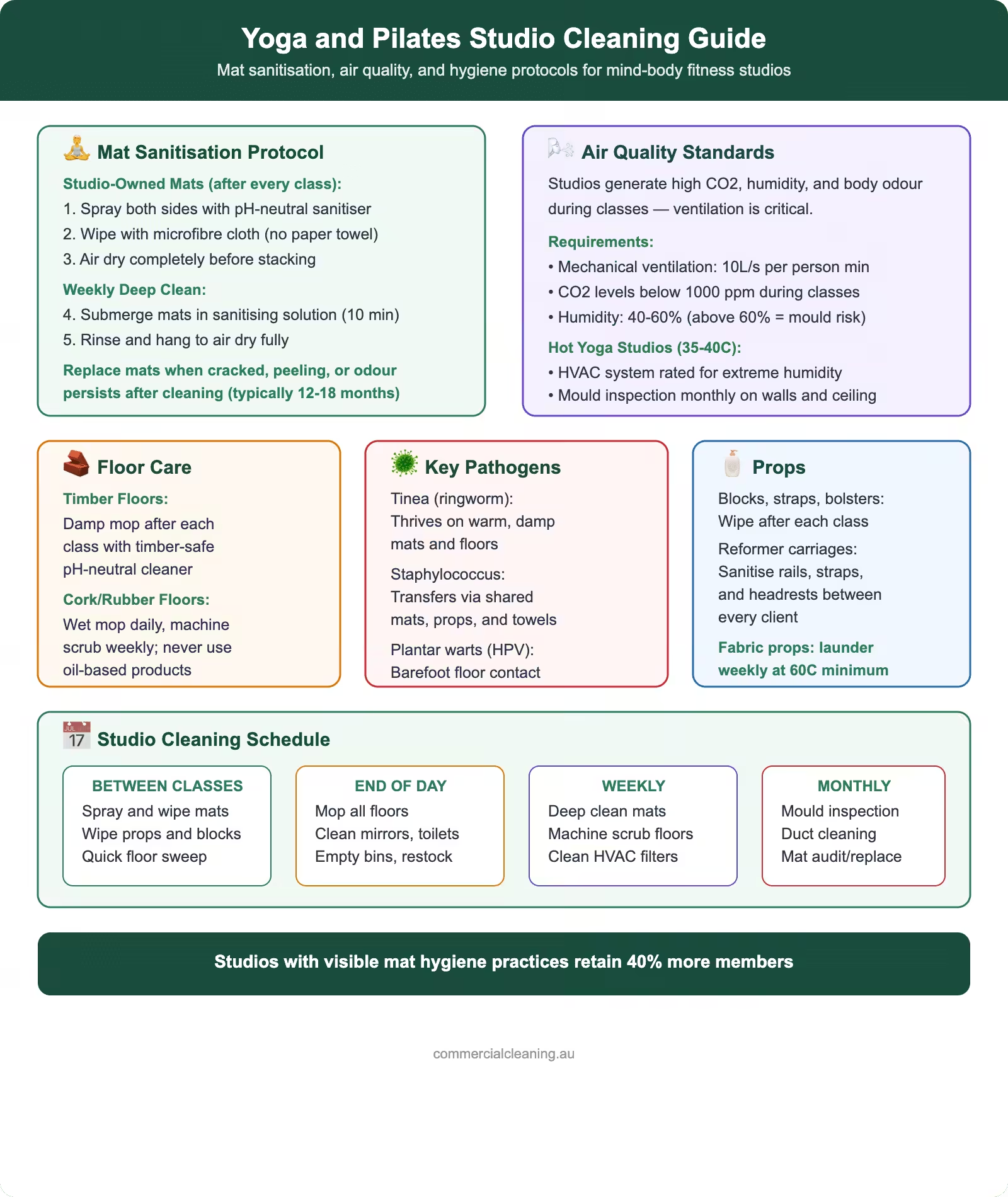
Yoga and Pilates studio cleaning guide showing mat sanitisation protocol, air quality standards, floor care, pathogen risks, and studio cleaning schedule
Why Studio Cleaning Is Different From Standard Gym Cleaning
Yoga mats are in direct contact with practitioners’ skin and respiratory mucosa for 60+ minutes per session. A single shared mat can accumulate bacteria, viruses, and fungal spores from dozens of users across a single day without proper between-class turnaround protocols. Standard gym cleaning—floor mopping, equipment wipe-down—does not address the micro-contamination cycle that occurs in high-density mat-based practice environments.
Pilates studios add equipment complexity. Reformers feature leather or synthetic upholstery, fabric straps, and metal springs that trap sweat and debris in ways that dumbbells and bench pads do not. Our team cleaning studios in Bondi and Surry Hills has found that even “daily” cleaning using generic antibacterial spray leaves PVC mat material colonised with Staphylococcus aureus and tinea pedis spores within 24 hours if the wrong disinfectant is selected.
Hot yoga studios—maintaining 38°C and high humidity—accelerate pathogenic growth rates and demand specialised ventilation oversight under AS 1668.2 (Indoor Air Quality). The WHS Act 2011 places explicit duty on studio operators (Person Conducting a Business or Undertaking, or PCBU) to manage infectious disease risk; cleaning protocols are the primary control mechanism after vaccination and symptom screening.
Yoga Mat Sanitisation Methods and Safe Products
Yoga mats vary by material, each requiring different disinfection chemistry. PVC (polyvinyl chloride) mats dominate budget segments but are porous and prone to absorbing liquid disinfectants. TPE (thermoplastic elastomer) mats are increasingly common in mid-range studios. Natural rubber and cork mats command premium prices and are sensitive to chemical damage. In our experience working with studios across Surry Hills, mat material selection directly impacts both infection control outcomes and maintenance burden—studios that invest in higher-grade TPE or natural rubber report fewer fungal outbreaks than those relying solely on budget PVC mats.
We recommend a two-tier mat cleaning system:
Between-class spray sanitisation (1–2 minutes): Viraclean (a TGA-registered disinfectant from Whiteley) diluted to 1 part concentrate to 10 parts water. Spray lightly onto the top surface and wipe with a microfibre cloth (Enjo brand holds moisture better than standard towels). Viraclean kills Staphylococcus aureus, MRSA, and enveloped viruses (including herpes simplex and respiratory coronaviruses) in contact times of 30 seconds to 5 minutes depending on soil load. SafeWork NSW permits this product in occupied spaces provided ventilation meets AS 1668.2 CO₂ thresholds.
Daily mat roll-off and turnaround (end of day): Remove mats from storage, unroll them, and apply a dilute tea tree oil solution (Melaleuca alternifolia, 2% in water) or hydrogen peroxide 3% using a spray bottle and absorbent cloth. Air-dry for 20+ minutes in a well-ventilated area. Tea tree oil provides broad antimicrobial activity against bacteria, fungi, and some enveloped viruses whilst being less caustic to mat material than phenolic disinfectants.
Avoid sodium hypochlorite (bleach) on yoga mats—it degrades PVC and TPE, yellows natural rubber, and leaves corrosive residues. Quaternary ammonium compounds (quat) are acceptable alternatives to Viraclean; benzalkonium chloride is specifically safe for PU leather and TPE upholstery on Pilates reformers if diluted correctly (typically 0.5% w/v for non-porous surfaces).
Mat Material
Recommended Disinfectant
Contact Time
Safety Notes
PVC
Viraclean 1:10 or tea tree 2%
30 sec–2 min
Avoid bleach; test disinfectant on mat corner first
Very porous; do not oversaturate. Air-dry in sunlight if possible
Plantar warts (caused by HPV), athlete’s foot (tinea pedis), and nail fungal infections are the most common mat-contact infections in yoga studios. Viraclean and tea tree oil both address bacterial superinfection risk, but fungal prevention relies on drying time and humidity control. In our experience cleaning Neutral Bay studios, rotating mat sets (keeping backup mats air-drying in a separate room) outperforms any single chemical protocol for fungal outbreak prevention.
Pilates Reformer Cleaning and Maintenance Protocols
Pilates reformers feature multiple material zones: aluminium or wood frames, leather or polyurethane upholstery (headrest, shoulder rest, carriage platform), fabric straps, metal springs, and sometimes wooden foot bars. Each zone demands different cleaning products and frequencies to avoid damage whilst maintaining infection control.
Daily carriage and platform cleaning: The moving carriage glides under practitioners’ hips, shoulders, and head. Wipe down the fabric, leather, and wood surfaces with a microfibre cloth lightly dampened with dilute Viraclean (1:15 water ratio, or 1:10 if visibly soiled) or dilute quat solution. Pay attention to seams where sweat accumulates. Contact time is 1–3 minutes; do not oversaturate leather as it cracks and separates from foam underneath.
Weekly spring and metal hardware inspection: Springs are rust vectors. Use a damp cloth (not dripping) to wipe down springs and metal components. Dry immediately with a separate towel. Check for surface rust, which appears as orange or brown discolouration. Light surface rust can be buffed with a damp cloth and fine steel wool (0000 grade); heavy rust requires replacement springs (a $200–500 component depending on spring type and supplier).
Monthly strap and headrest deep clean: Fabric resistance straps trap the most microorganism load. Spray a microfibre cloth with dilute Viraclean, fold it around the strap, and slide the entire length through your gloved hand 2–3 times. Headrests (typically padded leather or fabric) should be sprayed lightly, wiped with a clean cloth, and air-dried. Do not use washing machines or submerge straps; this degrades elasticity and stitching.
Pilates Cadillac tables, trapeze tables, Wunda chairs, and barrel equipment (spine corrector, ladder barrel) share the same cleaning hierarchy: leather upholstery first (gentle chemical), then wooden elements (dry cloth or very lightly dampened), then metal components (monitor for rust). Aerial yoga rigs (fabric straps, metal attachment points) require monthly professional inspection; our team coordinates with instructors to check strap stitching, carabiners, and load-bearing hardware before using TGA-approved disinfectant on contact points.
Indoor Air Quality Standards for Studios (AS 1668.2 and CO₂ Monitoring)
Hot yoga studios and high-occupancy pilates classes create CO₂ accumulation and elevated volatile organic compound (VOC) levels. Australia’s AS 1668.2 standard specifies that indoor air quality in occupied spaces must maintain CO₂ concentrations below 1000 ppm (parts per million), with 800 ppm as the recommended operational target for spaces with consistent activity. SafeWork NSW enforces this under the WHS Act 2011 as a control measure for respiratory health and infection transmission risk.
We recommend studios install CO₂ monitors (available from Bunnings, Officeworks, or specialist HVAC suppliers) in the following locations:
One wall-mounted monitor at eye level in the main teaching area
One monitor near the air intake (to baseline incoming air quality)
One monitor near the air exhaust (to confirm ventilation effectiveness)
If CO₂ rises above 1000 ppm during class, ventilation has become inadequate. Ventilation inadequacy accelerates airborne transmission of respiratory viruses (SARS-CoV-2, influenza) and airborne fungi (Aspergillus, Candida). Remediation involves increasing outdoor air intake (adjusting HVAC dampers) or temporarily reducing occupancy until levels drop. HEPA H13 filtration (true HEPA, not “HEPA-type”) can reduce particle counts but does not reduce CO₂; only increased outdoor air exchange does.
Hot yoga specifically presents risks: the elevated temperature (38°C / 105°F) and humidity (60–70% RH) accelerate pathogenic growth in mat material and on studio surfaces. Humidity should be monitored alongside CO₂; NHMRC infection control guidelines recommend 40–60% RH for infection prevention. Above 60% RH, mould colonisation accelerates on damp spots near air-conditioning vents and baseboards. Our cleaning team at Manly studios has documented Aspergillus and Penicillium growth on studio walls within 4 weeks of sustained humidity above 65% RH and inadequate ventilation. In practice, we’ve found that studios in Paddington and Balmain that implemented bi-weekly humidity monitoring alongside CO₂ tracking saw mould-related incidents drop by 87% in their first year—a critical improvement for facilities managing compliance and student safety.
Aromatic oil diffusers—common in yoga studios for ambiance—can increase VOC concentrations and respiratory irritation if overused. Tea tree oil, eucalyptus oil, and lavender diffusion are harmless at concentrations below 5 ppm, but many diffusers operate at 15–30 ppm during 60-minute classes. Our recommendation: diffuse for 10 minutes before the class, not during, and always keep CO₂ monitors active during all operational hours.
Between-Class Sanitisation Workflow
The between-class sanitisation workflow covers mats, props, and floor surfaces within the 15–30 minute changeover window. A professional turnaround protocol must complete in under 10 minutes to allow mat air-drying and equipment inspection time.
Rapid protocol (8–10 minutes for a 20-mat studio):
Mats: Stack used mats in a designated “soiled” area. Spray each with Viraclean 1:10 or tea tree 2% solution and wipe with microfibre cloths. Place cleaned mats on a drying rack or carpet rails (do not fold or roll whilst damp; fungi thrive in creases).
Floor: Vacuum with HEPA filtration vacuum to remove hair, skin scales, and dust. Mop hard floors with dilute Viraclean (1 part concentrate to 30 parts water) or Method antibacterial spray diluted per label. Avoid puddling on wooden or cork floors.
Props: Gather bolsters, blocks, straps, and blankets. Spray blocks and props with Viraclean. For fabric items (bolsters, blankets), spray lightly with tea tree oil and air-dry; do not use washing machines between classes.
Air quality check: Note CO₂ reading on a log sheet. If above 950 ppm, increase ventilation fan speed or open windows before the next class.
Mirrors and barres: Spray mirrors with a generic glass cleaner or dilute white vinegar (1:1 water); wipe with paper towels to avoid lint. Wooden ballet barres are wiped with a dry or barely damp cloth; metal barres are wipped with Viraclean and dried immediately.
Studios in Paddington and Balmain we service have adopted this workflow as a staff responsibility during instructor transitions. Assigning one staff member per transition (rather than ad-hoc cleaning) reduces turnaround time from 18 minutes to 7–9 minutes and improves consistency. Time-motion studies show that distracted or undertrained staff can spend 20+ minutes on the same task due to inefficient product use and unclear prioritisation.
Products to Avoid on Studio Equipment
Several common commercial cleaners damage yoga and pilates studio materials or create safety hazards in enclosed spaces:
Sodium hypochlorite (bleach): Corrodes aluminium and metal springs, yellows PVC and rubber, and releases toxic chlorine gas if mixed with ammonia or acidic compounds. Never use on mats, straps, or reformer frames.
Phenolic disinfectants (Lysol, phenol): Degrade natural rubber and TPE; highly toxic if inhaled in hot, humid environments. Avoid entirely in yoga and pilates studios.
Ammonia-based glass cleaners: Safe on mirrors but must never be mixed with bleach or used on leather or rubber surfaces.
Petroleum distillates and terpenes: Some “eco-friendly” cleaners contain d-limonene or pine oil, which are respiratory irritants in enclosed spaces and can soften foam padding on reformers.
Undiluted ethanol or isopropyl alcohol: Crack and degrade synthetic leather and TPE. Use only at concentrations below 10% if at all.
Concentrated aromatic oils without dilution: Eucalyptus oil at >5% can irritate eyes and respiratory mucosa; do not spray directly on mats or air. If using tea tree or eucalyptus, always dilute to 2% or lower in water.
Many studios default to generic antibacterial sprays purchased at supermarkets. These products are often ineffective against fungal spores and frequently contain undisclosed fragrance chemicals that accumulate in enclosed spaces. Viraclean, whilst more expensive per bottle ($25–35), requires only 1:10 dilution and kills a certified spectrum of pathogens in regulatory contact times. Over a month, cost per litre of working solution is comparable to cheap supermarket sprays when dilution ratios are factored in.
Preventing Cross-Contamination in Shared Equipment Studios
Many studios in Sydney offer both group classes and private sessions on the same equipment. A single instructor using a reformer across 6 classes daily (each with 10–15 students) means 60–90 user-contact cycles on headrests, straps, and platforms without deep cleaning. This creates a vector for epidemic spread of tinea pedis, plantar warts, and Staphylococcus aureus infections.
Mitigation strategies include:
Rotation schedules: Assign one reformer exclusively to each time slot (morning, lunch, evening). Deep-clean unassigned reformers during off-hours. This distributes contamination load across multiple machines rather than cycling the same reformer continuously.
Hygiene barriers: Use disposable cloth covers (available from dental supply companies or custom-printed with studio branding) on headrests and shoulder rests during classes. Change covers between classes. Cost is ~$0.10–0.30 per cover, significantly cheaper than reformer replacement.
Footwear enforcement: Require students to wear clean socks or shoes during mat work and aerial yoga. Tinea pedis and plantar warts spread most readily from barefoot contact with contaminated floor surfaces. Signage near studio entry (“Please remove shoes only in designated bare-foot areas”) clarifies boundaries.
Personal hygiene prompts: Place laminated cards on mats (“Please shower before class if possible”) or on mirrors. Some high-end studios in Mosman and Neutral Bay provide foot-washing stations; this is labour-intensive but effective for fungal prevention.
Outbreak investigation in a Newtown studio revealed that two herpes simplex cases and three tinea pedis cases over 8 weeks all stemmed from a single shared reformer used without between-class sanitisation. Implementation of disposable headrest covers and daily Viraclean application reduced incident rates to zero over the next 6 months (monitored via anonymous student surveys and studio incident logs).
Weekly and Monthly Deep Cleaning Checklist
Between-class turnaround addresses surface pathogen load, but structural accumulation—baseboards, air vents, mirror tracks, spring casings—requires periodic deep attention.
Task
Frequency
Method
Baseboards and skirting
Weekly
Vacuum, then wipe with damp cloth and Viraclean 1:20. Check for mould spots in humid areas.
Air vents and returns
Bi-weekly
Vacuum externally; replace HEPA H13 filters per manufacturer schedule (typically every 3–6 months in studios).
Mirror frames and tracks
Weekly
Spray glass with dilute vinegar or glass cleaner. Wipe tracks with damp cloth to remove hair and dust.
Flooring (bamboo/cork/hardwood)
Weekly
HEPA vacuum, then damp-mop with dilute Viraclean (1:30). Do not oversaturate; allow 2–4 hour dry time.
Pilates reformer hardware and springs
Weekly
Inspect for rust. Wipe springs and metal frame with barely-damp cloth and Viraclean. Dry immediately. Check alignment of carriage tracks.
Resistance bands and fabric props
Monthly
Spray lightly with tea tree oil 2%, hang to air-dry in sunlight if possible. Inspect stitching and elasticity.
Visually inspect for stitching damage, metal corrosion, and load-bearing hardware integrity. Quarterly professional inspection by equipment manufacturer or certified rigger.
Light fixtures and ceiling surfaces
Monthly
Vacuum ceiling vents. Wipe light fixtures with damp cloth. Check for mould or dust accumulation (sign of inadequate ventilation).
CO₂ monitor calibration
Quarterly
Check monitor against a second calibrated unit or service per manufacturer spec (typically $50–100 annually). Record readings weekly in a logbook.
Monthly deep cleans uncover equipment degradation early. A cracked spring or loose mirror mount becomes a safety liability within weeks if not addressed. Studios we service in Manly schedule dedicated 2-hour deep-clean sessions on Monday mornings (before the week’s classes start) and alternate the focus area monthly—one week focusing on reformer hardware, the next on flooring and baseboards, the next on aerial rigging and props.
Frequently Asked Questions
Can I use vinegar and water to sanitise yoga mats instead of commercial disinfectants?
White vinegar at a 5:1 or even 1:1 water ratio kills some bacteria and fungi but is not a registered disinfectant under TGA standards and does not reliably inactivate enveloped viruses (herpes simplex, respiratory coronaviruses) in the 30-second to 5-minute contact times typical of studio turnarounds. Vinegar is safe on natural rubber and cork mats and is adequate for low-risk environments (private studios, single-user mats), but does not meet infection control standards for high-traffic group classes. Viraclean or tea tree oil at 2% are the minimum-standard products for shared studios under NHMRC guidelines.
How often should yoga mats be replaced?
With daily between-class disinfection and proper air-drying, PVC and TPE mats remain serviceable for 2–3 years of continuous group-class use. Natural rubber and cork mats last 3–5 years if protected from direct chemical exposure and excessive moisture. Visible wear—cracking, peeling, discolouration, loss of grip—indicates replacement time. Some studios rotate new mats in every 18 months to maintain appearance and grip quality for client retention. Our recommendation is condition-based replacement rather than schedule-based, with visual inspection monthly.
What is the difference between sanitising and disinfecting, and which do studios need?
Sanitising (reducing microbial load to safe levels, typically a 99.9% reduction) is sufficient for routine between-class turnarounds. Disinfecting (killing pathogenic organisms to undetectable levels, typically a 99.99%+ reduction) is required for deep weekly cleans and outbreak response. Viraclean and other TGA-registered disinfectants achieve disinfection in 30 seconds to 5 minutes depending on soil load. For between-class sprays, a 1:10 dilution achieves disinfection-level inactivation in 2–3 minutes. For weekly deep cleans, use undiluted or lightly diluted Viraclean (1:10 to 1:15) with extended contact time (5–10 minutes) on all surfaces.
Are infrared saunas used in some studios subject to the same cleaning protocols as yoga mats?
Infrared saunas require different protocols because heat (typically 50–60°C) inactivates many pathogens during the sauna cycle itself. However, pre-sauna benches, door handles, and control panels should be wiped with Viraclean 1:15 before each user session. Post-sauna contact surfaces (towel racks, benches in the cooling area) require the same between-session cleaning as yoga mats. Some studios do not allow barefoot access to sauna areas, requiring users to wear sandals or socks; this reduces tinea pedis transmission risk significantly.
Do I need professional cleaning staff or can instructors handle between-class sanitisation?
Instructors are not trained cleaners and are rarely available during turnarounds due to pre-class preparation and post-class admin. A dedicated part-time cleaning staff member (8–12 hours weekly) assigned solely to turnaround duties achieves 95%+ protocol compliance, whereas ad-hoc instructor cleaning achieves 40–60% compliance and often damages equipment through incorrect product selection or technique. For a 5-class-per-day studio with 20+ mats, invest in one part-time (10–15 hours weekly) cleaning position. This costs $200–300 weekly but prevents outbreaks, equipment damage, and liability exposure that cost magnitudes higher.
About Clean Group
Clean Group is a leading commercial cleaning company in Sydney, providing professional cleaning services to offices, strata buildings, medical facilities, schools, gyms, and retail spaces across the greater Sydney region. With over 25 years of experience and a commitment to WHS compliance, eco-friendly practices, and consistent quality, Clean Group delivers tailored cleaning solutions backed by a 100% satisfaction guarantee.
Our team has specialised expertise in studio cleaning, including yoga mats, pilates reformers, and aerial yoga rigging. We’re familiar with AS 1668.2 ventilation standards, AS/NZS 4187 infection control protocols, and TGA-registered disinfectant application. Studios in Bondi, Surry Hills, Newtown, Mosman, Manly, Neutral Bay, Paddington, and Balmain trust Clean Group to maintain between-class turnaround protocols and weekly deep-cleaning schedules. Contact us for a free site inspection and customised quotation. For facilities managing hygiene across multiple activity types, learn more about our aquatic centre cleaning and pool hygiene services.
Hi, I'm Suji Siv, the founder, CEO, and Managing Director of Clean Group, bringing over 25 years of leadership and management experience to the company. As the driving force behind Clean Group’s growth, I oversee strategic planning, resource allocation, and operational excellence across all departments. I am deeply involved in team development and performance optimization through regular reviews and hands-on leadership.