A documented workplace hygiene policy is your legal defence and your team’s protection. As an office cleaning sydney team working across Sydney’s commercial spaces, we’ve found that offices with clear hygiene expectations experience fewer sick days, higher morale, and stronger compliance records. This guide walks you through writing one that actually works.
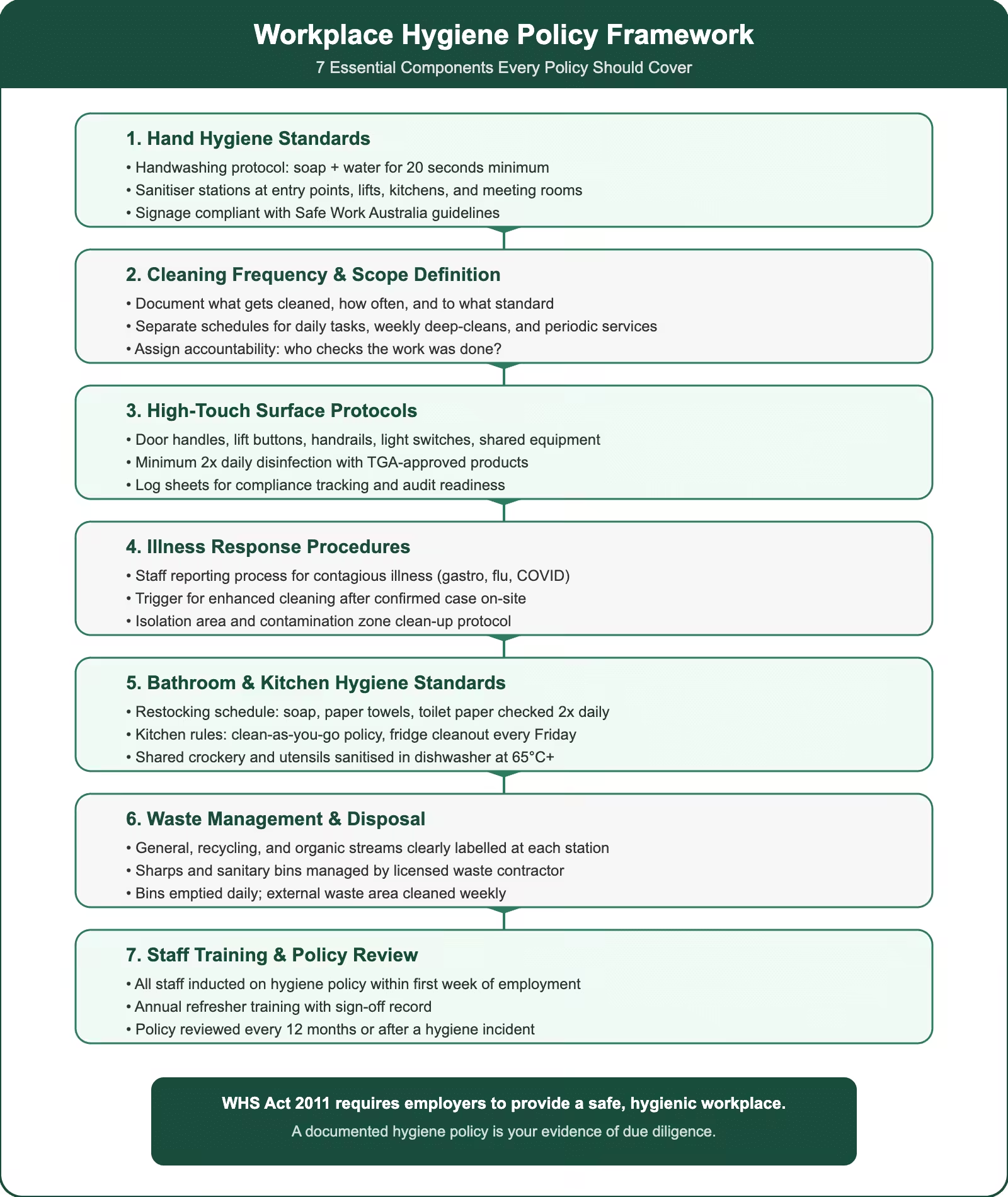
Workplace hygiene policy framework covering hand hygiene, cleaning frequency, high-touch surfaces, illness response, bathroom and kitchen standards, waste management, and staff training
What a Workplace Hygiene Policy Is and Why You Need One
A workplace hygiene policy sets clear standards for personal cleanliness, shared space maintenance, and illness management. It’s not bureaucracy—it’s a practical agreement between you and your staff about how to keep the workplace safe and functional.
Think of it as a contract. Your organisation commits to supplying hand soap, clean facilities, and a protocol for unwell employees. Your team commits to following those standards. When both sides hold up their end, infections drop, productivity rises, and you’ve protected yourself legally if disputes arise.
In our experience working with offices in Parramatta, Chatswood, and the CBD, the biggest operational wins come when staff know exactly what’s expected before a problem starts.
Legal Requirements Under WHS Act 2011
Legal Requirements Under WHS Act 2011 involves specific protocols that we tailor to each facility based on its layout, traffic, and compliance requirements. Australia’s Work Health and Safety Act 2011 places a duty on employers and workers to maintain a healthy workplace. A hygiene policy isn’t optional—it’s a legal requirement that demonstrates due diligence under PCBU (Person Conducting a Business or Undertaking) obligations.
Employer Obligations — PCBU Duties
You must provide and maintain a safe workplace, including clean facilities, adequate handwashing stations, and hygiene protocols. The WHS Act 2011 specifically requires you to identify hygiene risks and put controls in place.
SafeWork NSW guidance makes clear that surface contamination and poor hand hygiene are identified workplace hazards. Your policy documents how you’re controlling those hazards.
We’ve found that offices referencing the WHS Act 2011 in their policy preamble show stronger engagement during staff inductions—people take it seriously when they see it’s legal, not just management preference.
Employee Obligations — Worker Duties
Workers have a reciprocal duty under the WHS Act 2011 to follow hygiene practices and report issues. Your policy must make this clear without sounding punitive.
Frame it as participation, not enforcement: “All team members play a role in keeping our workplace safe” works better than “Failure to comply will result in disciplinary action.”
What to Include in Your Hygiene Policy
What to Include in Your Hygiene Policy requires specific protocols that we tailor to each facility based on its layout, traffic, and compliance requirements. A solid policy has four pillars. Let me walk you through each.
Personal Hygiene Standards
Start with hand hygiene—the highest-impact control. Specify when hands must be washed: after toilets, before eating, after handling shared equipment, after breaks. Include requirements for hand sanitiser stations where sinks aren’t available (common in open-plan offices).
Cover personal grooming and dress code to the extent it affects shared areas. For food-handling roles, include specific protocols. In our experience, adding a line about not sharing personal items (cups, cutlery, headphones) prevents cross-contamination and sets a professional tone.
Shared Space Hygiene Rules
Breakrooms, bathrooms, and meeting areas need explicit standards. Who cleans the microwave? How often are door handles wiped? What’s the protocol for someone’s lunch left in the fridge?
We’ve found that naming responsibility prevents the “someone else will do it” trap. Example: “The last person to use the break room is responsible for wiping benches and emptying the bin.”
Illness and Absence Protocol
This is where many policies fall short. State clearly: how unwell must an employee be to stay home? Should they notify a manager before arriving? What’s the medical certificate threshold (typically 3+ consecutive days)?
Add a line supporting staff who report symptoms early rather than pushing through. That flexibility reduces spread and builds trust.
Cleaning Schedules and Responsibilities
Your professional cleaning service handles daily and weekly deep cleaning. But between those visits, who’s responsible for small tasks? Your policy should clarify desk hygiene (wiping keyboards, monitors), kitchen duties, and bathroom restocking.
Link this to your contracted cleaning schedule so staff know what you’re managing versus what they’re managing.
How to Roll Out the Policy to Staff
How to Roll Out the Policy to Staff includes specific protocols that we tailor to each facility based on its layout, traffic, and compliance requirements. A policy sitting in a shared drive is dead on arrival. Rollout matters as much as content.
Schedule a team meeting and walk through the policy section by section. Explain the “why”—people are more likely to follow standards they understand. Hand out printed copies or email it with a sign-off form confirming receipt.
Add it to your induction checklist for new starters. In our experience, new employees who see a policy on day one assume it’s genuinely important, while those who stumble across it months later see it as aspirational.
Review it annually and update it if you’ve had incidents or if regulations change. A policy that’s two years old without revision signals neglect.
Hygiene Policy Template — Key Sections and Wording
Hygiene Policy Template — Key Sections and Wording addresses specific protocols that we tailor to each facility based on its layout, traffic, and compliance requirements. Here’s a table showing the structure and sample language for each major section. Adapt it to your organisation’s needs.
Policy Section
Key Content
Sample Wording
Policy Objective
1–2 sentence purpose statement
“This policy establishes hygiene standards to protect worker health and comply with the WHS Act 2011.”
Scope
Who it applies to; exceptions
“This policy applies to all employees, contractors, and visitors in our workplace.”
Hand Hygiene
When to wash; sanitiser locations
“Hands must be washed after toilets, before eating, and after handling shared equipment.”
Food & Kitchen
Storage, use, cleanup rules
“All food must be clearly labelled with the date. Unlabelled items are removed after 3 days.”
Illness Management
Stay-home thresholds; reporting
“Employees with fever, vomiting, or diarrhoea should not attend work.”
Cleaning Responsibilities
Daily/weekly/monthly tasks by area
“Desk areas are sanitised by staff daily. Professional cleaning occurs on Wednesday and Friday evenings.”
Personal Protective Equipment
Gloves, masks, where required
“Gloves and masks are available in the supply cupboard for cleaning duties and food handling.”
Training & Induction
How staff learn the policy
“All staff complete hygiene training during induction and annually thereafter.”
Review & Monitoring
How you audit compliance; update frequency
“Management reviews this policy annually and updates it if incidents or regulatory changes occur.”
How We Support Sydney Offices With Hygiene Compliance
How We Support Sydney Offices With Hygiene Compliance targets specific protocols that we tailor to each facility based on its layout, traffic, and compliance requirements. Your hygiene policy sets the expectation. Our team executes it. We work with offices across Ryde, Strathfield, and the Inner West to deliver professional deep cleaning aligned to your schedules and standards.
We’ve found that offices with documented policies and professional cleaning schedules report higher staff satisfaction and fewer health complaints. It’s not magic—it’s the combination of clear expectations and consistent execution.
We can also help you audit your current cleaning against your policy, identify gaps, and adjust our service to fill them. That alignment is what turns a policy from words on paper into real health outcomes.
If you’re concerned about shared space hygiene or want to strengthen your current controls, we’re ready to help. The next step is understanding your specific risks—whether that’s managing illness outbreaks, tackling food areas, or preventing pests. Speaking of pests, office hygiene and pest prevention go hand-in-hand. If you’d like to understand how proper cleaning directly prevents infestations, read our guide to cleaning vs disinfecting your office environment.
Frequently Asked Questions
Do I need a formal written workplace hygiene policy?
Yes. The WHS Act 2011 requires you to identify hygiene hazards and control them. A written policy demonstrates due diligence and gives staff clarity. Verbal expectations alone leave you legally exposed.
What’s the legal consequence of not having a hygiene policy?
If a worker gets sick due to poor hygiene and there’s no documented policy or control, you breach the WHS Act 2011. Penalties include fines and, in serious cases, criminal liability. A written policy is your primary defence against those risks.
How often should I update my hygiene policy?
Review it annually as standard practice. Update immediately if you’ve had a health incident, a near miss, or a change in regulations. In our experience, seasonal updates (e.g., before winter illness season) also help.
Can I require employees to wear masks in the office under the policy?
You can recommend masks, especially during flu season or if someone is unwell. Requiring them universally is more contentious and may trigger pushback. Frame it as optional unless a specific outbreak or health risk warrants a temporary mandate.
Who’s responsible if an employee refuses to follow the hygiene policy?
First, investigate why. Often refusal stems from confusion, not defiance. Retraining usually resolves it. If an employee deliberately ignores the policy after clear instruction, that becomes a conduct issue and may require disciplinary steps. Document all conversations to protect yourself legally.
About Clean Group
Clean Group is a leading commercial cleaning company in Sydney, providing professional cleaning services to offices, strata buildings, medical facilities, schools, gyms, and retail spaces across the greater Sydney region. With over 25 years of experience and a commitment to WHS compliance, eco-friendly practices, and consistent quality, Clean Group delivers tailored cleaning solutions backed by a 100% satisfaction guarantee.
Ensuring Staff Buy-In and Long-Term Compliance
Ensuring Staff Buy-In and Long-Term Compliance involves specific protocols that we tailor to each facility based on its layout, traffic, and compliance requirements. A policy is only effective when staff genuinely follow it. Compliance isn’t about enforcement alone—it’s about creating a culture where good hygiene feels normal and valued.
Start with clear communication. When you roll out the policy, explain the “why” behind each rule. Staff who understand that hand hygiene directly prevents sick days are more likely to comply than those just following orders.
We’ve found that visual reminders work well. Post simple laminated guides at handwashing stations, above microwaves, and in bathroom areas. These catch attention and serve as gentle daily reinforcement without feeling like nagging.
Monitor compliance through simple spot checks—not as punishment, but as care. When staff see management taking the policy seriously, they take it seriously too. Celebrate compliance wins during team meetings and acknowledge staff who exemplify good hygiene habits.
Adapting Your Hygiene Policy to Seasonal Risks
Workplace hygiene risks shift with the season. Cold and flu season (May to August in Australia) demands heightened vigilance. Winter illness spreads faster in enclosed, air-conditioned spaces where staff sit closer together.
Your policy should include seasonal adjustments. During winter, you might increase hand sanitiser availability, encourage staff to bring their own hand cream (dry skin compromises the skin barrier), and emphasise the stay-home threshold for illness.
In our experience, offices that revisit their hygiene policies before seasonal peaks (June for winter, December for summer holidays) maintain better health outcomes. It signals to staff that you’re proactive, not reactive.
Summer brings different challenges: food spoilage in shared fridges and faster bacterial growth if bins aren’t emptied frequently. Your policy should address these seasonal specifics explicitly.
Hi, I'm Suji Siv, the founder, CEO, and Managing Director of Clean Group, bringing over 25 years of leadership and management experience to the company. As the driving force behind Clean Group’s growth, I oversee strategic planning, resource allocation, and operational excellence across all departments. I am deeply involved in team development and performance optimization through regular reviews and hands-on leadership.