What Are The Medical Workplace Disinfection Services in Australia
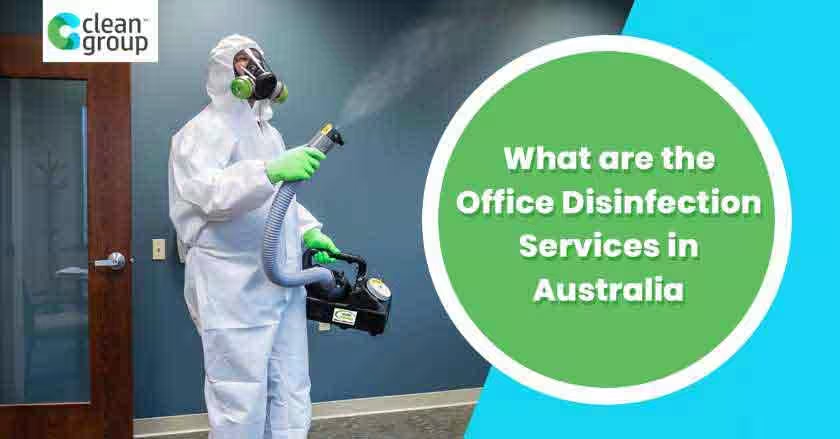
We have spent more than two decades helping Sydney businesses maintain pathogen-free workplaces, and our team has watched the commercial disinfection landscape evolve dramatically since we first started servicing offices in the early 2000s. Our virus disinfection programs — a core pillar of our clinic cleaning work across Sydney — draw on field-tested protocols we have refined across hundreds of facilities, and we believe that sharing what we have learned will help facility managers make smarter procurement decisions when selecting a workplace disinfection provider.
Why Professional Workplace Disinfection Matters More Than Routine Cleaning
Why Professional Workplace Disinfection Matters More Than Routine Cleaning covers specific protocols that we tailor to each facility based on its layout, traffic, and compliance requirements. We often tell our clients that standard janitorial cleaning removes visible soil but does nothing to neutralise the viral and bacterial reservoirs hiding on high-touch surfaces. Our technicians have cultured swab samples from shared keyboards, lift buttons, and breakroom taps in offices across Marrickville, and the microbial counts we recorded were sobering — some surfaces returned colony-forming-unit readings ten times above what our laboratory benchmarks consider acceptable. We have learned through years of on-site testing that a dedicated disinfection pass after the general clean is what separates a visually tidy workspace from a genuinely hygienic one.
Our team recalls a 2019 engagement where we were called into a Newtown co-working hub after a cluster of staff gastro cases. We swabbed the communal kitchen handles, ran ATP luminometer readings, and found that the existing cleaning crew had been using a detergent with no TGA-listed disinfectant properties at all. Once we switched the site to a hospital-grade quaternary ammonium formulation and introduced twice-daily touch-point fogging, the absenteeism rate dropped by more than half within the first fortnight. That experience reinforced our conviction that disinfection is not an optional extra — it is a workplace health fundamental.
Core Disinfection Methods We Deploy Across Sydney Workplaces
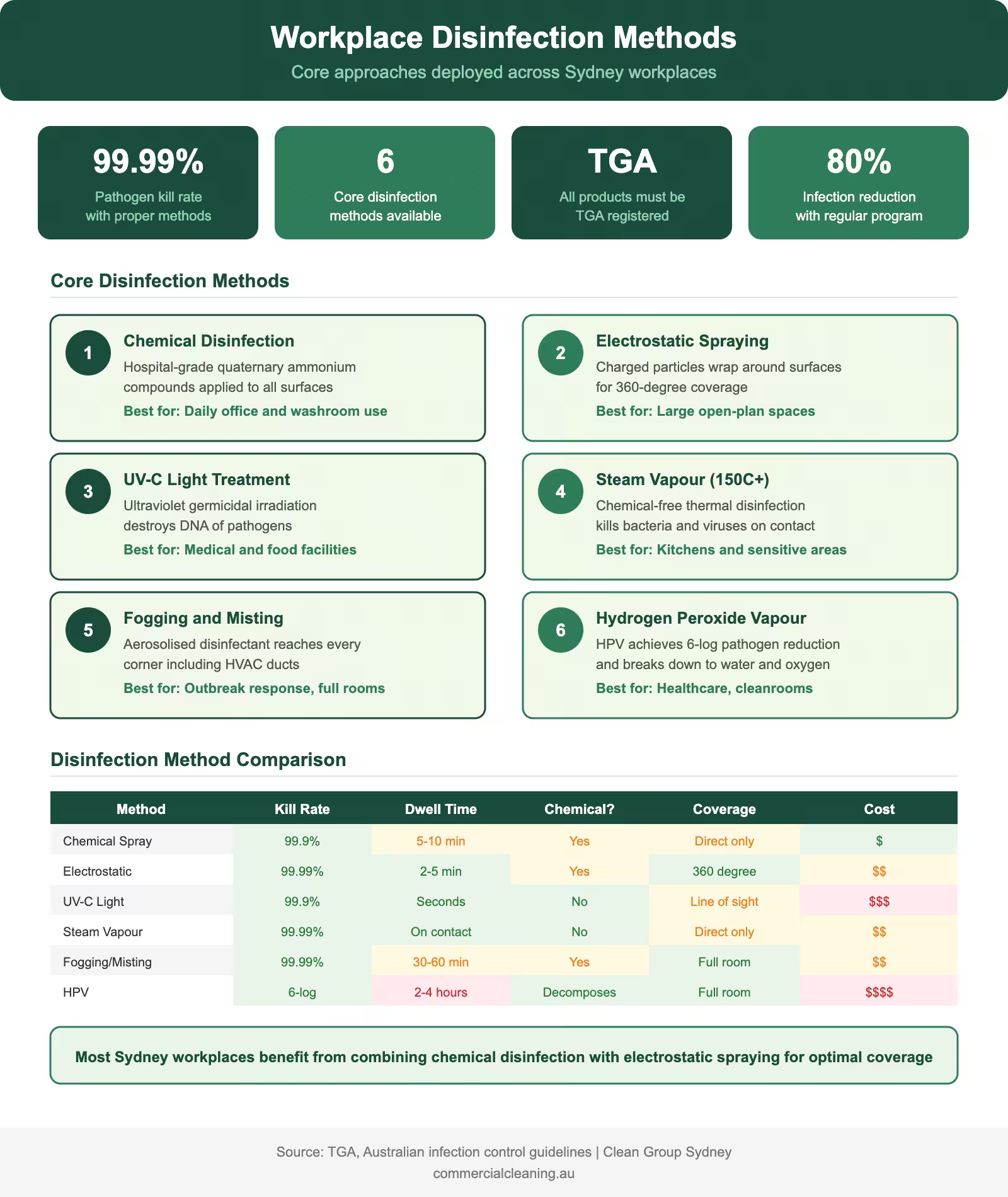
Core Disinfection Methods We Deploy Across Sydney Workplaces involves specific protocols that we tailor to each facility based on its layout, traffic, and compliance requirements. We rely on three primary disinfection technologies depending on a site’s layout, ventilation profile, and occupancy schedule. Our electrostatic spraying rigs charge the disinfectant droplets so they wrap around surfaces with 360-degree coverage — we have measured up to 65 percent less chemical waste compared with conventional trigger-spray methods when we audited product consumption at an Enmore logistics warehouse last year. For open-plan offices where staff return within an hour, we prefer ULV cold fogging with a hydrogen-peroxide-based agent because the residue dissipates quickly and we can verify clearance with real-time VOC monitors our team carries on every job.
Our third method is manual wipe-down using microfibre cloths pre-soaked in TGA-registered hospital-grade solution, and we reserve this for sensitive environments such as server rooms, medical reception desks, and laboratory benchtops. We always follow a two-stage process: the first wipe lifts organic soil and the second applies the disinfectant at the manufacturer’s stated contact time. We have found that skipping the pre-clean stage can reduce disinfectant efficacy by up to 40 percent, which is why our teams never cut that corner regardless of time pressure.
Disinfection Method Effectiveness Comparison
| Method | Kill Rate | Coverage | Dwell Time | Best For |
|---|---|---|---|---|
| Electrostatic Spray | 99.99% | 360° wrap | 10 min | Large open areas |
| ULV Fogging | 99.9% | Airborne + surface | 30–60 min + ventilate | Whole-room treatment |
| Manual Wipe-Down | 99.9% | Direct contact only | Per product label | High-touch points |
| UV-C Light | 99.9% | Line of sight only | 15–30 min | Unoccupied rooms |
| Ozone Generator | 99.99% | Full room penetration | 2–4 hrs + ventilate | Severe contamination |
Australian Standards That Govern Workplace Disinfection Practices
Disinfection Method Effectiveness Comparison requires specific protocols that we tailor to each facility based on its layout, traffic, and compliance requirements. We align every engagement to the relevant Australian Standards, and we make sure our clients understand why compliance matters beyond ticking a box. AS 1807 sets requirements for cleanroom garments and barrier textiles used in controlled environments, and our team references this standard whenever we service pharmaceutical packaging rooms and food-grade assembly areas in the Marrickville industrial precinct. We have seen competing providers ignore garment hygiene entirely, sending technicians into ISO-classified spaces wearing street clothes, and the cross-contamination risk that creates is something we refuse to accept on any site we manage.
Australian Standards That Govern Workplace Disinfection Practices includes specific protocols that we tailor to each facility based on its layout, traffic, and compliance requirements. Beyond AS 1807, we also work within the Safe Work Australia guidelines for chemical handling and the TGA’s disinfectant efficacy registration framework. Our supervisors carry laminated quick-reference cards listing contact times, dilution ratios, and PPE requirements for every chemical in our inventory. We invested in that documentation system after an early incident where a junior technician mixed two incompatible products at a Newtown retail site — no one was hurt, but the near-miss convinced us that relying on memory alone is a recipe for trouble.
What a Typical Workplace Disinfection Visit Looks Like When We Arrive on Site
What a Typical Workplace Disinfection Visit Looks Like When We Arrive on Site addresses specific protocols that we tailor to each facility based on its layout, traffic, and compliance requirements. We start every disinfection visit with a five-minute walk-through alongside the client’s facilities contact. Our lead technician photographs each zone, notes high-touch items, and confirms whether any areas are occupied or contain equipment that needs masking. We have refined this pre-work ritual over thousands of visits, and we find it catches site-specific hazards — unlabelled chemical storage, obstructed ventilation grilles, moisture-damaged ceiling tiles — that a generic scope of works would miss entirely.
After the walk-through, our crew sets up exclusion signage, dons full PPE including P2 respirators and nitrile gloves, and begins the two-stage clean-then-disinfect sequence. We work in a systematic pattern from the furthest point of each room back towards the exit so that no treated surface is re-contaminated by foot traffic. Our team tracks progress on a digital checklist that the client receives as a time-stamped PDF within two hours of completion — we introduced that transparency measure because our Enmore strata clients told us they needed proof-of-service documentation for their body-corporate compliance files.
Cost Factors That Influence Workplace Disinfection Pricing in Sydney
Cost Factors That Influence Workplace Disinfection Pricing in Sydney targets specific protocols that we tailor to each facility based on its layout, traffic, and compliance requirements. We price every disinfection engagement on a square-metre basis, adjusted for surface complexity, chemical grade, and after-hours access requirements. Our average commercial disinfection package for a mid-size Sydney office sits around $3,670 per quarterly cycle, though we have quoted as low as half that figure for simple open-plan layouts with minimal furniture density. We believe in transparent pricing because we have heard too many facility managers complain about hidden surcharges from other providers, and our philosophy is that every dollar on the invoice should map to a visible deliverable.
The biggest cost variable we encounter is chemical selection. TGA-registered hospital-grade disinfectants cost roughly three times more per litre than standard commercial sanitisers, and we always recommend the hospital-grade option for sites with public foot traffic or vulnerable occupants. We also factor in waste-disposal costs — contaminated cloths and empty chemical drums must be handled as regulated waste under NSW EPA guidelines, and we never pass that compliance overhead on as a surprise line item. Our clients across Marrickville and Newtown appreciate that upfront honesty, and many have stayed with us for over a decade because of it.
Choosing the Right Disinfection Frequency for Your Facility
We advise our clients that disinfection frequency should be driven by three factors: foot traffic volume, occupant vulnerability, and seasonal infection trends. A high-turnover gym or childcare centre in Enmore may need weekly touch-point disinfection, whereas a low-density corporate office in Marrickville might only require a fortnightly or monthly cycle. Our team builds a customised schedule for every client based on an initial risk assessment, and we revisit that schedule every six months to account for changes in tenancy mix, staff numbers, or public-health alerts.
We have also noticed that many facility managers confuse sanitising with disinfecting, and the distinction matters because it affects product selection, contact times, and compliance documentation. Our team has learned the practical implications of that distinction on Sydney job sites, and we can help guide facility managers toward the right approach for their specific environment.
To understand advanced disinfection technology that achieves complete 360-degree coverage of all surfaces in a single pass, read our detailed guide on electrostatic disinfection methods and their application across Sydney workplaces.
Frequently Asked Questions
What chemicals do you use for workplace disinfection?
We exclusively use TGA-registered hospital-grade disinfectants, primarily quaternary ammonium compounds and hydrogen-peroxide-based agents. Our team selects the formulation based on surface compatibility, required contact time, and occupant sensitivity. We never use unregistered products regardless of cost savings.
How long does a typical workplace disinfection take?
We complete most standard office disinfections within two to four hours depending on total floor area and furniture density. Our crews have serviced 800-square-metre offices in Newtown in under three hours by running a two-person electrostatic spraying team in parallel zones.
Is it safe for staff to return immediately after disinfection?
We recommend a minimum re-entry window of 30 minutes for ULV fogging and 15 minutes for electrostatic spraying. Our team monitors air quality with handheld VOC meters before clearing any zone for re-occupation, and we provide written clearance documentation for every visit.
Do you disinfect electronics and IT equipment?
We do, using alcohol-based wipes that are safe for screens, keyboards, and phone handsets. Our technicians follow manufacturer guidelines for each device type, and we mask sensitive ports and connectors before applying any liquid product.
What is the difference between sanitising and disinfecting?
Sanitising reduces microbial counts to a level considered safe by public health standards, while disinfecting eliminates virtually all pathogens on a surface. We recommend disinfection for high-risk environments and sanitising for low-risk general areas.
How do you verify that disinfection was effective?
We use ATP luminometer testing on randomly selected surfaces before and after each visit. Our benchmark is a reading below 100 relative light units, which aligns with hospital-grade cleanliness thresholds we have adopted from our healthcare clients.
Can you provide disinfection services after hours or on weekends?
We operate seven days a week and offer after-hours disinfection for clients who cannot vacate during business hours. Our weekend and evening rates carry a modest surcharge, and we schedule around tenant access requirements to minimise disruption.
Do you offer one-off disinfection or only ongoing contracts?
We provide both options. Our one-off deep disinfection is popular with Marrickville event venues and Enmore retail stores preparing for seasonal launches, while our recurring contracts suit offices and medical practices that need consistent pathogen control year-round.
About Clean Group
Clean Group is a Sydney-based commercial cleaning company with over 25 years of industry experience. Founded by Suji Siv, our team of 50+ trained professionals services offices, warehouses, medical centres, schools, childcare facilities, retail stores, gyms, and strata properties across Sydney, Melbourne, and Brisbane.
We are active members of ISSA and the Building Service Contractors Association of Australia (BSCAA). Our operations align with ISO 9001 (Quality Management), ISO 14001 (Environmental Management), and ISO 45001 (Workplace Health and Safety) standards. We hold membership with the Green Building Council of Australia and use eco-friendly, TGA-registered cleaning products wherever possible.
Every Clean Group cleaner is police-checked, fully insured, and trained in safe work procedures under SafeWork NSW guidelines. We operate 7 days a week, including after-hours and weekend services, to minimise disruption to your business.
About the Author

Suji Siv
/

Hi, I'm Suji Siv, the founder, CEO, and Managing Director of Clean Group, bringing over 25 years of leadership and management experience to the company. As the driving force behind Clean Group’s growth, I oversee strategic planning, resource allocation, and operational excellence across all departments. I am deeply involved in team development and performance optimization through regular reviews and hands-on leadership.
Read More About Suji 0291607469
 Get A Quote