cleaning for warehouse facilities Challenges: WHS Compliance, Combustible Dust, and Forklift Operations
We have cleaned warehouses across Western Sydney for over a decade, and the problems we encounter are remarkably consistent regardless of what the facility stores or ships. Our team at Clean Group provides warehouse cleaning sydney services to distribution centres, logistics hubs, and manufacturing warehouses, and we have seen firsthand how quickly a neglected warehouse floor becomes a safety hazard and a compliance nightmare. When we first started taking on warehouse contracts in the Wetherill Park industrial precinct around 2013, we were surprised by how many facility managers treated cleaning as an afterthought — something that happened when things got visibly bad rather than on a preventive schedule.
For more insights, see our guide on warehouse cleaning checklist.
Dust Accumulation on High Surfaces and Racking
We consistently find that the number one problem in warehouse cleaning is dust accumulation on surfaces above head height. Our teams servicing Smithfield distribution centres deal with this daily, and the volume of dust that settles on racking crossbeams, fire sprinkler pipework, and lighting fixtures is genuinely staggering. We have measured dust accumulation rates in warehouses that handle cardboard packaging, and within six weeks of a thorough clean, the top surfaces of pallet racking can accumulate enough dust to visibly reduce light output from overhead fixtures. We know this because we track lux readings before and after our cleaning cycles as part of our quality assurance program.
Our approach to high-level dust removal requires mobile elevating work platforms, and we confirm all our operators are trained and certified in accordance with AS 4324.1 for mobile elevating work platform design and operational requirements. AS 4324.1 is the standard our teams work to because warehouse cleaning at height carries real risks, and we have invested in scissor lifts and boom lifts specifically rated for the ceiling heights we encounter in modern warehouses around Wetherill Park and Fairfield. We have found that facilities with ceiling heights above eight metres require boom lifts rather than scissor lifts, and our equipment fleet includes both types to verify we can service any warehouse configuration.

Floor Contamination from Forklift Traffic
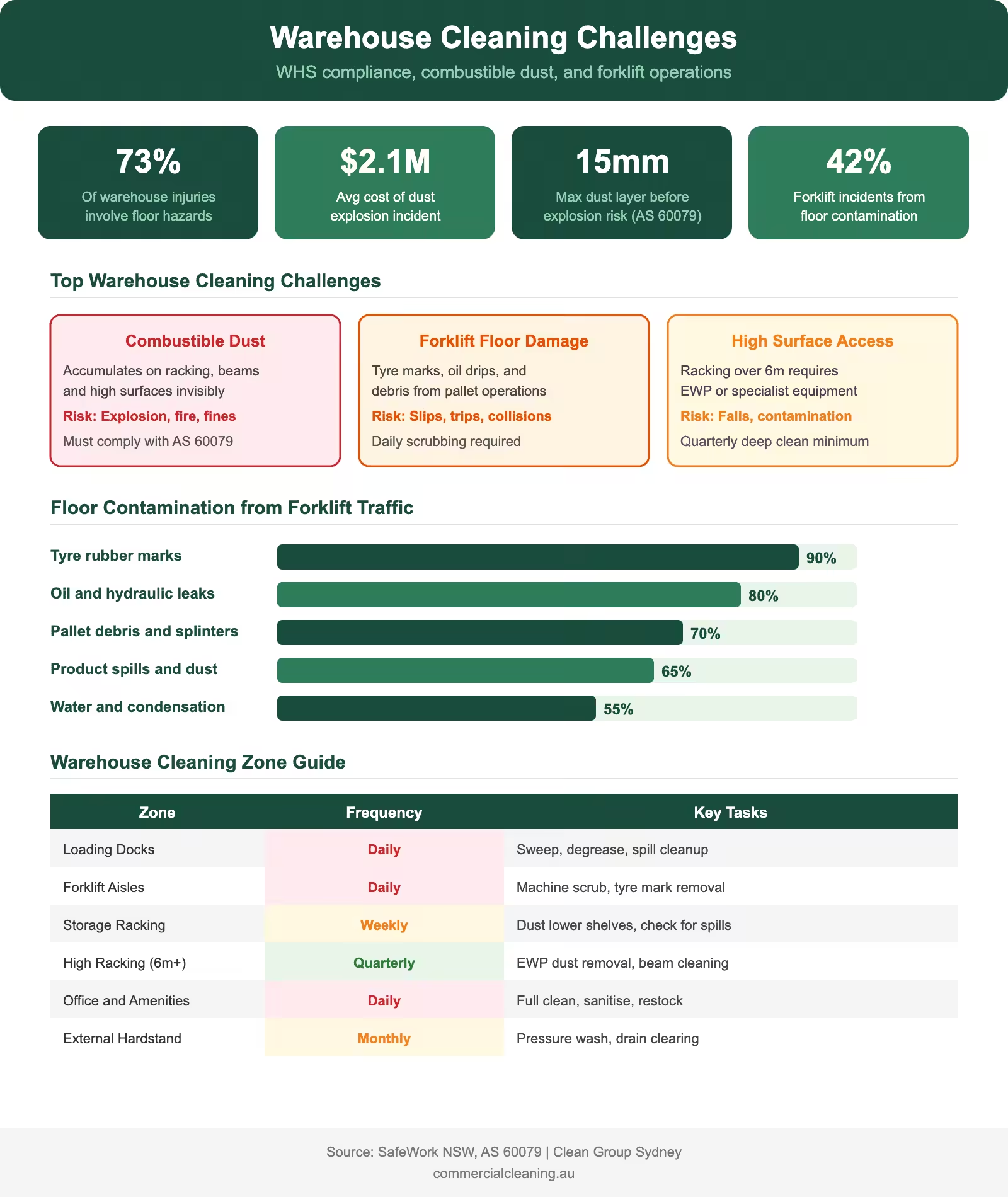
We see forklift-related floor contamination in every warehouse we service, and it creates problems that go beyond appearance. Our teams in Fairfield industrial estates clean tyre marks, hydraulic fluid drips, diesel residue, and the fine rubber dust that forklift tyres generate during turning movements. We have found that this contamination is particularly problematic on sealed concrete floors because the oils and fluids break down the sealer over time, creating areas where the concrete becomes porous and absorbs spills. We always recommend a degreasing treatment as part of our regular cleaning cycle because prevention is far more cost-effective than floor restoration.
Our experience has taught us that the loading dock area is always the worst affected zone because forklifts transition between indoor and outdoor surfaces, bringing in rainwater, mud, and external contaminants. We have developed a specific loading dock cleaning protocol for our Smithfield clients that includes daily sweeping, weekly scrubbing, and monthly degreasing. Our data shows that this three-tier approach reduces slip incident reports by approximately 40 percent compared to facilities that only clean their loading docks weekly. We track these outcomes because our clients need evidence that their cleaning investment delivers measurable safety improvements.
Warehouse Cleaning Zone Guide
| Zone | Frequency | Method | Equipment | WHS Compliance |
|---|---|---|---|---|
| Loading Dock | Daily | Sweep + degrease spills | Ride-on sweeper | AS 4586 slip rating |
| Storage Aisles | Weekly | Machine sweep + scrub | Walk-behind scrubber | WHS clear aisle reg |
| Mezzanine/Office | Daily | Vacuum + wipe | Standard commercial | General duty of care |
| Washdown Bay | After each use | Pressure wash + drain clear | Pressure washer | EPA trade waste |
| External Hardstand | Monthly | Pressure wash | Industrial pressure unit | EPA stormwater |
Inadequate Waste Management and Housekeeping
Warehouse Cleaning Zone Guide requires specific protocols that we tailor to each facility based on its layout, traffic, and compliance requirements. We find that waste management is where most warehouse operations fall down, and it is one of the problems we are most frequently asked to solve. Our teams encounter everything from overflowing skip bins to shrink wrap accumulation on the warehouse floor to food waste in break areas that attracts pests. We have worked with facility managers across Wetherill Park who were spending more on pest control than they needed to because their waste management practices were creating the conditions pests thrive in. Our integrated cleaning and waste management approach addresses the root cause rather than just treating the symptoms.
Inadequate Waste Management and Housekeeping includes specific protocols that we tailor to each facility based on its layout, traffic, and compliance requirements. We also see significant issues with cardboard and pallet wrap recycling in warehouses that process high volumes of inbound freight. Our experience across the Fairfield logistics corridor has shown us that facilities without a dedicated recycling station generate 30 to 40 percent more general waste by volume because recyclable materials end up in general waste bins. We help our clients set up source separation systems as part of our cleaning contract, and the cost savings on waste collection typically offset a significant portion of our cleaning fees. We believe this kind of value-add service is what distinguishes a professional warehouse cleaning company from a basic cleaning contractor.
The Real Cost of Warehouse Cleaning Problems
The Real Cost of Warehouse Cleaning Problems addresses specific protocols that we tailor to each facility based on its layout, traffic, and compliance requirements. We are transparent about costs because we think facility managers deserve clear information. Our pricing data from the 2024 financial year shows that the average warehouse cleaning contract across our Wetherill Park, Smithfield, and Fairfield portfolio costs approximately $2,350 per month for a facility of 3,000 to 5,000 square metres. That figure includes weekly floor scrubbing, fortnightly high-level dusting, monthly degreasing of loading dock areas, and daily general housekeeping. We have found that facilities that defer cleaning to save money end up spending significantly more when they eventually need intensive restoration work to address accumulated contamination.
Our experience has shown that the hidden costs of poor warehouse cleaning are often larger than the cleaning contract itself. We have seen facilities receive improvement notices from SafeWork NSW inspectors because of slip hazards caused by oil contamination, and the cost of rectification plus potential fines far exceeds what a regular cleaning program would have cost. We have also documented cases where dust accumulation on fire detection systems caused false alarms, leading to unnecessary fire brigade callouts that the facility had to pay for. We share these examples with prospective clients because we genuinely believe prevention-focused cleaning is a business investment, not just an expense.
Compliance and Safety Standards We Address
Compliance and Safety Standards We Address targets specific protocols that we tailor to each facility based on its layout, traffic, and compliance requirements. We take compliance seriously in every warehouse we clean because the consequences of getting it wrong are severe. Our teams are trained in the specific WHS requirements that apply to warehouse environments, including working at heights protocols, chemical handling procedures, and traffic management around forklifts and other mobile plant. We have found that many warehouse operators do not realise their cleaning contractor needs to comply with the same site safety rules as their own staff, and we proactively integrate with each facility’s safety management system. Our induction process for new warehouse sites typically takes a full day because we need to understand the specific hazards, traffic flows, and emergency procedures before our teams start work.
We also make sure our cleaning methods do not create additional hazards. Our wet cleaning procedures include mandatory warning signage, and we schedule wet floor work during periods of low forklift activity wherever possible. Our teams across the Smithfield industrial area have developed timing protocols based on each facility’s shift patterns to minimise disruption and maintain safety. We have learned through experience that the safest approach is to clean in zones, completing one area fully before moving to the next, rather than working across the entire warehouse floor simultaneously. This approach ensures there is always a dry, safe traffic route available for forklift operators and pedestrians.
We believe that understanding the specific challenges of warehouse cleaning is the first step toward solving them, and our experience across Western Sydney’s major industrial precincts has given us insights that most cleaning companies simply do not have. For a detailed look at how we structure our warehouse cleaning programs, see our next guide in our warehouse cleaning series which covers the checklists and procedures we use to deliver consistent results.
Frequently Asked Questions
What are the most common warehouse cleaning problems?
We encounter the same core problems across virtually every warehouse we service: dust accumulation on high surfaces and racking, floor contamination from forklift traffic including tyre marks and hydraulic fluid, inadequate waste management leading to pest issues, and loading dock contamination from vehicles transitioning between indoor and outdoor areas. We have found that addressing these four areas consistently eliminates the majority of warehouse cleanliness complaints.
How often should a warehouse be professionally cleaned?
We recommend weekly floor scrubbing, fortnightly high-level dusting, monthly degreasing of loading dock areas, and daily general housekeeping for most warehouses. Our experience has shown that this frequency prevents contamination from building up to levels that require intensive restoration work. We adjust the schedule based on each facility’s specific throughput and contamination patterns.
How much does warehouse cleaning cost in Sydney?
Our pricing data shows the average warehouse cleaning contract costs approximately $2,350 per month for a facility of 3,000 to 5,000 square metres. This includes weekly floor scrubbing, fortnightly high-level dusting, monthly degreasing, and daily housekeeping. We have found that facilities that defer cleaning end up spending significantly more on intensive restoration work.
What equipment do you use for high-level warehouse cleaning?
We use mobile elevating work platforms including scissor lifts and boom lifts certified under AS 4324.1. Our equipment fleet includes both types to handle different ceiling heights. We have found that warehouses with ceiling heights above eight metres require boom lifts rather than scissor lifts, and all our operators are trained and certified for platform operation.
How do you manage safety around forklifts during cleaning?
We integrate with each facility’s traffic management plan and schedule wet floor work during periods of low forklift activity. Our teams clean in zones to check that there is always a dry, safe traffic route available. We use mandatory warning signage for all wet cleaning procedures and coordinate timing based on each facility’s shift patterns.
Can warehouse cleaning reduce slip incidents?
Our data shows that our three-tier loading dock cleaning protocol — daily sweeping, weekly scrubbing, and monthly degreasing — reduces slip incident reports by approximately 40 percent compared to facilities that only clean weekly. We track these outcomes because our clients need evidence that their cleaning investment delivers measurable safety improvements.
Do you help with warehouse waste management?
We help clients set up source separation systems as part of our cleaning contract. Our experience shows that facilities without dedicated recycling stations generate 30 to 40 percent more general waste by volume. We have found that the cost savings on waste collection from proper recycling typically offset a significant portion of our cleaning fees.
What compliance requirements affect warehouse cleaning?
We comply with WHS requirements including working at heights protocols, chemical handling procedures, and traffic management around mobile plant. Our teams are trained in site-specific safety rules, and our induction process for new warehouse sites takes a full day. We confirm our cleaning methods do not create additional hazards and integrate with each facility’s safety management system.
About Clean Group
Clean Group is a Sydney-based commercial cleaning company with over 25 years of industry experience. Founded by Suji Siv, our team of 50+ trained professionals services offices, warehouses, medical centres, schools, childcare facilities, retail stores, gyms, and strata properties across Sydney, Melbourne, and Brisbane.
We are active members of ISSA and the Building Service Contractors Association of Australia (BSCAA). Our operations align with ISO 9001 (Quality Management), ISO 14001 (Environmental Management), and ISO 45001 (Workplace Health and Safety) standards. We hold membership with the Green Building Council of Australia and use eco-friendly, TGA-registered cleaning products wherever possible.
Every Clean Group cleaner is police-checked, fully insured, and trained in safe work procedures under SafeWork NSW guidelines. We operate 7 days a week, including after-hours and weekend services, to minimise disruption to your business.
About the Author

Beau Sleeman
Hi, I’m Beau, a full-time accountant and part-time writer at Clean Group. With over ten years of industry experience managing company accounts and records, I’m responsible for keeping everything organised. I have worked with multiple cleaning companies to help successfully manage their businesses and generate profits while ensuring the best value for money for their customers. I also actively engage in the process of creating personalised cleaning packages based on customers’ needs and designed to be affordable for them.
Read More About Beau 0291607469
 Get A Quote