Transform Your Warehouse: WHS Compliance, Loading Dock Standards, and Forklift Safety Integration
Warehouse cleaning services professionals need to understand this. We have transformed warehouses that facility managers had essentially given up on, and the results never stop surprising us. Our team at Clean Group provides logistics facility cleaning across Sydney’s industrial corridors, and some of our most satisfying projects have been the complete transformations where a neglected warehouse goes from grimy and hazardous to clean and compliant in a single intensive treatment. When we walk into a warehouse in Seven Hills that has not had professional cleaning in years, we see the same patterns — embedded floor contamination, dust-coated racking up to the ceiling, grease-blackened loading docks, and amenities blocks that workers avoid using.
For more insights, see our guide on warehouse cleaning challenges.
Assessing the Scale of a Warehouse Transformation
Assessing the Scale of a Warehouse Transformation covers specific protocols that we tailor to each facility based on its layout, traffic, and compliance requirements. We start every transformation project with a detailed assessment because we have learned that underestimating the scope leads to rushed work and poor outcomes. Our assessment team in Kings Park walks every square metre of the facility, documenting floor condition, contamination types, surface damage, and access restrictions. We photograph the current state of every zone because these before images become part of our transformation report and give our clients a clear visual record of the improvement. We have found that facility managers are often so accustomed to the deteriorated state of their warehouse that they do not fully appreciate how bad conditions have become until they see the before and after comparison.
Our assessment also evaluates structural considerations that affect our cleaning approach. We check floor load ratings because our ride-on equipment needs to operate safely, and we assess the condition of mezzanines, catwalks, and elevated platforms where our teams will need to work at height. We confirm all elevated access points meet AS 1170.1 requirements for structural design actions, because the loads imposed by our cleaning equipment and personnel on these structures must fall within the design parameters. AS 1170.1 governs the permanent, imposed, and other actions on structures, and we have encountered mezzanines in older Kings Park warehouses where the load rating was insufficient for our scrubbing equipment, requiring us to use lighter manual methods in those areas.
The Transformation Process: Phase by Phase
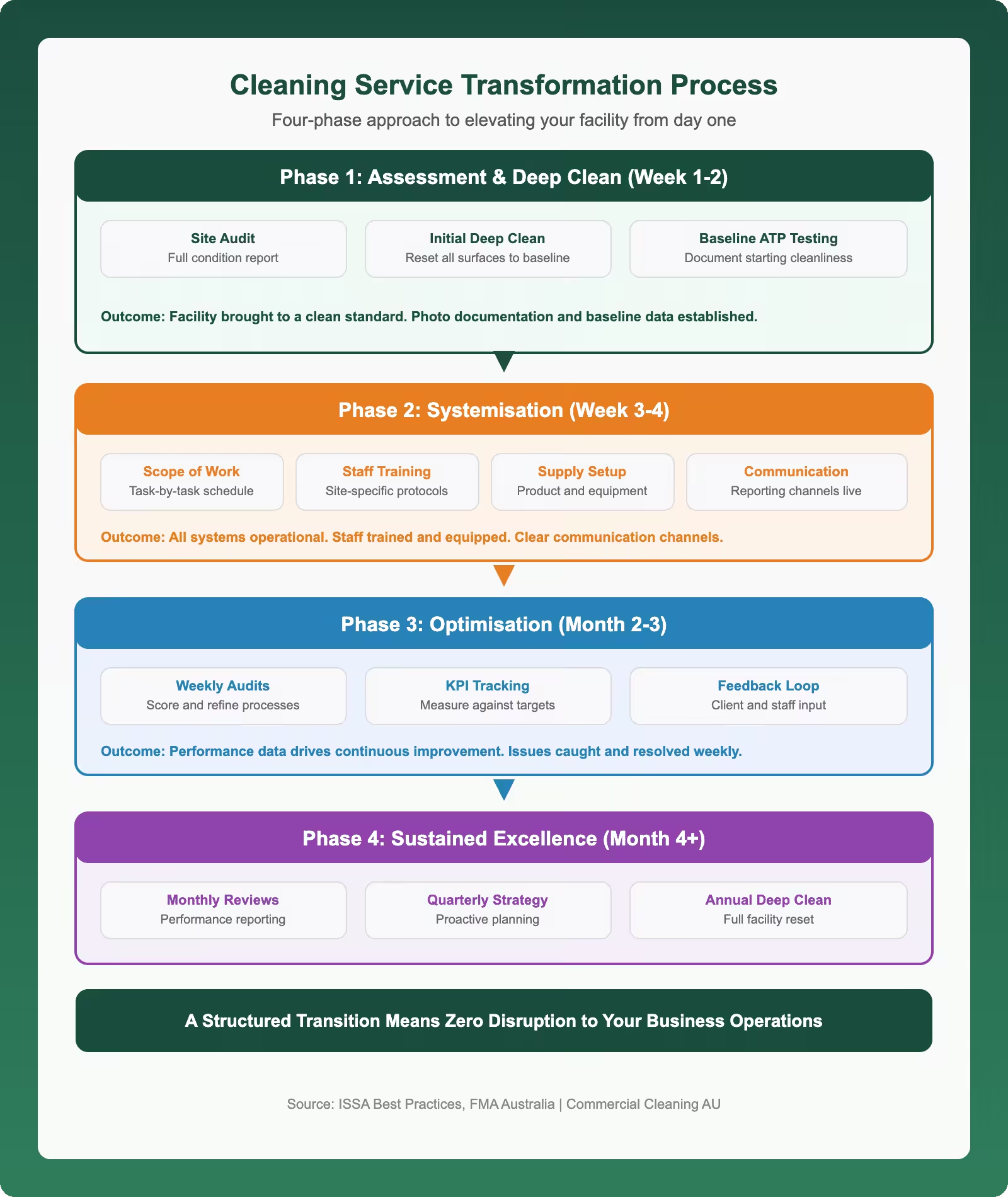
We break every warehouse transformation into four distinct phases because trying to do everything simultaneously leads to chaos and cross-contamination between clean and dirty zones. Our Phase 1 focuses exclusively on high-level cleaning — removing accumulated dust from racking, cable trays, services pipework, and lighting fixtures using telescopic tools and scissor lifts. We always start high and work down because dust displaced from upper surfaces settles on the floor, and cleaning the floor first would mean cleaning it twice. Our Seven Hills teams typically spend two full days on Phase 1 for a 5,000 square metre warehouse with standard racking heights.
Phase 2 addresses walls, dock doors, roller shutters, and vertical surfaces that have accumulated contamination from years of warehouse operations. We use pressure washing on loading dock walls and chemical degreasing on areas around forklift charging stations where battery acid mist has etched into painted surfaces. Our Bella Vista warehouse transformations have included complete repainting recommendations after our cleaning revealed that the underlying surface damage was too severe for cleaning alone to restore, and we appreciate clients who trust our honest assessment even when it means additional expense.
Phase 3 is the floor transformation, which is always the most dramatic and labour-intensive phase. We start with mechanical scrubbing using aggressive pads or brushes to break up embedded contamination, followed by extraction of the dirty solution, and then a second pass with clean solution to remove residual contamination. For severely neglected floors, we add a chemical stripping phase before scrubbing to remove failed floor sealer that has become a trap for dirt and oils. Our experience across Seven Hills logistics centres has taught us that skipping the stripping phase on failed sealers just pushes contamination around rather than removing it.
Warehouse Cleaning Zone Guide
| Zone | Frequency | Method | Equipment | WHS Compliance |
|---|---|---|---|---|
| Loading Dock | Daily | Sweep + degrease spills | Ride-on sweeper | AS 4586 slip rating |
| Storage Aisles | Weekly | Machine sweep + scrub | Walk-behind scrubber | WHS clear aisle reg |
| Mezzanine/Office | Daily | Vacuum + wipe | Standard commercial | General duty of care |
| Washdown Bay | After each use | Pressure wash + drain clear | Pressure washer | EPA trade waste |
| External Hardstand | Monthly | Pressure wash | Industrial pressure unit | EPA stormwater |
Floor Restoration and Protection
Warehouse Cleaning Zone Guide requires specific protocols that we tailor to each facility based on its layout, traffic, and compliance requirements. We include floor protection as the final element of Phase 3 because a transformed floor without new protection will deteriorate back to its previous condition within months. Our standard approach applies two coats of industrial-grade floor sealer after the transformation scrub, with a minimum 12-hour cure time between coats. We have tested numerous sealer products across our Kings Park portfolio and settled on a polyurethane-modified acrylic that offers the best balance of chemical resistance, abrasion resistance, and ease of maintenance for forklift-trafficked warehouse floors.
Floor Restoration and Protection includes specific protocols that we tailor to each facility based on its layout, traffic, and compliance requirements. We always explain to our clients that floor sealer is not permanent and needs to be maintained through our regular cleaning program to achieve its rated lifespan. Our data shows that a properly maintained sealer lasts 18 to 24 months in a high-traffic warehouse before it needs recoating, while an unmaintained sealer fails in as little as six months. We build sealer maintenance into our ongoing cleaning contracts because we have seen too many transformation projects undone by neglect after the initial work was completed.
What a Complete Transformation Costs
What a Complete Transformation Costs addresses specific protocols that we tailor to each facility based on its layout, traffic, and compliance requirements. We quote every transformation individually because the scope varies enormously between facilities, but we can share our typical pricing to give facility managers a realistic budget expectation. Our data from 2024 shows that a complete warehouse transformation including all four phases costs approximately $2,430 per 1,000 square metres for a facility in the Seven Hills, Kings Park, or Bella Vista industrial areas. That figure includes high-level cleaning, wall and dock treatment, floor stripping and scrubbing, two coats of floor sealer, and our detailed before-and-after report. We have found that this investment pays for itself within the first year through reduced maintenance costs, improved safety outcomes, and better staff morale in facilities where workers can see their employer cares about working conditions.
We also offer a transformation guarantee where we return within 30 days for a free touch-up of any areas that have not responded as expected to our initial treatment. Our experience has taught us that some contamination types — particularly oil stains that have penetrated deeply into unsealed concrete — may require a second treatment cycle to fully remove. We would rather manage this expectation upfront and deliver a genuine transformation than overpromise and leave our clients disappointed. For the specific challenges that arise in warehouse cleaning and our solutions for each, see our next guide in our warehouse cleaning series.
Frequently Asked Questions
How long does a complete warehouse transformation take?
We typically allow five to seven working days for a 5,000 square metre warehouse, broken into four phases: high-level cleaning, wall and dock treatment, floor transformation, and sealer application. Our Seven Hills teams spend roughly two days on high-level work alone for standard racking heights. We can compress timelines for urgent projects but prefer adequate time for each phase.
Can the warehouse continue operating during a transformation?
We work in zones to allow continued operations in areas we are not currently treating. Our teams coordinate with facility managers to schedule each zone around operational priorities. We have completed transformations in fully operational Kings Park distribution centres by working zone by zone during quieter periods and overnight shifts.
How much does a warehouse transformation cost?
Our 2024 data shows approximately $2,430 per 1,000 square metres for a complete transformation including all four phases plus floor sealer and reporting. We quote individually because scope varies between facilities, but this figure provides a realistic budget expectation for facilities in Western Sydney industrial areas.
How do you handle structural limitations during cleaning?
We assess floor load ratings and elevated platform conditions against AS 1170.1 structural design action requirements before deploying equipment. We have encountered mezzanines where load ratings were insufficient for our scrubbing equipment, requiring lighter manual methods in those areas. Safety always takes precedence over cleaning method preferences.
Will the floor stay clean after transformation?
We apply two coats of industrial floor sealer that lasts 18 to 24 months with proper maintenance. Without ongoing maintenance, sealer fails in as little as six months. We build sealer maintenance into ongoing cleaning contracts because transformation results only last with consistent follow-up care.
What if some stains don’t come out in the first treatment?
We offer a 30-day transformation guarantee including free touch-up of areas that need a second treatment. Deep oil stains in unsealed concrete sometimes require additional treatment cycles. We manage expectations upfront rather than overpromise on severely contaminated surfaces.
Do you provide before and after documentation?
We photograph every zone before and after transformation for our detailed report. Facility managers often don’t appreciate how deteriorated conditions have become until they see the visual comparison. We have found these reports valuable for demonstrating cleaning investment value to building owners and corporate management.
What floor sealer do you recommend for warehouses?
We use polyurethane-modified acrylic sealers that offer the best balance of chemical resistance, abrasion resistance, and ease of maintenance for forklift-trafficked floors. We have tested numerous products across our portfolio and apply two coats with 12-hour cure times between applications for best durability.
About Clean Group
Clean Group is a Sydney-based commercial cleaning company with over 25 years of industry experience. Founded by Suji Siv, our team of 50+ trained professionals services offices, warehouses, medical centres, schools, childcare facilities, retail stores, gyms, and strata properties across Sydney, Melbourne, and Brisbane.
We are active members of ISSA and the Building Service Contractors Association of Australia (BSCAA). Our operations align with ISO 9001 (Quality Management), ISO 14001 (Environmental Management), and ISO 45001 (Workplace Health and Safety) standards. We hold membership with the Green Building Council of Australia and use eco-friendly, TGA-registered cleaning products wherever possible.
Every Clean Group cleaner is police-checked, fully insured, and trained in safe work procedures under SafeWork NSW guidelines. We operate 7 days a week, including after-hours and weekend services, to minimise disruption to your business.
About the Author
Suji Siv
/

Hi, I'm Suji Siv, the founder, CEO, and Managing Director of Clean Group, bringing over 25 years of leadership and management experience to the company. As the driving force behind Clean Group’s growth, I oversee strategic planning, resource allocation, and operational excellence across all departments. I am deeply involved in team development and performance optimization through regular reviews and hands-on leadership.
Read More About Suji 0291607469
 Get A Quote