We have been cleaning tennis courts at schools, clubs, and council facilities across western Sydney for over six years, and the cost question is always the first thing facility managers ask when they call us. Our team services courts in Homebush West, Olympic Park, and Concord West where the surfaces range from synthetic grass and acrylic hardcourt to clay and cushioned polyurethane, and each material demands a different cleaning method with its own cost profile. We price every job based on the surface type, court condition, total area, and access constraints rather than applying a generic per-court rate, because a neglected synthetic turf court with embedded organic growth costs significantly more to restore than a well-maintained acrylic surface that just needs its annual deep clean. As providers of reliable office cleaning services, we bring the same transparent pricing approach to our outdoor facility work that our commercial clients expect from their regular cleaning contracts.
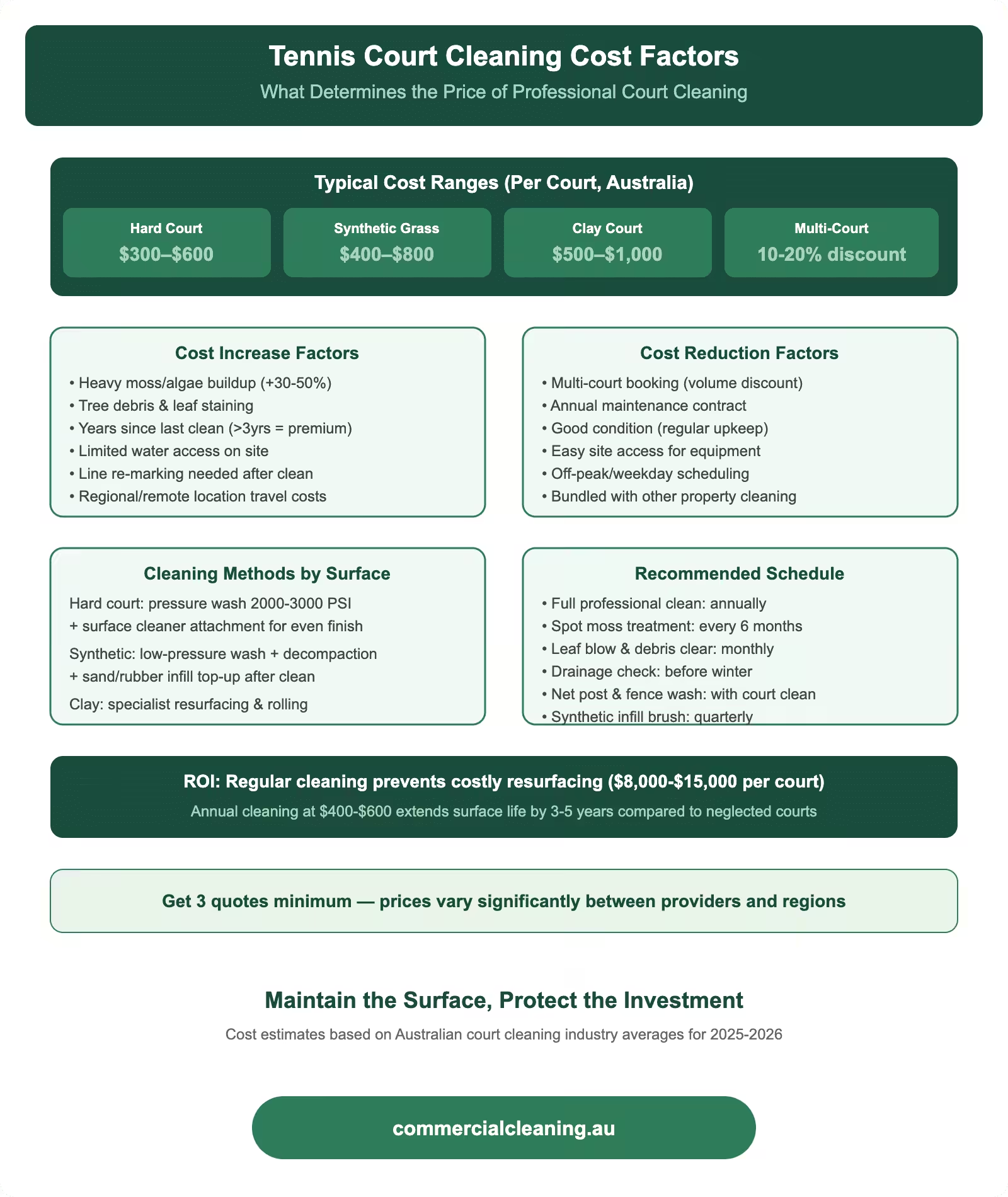
Tennis court cleaning cost factors showing price ranges by surface type, cost increase and decrease factors, cleaning methods, and recommended maintenance schedule
We assess five key variables when quoting a tennis court cleaning job: surface material, total square metreage, the type and severity of contamination present, site access for our equipment, and whether the client needs a one-off restoration or an ongoing maintenance program. A standard tennis court measures approximately 670 square metres including run-off areas, but we have cleaned facilities at Olympic Park with eight courts arranged in a continuous block that total over 5,000 square metres, and the economies of scale on a job that size are substantial. Surface material is the biggest cost driver because synthetic turf cleaning requires specialised equipment that acrylic or concrete courts do not, and biological contamination such as moss and algae demands chemical treatment with additional dwell time that extends the labour hours on site.
We also factor in the condition of the court infrastructure when preparing a quote. Cracked acrylic surfaces trap dirt in the fissures and require pre-treatment before pressure washing, while synthetic turf courts with compacted infill need a mechanical decompaction pass before the cleaning step can be effective. Our experience across the Homebush West and Concord West school network has shown us that courts which receive annual professional cleaning cost less per visit over a five-year period than courts that are left until they become a safety concern and need a full restoration. We always present our clients with both a one-off quote and an annual maintenance option so they can see the long-term cost comparison.
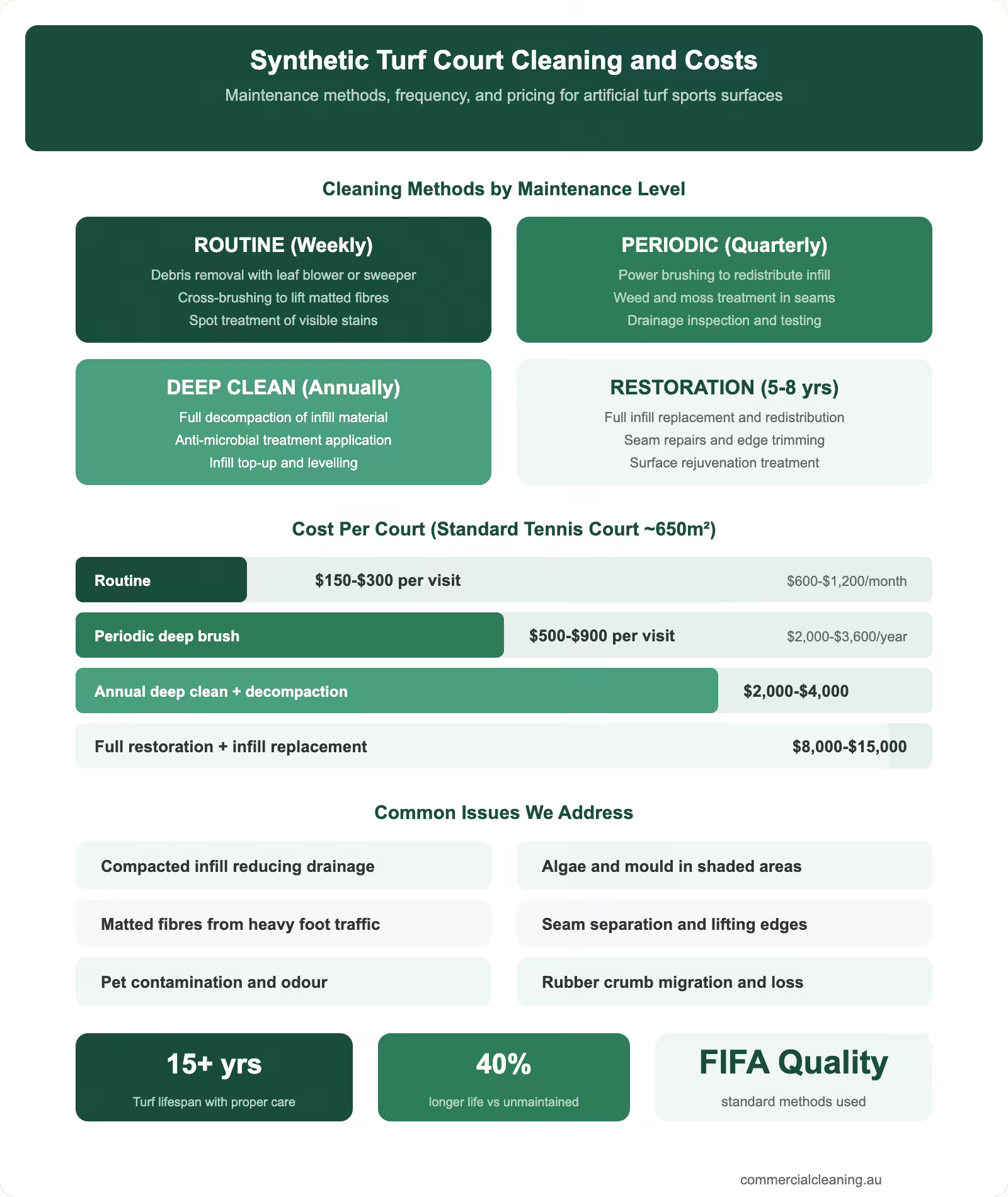
Synthetic turf court cleaning infographic showing four maintenance levels with costs per tennis court common issues and lifespan extension data
Synthetic Turf Court Cleaning Methods and Costs
We clean synthetic turf tennis courts using a process aligned with the maintenance recommendations in AS 4361, which covers the installation and maintenance of synthetic turf surfaces. Our method begins with a mechanical brush pass using a towed rotary unit that lifts compacted rubber or sand infill and removes surface debris including leaves, organic matter, and accumulated dirt. We then apply a moss and algae treatment using a product registered with the APVMA that kills biological growth without degrading the polyethylene turf fibres. After the required dwell time, we flush the surface with a low-pressure water system that carries the dead organic material and loosened contaminants off the court and into the stormwater or collection system. The final step is an infill redistribution pass that levels the playing surface and restores consistent ball bounce characteristics.
We have found that synthetic turf courts in shaded locations or near mature trees in Concord West and Homebush West accumulate biological growth much faster than open courts, and these typically need two chemical treatment cycles per visit rather than one. A single synthetic turf court of standard dimensions costs our clients approximately $2,400 for a full clean-and-restore service including infill decompaction, biological treatment, flushing, and redistribution. Courts on annual maintenance contracts receive a reduced rate because the biological growth and compaction levels are lower at each visit, which means less chemical product and fewer labour hours. We recommend two maintenance visits per year for courts in full sun and three for shaded courts to keep them in safe playing condition year-round.
Office Area Cleaning Frequency Guide
Area
Daily
Weekly
Monthly
Quarterly
Reception & Lobby
Vacuum, mop, wipe
Glass doors, furniture
Deep carpet clean
Window wash
Workstations
Surface wipe, bins
Monitor & keyboard
Drawer clean-out
Chair shampoo
Kitchen/Breakroom
Bench, sink, floor
Weekly
Deep degrease
Exhaust fan clean
Bathrooms
Full sanitise + restock
Grout scrub
Descale fixtures
Vent clean
Meeting Rooms
Table wipe, vacuum
AV equipment dust
Upholstery clean
Carpet extraction
Acrylic and Hardcourt Surface Cleaning
Office Area Cleaning Frequency Guide requires specific protocols that we tailor to each facility based on its layout, traffic, and compliance requirements. We clean acrylic and concrete tennis courts using hot-water pressure washing at pressures between 2,500 and 3,500 PSI depending on the surface condition and coating type. Our pressure washing unit is mounted on a surface cleaner attachment that distributes the spray evenly across a 500-millimetre path, which prevents the striping effect that a handheld lance produces on painted acrylic surfaces. We pre-treat stained areas with a sodium hypochlorite solution diluted to a concentration that kills moss and algae without bleaching the court colour, and we allow a fifteen-minute dwell time before commencing the pressure wash. The result is a court surface that looks close to newly painted without the cost of a full recoat.
Acrylic and Hardcourt Surface Cleaning includes specific protocols that we tailor to each facility based on its layout, traffic, and compliance requirements. Our experience at school facilities in Olympic Park has taught us that acrylic courts near playing fields accumulate a fine clay and soil film that standard pressure washing alone cannot remove. For these courts, we add an alkaline detergent to the pressure wash water that emulsifies the clay particles and allows them to be flushed off the surface cleanly. We tested this approach against plain water washing on adjacent courts at a Homebush West primary school and the detergent-assisted courts showed measurably better grip readings on our slip resistance meter after drying. That kind of evidence-based refinement is how we continuously improve our methods rather than just doing the same thing we did five years ago.
Safety Compliance and Slip Resistance Testing
We take slip resistance seriously on every tennis court we clean because a slippery surface after cleaning is worse than a dirty one from a liability perspective. Our technicians carry a portable pendulum slip resistance tester that we use to verify the court surface meets the minimum wet pendulum test value recommended by Standards Australia for sports surfaces. We take readings at three points on each court after cleaning and record the results in our completion report. If any reading falls below the threshold, we investigate the cause, which is usually residual detergent or a worn section of coating, and either re-rinse the area or flag it to the facility manager for resurfacing consideration.
We have also developed a safety protocol for working on multi-court facilities where some courts remain in use while we clean adjacent ones. At the Olympic Park tennis centre, we set up physical barriers and signage to separate the active cleaning zone from courts in play, and we schedule our water flushing direction so that runoff flows away from occupied courts rather than across walkways and access paths. Our team wears high-visibility clothing and steel-capped boots on every outdoor site, and we carry a first aid kit rated for the risks associated with pressure washing and chemical handling. These precautions are standard practice for us, but we mention them because not every cleaning company that offers tennis court services takes the same approach to worksite safety.
Comparing Cleaning Costs Across Surface Types
Comparing Cleaning Costs Across Surface Types targets specific protocols that we tailor to each facility based on its layout, traffic, and compliance requirements. We have compiled cost data from our tennis court cleaning work across the greater Sydney region to give facility managers a realistic benchmark for budgeting purposes. A standard single acrylic hardcourt clean using pressure washing with pre-treatment runs between $800 and $1,200 depending on contamination severity. Synthetic turf courts cost more at $2,000 to $2,400 per court because the equipment requirements and labour hours are substantially greater. Clay courts, which we encounter less frequently but do service at several private clubs, cost between $600 and $900 for a surface renovation including scarifying, levelling, and line remarking. Multi-court facilities benefit from volume pricing that reduces the per-court rate by fifteen to twenty per cent compared to a single court job, which is why we encourage schools and councils in the Homebush West to Concord West corridor to combine all their courts into a single maintenance contract.
We provide every prospective client with a written quote that remains valid for thirty days and includes a detailed breakdown of labour, equipment, chemicals, waste disposal, and any access costs such as traffic management on council sites. Our quotes also include an indicative annual maintenance cost so facility managers can plan their budgets with confidence. We believe that transparent pricing builds long-term relationships, and the fact that most of our tennis court clients have been with us for three or more years tells us that approach is working. For facility managers who also oversee indoor environments that need specialist care, our keg cleaning service demonstrates the same precision and documentation standards we apply to every job regardless of whether it is indoors or outdoors.
Frequently Asked Questions
How much does it cost to clean a single tennis court?
The cost varies by surface type and condition. Acrylic hardcourt cleaning typically ranges from $800 to $1,200 per court, while synthetic turf courts cost between $2,000 and $2,400 due to the specialised equipment and infill management required. We provide a fixed-price quote after inspecting the court so there are no surprises on the invoice.
How often should tennis courts be professionally cleaned?
We recommend annual cleaning for acrylic and concrete courts in full sun, and two to three times per year for synthetic turf courts or any court in a shaded location where moss and algae growth is accelerated. Courts at schools and public facilities with heavy daily use may benefit from more frequent attention to maintain safe playing conditions and extend the surface lifespan.
Will pressure washing damage my tennis court surface?
Not when performed correctly. We calibrate our pressure settings for each surface type and use surface cleaner attachments that distribute the spray evenly to prevent localised damage. We never use pressures above 3,500 PSI on acrylic courts, and we avoid pressure washing synthetic turf entirely, using low-pressure flushing instead. Our technicians are trained to recognise signs of surface wear that could be worsened by pressure washing and will flag these areas before proceeding.
Can you clean tennis courts at schools during term time?
Yes. We schedule school court cleaning during weekends or school holidays whenever possible, but we can also work during term time by setting up safety barriers around the work zone. Our team coordinates with the school facilities manager to confirm no students access the courts during cleaning, and we complete most single-court jobs within four to five hours so the disruption to school sport programs is minimal.
Do you offer ongoing maintenance contracts for tennis courts?
Yes. Our annual maintenance contracts include scheduled cleaning visits at agreed intervals, priority booking for storm damage or emergency callouts, and a reduced per-visit rate compared to one-off bookings. We provide a condition report after every visit that tracks surface deterioration over time and helps facility managers plan for resurfacing or replacement before the court becomes unsafe or unplayable.
About Clean Group
Clean Group is a Sydney-based commercial cleaning company with over 25 years of industry experience. Founded by Suji Siv, our team of 50+ trained professionals services offices, warehouses, medical centres, schools, childcare facilities, retail stores, gyms, and strata properties across Sydney, Melbourne, and Brisbane.
We are active members of ISSA and the Building Service Contractors Association of Australia (BSCAA). Our operations align with ISO 9001 (Quality Management), ISO 14001 (Environmental Management), and ISO 45001 (Workplace Health and Safety) standards. We hold membership with the Green Building Council of Australia and use eco-friendly, TGA-registered cleaning products wherever possible.
Every Clean Group cleaner is police-checked, fully insured, and trained in safe work procedures under SafeWork NSW guidelines. We operate 7 days a week, including after-hours and weekend services, to minimise disruption to your business.
Hi, I'm Suji Siv, the founder, CEO, and Managing Director of Clean Group, bringing over 25 years of leadership and management experience to the company. As the driving force behind Clean Group’s growth, I oversee strategic planning, resource allocation, and operational excellence across all departments. I am deeply involved in team development and performance optimization through regular reviews and hands-on leadership.