Cleaning Methods for Warehouses: Sweeping, Scrubbing and Degreasing by Zone

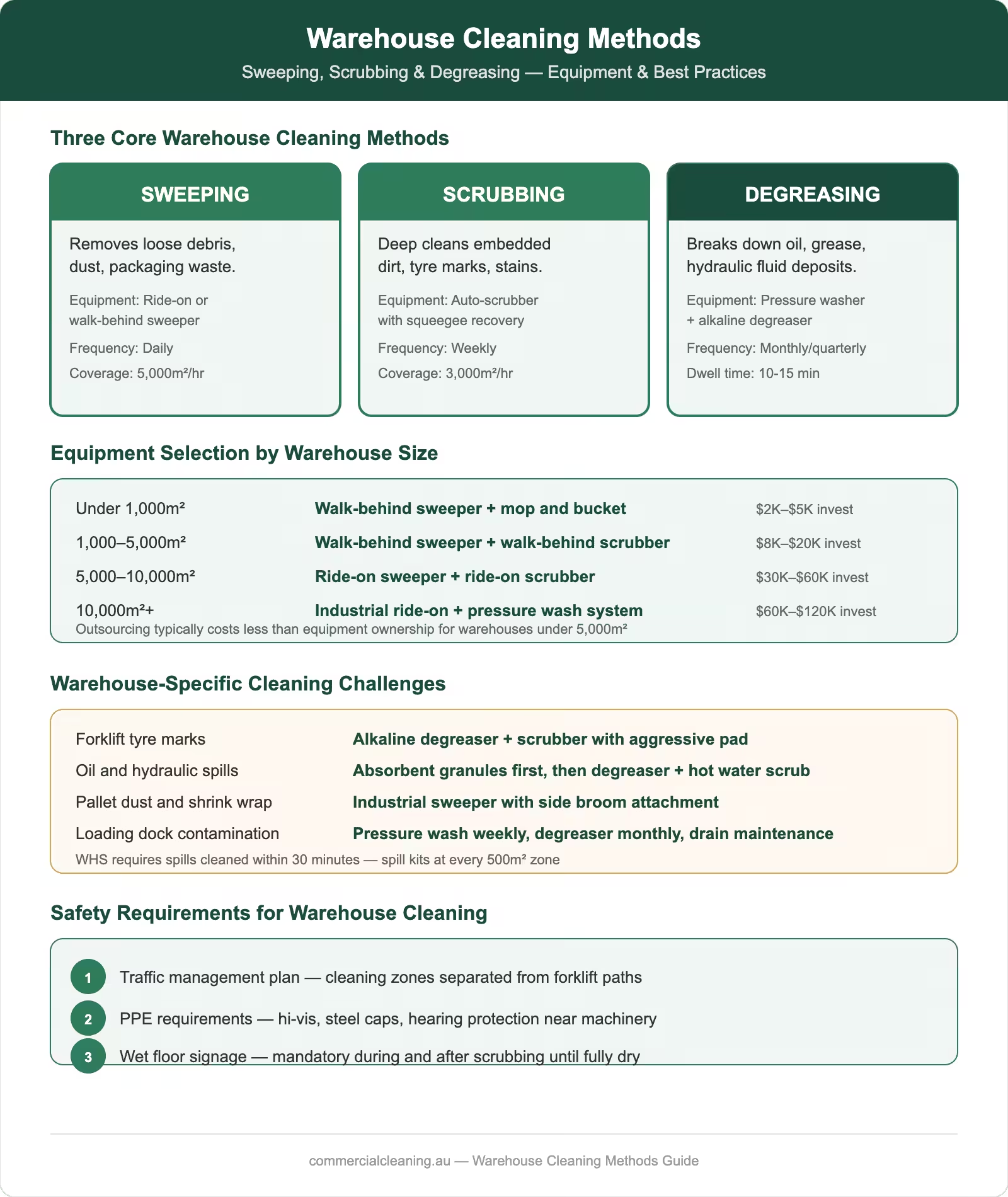
We use three core cleaning methods in every warehouse we service — sweeping, scrubbing, and degreasing — and knowing when to use each one is what separates effective warehouse maintenance from wasted effort. Our team at Clean Group provides commercial warehouse cleaning across Sydney’s industrial corridors, and we have refined our understanding of these three methods through years of hands-on experience in facilities that handle everything from ambient general merchandise to temperature-sensitive pharmaceuticals. When we assess a new warehouse in Marsden Park, the first thing we determine is which combination of sweeping, scrubbing, and degreasing each zone requires, because applying the wrong method to the wrong contamination type wastes time and product.
For more insights, see our guide on logistics facility cleaning.
Sweeping: The Foundation of Warehouse Floor Maintenance
We consider sweeping the foundation of every warehouse cleaning program because it addresses the baseline contamination that accumulates daily from normal warehouse operations. Our teams in Box Hill use ride-on sweepers with dust filtration systems that capture fine particulate matter down to 10 microns, which is significantly more effective than manual broom sweeping. We have measured that our mechanical sweeping captures over 95 percent of floor debris compared to roughly 60 percent from manual sweeping, and the difference is particularly important in warehouses where fine dust contributes to respiratory health risks for workers.
Our sweeping protocol varies by zone because different areas of a warehouse generate different types and volumes of debris. We sweep loading dock areas daily because they accumulate contamination fastest from vehicle traffic and freight handling. Main forklift aisles get swept three times weekly, while low-traffic storage zones only need weekly attention. We have found this tiered frequency approach delivers the best balance of cleanliness and cost across our Vineyard warehouse portfolio, and we adjust the schedule based on each facility’s specific contamination patterns rather than applying a generic frequency.
Scrubbing: Deep Cleaning for Embedded Contamination
Scrubbing: Deep Cleaning for Embedded Contamination involves specific protocols that we tailor to each facility based on its layout, traffic, and compliance requirements. We deploy scrubbing when sweeping alone cannot maintain acceptable floor condition, which is inevitable in any warehouse with forklift traffic. Our ride-on scrubbers combine mechanical agitation from rotating brushes or pads with chemical cleaning solution and immediate extraction of the dirty water, leaving the floor clean and dry in a single pass. We have found that scrubbing is necessary for removing the tyre mark buildup, fluid contamination, and embedded grime that sweeping cannot address, and most of our Marsden Park warehouse contracts include weekly scrubbing of main traffic areas as a minimum standard.
Our scrubbing approach is custom to the floor type and contamination profile because we have learned that using the wrong brush type or cleaning chemistry reduces effectiveness and can damage floor surfaces. We use stiff polypropylene brushes on sealed concrete for aggressive contamination removal, softer nylon brushes on epoxy-coated floors to avoid scratching, and red buffing pads on polyurethane-finished floors for light maintenance scrubbing. Our teams carry multiple brush and pad types on every warehouse visit because most facilities have different floor finishes in different zones — for example, epoxy in chemical storage areas and standard sealed concrete in general warehousing.
Warehouse Cleaning Zone Guide
| Zone | Frequency | Method | Equipment | WHS Compliance |
|---|---|---|---|---|
| Loading Dock | Daily | Sweep + degrease spills | Ride-on sweeper | AS 4586 slip rating |
| Storage Aisles | Weekly | Machine sweep + scrub | Walk-behind scrubber | WHS clear aisle reg |
| Mezzanine/Office | Daily | Vacuum + wipe | Standard commercial | General duty of care |
| Washdown Bay | After each use | Pressure wash + drain clear | Pressure washer | EPA trade waste |
| External Hardstand | Monthly | Pressure wash | Industrial pressure unit | EPA stormwater |
Degreasing: Targeting Industrial Contamination
Warehouse Cleaning Zone Guide requires specific protocols that we tailor to each facility based on its layout, traffic, and compliance requirements. We treat degreasing as a specialist intervention rather than a routine cleaning method because it addresses contamination that sweeping and scrubbing alone cannot remove. Our degreasing protocols target petroleum-based contamination including hydraulic fluid, diesel, engine oil, and grease that bond to concrete surfaces and resist water-based cleaning. We use alkaline degreasing agents that break the chemical bond between the oil and the floor surface, allowing our scrubbers to extract the contamination rather than just moving it around. Our Box Hill warehouse clients who operate forklift fleets with older hydraulic systems see the most benefit from our degreasing program because these machines drip more fluid than newer equipment.
Degreasing: Targeting Industrial Contamination includes specific protocols that we tailor to each facility based on its layout, traffic, and compliance requirements. We are particularly careful with degreasing chemicals because they need to be managed in accordance with AS 1940.1 for the storage and handling of flammable and combustible liquids. AS 1940.1 is relevant because some degreasing solvents are classified as combustible, and our team members are trained in the correct handling, application, and disposal procedures for every chemical we use. We store our degreasing products in designated chemical cabinets on our service vehicles, and we maintain Safety Data Sheets for every product that are available for inspection at any time. Our Vineyard teams are particularly attentive to this because several of our clients in that precinct hold dangerous goods licences and require all contractors to demonstrate chemical compliance.
Combining Methods for Best Results
Combining Methods for Best Results addresses specific protocols that we tailor to each facility based on its layout, traffic, and compliance requirements. We have developed what we call our layered cleaning approach, where we deploy sweeping, scrubbing, and degreasing in sequence to achieve the deepest possible clean. Our standard sequence for heavily contaminated zones is: first sweep to remove loose debris, then apply degreaser and allow it to dwell for the specified contact time, then scrub with our ride-on unit to agitate and extract the contamination, and finally a rinse pass with clean water to remove any chemical residue. We have found that this four-step sequence removes over 98 percent of floor contamination, compared to roughly 80 percent from scrubbing alone.
We do not apply this intensive sequence everywhere because it is not cost-effective for lightly contaminated areas. Our zone-based approach means loading docks and forklift charging areas receive the full four-step treatment monthly, main aisles receive sweeping plus scrubbing weekly, and storage zones receive sweeping only on their standard frequency. We adjust this allocation based on each facility’s specific contamination data, and we review the zone assignments quarterly with our clients to confirm the cleaning investment is directed where it delivers the most value.
Cost Comparison of Cleaning Methods
We are transparent about what each cleaning method costs because our clients need to make informed decisions about their cleaning investment. Our 2024 pricing data shows that for a typical warehouse in the Marsden Park, Box Hill, or Vineyard industrial areas, sweeping-only maintenance costs approximately $1,200 per month, sweeping plus weekly scrubbing costs approximately $2,510 per month, and our detailed program including monthly degreasing costs approximately $2,900 per month for a 3,000 to 5,000 square metre facility. We always recommend the middle tier as the minimum standard for warehouses with forklift traffic because sweeping alone cannot prevent embedded contamination from degrading the floor surface over time.
We present these options honestly because we believe our clients deserve real choices rather than a single take-it-or-leave-it quote. Our data consistently shows that the detailed program delivers the best long-term value because it prevents the floor deterioration that eventually requires expensive restoration work, but we understand that not every facility’s budget can support the premium option. We work with our clients to find the right balance of methods and frequencies that protects their floor investment within their available budget. For an overview of how these methods apply across an entire logistics operation, see our next guide in our warehouse cleaning series.
Frequently Asked Questions
What is the difference between sweeping, scrubbing, and degreasing?
We use sweeping to remove loose debris and dust, scrubbing to address embedded contamination through mechanical agitation with chemical solution, and degreasing to break down petroleum-based contamination that resists water-based cleaning. Each method targets different contamination types and is most effective when applied appropriately.
Which cleaning method does my warehouse need?
We assess each facility individually, but warehouses with forklift traffic need at minimum sweeping plus weekly scrubbing. Loading docks and charging areas benefit from monthly degreasing. We develop zone-based programs that match the right method to each area’s contamination profile.
How much does warehouse scrubbing cost compared to sweeping?
Our data shows sweeping-only costs approximately $1,200 per month while sweeping plus weekly scrubbing costs approximately $2,510 per month for a 3,000 to 5,000 square metre facility. The detailed program including degreasing costs approximately $2,900 per month.
Are degreasing chemicals safe to use in warehouses?
We manage degreasing chemicals in accordance with AS 1940.1 for flammable and combustible liquid handling. All products are stored in designated chemical cabinets with current Safety Data Sheets. Our team members are trained in correct handling, application, and disposal procedures.
How often should warehouse floors be scrubbed?
We recommend weekly scrubbing of main traffic areas as a minimum for warehouses with forklift operations. Loading docks may need more frequent scrubbing due to higher contamination rates. Storage zones with minimal traffic can be maintained with sweeping alone.
Can you combine all three methods in a single visit?
We use a layered approach for heavily contaminated zones: sweep, apply degreaser with dwell time, scrub to agitate and extract, then rinse. This four-step sequence removes over 98 percent of contamination compared to 80 percent from scrubbing alone.
What brush types do you use for different floors?
We use stiff polypropylene on sealed concrete, softer nylon on epoxy coatings to avoid scratching, and red buffing pads on polyurethane finishes. Our teams carry multiple types because most facilities have different finishes in different zones.
How do you determine the right cleaning frequency for each zone?
We base frequencies on measured contamination accumulation rates rather than generic schedules. Loading docks get daily sweeping, main aisles three times weekly, and storage zones weekly. We review zone assignments quarterly with clients and adjust based on changing conditions.
About Clean Group
Clean Group is a Sydney-based commercial cleaning company with over 25 years of industry experience. Founded by Suji Siv, our team of 50+ trained professionals services offices, warehouses, medical centres, schools, childcare facilities, retail stores, gyms, and strata properties across Sydney, Melbourne, and Brisbane.
We are active members of ISSA and the Building Service Contractors Association of Australia (BSCAA). Our operations align with ISO 9001 (Quality Management), ISO 14001 (Environmental Management), and ISO 45001 (Workplace Health and Safety) standards. We hold membership with the Green Building Council of Australia and use eco-friendly, TGA-registered cleaning products wherever possible.
Every Clean Group cleaner is police-checked, fully insured, and trained in safe work procedures under SafeWork NSW guidelines. We operate 7 days a week, including after-hours and weekend services, to minimise disruption to your business.
About the Author

Suji Siv
/

Hi, I'm Suji Siv, the founder, CEO, and Managing Director of Clean Group, bringing over 25 years of leadership and management experience to the company. As the driving force behind Clean Group’s growth, I oversee strategic planning, resource allocation, and operational excellence across all departments. I am deeply involved in team development and performance optimization through regular reviews and hands-on leadership.
Read More About Suji 0291607469
 Get A Quote