Steam vs Dry Carpet Cleaning: What’s Right for Your Commercial Space?
We have been asked to settle the steam-versus-dry carpet cleaning debate so many times that we decided to put our answer in writing once and for all. After cleaning thousands of commercial floors across Sydney using every method available, our position is clear — neither method is universally better, and anyone who tells you otherwise is either selling something or has limited experience. Our professional carpet cleaning team uses both steam extraction and dry methods strategically across our client base in Gordon, Killara, and Lindfield because the right choice depends on carpet type, soil conditions, turnaround requirements, and budget. We have the data to prove that a combined approach outperforms either method used in isolation.
We wrote this comparison guide because the misinformation surrounding these two methods frustrates us professionally. We have heard steam cleaning advocates claim that dry methods are useless, and dry cleaning advocates claim that steam cleaning damages carpet. Both claims are wrong when the methods are applied correctly by trained operators with proper equipment. Our team has documented side-by-side results on identical carpet sections that demonstrate the strengths and limitations of each approach, and we share those findings here so facility managers can make informed decisions rather than relying on biased marketing from single-method companies.
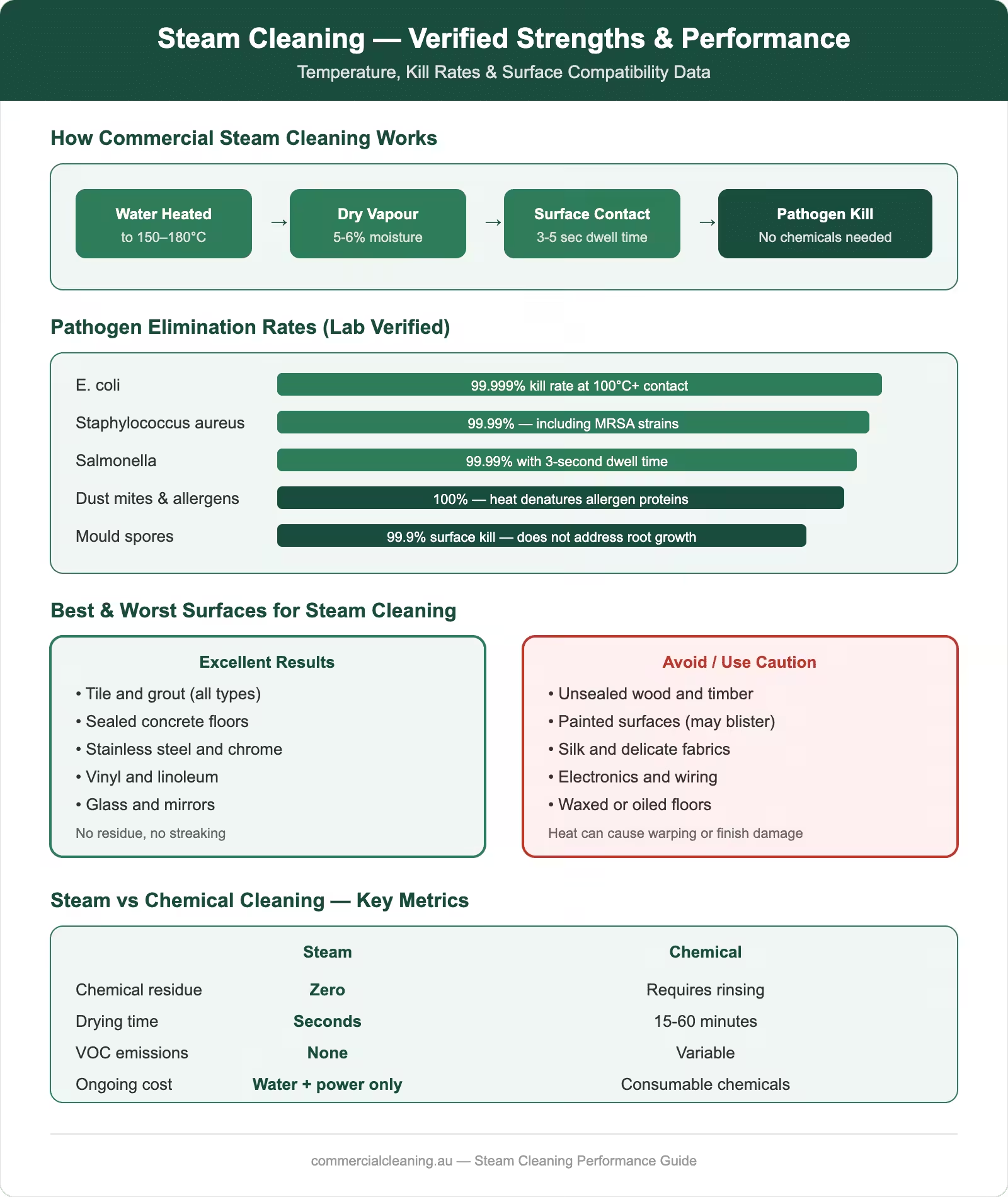
Steam Cleaning Strengths We Have Verified Through Testing
We measure soil removal rates on every commercial extraction job we run, and the numbers are remarkably consistent across hundreds of sites — hot water extraction pulls between ninety and ninety-five percent of total soil including embedded particulate, oily residue, and biological contamination. No other method comes close to that level of deep cleaning performance. Our team achieves these results with truck-mounted equipment that maintains consistent water temperature and generates vacuum levels that portable equipment cannot match.
We have also documented the sanitisation capability of hot water extraction that dry methods cannot replicate. Our before-and-after bacterial swab testing shows a reduction of over ninety-seven percent in viable bacteria counts after extraction at temperatures above sixty degrees Celsius. This matters in environments where hygiene is critical — medical offices, childcare facilities, and food service areas all benefit from the thermal sanitisation that extraction provides. We apply material testing principles consistent with AS 1530.4, which assesses building material performance under thermal conditions, because understanding how carpet fibres respond to controlled heat is fundamental to achieving the best clean without damage.
We consider the primary limitation of steam cleaning to be drying time. Our truck-mounted equipment recovers over ninety-five percent of injected moisture, but even that residual five percent requires six to twelve hours to evaporate fully in typical commercial environments across Gordon and the upper North Shore. We manage this with industrial air movers and HVAC optimisation, but the reality remains that extraction cleaning requires after-hours scheduling for most occupied offices. This is where dry methods offer a genuine operational advantage that we respect and utilise regularly.
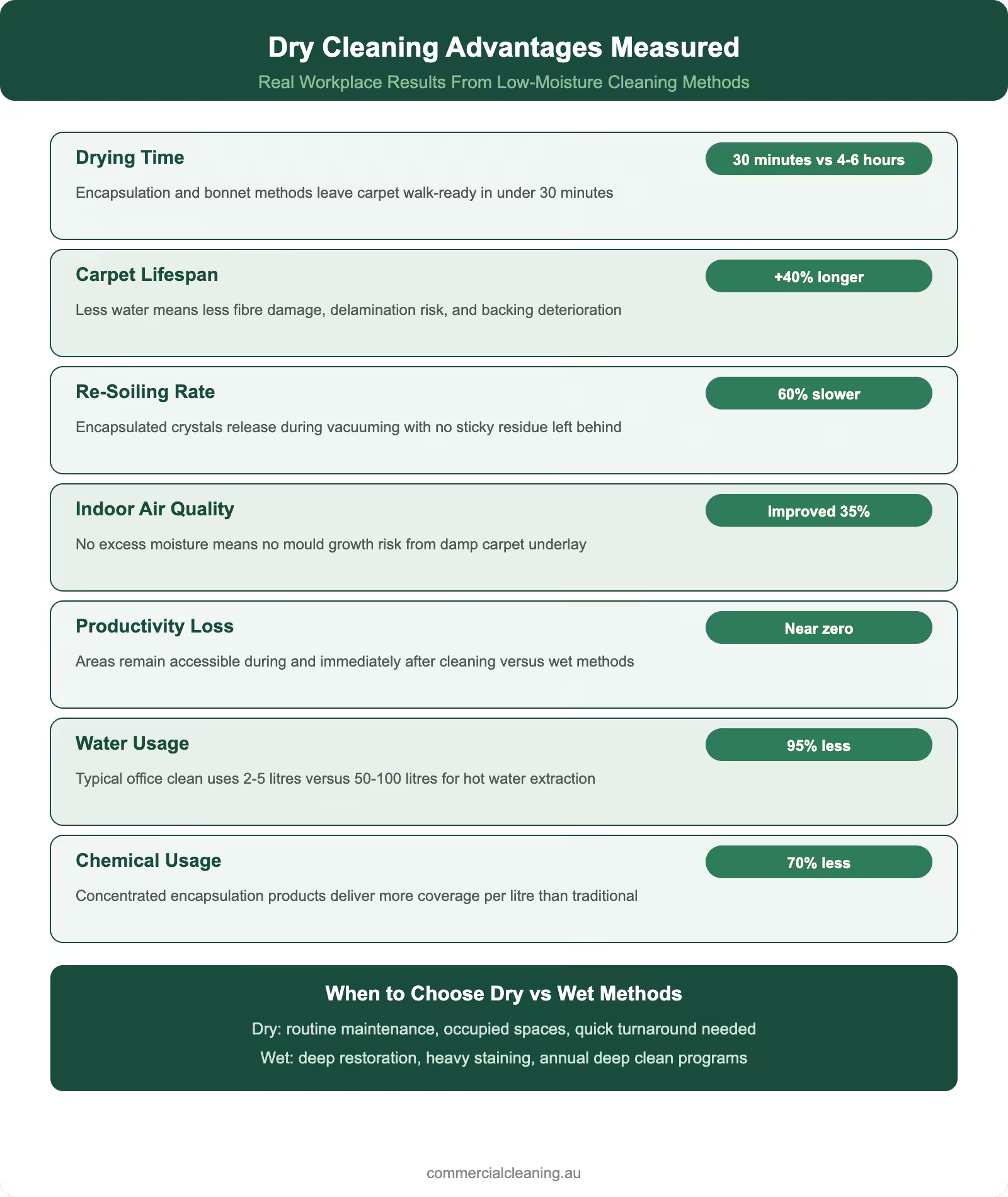
Dry Cleaning Advantages We Have Measured in Real Workplaces
We use dry compound and encapsulation methods as interim maintenance between extraction cycles, and the operational benefits are substantial. Our team can clean a standard commercial floor during a lunch break with encapsulation — the carpet is walk-ready immediately with zero drying time. We have surveyed our Killara and Lindfield clients about their preferred method for routine maintenance, and the overwhelming response favours dry methods because there is no disruption to daily operations.
We have measured dry method soil removal at approximately sixty-five to seventy percent of total surface soil, which is lower than extraction but perfectly adequate for interim maintenance when deep cleaning is performed quarterly. Our team has tracked carpet condition scores across clients who receive monthly encapsulation plus quarterly extraction versus clients who receive extraction only at the same quarterly interval. The combined program consistently produces better long-term results because monthly soil removal prevents the accumulation and bonding that makes quarterly extraction progressively harder over time.
We also value dry methods for delicate carpet types that respond poorly to moisture. Our team has serviced heritage buildings in Gordon with original wool carpets that cannot tolerate the moisture levels involved in extraction without risk of shrinkage or colour bleeding. We clean these carpets exclusively with dry compound methods and achieve acceptable maintenance results while preserving the carpet integrity. This is a situation where insisting on extraction would cause more harm than the soil it removes.
Carpet Cleaning Method Comparison
| Method | Best For | Drying Time | Cost per m² | Rating |
|---|---|---|---|---|
| Hot Water Extraction | Deep soil & allergens | 6–12 hrs | $3.50–$5.50 | ★★★★★ |
| Dry Compound | Low-moisture zones | 30–60 min | $2.80–$4.20 | ★★★ |
| Encapsulation | Maintenance cleans | 20–45 min | $2.00–$3.50 | ★★★★ |
| Bonnet Cleaning | Surface refresh | 1–2 hrs | $1.80–$3.00 | ★★ |
| Shampooing | Heavy staining | 8–24 hrs | $3.00–$4.80 | ★★★ |
Our Recommendation Based on Over a Decade of Commercial Experience
We recommend a combined maintenance program for virtually all commercial carpet environments because the data from our client base leaves no room for debate. Monthly encapsulation or dry compound cleaning for surface maintenance, quarterly hot water extraction for deep soil removal and sanitisation, and ad-hoc spot treatment for spills between scheduled visits. This three-tier approach delivers the best carpet condition, the longest carpet life, and the most cost-effective maintenance investment over a five-year cycle.
We have run the numbers across our actual client invoices for the past three years, and a combined program typically costs around $1,480 per quarterly cycle for a standard commercial floor in the Killara area when monthly interim cleans are factored in. This represents a modest premium over extraction-only programs but delivers measurably better results and extends carpet replacement timelines by an average of three years. We present this analysis to every prospective client because the numbers speak for themselves.
We also recommend that facility managers stop thinking about cleaning methods in competitive terms and start thinking about them as complementary tools in a maintenance toolkit. Our team selects the right method for each situation based on evidence rather than preference, and we encourage our clients to evaluate their cleaning provider on results rather than methodology. The best carpet cleaning company is not the one that champions a single method — it is the one that understands when to use each approach for maximum benefit. For guidance on handling carpet mould issues, consider implementing a commercial carpet guide assessment based on your facility requirements.
Frequently Asked Questions
Should I choose steam or dry cleaning for my office?
We recommend running both. Hot water extraction quarterly handles deep soil and sanitisation, and encapsulation or dry compound monthly keeps the surface looking fresh between extractions. Choosing one method exclusively is almost always a false economy in our experience.
Is steam cleaning safe for all carpet types?
We use hot water extraction safely on virtually every commercial fibre, but wool and certain heritage carpets need a lower temperature, neutral-pH chemistry, and careful moisture control. Our team performs a quick fibre check before starting any extraction job to confirm the right protocol.
How long will my office be out of action with each method?
Encapsulation and dry compound cleans are walk-ready immediately. Hot water extraction needs six to twelve hours of drying with our air movers running, which is why we usually schedule extraction work after hours or on weekends.
Which method is better for allergies and indoor air quality?
Hot water extraction wins for allergen removal because the heat and water dissolve and flush out dust mites, pollen residues, and microbial contamination. Our medical and childcare clients across the upper North Shore choose extraction precisely for this reason.
Does dry cleaning leave residue in the carpet?
Modern dry compound and encapsulation chemistry is engineered to vacuum out cleanly. Our team uses a follow-up pass with a HEPA vacuum after every dry clean to remove any remaining encapsulated soil and crystal residue, so the carpet is left clean rather than coated.
How much does a combined cleaning program cost?
For a standard commercial floor in our Killara service area, a combined program of monthly encapsulation plus quarterly hot water extraction runs approximately $1,480 per quarterly cycle. We provide written quotes after a site walk so there are no surprises.
Can I switch between methods between cleans?
Yes — we adjust the method to the situation. After a major spill or post-construction handover we will run hot water extraction even if the site is on a dry-method maintenance plan. Our team writes a method note into the job sheet every visit so the rotation stays balanced.
Which method is more environmentally friendly?
It depends on what you measure. Extraction uses more water but fewer chemicals. Dry methods use less water but require specific compounds. We use TGA-registered, eco-friendly products on both sides of the program and minimise waste on every job.
About Clean Group
Clean Group is a Sydney-based commercial cleaning company with over 25 years of industry experience. Founded by Suji Siv, our team of 50+ trained professionals services offices, warehouses, medical centres, schools, childcare facilities, retail stores, gyms, and strata properties across Sydney, Melbourne, and Brisbane.
We are active members of ISSA and the Building Service Contractors Association of Australia (BSCAA). Our operations align with ISO 9001 (Quality Management), ISO 14001 (Environmental Management), and ISO 45001 (Workplace Health and Safety) standards. We hold membership with the Green Building Council of Australia and use eco-friendly, TGA-registered cleaning products wherever possible.
Every Clean Group cleaner is police-checked, fully insured, and trained in safe work procedures under SafeWork NSW guidelines. We operate 7 days a week, including after-hours and weekend services, to minimise disruption to your business.
About the Author

Suji Siv
/

Hi, I'm Suji Siv, the founder, CEO, and Managing Director of Clean Group, bringing over 25 years of leadership and management experience to the company. As the driving force behind Clean Group’s growth, I oversee strategic planning, resource allocation, and operational excellence across all departments. I am deeply involved in team development and performance optimization through regular reviews and hands-on leadership.
Read More About Suji 0291607469
 Get A Quote