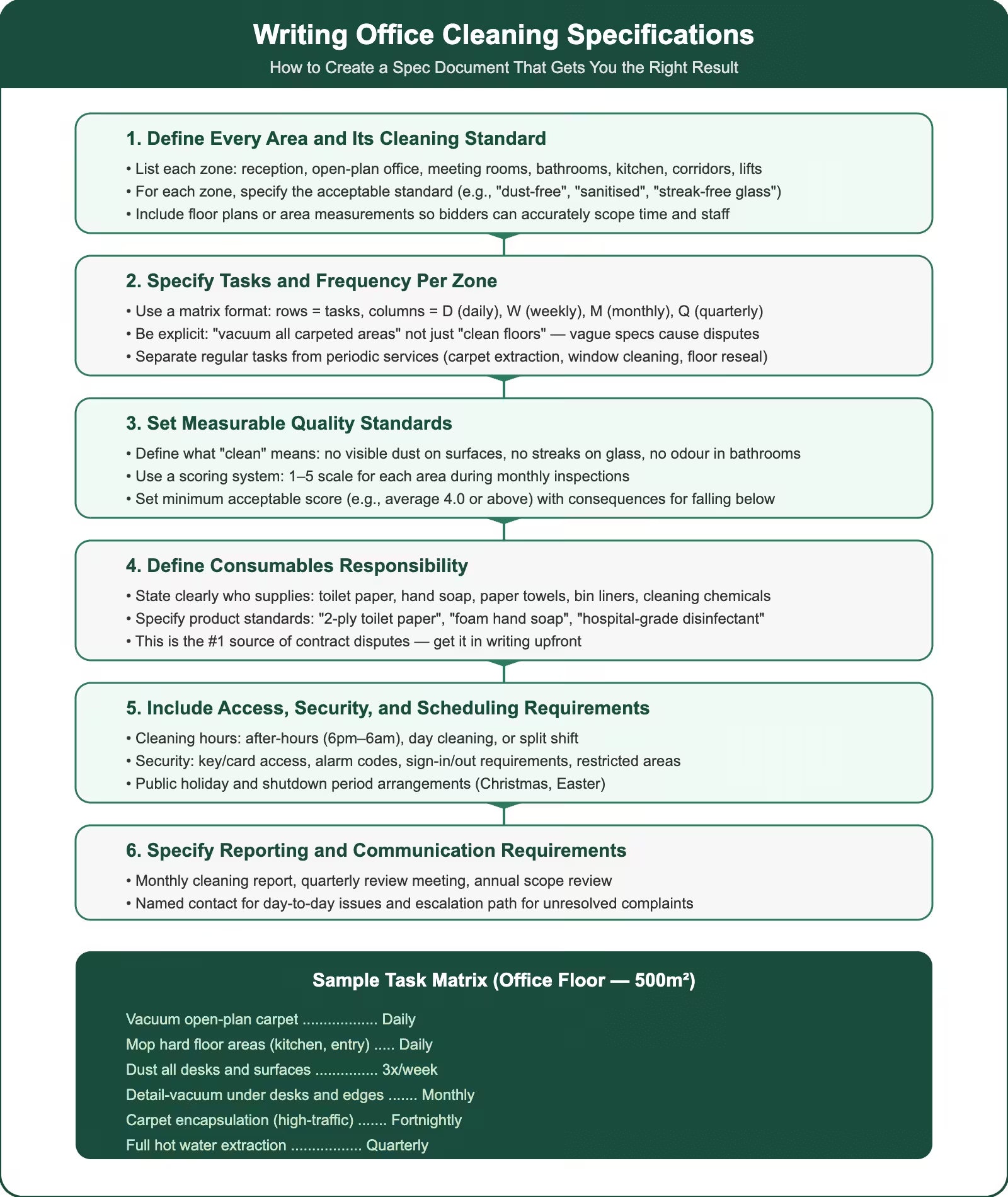
Cleaning specifications are the foundation of any professional facilities management program. Without clear standards and documented processes, cleaning becomes inconsistent, compliance suffers, and accountability disappears. As an office cleaners sydney company in Sydney, we’ve worked with hundreds of facilities to establish or improve their cleaning specifications. Understanding what belongs in a thorough cleaning specification protects your building, satisfies tenants, and ensures your cleaning contractor delivers measurable results.
How to write office cleaning specifications covering zone definitions, task frequency matrix, quality standards, consumables, access requirements, and reporting
What Are Cleaning Specifications?
Cleaning specifications are documented standards that define exactly what cleaning tasks must be performed, how often, to what standard, and using which methods and products. They’re part of a formal Service Level Agreement (SLA) and provide the benchmark for assessing cleaning quality.
Safety and compliance requirements (WHS Act 2011, SafeWork NSW)
Inspection procedures and documentation
Without specifications, disagreements arise. Is the carpet “clean enough” if it’s vacuumed weekly but stains are visible? Does “clean windows” mean interior only, or exterior? Are high-reach areas (above 2 metres) included? Specifications eliminate this ambiguity.
Why Cleaning Specifications Matter
Why Cleaning Specifications Matter involves specific protocols that we tailor to each facility based on its layout, traffic, and compliance requirements. Clear specifications provide several critical benefits:
Consistency: Every team member knows the standard. Cleaning quality doesn’t vary based on which cleaner shows up.
Accountability: If standards aren’t met, documentation proves what should have been done. You can hold your contractor accountable with evidence.
Compliance: Specifications confirm your facility meets Work Health and Safety Act 2011 requirements. Documented cleaning schedules satisfy regulators and auditors.
Cost control: Specifications prevent scope creep. You know exactly what you’re paying for and can benchmark against market rates.
Tenant satisfaction: In strata or multi-tenancy buildings, specifications verify all areas meet agreed standards, reducing complaints and disputes.
Insurance protection: Insurance companies often require documented cleaning procedures. Specifications demonstrate due diligence.
Components of Effective Cleaning Specifications
1. Area Classification
Components of Effective Cleaning Specifications requires specific protocols that we tailor to each facility based on its layout, traffic, and compliance requirements. Divide your facility into cleaning zones based on traffic patterns and function. Typical categories include:
High-traffic areas: Foyers, corridors, reception, lifts (require more frequent cleaning)
Standard office areas: Workspaces, meeting rooms (moderate cleaning)
Specialised areas: Medical facilities, kitchens, bathrooms (require specific protocols)
Service areas: Utility rooms, plant rooms (basic maintenance)
2. Task Definitions
Define each cleaning task with specificity. Don’t simply state “floor cleaning.” Instead:
Poor specification: “Clean floors daily.”
Good specification: “Vacuum carpet areas daily to remove visible dust and debris. Damp mop hard floors daily with neutral pH detergent. Spot-clean stains same-day. Floors must be dust-free and stain-free at end of each working day.”
3. Frequency Schedules
Establish clear frequencies tied to area classification:
Daily: High-traffic areas, bathrooms, kitchens
Weekly: Standard offices, general cleaning tasks
Fortnightly: Deep tasks like window cleaning or carpet shampooing
Quarterly: Specialist tasks like wall washing or blind cleaning
Annual: Major renovations or specialist treatments (floor polishing, etc.)
4. Quality Standards
Define what “clean” means. Examples:
Surfaces free of visible dust, dirt, or marks
No odours present in enclosed spaces
Floors must be dry and free of slip hazards
All waste bins empty at end of shift
Spillage responded to within 30 minutes
5. Method and Equipment Standards
Specify the methods and equipment allowed. This is critical for protecting your facility. For example:
Vacuum with HEPA filtration (for air quality compliance)
Mop systems only—no excessive water on vinyl floors
Microfiber cloths for polished surfaces (prevents scratching)
Only approved cleaning chemicals (prevents damage and allergic reactions)
No bleach in medical facilities
6. Chemical and Product Specifications
List approved cleaning products and chemicals. Include safety data sheet references and restrictions. For example:
pH-neutral detergent for vinyl floors (specify brand if critical)
Hospital-grade disinfectant for medical facilities
Environmentally responsible products preferred (align with green initiatives)
No ammonia in windows (prevent streaking)
All products WHS Act 2011 compliant with Safety Data Sheets available
7. Health, Safety, and Compliance
Incorporate WHS requirements. Specify:
Worker training requirements (SafeWork NSW certification)
Personal protective equipment (PPE) standards
Incident reporting procedures
Chemical handling and storage protocols
Biohazard cleaning procedures (if applicable)
Compliance with AS/NZS standards relevant to your facility type
8. Inspection and Reporting
Define how cleaning quality will be verified:
Weekly walk-through by facility manager
Monthly detailed inspection with photographic documentation
Developing Your Facility’s Cleaning Specifications
Cleaning Specifications by Facility Type includes specific protocols that we tailor to each facility based on its layout, traffic, and compliance requirements. Creating full specifications is a collaborative process. We recommend:
Step 1: Audit your current facility. Document existing conditions, problem areas, and traffic patterns.
Step 2: Consult with your cleaning provider. They’ll identify practical approaches that work given your facility’s specific layout and needs.
Step 3: Define standards based on your facility type and budget. Balance aspiration with reality—specifications must be achievable.
Step 4: Document everything. Create a master specification document and share it with all stakeholders.
Step 5: Implement and monitor. Begin measuring against specifications, adjust as needed after 3 months of operation.
Step 6: Review annually. Cleaning needs change with seasonal variation and facility usage patterns.
Developing Your Facility’s Cleaning Specifications addresses specific protocols that we tailor to each facility based on its layout, traffic, and compliance requirements. Our team has developed specifications for offices across Sydney’s CBD, Parramatta corporate parks, and Eastern Suburbs medical facilities. We work with facility managers to create standards that are ambitious enough to make sure quality but realistic enough that your cleaning contractor can deliver consistently. Specifications are a partnership tool, not a punitive instrument.
Once your cleaning specifications are documented and agreed, embedding them into your broader facility strategy ensures operational continuity. We also coordinate cleaning specifications with green cleaning practices when sustainability is a priority, balancing environmental responsibility with performance standards. For a deeper look at how cleaning fits within broader building operations, see our guide on facility management.
Frequently Asked Questions
Should cleaning specifications include response times for spills?
Yes. Response time standards (e.g., “spills must be cleaned within 30 minutes”) are important for safety (WHS Act 2011) and appearance. Specify different response times based on hazard level: immediate for biohazards, quick for slipping hazards, and reasonable for cosmetic spills.
Can I use generic industry specifications or should I customise for my facility?
Use industry baselines as a starting point, but customise for your facility’s unique characteristics. Every building has different traffic patterns, floor types, and usage. Customisation ensures standards are achievable and relevant.
How do I enforce cleaning specifications if standards aren’t met?
Establish a clear remediation process: documented deficiency reports, time to remedy, reinspection, and escalation to contract review or termination if chronic non-compliance occurs. Your SLA should specify these procedures.
Are cleaning specifications required by law?
Not explicitly required, but the Work Health and Safety Act 2011 requires workplaces to be kept clean and safe. Documented specifications demonstrate compliance. They’re standard practice for any professional facility.
How often should cleaning specifications be reviewed?
We recommend quarterly reviews during the first year to refine standards based on actual performance. After that, annual review is adequate unless your facility usage significantly changes.
About Clean Group
Clean Group is a leading commercial cleaning company in Sydney, serving offices, strata properties, medical centres, schools, and industrial facilities across the greater Sydney region. With over 25 years of experience and a team of fully trained, insured cleaners, we deliver consistent results backed by a 100% satisfaction guarantee. Our services are tailored to your schedule, your budget, and your industry’s compliance requirements.
Hi, I'm Suji Siv, the founder, CEO, and Managing Director of Clean Group, bringing over 25 years of leadership and management experience to the company. As the driving force behind Clean Group’s growth, I oversee strategic planning, resource allocation, and operational excellence across all departments. I am deeply involved in team development and performance optimization through regular reviews and hands-on leadership.