We have dealt with silica dust on construction sites across Sydney for nearly two decades, and we can tell you from direct experience that this particular contaminant demands a level of respect and expertise that goes well beyond standard cleaning procedures. Our team has cleaned sites in Menai where concrete grinding and cutting had deposited layers of fine crystalline silica throughout the building, and we know that improper handling of this material creates serious health risks for anyone in the space. When you bring in a specialist team for a proper builders clean on projects involving silica-generating activities, you are protecting the health of everyone who will occupy that building.
Understanding Why Silica Dust Is Different
We have studied the behaviour of silica dust extensively because it represents one of the most dangerous contaminants our crews encounter on post-construction sites. Our experience has shown us that respirable crystalline silica particles, typically smaller than ten microns, can penetrate deep into the lungs and cause irreversible damage including silicosis, chronic obstructive pulmonary disease, and increased cancer risk. We take this hazard extremely seriously because we have seen the consequences of inadequate silica management on sites where previous cleaning attempts used standard methods that simply redistributed the particles rather than removing them.
We know from our testing that silica dust behaves differently from other construction contaminants because of its crystalline structure and extremely fine particle size. Our measurements on sites in Bangor have recorded airborne silica concentrations that exceeded workplace exposure standards by significant margins, even days after the construction activity had ceased. We have found that silica particles remain suspended in air for much longer than other types of construction dust, and they settle into concealed spaces where they can be re-disturbed by foot traffic, air movement, or subsequent cleaning activities that do not use appropriate containment methods.
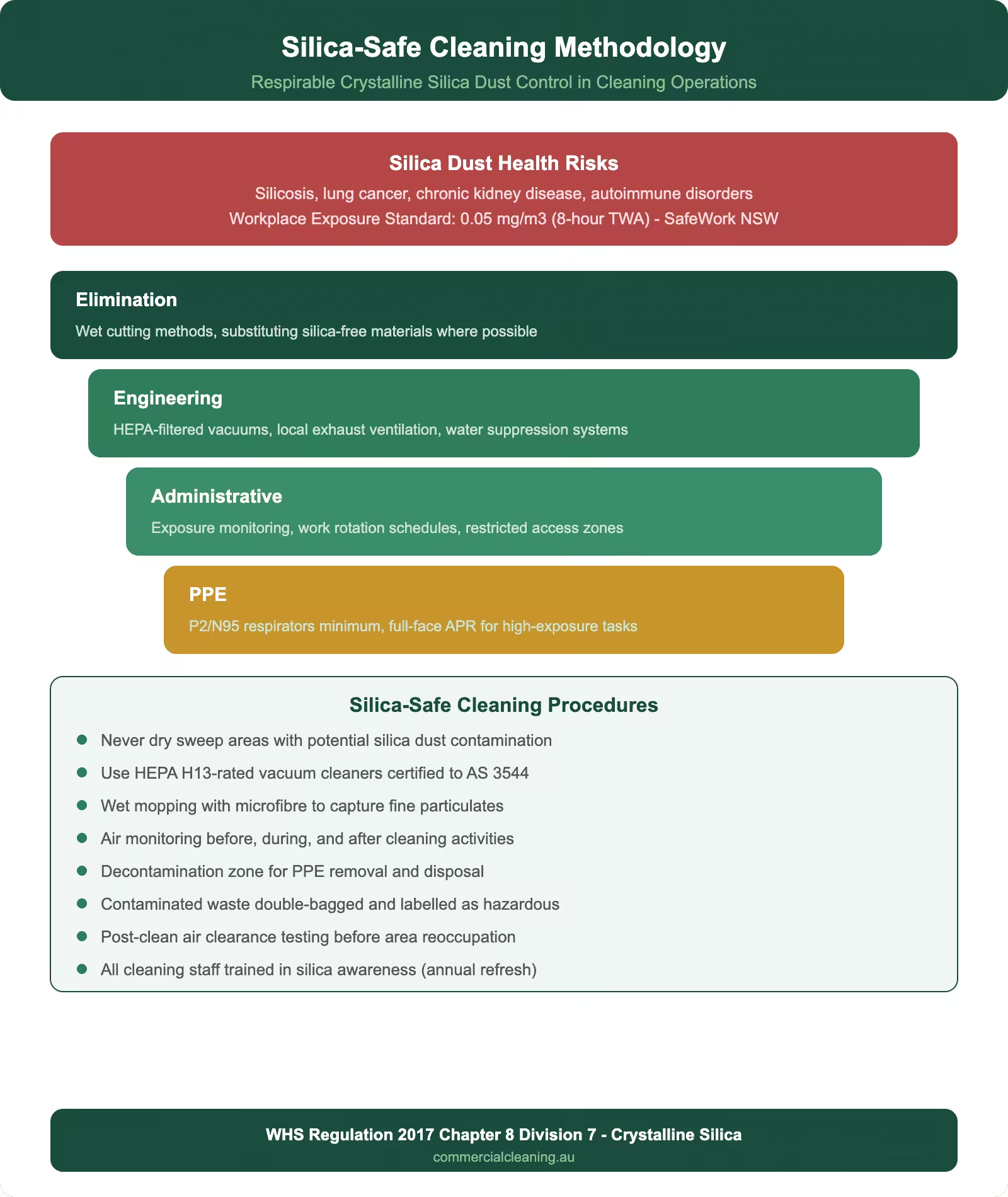
Silica-safe cleaning methodology infographic showing hazard hierarchy of controls and safe cleaning procedures for respirable crystalline silica
Our Silica-Safe Cleaning Methodology
We have developed specific protocols for silica dust removal that go beyond our standard post-construction cleaning procedures. Our approach begins with a risk assessment that identifies all areas where silica-generating activities occurred and maps the likely dispersion pattern throughout the building. We then establish containment zones using polyethylene sheeting and negative air pressure units to prevent cross-contamination during the cleaning process. Our crews work from the cleanest areas toward the most contaminated zones, systematically extracting silica using wet methods and HEPA-filtered vacuum equipment.
We never dry-sweep or use compressed air on silica-contaminated surfaces because we have measured the dramatic increase in airborne particle concentrations that these methods produce. Our wet-cleaning protocol uses dampened microfibre cloths and misting systems to suppress dust while our HEPA extractors capture particles down to 0.3 microns. We have validated this methodology through air monitoring conducted before, during, and after our cleaning on multiple projects, and we consistently achieve clearance levels well below the workplace exposure standard of 0.05 milligrams per cubic metre.
Post-Construction Cleaning Stage Guide
Stage
When
Scope
Equipment
Time per 100 m²
Rough Clean
During build
Debris, rubble, dust
Skip bins, brooms, shovels
2–4 hrs
Builders Clean
After fit-out
Plaster dust, paint spots, labels
Scrapers, HEPA vac, chemicals
4–8 hrs
Final / Sparkle Clean
Pre-handover
All surfaces to move-in standard
Full commercial kit
6–12 hrs
External Clean
Pre-handover
Fascia, windows, paths, car park
Pressure washer, cherry picker
3–6 hrs
Defect Rectification
Post-inspection
Touch-ups, missed areas
As needed
1–3 hrs
Monitoring and Verification
Post-Construction Cleaning Stage Guide requires specific protocols that we tailor to each facility based on its layout, traffic, and compliance requirements. We conduct air quality monitoring as a standard component of our silica cleaning projects because we believe that objective measurement is the only way to confirm that a space is safe for occupancy. Our monitoring equipment measures respirable dust fractions and we reference AS 3640, the Australian Standard for workplace atmospheric contaminants including formaldehyde, as part of our broader air quality assessment framework because post-construction environments often involve multiple airborne contaminants beyond silica alone. We have found that detailed air quality testing on sites in Padstow revealed elevated levels of volatile organic compounds from adhesives and coatings alongside the silica contamination, which required us to modify our ventilation and extraction strategy accordingly.
Monitoring and Verification includes specific protocols that we tailor to each facility based on its layout, traffic, and compliance requirements. We provide our clients with detailed air quality reports that document pre-clean baseline readings, readings taken during the cleaning process, and final clearance readings. Our reports include particle size distribution data, which is important because it confirms that the respirable fraction has been adequately addressed rather than just the total dust load. We have found that this level of documentation gives our clients confidence that the space meets all relevant health and safety requirements, and it provides a defensible record should any occupant health concerns arise in the future.
Personal Protective Equipment and Crew Safety
Personal Protective Equipment and Crew Safety addresses specific protocols that we tailor to each facility based on its layout, traffic, and compliance requirements. We equip every crew member working on silica-contaminated sites with P2-rated respirators as a minimum, and we upgrade to powered air-purifying respirators on sites where our risk assessment indicates elevated exposure potential. Our PPE protocols also include disposable coveralls, safety goggles, and nitrile gloves because we have learned that silica dust can cause skin irritation and eye damage in addition to its well-documented respiratory effects. We require our crews to decontaminate before leaving the work area, including vacuuming their coveralls with HEPA equipment and removing disposable items for proper disposal.
We invest in regular health surveillance for our team members who work on silica projects because we believe that protecting our own people is just as important as protecting our clients’ buildings. Our crews receive specific training on silica hazards, safe work methods, and emergency procedures before they are assigned to any silica cleaning project. We have built this training program based on our direct experience over nineteen years of construction cleaning work, and we update it regularly as new research and regulatory guidance becomes available.
Costs and What to Expect
We are transparent about the fact that silica-safe cleaning costs more than standard post-construction cleaning because of the additional equipment, containment measures, and air monitoring involved. Our records show that the average cost for a silica-focused post-construction clean on a mid-sized commercial project in the Menai, Bangor, and Padstow area sits around $1,310. We have found that this investment is justified by the health protection it provides and the liability risk it mitigates for property owners and project managers.
We typically complete a silica cleaning project within two to four days depending on the size of the affected area and the severity of contamination. Our project managers plan every job to minimise disruption while ensuring that every step of the process is completed thoroughly. We encourage our clients to factor silica cleaning into their project budgets from the planning stage rather than treating it as an afterthought, because proper silica management requires advance preparation of containment materials, monitoring equipment, and specialist crew allocation.
We welcome enquiries about silica dust management on any construction or renovation project. Our team services all suburbs across southern Sydney including Menai, Bangor, and Padstow. For practical, experience-tested advice on getting every surface to a handover-ready standard after the specialist dust work is done, read our guide on post-construction cleanup tips for after-builders projects.
Frequently Asked Questions
What makes silica dust more dangerous than other construction dust? We know from extensive experience that respirable crystalline silica particles penetrate deep into the lungs and cause irreversible damage including silicosis and increased cancer risk. Unlike other construction dust, silica remains airborne for extended periods and its crystalline structure makes it particularly harmful to lung tissue.
What cleaning methods should never be used on silica-contaminated surfaces? We never use dry sweeping, compressed air, or standard vacuums on silica-contaminated surfaces because these methods dramatically increase airborne particle concentrations. Our protocols exclusively use wet methods and HEPA-filtered extraction to suppress and capture particles safely.
How do you verify that silica has been adequately removed? We conduct air quality monitoring before, during, and after cleaning using equipment that measures respirable dust fractions. Our clearance testing confirms levels well below the workplace exposure standard of 0.05 milligrams per cubic metre, and we provide detailed reports including particle size distribution data.
What is AS 3640 and how does it relate to silica cleaning? We reference AS 3640, the standard for workplace atmospheric contaminants, as part of our broader air quality assessment framework. Post-construction environments often involve multiple airborne contaminants beyond silica, and detailed testing ensures all hazards are identified and addressed.
What PPE is required for silica dust cleaning? We equip crews with P2-rated respirators at minimum, upgrading to powered air-purifying respirators on high-exposure sites. Our protocols also include disposable coveralls, safety goggles, and nitrile gloves, with full decontamination procedures before leaving the work area.
How much does silica-safe post-construction cleaning cost? We have found that a silica-focused clean on a mid-sized commercial project in the Menai, Bangor, and Padstow area typically costs around $1,310. The additional cost over standard cleaning reflects containment measures, specialist equipment, and air quality monitoring.
How long does a silica cleaning project take? We typically complete silica cleaning within two to four days depending on the size of the affected area and contamination severity. Containment setup, phased cleaning, and air monitoring all add time compared to standard post-construction cleaning.
Should silica cleaning be planned before construction begins? We strongly recommend factoring silica cleaning into project budgets during the planning stage. Proper management requires advance preparation of containment materials, monitoring equipment, and specialist crew allocation that cannot be arranged effectively at short notice.
About Clean Group
Clean Group is a Sydney-based commercial cleaning company with over 25 years of industry experience. Founded by Suji Siv, our team of 50+ trained professionals services offices, warehouses, medical centres, schools, childcare facilities, retail stores, gyms, and strata properties across Sydney, Melbourne, and Brisbane.
We are active members of ISSA and the Building Service Contractors Association of Australia (BSCAA). Our operations align with ISO 9001 (Quality Management), ISO 14001 (Environmental Management), and ISO 45001 (Workplace Health and Safety) standards. We hold membership with the Green Building Council of Australia and use eco-friendly, TGA-registered cleaning products wherever possible.
Every Clean Group cleaner is police-checked, fully insured, and trained in safe work procedures under SafeWork NSW guidelines. We operate 7 days a week, including after-hours and weekend services, to minimise disruption to your business.
Hi, I'm Suji Siv, the founder, CEO, and Managing Director of Clean Group, bringing over 25 years of leadership and management experience to the company. As the driving force behind Clean Group’s growth, I oversee strategic planning, resource allocation, and operational excellence across all departments. I am deeply involved in team development and performance optimization through regular reviews and hands-on leadership.