We have managed the cleaning of strata properties long enough to know that the real secrets are not glamorous — they sit in compliance documents, chemical safety data sheets, and maintenance schedules that most people never read. Our team handles buildings across Sydney from Bankstown to Chatswood, and the difference between a well-maintained property and a neglected one almost always comes down to whether someone understood the regulatory framework and built a cleaning program around it. Our building cleaners crews work within a web of obligations under the Strata Schemes Management Act 2015, WorkCover NSW requirements, and Australian Standards that most owners corporations are only vaguely aware of.
The Compliance Framework Most Strata Managers Miss
We have attended dozens of AGMs where strata committees debated cleaning costs without once mentioning compliance obligations. Under the Strata Schemes Management Act 2015, the owners corporation has a statutory duty to maintain and repair common property — and cleaning is a core component of that duty. Our team builds every cleaning program around this legal baseline first, then layers in aesthetic and resident satisfaction goals on top. When we took over a 90-lot building in Parramatta, the previous contractor had no documented cleaning schedule, no chemical registers, and no evidence of WHS compliance. We spent the first month just getting the building into legal good standing.
We also confirm compliance with the Building Code of Australia requirements for fire safety maintenance — dirty lint traps in common laundries, grease buildup in commercial kitchen exhausts, and blocked fire stairwell corridors are all fire hazards that fall under the owners corporation’s responsibility. Our quarterly deep-cleaning audits specifically check these high-risk areas against BCA requirements, and we document everything for the strata manager’s records.
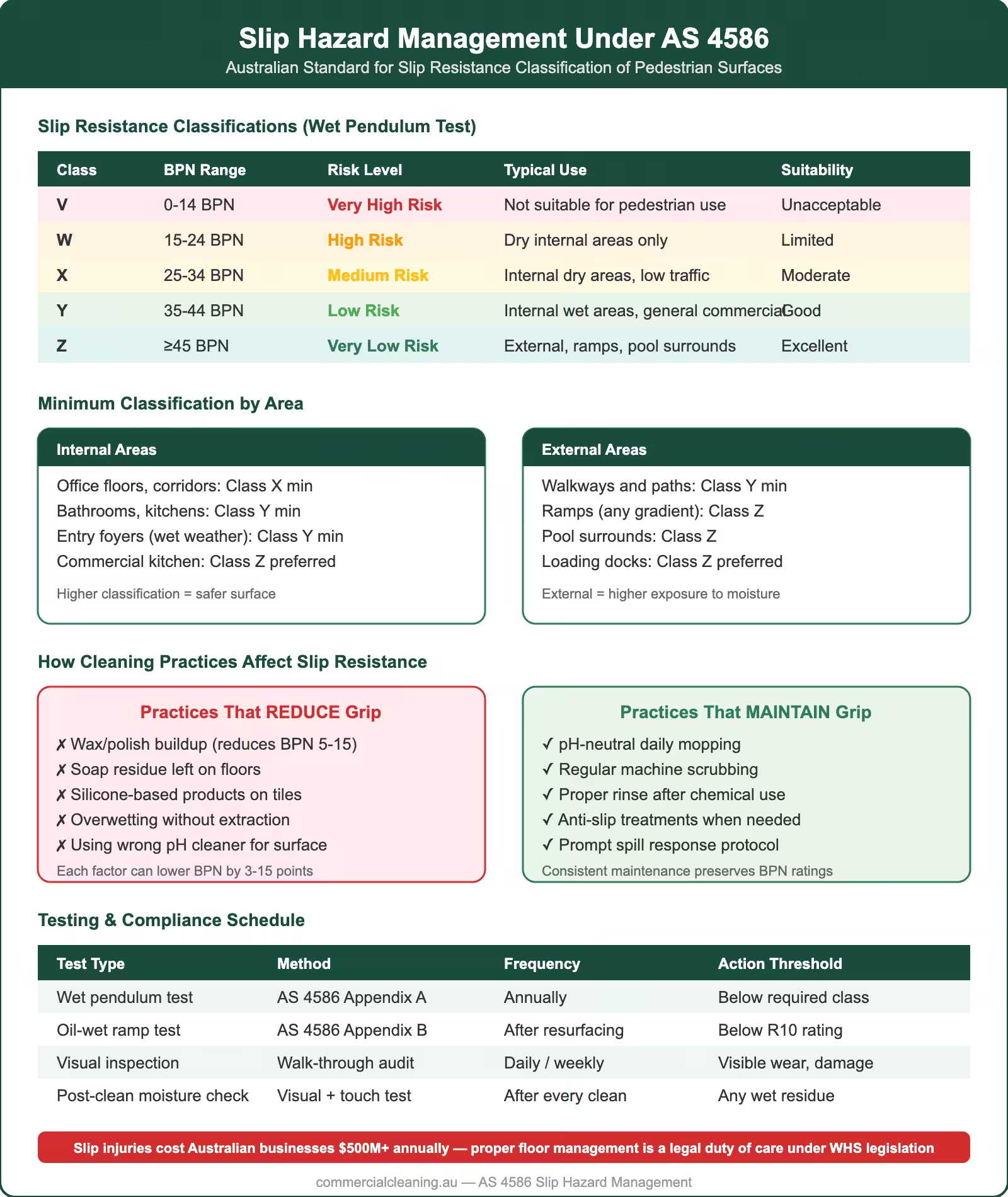
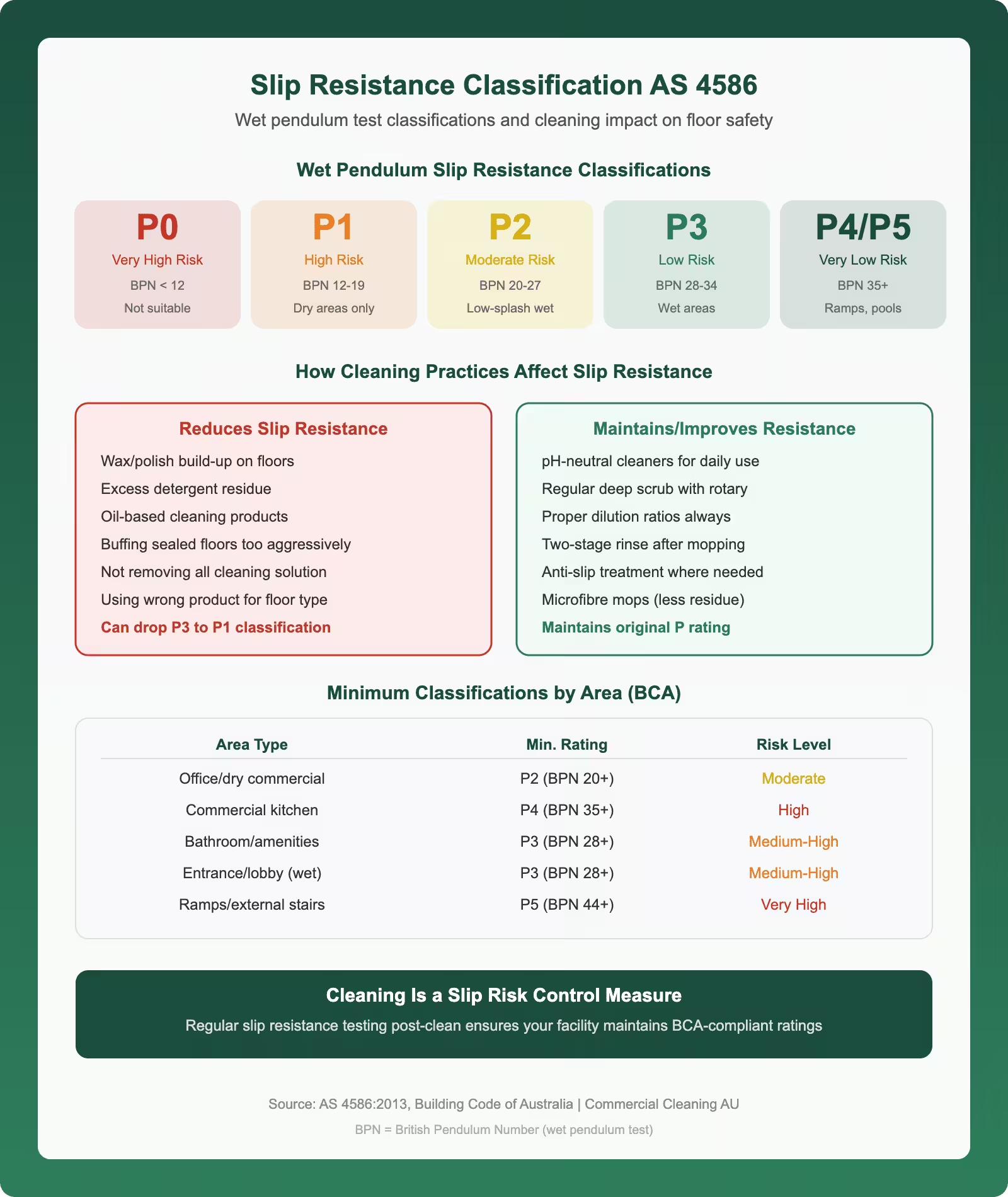
Slip hazard management under AS 4586 showing classification table, area requirements, cleaning practices impact on slip resistance, and compliance scheduleSlip resistance classification infographic showing AS 4586 wet pendulum ratings P0 to P5 and how cleaning practices affect floor safety in commercial buildings
Slip Hazard Management Under AS 4586
We take slip hazard management seriously because it is the number one liability exposure for strata buildings. AS 4586 specifies slip resistance classifications for different areas — lobbies, pool surrounds, car park ramps, and external paths all have different requirements. Our crew tests slip resistance annually using a pendulum tester on high-traffic surfaces and adjusts our cleaning methods based on the results. A Surry Hills building we service had lobby tiles rated P3 when dry but falling below P2 when wet — we switched to a slip-resistant floor treatment that maintained compliance even during rainy-day foot traffic.
The cost of getting this wrong is substantial. We have seen slip-and-fall claims against owners corporations settle for $25,000 to $60,000 in the Sydney market. Our wet-floor signage protocol, rapid-dry mopping technique, and scheduled cleaning during low-traffic windows reduce exposure significantly. One Eastwood strata manager told us that slip-related incident reports dropped to zero in the 18 months after we implemented our AS 4586-aligned cleaning protocol — compared to three incidents in the previous year.
Strata Common Area Maintenance Schedule
Area
Daily
Weekly
Monthly
Annual
Lobby & Foyer
Sweep, mop, glass
Deep mop, dust lights
Floor machine scrub
Strip & reseal
Lifts & Doors
Wipe panels + buttons
Full interior detail
Track & rail degrease
Deep restoration
Car Park
Litter patrol
Sweep + line check
Pressure wash bays
Full pressure + repaint
Pool/Gym
Sanitise surfaces
Deep clean equipment
Grout scrub
Full tile restoration
Bin Room
Hose down, deodorise
Deep scrub walls
Pest treatment
Full sanitise + repaint
Microbial Contamination and How We Handle It
Strata Common Area Maintenance Schedule requires specific protocols that we tailor to each facility based on its layout, traffic, and compliance requirements. We encounter microbial contamination issues in strata buildings far more often than most people realise. Bin rooms, gym facilities, pool change rooms, and basement car parks with poor ventilation are breeding grounds for mould, bacteria, and fungi. Our disinfection protocols follow AS/NZS 4187 guidelines for surface decontamination, and we use hospital-grade disinfectants registered with the Therapeutic Goods Administration for high-risk areas. A Cabramatta building we took on had visible Aspergillus mould growth in the basement gym — the previous cleaner had been wiping it with household bleach, which killed surface growth but did nothing about the spore load in the HVAC system.
Microbial Contamination and How We Handle It includes specific protocols that we tailor to each facility based on its layout, traffic, and compliance requirements. We brought in air quality testing that showed spore counts at 3,200 CFU per cubic metre — well above the 500 CFU safe threshold. Our team coordinated with a licensed mould remediation specialist, supervised the HVAC cleaning, and implemented a weekly antifungal treatment program that brought levels below 200 CFU within two months. The total cost was $4,800 — far less than the potential health liability the owners corporation was carrying unknowingly.
Environmental Compliance and Stormwater Protection
Environmental Compliance and Stormwater Protection addresses specific protocols that we tailor to each facility based on its layout, traffic, and compliance requirements. We have seen strata buildings receive fines of $3,000 to $15,000 from local councils for stormwater contamination caused by improper cleaning practices. Pressure washing car parks and driveways without proper containment sends oil, chemicals, and sediment directly into the stormwater system, which is a breach of the Protection of the Environment Operations Act 1997. Our crew uses bunding and vacuum recovery systems on every external pressure wash, and we dispose of contaminated water through licensed trade waste facilities.
Our chemical management also follows strict environmental protocols. Every product we use is biodegradable and carries either Green Building Council of Australia certification or equivalent eco-credentials. We maintain Safety Data Sheets for every chemical on every site, stored digitally so any team member or strata manager can access them instantly. Our Homebush team recently helped a strata committee respond to a council audit by providing complete chemical documentation within two hours — the committee chair said it was the fastest compliance response they had ever seen.
Building-Specific Strategies That Actually Work
Building-Specific Strategies That Actually Work targets specific protocols that we tailor to each facility based on its layout, traffic, and compliance requirements. We have learned that no two strata buildings clean the same way. A 1970s brick walk-up in Newtown has completely different needs from a 2020 glass-and-concrete tower in the CBD. Our team develops a building-specific maintenance plan during the first 30 days of every new contract, documenting surface types, problem areas, seasonal variations, and resident usage patterns. We review and update these plans quarterly based on inspection data and strata manager feedback.
For older buildings, we focus heavily on preventive maintenance — sealing grout lines, treating timber surfaces with protective coatings, and managing the accelerated wear patterns that come with aging infrastructure. For newer buildings, our emphasis shifts to preserving warranties and maintaining the builder’s finish. We have found that following manufacturer-specified cleaning methods in the first five years of a building’s life can save the owners corporation 20 to 30 percent on remediation costs over the following decade. Our Liverpool team documented this pattern across eight buildings and presented the data at a Strata Community Association NSW seminar in 2024.
For practical advice on keeping your building’s car park areas in top condition, check out our guide on what cleaners handle.
Frequently Asked Questions
What slip resistance standard do strata car parks require?
Car park floors must comply with Australian Standard AS 4586, typically requiring R9 or R10 slip resistance ratings depending on traffic volume and moisture exposure. Regular cleaning maintains these ratings by removing dust, oil, and contaminants that reduce friction.
What disinfection protocols prevent pathogen transmission?
Professional disinfection applies TGA-approved products at prescribed concentrations for specified contact times (typically 30 seconds to 2 minutes). Products must remain wet on surfaces to achieve advertised pathogen elimination rates.
How do environmental laws regulate car park washing?
The Protection of the Environment Operations Act 1997 prohibits direct stormwater discharge of contaminated wash water. Professional services use water recovery systems or approved disposal methods to capture and filter wastewater appropriately.
How do building characteristics influence cleaning strategies?
Building age, materials, traffic patterns, climate exposure, and amenity types all influence cleaning approaches. Older buildings require specialized care, whilst coastal properties need more frequent pressure washing and coastal-climate protection protocols.
What documentation supports environmental compliance?
Maintenance records documenting oil-water separator cleaning, waste contractor visits, and wash water disposal methods provide evidence of environmental compliance if council or Sydney Water audits are conducted.
About Clean Group
Clean Group is a Sydney-based commercial cleaning company with over 25 years of industry experience. Founded by Suji Siv, our team of 50+ trained professionals services offices, warehouses, medical centres, schools, childcare facilities, retail stores, gyms, and strata properties across Sydney, Melbourne, and Brisbane.
We are active members of ISSA and the Building Service Contractors Association of Australia (BSCAA). Our operations align with ISO 9001 (Quality Management), ISO 14001 (Environmental Management), and ISO 45001 (Workplace Health and Safety) standards. We hold membership with the Green Building Council of Australia and use eco-friendly, TGA-registered cleaning products wherever possible.
Every Clean Group cleaner is police-checked, fully insured, and trained in safe work procedures under SafeWork NSW guidelines. We operate 7 days a week, including after-hours and weekend services, to minimise disruption to your business.
Hi, I'm Suji Siv, the founder, CEO, and Managing Director of Clean Group, bringing over 25 years of leadership and management experience to the company. As the driving force behind Clean Group’s growth, I oversee strategic planning, resource allocation, and operational excellence across all departments. I am deeply involved in team development and performance optimization through regular reviews and hands-on leadership.