Green cleaners professionals need to understand this. We have made reducing chemical use a central part of our cleaning philosophy, and our experience proves that less is genuinely more for cleaning products in commercial environments. Environmentally friendly cleaning starts with understanding that many conventional cleaning tasks can be accomplished with far fewer chemicals than most people assume. Our team has systematically reduced chemical usage across our operations in Ashfield, Croydon, and Summer Hill without any compromise in hygiene standards, and we share these methods with every client we work with.
Understanding Why We Overuse Cleaning Chemicals
Understanding Why We Overuse Cleaning Chemicals covers specific protocols that we tailor to each facility based on its layout, traffic, and compliance requirements. We have observed a deeply ingrained belief in the commercial cleaning industry that more chemical equals better cleaning, and our team has spent years challenging this assumption with data and results. Our experience shows that chemical overuse stems from habit, insufficient training, and the mistaken belief that chemical concentration correlates directly with cleaning effectiveness. We have measured situations where cleaners were using three to five times the recommended dilution rate, wasting product, leaving harmful residues, and actually achieving worse cleaning results than correct dilution would provide.
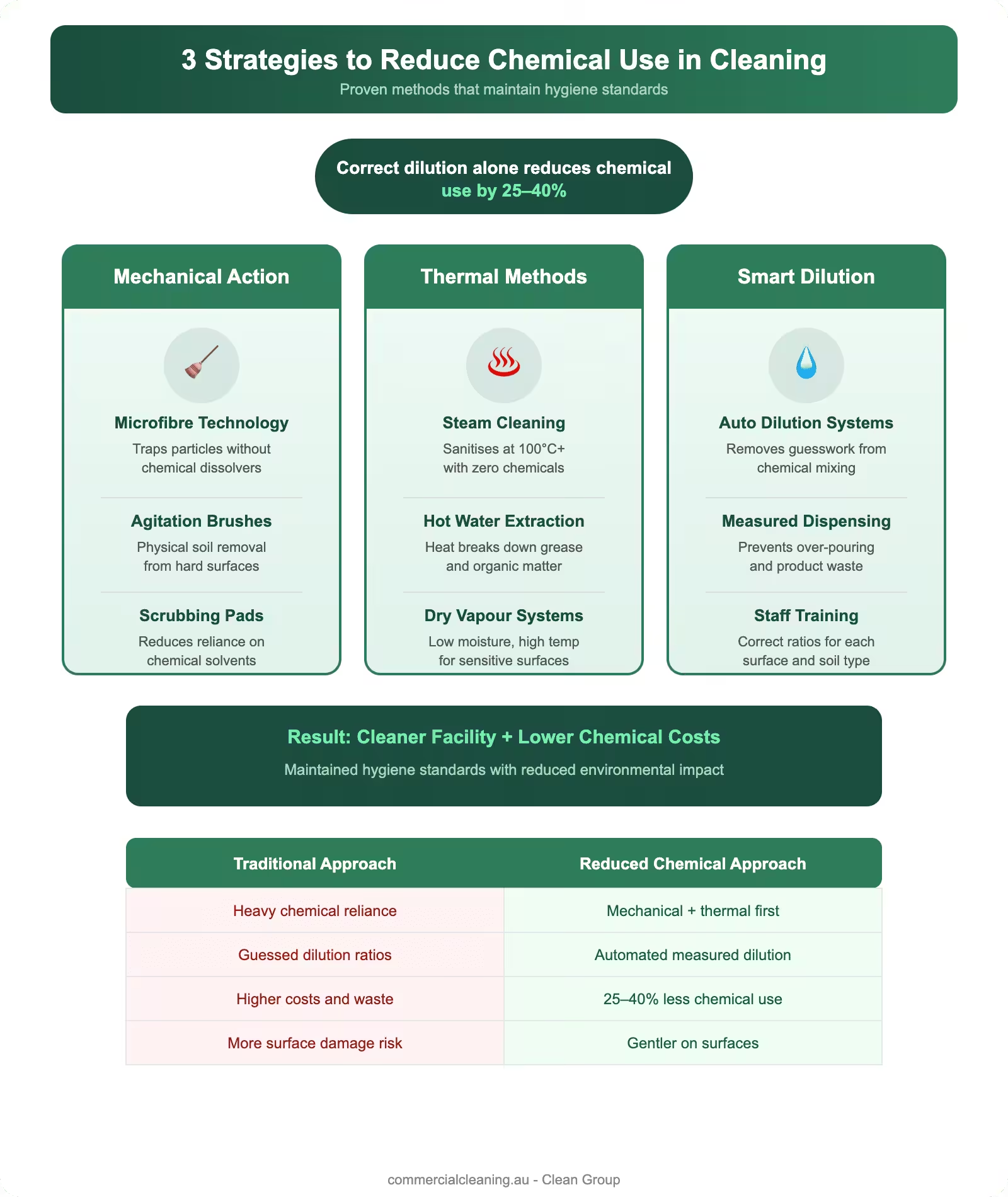
We have also noticed that the cleaning product industry has historically encouraged overuse through packaging design, marketing language, and dispensing mechanisms that deliver more product than needed. Our team has countered this by installing automated dilution systems at every site we service, removing the guesswork and eliminating the temptation to add a little extra for good measure. We have found that correct dilution alone reduces chemical consumption by 25 to 40 percent at most sites without any change in cleaning method or product.
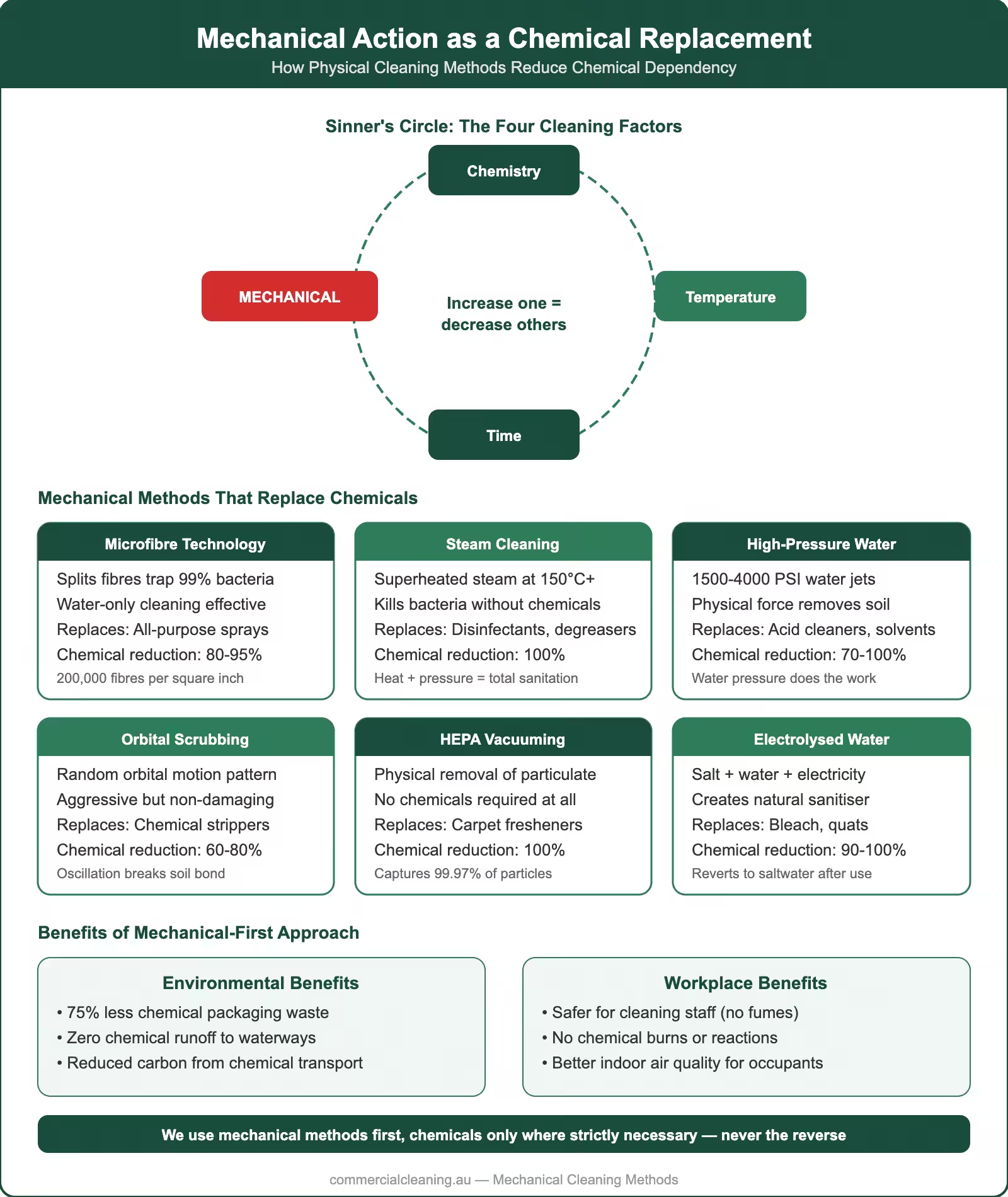
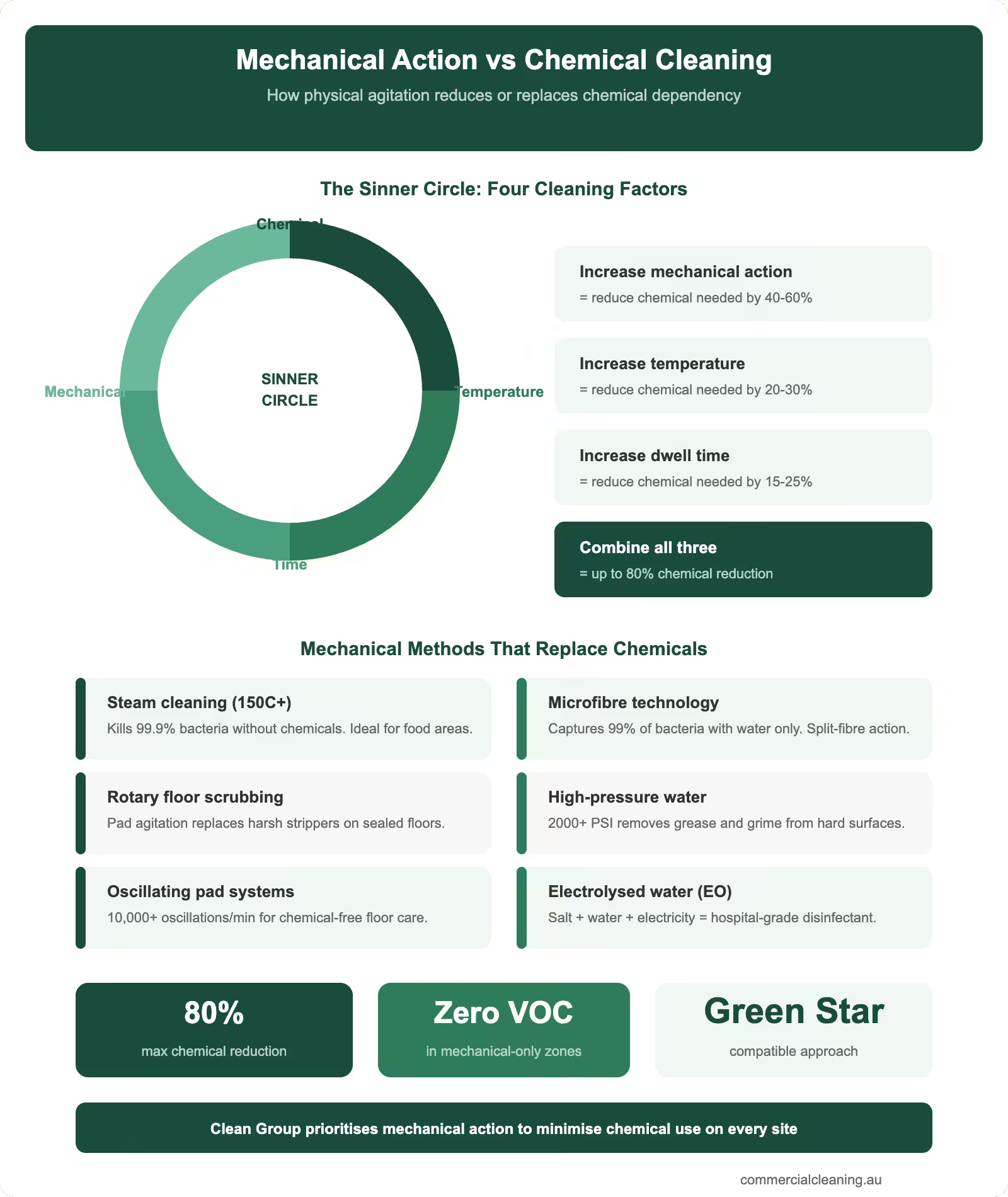
Three strategies to reduce chemical use in commercial cleaning showing mechanical action, thermal methods and smart dilutionMechanical action as chemical replacement showing Sinners Circle, six mechanical methods with chemical reduction percentages, and environmental and workplace benefitsMechanical action vs chemical cleaning infographic showing Sinner Circle principles six mechanical methods and chemical reduction percentages
Mechanical Action as a Chemical Replacement
We have shifted our cleaning philosophy toward maximising mechanical action and minimising chemical intervention, and the results have validated this approach across every type of commercial facility we service. Our team uses microfibre technology, agitation brushes, and scrubbing pads to physically remove soil from surfaces rather than relying on chemicals to dissolve it. We have found that proper mechanical technique removes more contaminants more thoroughly than chemical soaking in the majority of routine cleaning situations.
Our training emphasises the science of soil removal so that our team understands how mechanical action works at a practical level. We teach our cleaners that friction, combined with an appropriate cleaning medium like microfibre or a non-scratch pad, physically dislodges particles and lifts them away from the surface. We have demonstrated this to sceptical facility managers in Ashfield by cleaning half a surface with our mechanical method and half with their preferred chemical product, and the side-by-side comparison consistently shows equivalent or superior results from the mechanical approach.
Commercial Cleaning Product Comparison
Product Type
Active Ingredient
Kill Time
Best For
TGA Listed
Quaternary Ammonium
Benzalkonium chloride
10 min
General surfaces
Yes
Sodium Hypochlorite
Bleach 0.1%
1 min
Bathrooms, blood spills
Yes
Hydrogen Peroxide
H₂O₂ 3–6%
5 min
Multi-surface, eco
Yes
Isopropyl Alcohol
IPA 70%
30 sec
Electronics, glass
No
Peracetic Acid
PAA 0.2%
5 min
Food-grade surfaces
Yes
Safe Chemical Storage and Handling for Reduced Inventories
Commercial Cleaning Product Comparison requires specific protocols that we tailor to each facility based on its layout, traffic, and compliance requirements. We have found that reducing the number and volume of chemicals on site simplifies storage requirements and reduces safety risks. Our team is familiar with AS 2243.10 requirements for the storage of chemicals in workplace settings, and we help our clients confirm that whatever reduced chemical inventory they maintain is stored and handled correctly. We have audited chemical storage areas at properties across Croydon and found that many businesses store incompatible chemicals together, lack proper ventilation, and have no spill containment measures in place.
Our approach to chemical reduction makes compliance with storage standards easier because fewer products mean simpler segregation requirements, less storage space needed, and fewer safety data sheets to manage. We have helped several Summer Hill businesses reduce their cleaning chemical inventory from over 15 products to just five, which dramatically simplified their hazardous substances register and made their storage area compliant with minimal modification. We view this administrative simplification as an underappreciated benefit of chemical reduction.
Thermal Methods for Chemical-Free Sanitisation
We have embraced thermal sanitisation as a primary tool for reducing chemical use in high-hygiene environments. Our commercial steam equipment generates superheated dry steam that kills bacteria and viruses on contact without any chemical input. We use this technology extensively in bathrooms, kitchens, and high-touch areas where traditional cleaning would require chemical disinfectants. Our team has measured bacterial kill rates using ATP testing and confirmed that steam sanitisation achieves results equivalent to chemical disinfection on all common commercial surfaces.
We have also found that thermal methods are particularly effective for tackling persistent issues like grout discolouration, organic build-up in drains, and biofilm on bathroom fixtures. These problems traditionally require harsh chemicals that damage surfaces over time, but our steam equipment addresses them without any chemical intervention. Our Ashfield clients have seen the condition of their bathroom grout improve significantly since we switched to steam cleaning because the absence of chemical residue means there is nothing for mould and bacteria to feed on between cleans.
Measuring and Tracking Chemical Reduction
Measuring and Tracking Chemical Reduction targets specific protocols that we tailor to each facility based on its layout, traffic, and compliance requirements. We believe that what gets measured gets managed, and our team tracks chemical consumption at every site with precision. Our reporting system records the volume of each product used per cleaning visit, and we benchmark this against our target consumption rates to identify sites where further reduction is achievable. We share this data with our clients because we have found that transparency about chemical usage builds confidence in our methods and demonstrates the tangible progress of the reduction program.
Our data shows that the average site in our portfolio has reduced chemical consumption by over 50 percent since we began our systematic reduction program. We have achieved savings of $2,270 annually for a single Croydon commercial property through reduced product purchasing alone, and that figure does not include the secondary savings from simplified storage, reduced disposal costs, and fewer staff health incidents related to chemical exposure. We continue to push for further reductions because we believe there is still significant room for improvement across the industry.
Choosing the right cleaning products is just as important as reducing the quantity used, and the sensory experience of a cleaned space matters to the people who use it every day. Our next guide in our green cleaning series explores how to select cleaning products that smell great while meeting environmental and health standards.
How much can chemical use be reduced in commercial cleaning?
We have achieved over 50 percent reduction across our portfolio. Correct dilution alone reduces consumption by 25 to 40 percent, and replacing chemical methods with mechanical and thermal alternatives delivers further significant reductions.
Does reducing chemicals compromise cleaning quality?
We have demonstrated through side-by-side comparisons and ATP testing that mechanical and thermal methods achieve equivalent or superior results to chemical cleaning for the majority of routine commercial tasks.
What is the most effective chemical replacement method?
We find that microfibre technology combined with steam sanitisation covers most commercial cleaning needs. Microfibre handles daily surface cleaning while steam provides chemical-free deep sanitisation for bathrooms, kitchens, and high-touch areas.
How do automated dilution systems help?
They eliminate guesswork and the temptation to over-concentrate. Our systems verify correct product dilution every time, reducing consumption by 25 to 40 percent while actually improving cleaning results compared to manual mixing.
What chemical storage standards should businesses follow?
AS 2243.10 governs chemical storage in workplaces. Reducing the number of chemicals simplifies compliance by requiring less segregation, smaller storage areas, and fewer safety data sheets to manage.
How do you track chemical reduction progress?
We record product volumes used per cleaning visit and benchmark against target rates. Monthly reports show consumption trends, and we share this data with clients to demonstrate measurable progress.
Can steam cleaning replace chemical disinfectants?
Our commercial steam equipment at temperatures exceeding 150 degrees Celsius achieves bacterial kill rates equivalent to chemical disinfection on all common commercial surfaces, verified through ATP testing.
How much money does chemical reduction save?
We have documented savings of $2,270 annually for individual properties through reduced purchasing alone, plus secondary savings from simplified storage, lower disposal costs, and fewer staff health incidents.
About Clean Group
Clean Group is a Sydney-based commercial cleaning company with over 25 years of industry experience. Founded by Suji Siv, our team of 50+ trained professionals services offices, warehouses, medical centres, schools, childcare facilities, retail stores, gyms, and strata properties across Sydney, Melbourne, and Brisbane.
We are active members of ISSA and the Building Service Contractors Association of Australia (BSCAA). Our operations align with ISO 9001 (Quality Management), ISO 14001 (Environmental Management), and ISO 45001 (Workplace Health and Safety) standards. We hold membership with the Green Building Council of Australia and use eco-friendly, TGA-registered cleaning products wherever possible.
Every Clean Group cleaner is police-checked, fully insured, and trained in safe work procedures under SafeWork NSW guidelines. We operate 7 days a week, including after-hours and weekend services, to minimise disruption to your business.
Hi, I'm Suji Siv, the founder, CEO, and Managing Director of Clean Group, bringing over 25 years of leadership and management experience to the company. As the driving force behind Clean Group’s growth, I oversee strategic planning, resource allocation, and operational excellence across all departments. I am deeply involved in team development and performance optimization through regular reviews and hands-on leadership.