How To Professionally Clean An Aged Care Facility

We have cleaned aged care facilities across Sydney for over a decade and the standards required in these environments are among the highest in any commercial cleaning sector. Our aged care cleaning services in Sydney are built on infection control principles that we apply consistently from resident rooms through to communal dining areas, bathrooms, and clinical spaces. Our team understands that cleaning in aged care is not about appearance alone — it is about protecting vulnerable residents from healthcare-associated infections that can have serious consequences for people with compromised immune systems.
For more insights, see our guide on aged care cleaning.
Infection Control as the Foundation
We approach every aged care cleaning job with infection control as the non-negotiable starting point. Our protocols are informed by the Australian Guidelines for the Prevention and Control of Infection in Healthcare and we train every team member in the chain of infection, transmission routes, and the role that environmental cleaning plays in breaking those chains. We have seen firsthand in Pendle Hill aged care homes how a lapse in cleaning standards can contribute to gastroenteritis outbreaks that affect dozens of residents simultaneously, and that experience reinforced our commitment to doing this work properly every single time.
We follow a colour-coded cleaning system that prevents cross-contamination between different areas of the facility. Our team uses red cloths and mop heads exclusively in bathroom and toilet areas, blue for general resident areas, green for kitchen and dining spaces, and yellow for isolation rooms. We have found that this visual system makes compliance straightforward for our cleaners and gives facility managers an easy way to verify that our team is following protocol during spot checks. Our approach eliminates the guesswork that leads to cross-contamination incidents.
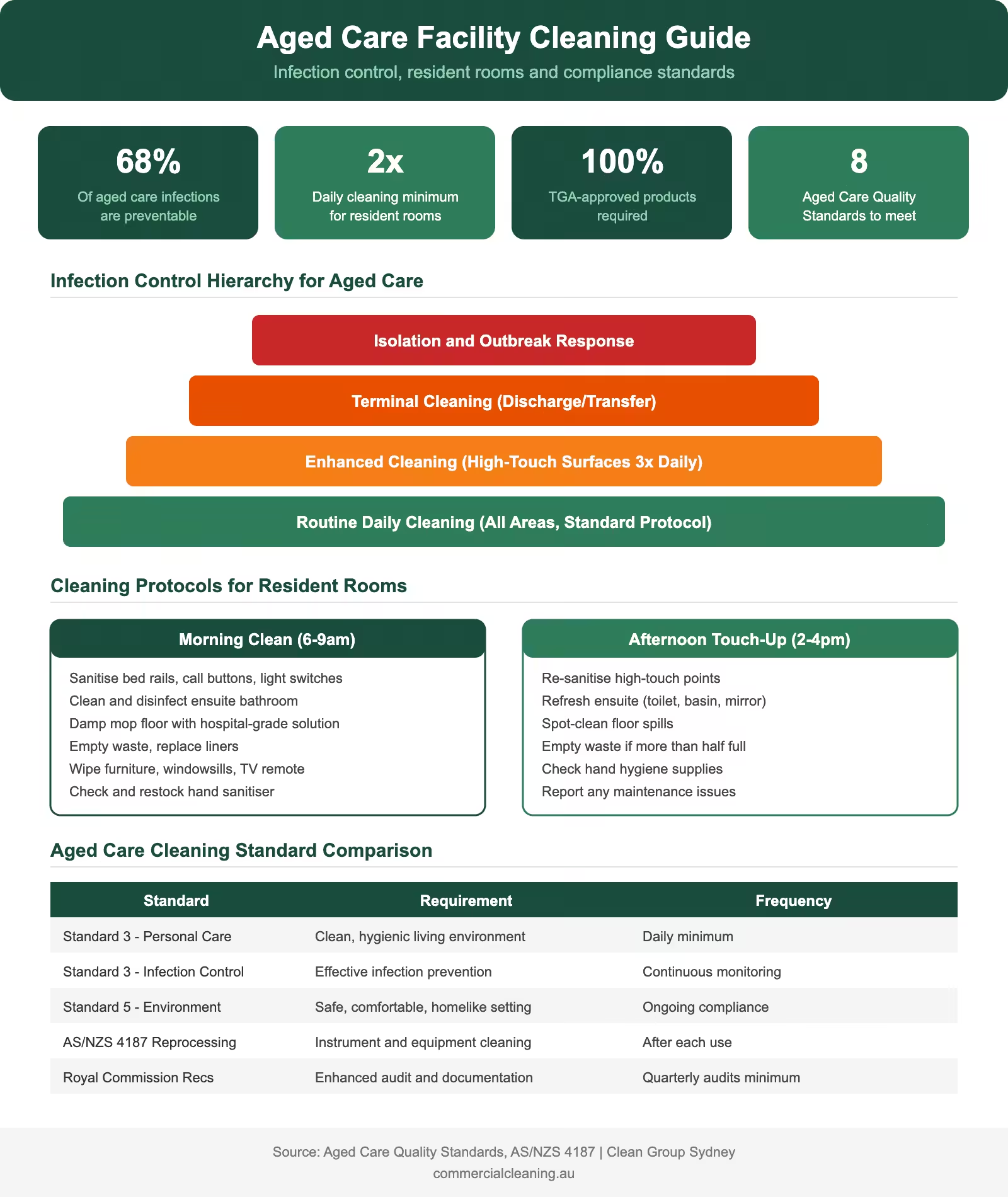
Cleaning Protocols for Resident Rooms
We clean resident rooms following a specific sequence that minimises the spread of contaminants. Our team starts with high-touch surfaces — bed rails, call buttons, light switches, door handles, bedside tables, and remote controls — because these are the primary transmission points for healthcare-associated pathogens. We use hospital-grade disinfectant wipes on every high-touch surface and we allow the required contact time before moving on. Our technicians in Wentworthville South facilities have told us that the difference between a facility that experiences frequent infection outbreaks and one that does not often comes down to how thoroughly these high-touch points are addressed.
We then work through the room in a systematic top-to-bottom, clean-to-dirty sequence. Our team dusts overhead surfaces first, then cleans horizontal surfaces, followed by low furniture and finally the floor. We never skip steps in this sequence because reversing the order pushes contaminants from dirty areas back onto surfaces we have already cleaned. Our experience across dozens of aged care facilities tells us that this disciplined approach is what delivers consistently low infection rates.
Aged Care Facility Cleaning Standard Comparison
| Area | Frequency | Standard Required | Key Risk | Audit Focus |
|---|---|---|---|---|
| Resident Room | Daily + discharge clean | Aged Care Quality Std 4 | Infection transmission | Surface ATP testing |
| Communal Dining | After each meal | Food Standards + Std 4 | Gastro outbreak | Food contact sanitise |
| Bathroom (Shared) | 3–4× daily | Std 4 + infection control | C. diff, norovirus | Colour-coded cloths |
| Medication Room | Daily | TGA + Std 4 | Cross-contamination | Clean room protocol |
| Outdoor Areas | Weekly | WHS + Std 4 | Trip/fall hazards | Slip resistance check |
Surface Disinfection and Chemical Selection
Aged Care Facility Cleaning Standard Comparison requires specific protocols that we tailor to each facility based on its layout, traffic, and compliance requirements. We use hospital-grade disinfectants that are TGA-listed and effective against the pathogens most commonly found in aged care environments including norovirus, influenza, MRSA, and Clostridioides difficile. Our team follows the manufacturer dilution rates exactly because under-diluting reduces efficacy and over-diluting creates unnecessary chemical exposure for residents and staff. We have audited our chemical usage at Pendle Hill facilities using ATP bioluminescence testing after cleaning and our results consistently show surface contamination levels well below the accepted healthcare benchmarks.
Surface Disinfection and Chemical Selection includes specific protocols that we tailor to each facility based on its layout, traffic, and compliance requirements. We pay particular attention to the requirements of AS 4187.1, the Australian Standard covering the cleaning stage of reprocessing reusable medical devices, because the same decontamination principles apply to environmental surfaces in aged care settings. Our understanding of validated cleaning processes — including pre-cleaning, cleaning agent selection, contact time, and rinse procedures — comes directly from this standard and we apply it to every surface our team touches. We have trained our Girraween-based crews specifically on these principles because the aged care facilities in that area have particularly rigorous compliance expectations.
Floor Cleaning Methods
Floor Cleaning Methods addresses specific protocols that we tailor to each facility based on its layout, traffic, and compliance requirements. We use flat mopping systems exclusively in aged care facilities because traditional string mops spread contaminated water across the floor surface rather than removing it. Our flat mop system uses pre-soaked disposable or laundered microfibre pads that pick up soil and bacteria in a single pass. We change the mop pad at every room transition and more frequently in high-traffic corridors. Our team has measured bacterial reduction rates on aged care floors using flat mops versus string mops and the flat mop system outperforms string mopping by a significant margin on every metric we track.
We also address the slip hazard that wet floors create in aged care environments. Our cleaning solutions are formulated to dry quickly and leave no slippery residue, and we always place wet floor signage during and after mopping. We have worked with facility managers in Wentworthville South to schedule corridor mopping during low-traffic periods so that residents are not walking through wet areas. Our team takes falls prevention seriously because a fall in an aged care setting can have life-changing consequences for a frail resident.
Bathroom and Toilet Cleaning
We treat bathrooms in aged care facilities as the highest-risk areas for infection transmission and our cleaning protocols reflect that. Our team uses dedicated red colour-coded equipment that never leaves the bathroom environment, and we apply a two-stage cleaning process — detergent clean first to remove organic soil, followed by a disinfectant application to kill remaining pathogens. We have found that combining these into a single step reduces the effectiveness of both the cleaning and the disinfection, which is why we insist on the two-stage approach even though it takes longer.
We clean every bathroom fixture methodically including toilets, basins, taps, shower heads, grab rails, soap dispensers, and the floor. Our technicians check for limescale buildup, grout discolouration, and silicone mould on every visit because these issues harbour bacteria and create a poor visual impression that affects resident and family confidence. We have seen bathrooms in Pendle Hill aged care homes where routine cleaning had been happening but the deeper maintenance issues had been ignored for months, and the bacterial loads on those surfaces were well above safe levels.
Equipment Standards and Trolley Setup
Equipment Standards and Trolley Setup focuses on specific protocols that we tailor to each facility based on its layout, traffic, and compliance requirements. We maintain our cleaning trolleys to a standard that would pass an infection control audit at any time. Our trolleys are organised with clean supplies separated from waste, colour-coded equipment stored in designated compartments, and chemical solutions prepared fresh at the start of every shift. We have invested in stainless steel trolleys with integrated waste separation and lockable chemical storage because these features reduce contamination risk and keep hazardous products secure in environments where residents with cognitive impairment may interact with unattended equipment.
We inspect and replace consumable items on every trolley daily including microfibre cloths, mop pads, gloves, aprons, and chemical solutions. Our team never reuses single-use items and we launder reusable microfibre products at 70 degrees Celsius to achieve thermal disinfection. We have audited our laundry process against the requirements for healthcare textile reprocessing and our results confirm that our laundered cloths are free from viable pathogens before they return to service. Our equipment standards are a reflection of our commitment to delivering aged care cleaning that genuinely protects residents.
Periodic Deep Cleaning
We schedule periodic deep cleaning on a quarterly or biannual basis depending on the facility needs. Our deep clean covers everything that routine daily cleaning cannot reach including carpet extraction, hard floor stripping and resealing, high-level dusting, vent cleaning, window tracks, and furniture extraction. We recently completed a detailed deep clean across a 120-bed aged care facility in Girraween where the total came to $3,230 including all labour, equipment, and materials over a three-day program scheduled during a low-occupancy period.
We coordinate deep cleaning schedules with facility management to minimise disruption to residents. Our team works wing by wing so that only a small section of the facility is affected at any time, and we always maintain access to necessary services including dining, common areas, and clinical spaces. We have found that this staged approach allows us to deliver a thorough deep clean without the stress and upheaval that comes from trying to do the entire facility at once.
We encourage aged care facility managers who want to understand how NDIS-funded cleaning integrates with broader care cleaning standards to explore our guide on NDIS cleaning that elevates care and cleanliness, which covers the intersection of disability support cleaning and aged care hygiene requirements that our team manages across Sydney.

Frequently Asked Questions
What cleaning products are safe for aged care environments?
We use TGA-listed hospital-grade disinfectants that are effective against common healthcare pathogens including norovirus, MRSA, and C. difficile. Our products are low-odour and formulated to minimise irritation for residents with respiratory sensitivities.
How often should aged care facilities be deep cleaned?
We recommend quarterly deep cleans for high-traffic facilities and biannual deep cleans for smaller or lower-acuity homes. Our deep clean program covers carpet extraction, hard floor restoration, high-level dusting, and furniture cleaning.
What is the colour-coded cleaning system?
We use red for bathrooms and toilets, blue for general areas, green for kitchens and dining, and yellow for isolation rooms. Our system prevents cross-contamination by ensuring equipment from one area never contacts surfaces in another.
How much does aged care facility cleaning cost?
We price based on facility size, cleaning frequency, and service scope. Our recent deep clean of a 120-bed facility in Girraween came to $3,230 including all labour, equipment, and materials over a three-day program.
Do your cleaners have aged care training?
We train every team member in infection control principles, the chain of infection, colour-coded cleaning systems, and aged care-specific protocols. Our staff hold current police checks and working with vulnerable people clearances.
How do you handle outbreak cleaning?
We have an outbreak response protocol that escalates cleaning frequency and intensity. Our team increases high-touch surface disinfection to multiple times daily, uses sporicidal agents when required, and follows the facility infection control practitioner directions throughout the outbreak period.
Can you clean during resident sleeping hours?
We schedule routine cleaning during waking hours to minimise sleep disruption. Our team works quietly in corridors and common areas during early morning hours and we defer noisy tasks like vacuuming until after breakfast service.
What qualifications should aged care cleaners have?
We require infection control training, manual handling certification, chemical safety awareness, and current national police checks for all aged care cleaning staff. Our team also receives facility-specific induction covering resident privacy, dignity, and behavioural support protocols.
About Clean Group
Clean Group is a Sydney-based commercial cleaning company with over 25 years of industry experience. Founded by Suji Siv, our team of 50+ trained professionals services offices, warehouses, medical centres, schools, childcare facilities, retail stores, gyms, and strata properties across Sydney, Melbourne, and Brisbane.
We are active members of ISSA and the Building Service Contractors Association of Australia (BSCAA). Our operations align with ISO 9001 (Quality Management), ISO 14001 (Environmental Management), and ISO 45001 (Workplace Health and Safety) standards. We hold membership with the Green Building Council of Australia and use eco-friendly, TGA-registered cleaning products wherever possible.
Every Clean Group cleaner is police-checked, fully insured, and trained in safe work procedures under SafeWork NSW guidelines. We operate 7 days a week, including after-hours and weekend services, to minimise disruption to your business.
About the Author

Beau Sleeman
Hi, I’m Beau, a full-time accountant and part-time writer at Clean Group. With over ten years of industry experience managing company accounts and records, I’m responsible for keeping everything organised. I have worked with multiple cleaning companies to help successfully manage their businesses and generate profits while ensuring the best value for money for their customers. I also actively engage in the process of creating personalised cleaning packages based on customers’ needs and designed to be affordable for them.
Read More About Beau 0291607469
 Get A Quote