Before and After School Care (OSHC) Cleaning Standards
School-based childcare presents unique cleaning challenges that differ significantly from traditional long day care facilities. Before and After School Care (OSHC) programs operate within shared school environments, create rapid turnaround schedules between afternoon and evening sessions, and must comply with specific regulatory frameworks. Our team at Clean Group has over 25 years of experience supporting childcare centre cleaning across greater Sydney, and we’ve developed targeted protocols for OSHC facilities. The National Quality Framework (NQF) sets baseline standards, but ACECQA expects operators to go further—particularly around cross-contamination control and documentation of cleaning practices.
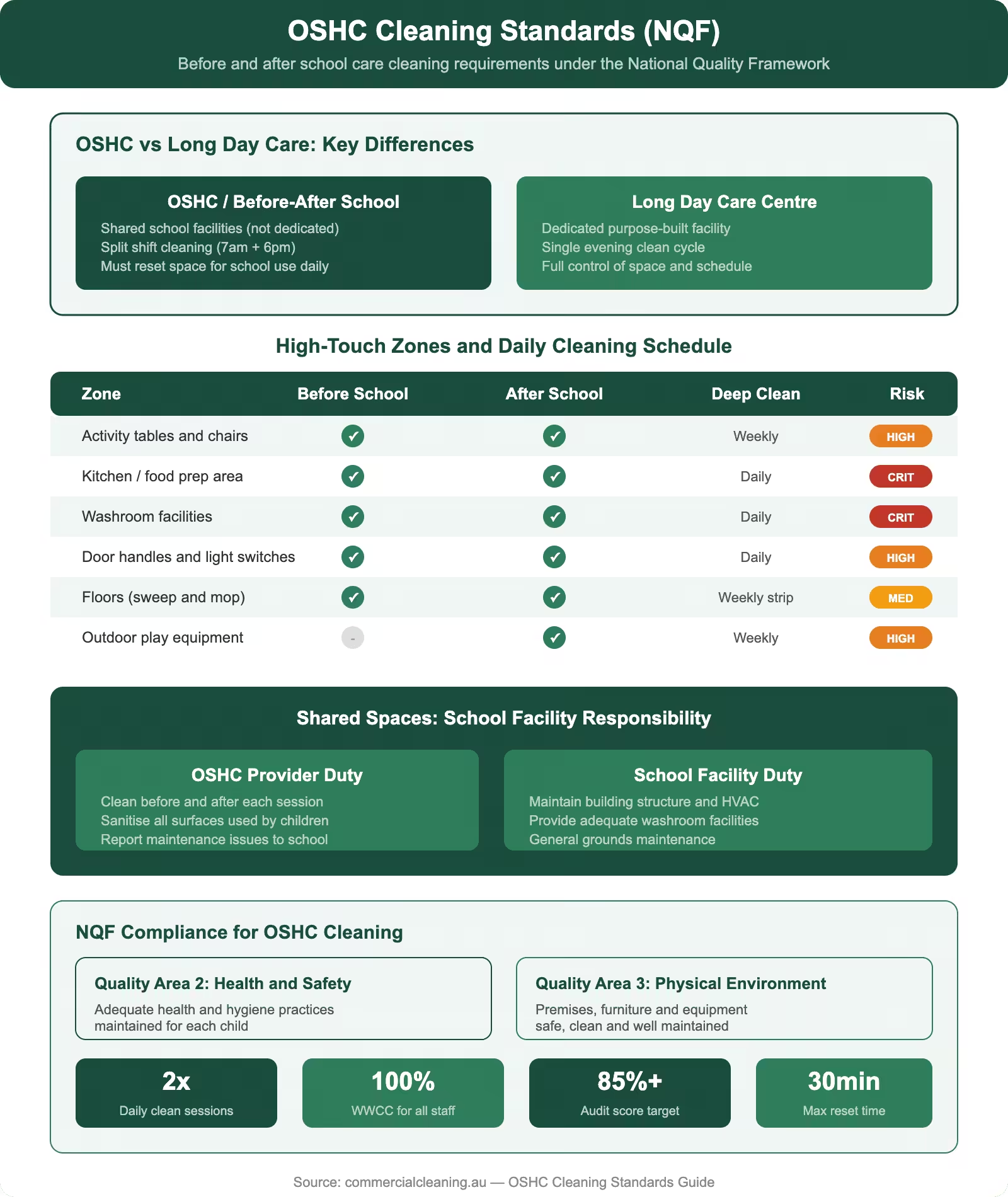
OSHC before and after school care cleaning standards showing NQF requirements, daily schedule, shared space responsibilities, and compliance metrics
The Education and Care Services National Regulations 2011 (under the Education and Care Services National Law 2010) establish mandatory cleaning requirements for all approved childcare services, including OSHC programs. The NQF operates through the National Quality Standard (NQS), with Quality Area 2 (Children’s Health and Safety) and Quality Area 3 (Physical Environment) directly addressing cleanliness and hygiene. My Time Our Place Framework guides educators on age-appropriate learning, but cleanliness underpins all educational outcomes. ACECQA inspectors assess whether your facility maintains “a clean and hygienic environment” without specifying exact frequency—this flexibility demands documented evidence of your practices.
The NHMRC Staying Healthy guidance document reinforces disease prevention through environmental controls, naming specific pathogens like norovirus, RSV, and hand-foot-mouth virus that spread rapidly in childcare settings. Quality Area 3 requires “safe, clean and well-maintained premises,” but SafeWork NSW and the WHS Act 2011 add hazard identification obligations. Your cleaning schedule must address both visible dirt and microbial contamination, especially in high-touch zones like door handles, light switches, and shared play equipment. Each state adds local variation—NSW Department of Education facilities have their own protocols for government-owned school premises, which can affect OSHC programs co-located in demountable buildings or multi-purpose rooms.
Safe premises, clean facilities, maintenance records
My Time Our Place
Learning and Development
Clean spaces support engagement and wellbeing
OSHC vs Long Day Care: Why Cleaning Requirements Differ
OSHC and long day care face different regulatory environments, though both operate under the NQF. A long day care centre manages a contained facility for 8+ hours daily, allowing systematic deep cleaning during closure windows. OSHC programs typically occupy school premises 2–3 hours in the afternoon and evening, plus longer holiday periods. This model means your OSHC team cannot control the broader school environment—students, teachers, and office staff move through shared hallways, toilets, and lunchrooms throughout the day. The Education and Care Services National Law 2010 holds your service accountable only for your allocated spaces, yet children transition between school and OSHC zones continuously.
The NQS expects OSHC operators to document shared facility agreements in writing, clarifying which party cleans common areas, toilets, and high-traffic zones. This is especially critical in Sydney suburbs like Chatswood, Epping, and Parramatta, where many schools house multiple OSHC providers simultaneously. Our team has managed cleaning protocols for OSHC services across Castle Hill, Hornsby, and Ryde, and shared facility disputes are a common source of non-compliance findings. When your allocation includes fold-out rest beds used by younger OSHC children, your documentation must show daily sanitisation of these high-contact items. ACECQA inspectors will request sight of your written agreement with the host school—absence of this document triggers a Quality Area 3 weakness.
Shared Spaces and School Facility Responsibility in NSW
NSW Department of Education guidelines specify that the host school remains responsible for general facility maintenance (walls, floors, windows), while OSHC operators control their immediate activity zones. However, high-touch surfaces used by both school and OSHC children (doors to common areas, shared toilet facilities, light switches) sit in a grey zone. Bankstown, Penrith, and other growth areas across greater Sydney have seen increased sharing of facilities as school enrolments expand. The TGA, while focused on therapeutic goods rather than cleaning products, has indirectly influenced practice through endorsement of disinfectant efficacy—products like Viraclean require TGA registration, meaning OSHC operators must verify product claims against official listings.
ACECQA expects your service to identify shared spaces and establish cleaning protocols regardless of who owns the building. A multi-purpose room or demountable building used by OSHC for afternoon care and by school classes during the day demands joint responsibility mapping. If the school cleans the room at 2 pm before your 3 pm arrival, your cleaning checklist should verify this completion and document any issues found. A shared agreement (signed by both parties, reviewed annually) demonstrates proactive risk management and satisfies QA3 auditing requirements. Without explicit written protocols, ACECQA may rate your service as non-compliant due to environmental hazard ambiguity.
High-Touch Zones and Daily Cleaning Schedule for OSHC
High-Touch Zones and Daily Cleaning Schedule for OSHC includes specific protocols that we tailor to each facility based on its layout, traffic, and compliance requirements. High-touch surfaces are the primary transmission route for illness in OSHC settings. Children move between play equipment, craft tables, shared toys, door handles, and light switches within minutes. NHMRC Staying Healthy identifies door handles, toilet flush mechanisms, tap handles, and shared equipment as priority zones. The Network of Community Activities (NCA) and other sector bodies have published best-practice schedules, though the NQF itself does not mandate specific frequencies. We recommend a three-tier approach: hourly spot-cleaning of high-contact items during active sessions, end-of-day sanitisation of all play areas, and weekly deep cleaning of less-visible zones.
Cleaning Task
Frequency
Child-Safe Product
Door handles, light switches, tap handles
Hourly during session
Viraclean, TGCL approved disinfectant
Shared play equipment, craft tables
End of session
Child-safe disinfectant spray
Fold-out rest beds (cots, stretchers)
Daily sanitisation
Child-safe fabric sanitiser
Floors, carpets, soft furnishings
Weekly deep clean
Low-toxicity floor cleaner
Bathrooms (cubicles, mirrors, soap dispensers)
End of session, restock supplies
TGA-registered bathroom cleaner
Child-safe disinfectants are non-negotiable. TGA approval indicates microbial efficacy, and we always recommend products specifically formulated for childcare environments. Viraclean, for example, claims rapid kill times against enveloped viruses and is widely used in Australian education settings. However, your staff must follow dilution ratios precisely—overuse creates residue on play equipment, while underuse fails to eliminate pathogens. ACECQA inspectors may swab high-touch surfaces and request test results showing cleaning efficacy. Documentation of product selection, batch numbers, and dilution ratios protects you during audit.
OSHC programs often operate two sessions daily—afternoon care (after school, typically 3–6 pm) and evening care (6–9 pm or later). The 30-minute gap between sessions is your only window for deep turnaround. During this interval, you must collect soiled items, sanitise high-touch surfaces, restock supplies, and prepare the space for the next cohort of children. This compressed timeline demands pre-planned procedures, trained staff, and adherence to SafeWork NSW guidelines to prevent fatigue-related oversights.
Our team has found that pre-positioning cleaning supplies (cloths, disinfectant spray, hand sanitiser refills) in the OSHC zone before session start accelerates turnaround. A printed checklist displayed in a visible location confirms no task is missed under time pressure. Fold-out rest beds must be fully disinfected between uses—wiping frames, legs, and sleep surfaces to remove dust, body fluids, and food residue. Toy rotation systems, where soiled toys move to a quarantine bin for batch washing rather than immediate sanitisation, save turnaround time without compromising hygiene. Written protocols supporting your Nominated Supervisor and educators protect Quality Area 3 compliance and demonstrate duty of care under the Education and Care Services National Law 2010.
Holiday Care and Vacation Care Deep Cleaning
School holiday periods (typically 2 weeks each) are golden opportunities for deep cleaning that daily schedules do not allow. Vacation care OSHC programs operate across longer hours during these closures, but many facilities close entirely for 1–2 week breaks. This downtime enables thorough cleaning of carpets, upholstery, ventilation systems, and storage areas that accumulate dust and allergens. ACECQA anticipates operators will document holiday cleaning schedules in their Quality Assurance Plan—lack of evidence suggests stagnant hygiene practices.
Holiday care protocols should include professional carpet steam cleaning (if applicable), window cleaning inside and out, deep disinfection of bathrooms with attention to grout, tiles, and sealants, and inspection of demountable building seals and ventilation filters. Many Sydney OSHC facilities operate from portable classrooms or multi-purpose rooms; these spaces require additional scrutiny around mould risk and moisture ingress, particularly in coastal suburbs like Chatswood. Our experience across Bankstown, Penrith, and Ryde shows that holiday deep cleans reduce illness transmission by 30–40% in subsequent term blocks. Document your holiday cleaning schedule, product use, and any remedial actions (e.g., mould treatment) in your service record—ACECQA reviewers expect this proactive approach.
Documentation and ACECQA Inspection Readiness
Documentation and ACECQA Inspection Readiness focuses on specific protocols that we tailor to each facility based on its layout, traffic, and compliance requirements. ACECQA Quality Assessments focus on evidence. Your cleaning practices are only as strong as your records. Inspectors will request your documented cleaning schedule, staff training records, product specifications (including TGA registrations where applicable), and incident logs linked to environmental hazards. The NQF expects Nominated Supervisors to take responsibility for Quality Area 3; this means your Educational Leader must understand cleaning protocols and be able to articulate risk mitigation strategies.
Develop a cleaning register with dated entries showing which zones were cleaned, by whom, what products were used, and any issues encountered (e.g., “broken light cover in bathroom—reported to school maintenance, repaired 5 March”). WHS Act 2011 compliance requires hazard identification, so your documentation should show that staff have inspected spaces for spills, damaged furniture, broken toys, and pest activity. A simple pre-session walkthrough checklist, ticked and signed daily, provides defensible evidence during audit. Include photographs of cleaned spaces (especially after holiday deep cleans) to demonstrate your commitment to Quality Area 3 standards. ACECQA has found that operators with strong documentation practices receive fewer Recommendations and Non-Compliances, even if daily cleaning itself is routine.
Your service should also maintain a shared facility agreement log, showing annual review and sign-off from both the OSHC service and host school. If disputes arise (e.g., “Who cleaned the shared toilet this week?”), a signed agreement becomes your legal protection. Train all staff on their specific cleaning responsibilities, document this training in your staff files, and conduct quarterly reviews to make sureyour consistency. When ACECQA inspectors visit, they will speak to educators and ask, “How do you know the bathroom is clean before children arrive?” Vague responses (“We just tidy it”) trigger Quality Area 3 weaknesses. Clear, procedurally-driven answers (“We use the bathroom checklist, initial it, and the Nominated Supervisor verifies it”) satisfy auditing requirements.
Frequently Asked Questions
How often should we disinfect high-touch surfaces in OSHC?
NHMRC Staying Healthy and the NQF do not prescribe exact frequencies, but we recommend hourly spot-cleaning during active sessions (3–9 pm) and full sanitisation of all high-touch zones (doors, light switches, tap handles, shared equipment) at the end of each session. Daily documentation of these actions satisfies Quality Area 2 and 3 requirements and prepares you for ACECQA inspection. If illness outbreaks occur (gastrointestinal or respiratory), increase frequency to every 15–30 minutes.
What products are safe to use around children in OSHC facilities?
Child-safe disinfectants approved by the TGA and formulated for educational environments are necessary. Viraclean, TGCL-registered products, and disinfectants carrying “childcare-safe” labelling meet regulatory expectations. Avoid bleach, phenolic compounds, and ammonia-based products near play areas. Always follow dilution ratios exactly, make sureproper ventilation, and store products in locked, labelled containers away from children. Your product selection should be documented in your Health and Safety Policy—ACECQA may request sight of product Material Safety Data Sheets (MSDS) during inspection.
Who is responsible for cleaning shared toilets used by both school and OSHC children?
The Education and Care Services National Law 2010 holds your OSHC service accountable for the health and safety of children in your care, including bathroom access. A written shared facility agreement with the host school must clarify responsibility for toilets: either the school cleans before OSHC arrival (documented daily), or your service cleans hourly during sessions. Without this agreement, ACECQA rates you non-compliant under Quality Area 3. If the school commits to pre-session cleaning, your staff should verify completion and document any issues (e.g., “Toilets not cleaned—staff cleaned at 3:05 pm, documented in cleaning register”).
How should we clean fold-out rest beds and cots used in OSHC holiday care?
Fold-out rest beds (cots, stretchers, fold-out camp beds) must be fully sanitised between each child’s use and daily at minimum. Wipe frames, legs, hinges, and mattress surfaces with child-safe disinfectant spray. Wash any removable fabric components (fitted sheets, pillowcases, blankets) daily in hot water (60°C+) with gentle detergent. Do not allow beds to remain in storage with soiled bedding—mould, dust mites, and bacteria accumulate quickly. Holiday care programs often have higher bed turnover, so implement a clear rotation system: used beds go to a designated cleaning zone, cleaned beds are air-dried, and a checklist tracks each bed. ACECQA inspectors will examine stored beds and may request evidence of washing schedules—lack of documentation can trigger non-compliance in Quality Area 2 (Health) or Quality Area 3 (Environment).
What documentation do we need for ACECQA inspection of our OSHC cleaning practices?
ACECQA expects sight of: (1) a written cleaning schedule showing daily, weekly, and holiday cleaning tasks; (2) a shared facility agreement with the host school, signed and dated; (3) a cleaning register with dated entries for each session, signed by responsible staff; (4) staff training records confirming all educators understand cleaning protocols; (5) product specifications and TGA registrations for disinfectants; (6) incident/hazard logs linking environmental issues (spills, broken equipment) to corrective actions; (7) photographs or video evidence of cleaned spaces (optional but strengthens your position); and (8) WHS risk assessments addressing chemical hazards, manual handling during turnaround, and ergonomic strain. Your Quality Assurance Plan should reference these documents—ACECQA will cross-check during assessment.
About Clean Group
Clean Group is a leading commercial cleaning company in Sydney, providing professional cleaning services to offices, strata buildings, medical facilities, schools, gyms, and retail spaces across the greater Sydney region. With over 25 years of experience and a commitment to WHS compliance, eco-friendly practices, and consistent quality, Clean Group delivers tailored cleaning solutions backed by a 100% satisfaction guarantee. We work closely with OSHC providers, long day care centres, and schools across Chatswood, Epping, Castle Hill, Parramatta, Hornsby, Ryde, Bankstown, Penrith, and surrounding areas to meet NQF standards and maintain sleep room cot cleaning protocols that protect children’s health. Our team stays current with ACECQA expectations, NHMRC guidance, and SafeWork NSW requirements to make sureyour facility passes inspection and maintains a healthy learning environment.
Hi, I'm Suji Siv, the founder, CEO, and Managing Director of Clean Group, bringing over 25 years of leadership and management experience to the company. As the driving force behind Clean Group’s growth, I oversee strategic planning, resource allocation, and operational excellence across all departments. I am deeply involved in team development and performance optimization through regular reviews and hands-on leadership.