South Bank is one of Brisbane’s iconic riverside precincts, home to cultural venues, parklands, and commercial spaces. Our team at Commercial cleaning services Brisbane understands the specific demands riverside locations present. The South Bank Parklands, QPAC, GOMA, and the Queensland Museum all require cleaning strategies that account for the region’s unique environmental challenges.
When the Brisbane River rises—as in 2011 and 2022—riverside precincts face compounded restoration demands. Our crews manage post-flood humidity, mould remediation under IICRC S520 standards, and careful preservation of heritage structures and cultural assets. The subtropical Brisbane climate, with its wet season November to March, keeps humidity consistently high even outside floods. For facility managers in South Bank, understanding these challenges is critical to protecting infrastructure and occupant health.
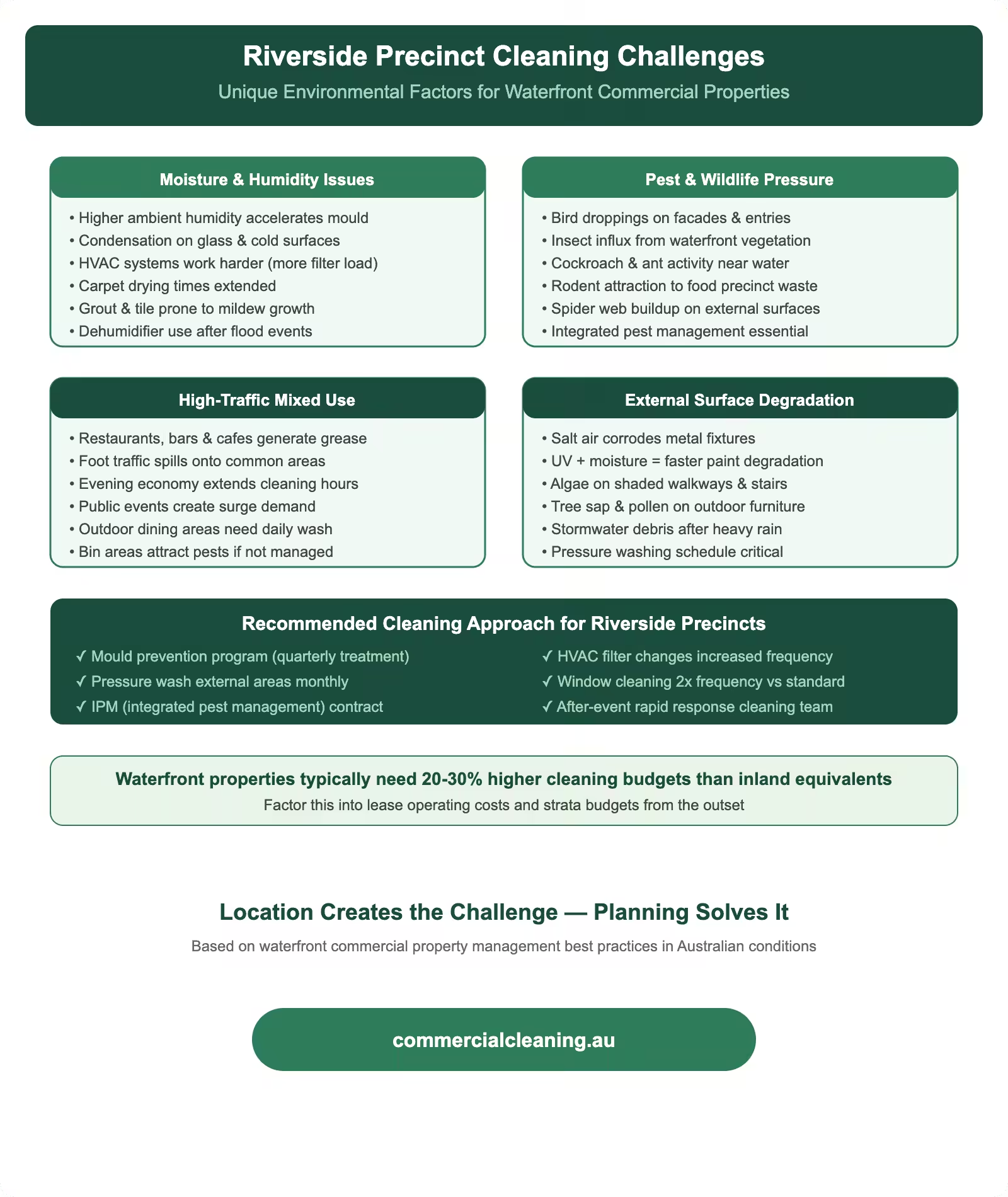
Riverside precinct cleaning challenges showing moisture and humidity issues, pest pressure, high-traffic mixed use, external surface degradation, and recommended approach
Understanding South Bank’s Riverside Cleaning Challenges
The South Bank precinct sits within Brisbane’s most dynamic urban waterfront environment. Streets Beach, the Parklands, and the Brisbane Convention & Exhibition Centre all operate in close proximity to the Brisbane River, which means humidity, moisture infiltration, and flood risk are year-round considerations. Unlike inland commercial spaces, riverside buildings experience accelerated moisture ingress through walls, HVAC systems, and structural joints.
Our team’s experience across QPAC, GOMA, and the State Library shows that standard commercial cleaning approaches fall short. The subtropical climate—with humidity readings between 60–75%—creates ideal mould growth conditions when moisture management lapses. Cultural venues require climate-controlled environments and chemical protocols that don’t damage finishes or artworks. A single HVAC failure can compromise climate control within hours.
Why Location Matters for Cleaning Protocols
Riverside geography introduces moisture variability. Buildings within 200 metres of the Brisbane River experience higher groundwater tables, capillary rise, and greater wind-driven rain exposure. The Workplace Health and Safety Act 2011 (QLD) requires maintaining indoor air quality below specific thresholds. For South Bank venues, this means active humidity control rather than reactive cleaning.
Post-Flood Restoration and Water Damage Remediation
Brisbane’s 2011 and 2022 flood events demonstrated the critical importance of swift, compliant restoration. Within 24 to 48 hours of standing water exposure, mould colonisation begins. Our flood restoration protocols for South Bank commercial spaces follow IICRC S520 (Professional Mould Remediation) standards and integrate with SafeWork Queensland requirements.
One missed sanitisation cycle can compromise patient safety protocols.
Immediate Response Protocol
The first 72 hours determine long-term outcomes. Our team deploys industrial water extraction equipment to remove standing water from QPAC, GOMA, and commercial office spaces. We establish perimeter containment and dehumidification units rated for the affected space. For heritage buildings like the State Library, we coordinate with conservation teams to protect archival materials and perform restoration without compromising structural integrity.
Beyond water removal, we apply HEPA filtration throughout work zones to prevent mould spores spreading. Contaminated drywall, carpeting, and soft furnishings are removed. Structural elements are dried over 2–4 weeks depending on saturation depth. We use moisture meters to verify relative humidity stabilises below 65% before handing areas back to facility teams.
Mould Remediation and Anti-Microbial Treatment
Once structural drying is complete, our crews apply IICRC-compliant mould remediation. All surfaces are HEPA-vacuumed and treated with approved anti-microbial solutions. For cultural venues, we specify heritage-safe compounds that won’t damage collections. Air scrubbing with HEPA and activated carbon filtration continues 48–72 hours to clear residual spores.
Subtropical Humidity and Mould Prevention for Commercial Spaces
Brisbane’s subtropical climate presents a year-round humidity challenge distinct from inland Australian cities. Between November and March, the wet season pushes relative humidity regularly above 75%. Even outside flood events, HVAC systems must maintain indoor humidity between 30–50% to prevent mould proliferation, per AS/NZS 3666 (Air handling and water systems) and EPA guidance.
Humidity Monitoring and Control Strategy
Our integrated approach begins with baseline humidity mapping. We install hygrometers across key zones—lobbies, storage areas, and mechanical rooms—to identify moisture hotspots. For QPAC and GOMA, we recommend automated humidity monitoring systems with alerts at 60% relative humidity. Once threshold breach occurs, dehumidification and HVAC adjustment happen within minutes.
Regular HVAC filter changes—every 30 days in high-humidity zones—prevent microbial growth on filter media and coils. Ductwork inspection at 12-month intervals catches condensation before it spreads mould downstream. The Brisbane Convention & Exhibition Centre benefits from pre-season HVAC audits that verify compressor capacity, drain pan integrity, and discharge pathways.
Addressing Capillary Rise in Riverside Structures
Commercial buildings near the Brisbane River experience moisture migration through concrete slabs due to water table proximity. Capillary rise—upward movement of moisture through masonry—can saturate foundation surfaces 1–2 metres above grade. Standard mopping cannot address this; instead, we recommend:
Installation of capillary breaks or moisture barriers in new construction
Application of breathable sealants (not plastic films) to allow trapped moisture to evaporate
Perimeter sump pumps and ground-level dehumidification in basement or ground-floor spaces
Regular inspection of expansion joints, cracks, and weep holes that allow water infiltration
For existing structures, our team works with building engineers to assess capillary rise risk and design targeted remediation. The cost of preventive measures is far lower than the cumulative cost of repeated mould remediation and air quality complaints.
Specialised Cleaning for Cultural Venues and Heritage Spaces
QPAC, GOMA, the Queensland Museum, and the State Library operate under distinct conservation standards. Cleaning these venues requires knowledge beyond standard commercial facility management.
Medical staff notice cleaning inconsistency within hours, not days.
Climate and Material Considerations
Cultural institutions house irreplaceable collections—artworks, manuscripts, and artefacts—each with specific environmental tolerances. GOMA’s Gallery spaces require humidity within ±5% of targets. QPAC’s theatres demand rapid air changes without vibration or acoustic interference. The State Library’s special collections vaults must maintain <40% relative humidity to preserve materials.
Our crews are trained in heritage conservation and understand the difference between archival-safe cleaning agents (pH-neutral, residue-free), surface-appropriate techniques (soft-bristle only for some materials), and vacuum systems rated for delicate materials (never standard shop vacs).
Performance and Event Space Protocols
QPAC’s theatres, studios, and foyer areas demand flexible scheduling to accommodate performances. Our team coordinates cleaning during closure windows—typically early morning or overnight—ensuring no residual odours, dust, or chemical traces remain during performances. We use approved cleaning products for stage floors, seating, and sound equipment, avoiding substances that compromise acoustic properties.
Wet Season Preparedness and Maintenance Schedules
Brisbane’s wet season (November–March) is not a time for standard cleaning regimes. Facilities across South Bank must shift to proactive moisture management and preventive maintenance.
Pre-Wet Season Audit Checklist
System / Component
Action Required
Frequency
HVAC coils and condensate drains
Professional cleaning and inspection; verify drain slope
Monthly (Nov–Mar)
Roof penetrations, seals, guttering
Inspect for cracks, blockages; clear debris
Pre-season + after heavy rain
Basement / ground-floor sump systems
Test pump operation; confirm discharge pathway is clear
Monthly
Humidity levels across zones
Establish baseline; schedule daily logging
Daily (Nov–Mar)
Flood barriers, removable dams, sandbags
Verify accessibility and functionality
Pre-season
Upholstery, soft furnishings in high-risk areas
Move to elevated storage or apply water-resistant covers
Before wet season onset
Scheduled Maintenance Between Flood Events
Our monthly protocols for South Bank facilities include ductwork inspection for condensation, floor slab inspections for cracks admitting moisture, and chemical drain treatments to prevent biofilm growth. Quarterly deep-clean HVAC treatments remove dust and biological growth common in humid conditions.
Active Humidity Management Beyond Cleaning
International best practices show that mechanical dehumidification integrated into facility operations prevents moisture accumulation. Refrigerant dehumidifiers cool air below its dew point, while desiccant systems use silica gel to absorb moisture directly. For South Bank spaces, we recommend portable industrial dehumidifiers (50–100 litres/day capacity) in basement zones and ducted systems for larger facilities like QPAC and GOMA. Automated monitoring dashboards trigger alerts at 60% relative humidity, maintaining target ranges cost-effectively. The operational cost—typically 500–800 kWh monthly—is substantially lower than a single mould remediation event.
Cross-contamination in healthcare spaces triggers compliance investigations.
Flood Insurance Compliance and Facility Readiness
Many South Bank facility managers are unaware that their commercial property and contents insurance policies include specific maintenance and readiness clauses. Underwriters may deny claims if flood damage occurs in buildings where documented preventive measures (HVAC maintenance, humidity logging, drain inspection) were neglected.
Our team maintains detailed compliance documentation: photographic records of pre-season inspections, monthly humidity logs, HVAC service certificates, and incident reports. This documentation protects facility managers when liaising with insurers and demonstrates due diligence to SafeWork Queensland auditors. For organisations hosting collections or sensitive operations—like the galleries within GOMA or performance archiving at QPAC—maintaining this audit trail is critical to both insurance and operational continuity. For information on heritage wharf cleaning and broader riverside facility maintenance, our team also specialises in heritage wharf cleaning solutions across Brisbane’s waterfront precincts.
The 48-Hour Emergency Window and Content Salvage
The critical window for intervention after water intrusion is 48 hours. This timeframe aligns with the IICRC S500 standard for water damage mitigation. Beyond this window, mould colonisation begins on saturated materials, and recovery becomes substantially more difficult and expensive. Our response protocol focuses on immediate salvage of high-value content before microbial establishment occurs.
Document and Content Salvage Procedures
For facilities like the State Library and GOMA housing archival materials, immediate salvage is non-negotiable. Paper documents, photographs, and manuscripts submerged in floodwater face mould colonisation within 48 hours if left wet. Our team coordinates rapid freeze-drying protocols: documents are placed in sterile containers, transported to specialised freeze-drying chambers, and thawed slowly under controlled humidity to prevent cockling and ink bleeding. This method preserves documents that would otherwise be total losses. For electronics and digital storage equipment, vacuum thermal drying removes moisture from circuit boards and internal components without heat damage. Hard drives and backup systems are prioritised first, given their irreplaceable data value to cultural institutions and commercial operations.
Prioritisation of Salvageable vs Non-Salvageable Materials
Not all flooded materials warrant salvage effort. Our team applies practical triage: high-value archival items, electronics, furniture with structural integrity, and artworks receive priority. Saturated drywall, carpeting, fibreglass insulation, and porous materials contaminated by river sediment are classified as non-salvageable and removed immediately. This prioritisation prevents crossover of microbial spores from contaminated items to recoverable materials. We document all decisions photographically for insurance purposes.
Dehumidification Staging and Monitoring
After initial water extraction, multi-stage dehumidification begins. First-stage systems operate at high capacity (100+ litres/day) to reduce absolute humidity. Secondary-stage systems using desiccant technology take over once bulk moisture is removed, maintaining relative humidity below 50% as materials dry. For South Bank facilities, we stage equipment based on floor area and material type: theatres and performance spaces require rapid drying without temperature swings that affect acoustic properties; vaults and special collections demand slower, more controlled dehumidification to prevent material stress.
Building Envelope Moisture Management
The building envelope comprises three moisture barrier layers working together. Understanding their interaction prevents chronic moisture problems in riverside structures near the Brisbane River. South Bank buildings experience unique exposure: proximity to groundwater, tidal influences, and persistent subtropical humidity test envelope integrity year-round.
The Three Moisture Barrier Layers and Their Function
The water barrier (outermost) sheds liquid water from rain and rising damp. Below sits the air barrier, which prevents wind-driven moisture from entering cavities. The vapour barrier (innermost) restricts moisture-laden air from diffusing into walls, preventing condensation within insulation. For riverside buildings, all three must function together: a failed water barrier allows bulk water entry; a failed air barrier permits wind-driven moisture penetration; a failed vapour barrier allows interior humidity to condense in cavities where mould thrives. Commercial buildings in South Bank often exhibit failures around window perimeters, expansion joints, and mechanical penetrations.
Capillary Rise in Riverside Foundations
Buildings within 200 metres of the Brisbane River experience capillary rise—the upward migration of groundwater through concrete and masonry. Water wicks 1–2 metres above the natural water table through microscopic pores. South Bank’s location near Streets Beach and the Parklands means foundation slabs sit above the local water table, allowing capillary rise to saturate surfaces with persistent dampness. Once established, passive drying becomes impossible without intervention. Our team prescribes moisture barriers, breathable sealants, perimeter sump systems, and for critical spaces, electric drying systems or salts-based remediation approved by AS 3740 (Waterproofing Assemblies).
Drainage Mat Systems and Waterproofing Membrane Inspection
Modern riverside buildings employ drainage mats—plastic products with raised nodules installed against foundation walls—that channel water downward toward foundation drains. Annual inspection confirms mats are seated correctly, drains discharge properly, and sediment doesn’t block flow. Waterproofing membranes (bituminous coatings or spray-applied systems) must be assessed for cracks and adhesion loss at expansion joints and penetrations. For existing South Bank buildings predating modern drainage, retrofitting these systems is often the only effective capillary rise solution. Our inspections use moisture meters to identify saturation zones, guiding targeted remediation.
For practical advice on maintaining event spaces, explore our guide on event venue cleaning.
Frequently Asked Questions
How quickly does mould grow after a flood in Brisbane?
Mould colonisation begins within 24 to 48 hours of water exposure. Our experience managing post-flood sites across South Bank Parklands shows that swift water extraction followed by aggressive dehumidification is the only effective intervention. We follow IICRC S520 protocols and deploy industrial-grade equipment immediately to prevent mould establishment.
What humidity level should we maintain in commercial spaces?
The EPA and AS/NZS 3666 recommend maintaining indoor relative humidity between 30–50%. For Brisbane’s subtropical climate, most facilities sustain 50–60% during non-flood periods, but humidity above 65% accelerates mould risk. Active HVAC management and supplementary dehumidification during wet season help maintain target levels. For cultural venues like GOMA and the Queensland Museum, humidity targets are tighter (±5% of setpoint) to protect collections.
Is post-flood cleaning covered by standard contracts?
No. Standard contracts exclude water damage restoration, mould remediation, and structural drying. Flood response requires specialized IICRC certification and restoration-specific insurance distinct from operational cleaning. Our team maintains separate flood restoration credentials to deliver compliant restoration under QLD workplace health and safety standards.
Can we prevent capillary rise near the Brisbane River?
Complete elimination is not possible in older structures, but mitigation is achievable. Capillary breaks, moisture barriers, and enhanced drainage reduce upward moisture migration. Perimeter sump systems and ground-level dehumidification have successfully managed capillary rise in riverside buildings including the Brisbane Convention & Exhibition Centre.
About Clean Group
Clean Group is a leading commercial cleaning company with over 25 years of experience, providing professional cleaning services to offices, strata buildings, medical facilities, schools, gyms, and retail spaces across Australia. With a commitment to WHS compliance, eco-friendly practices, and consistent quality, Clean Group delivers tailored cleaning solutions backed by a 100% satisfaction guarantee.
Testing Frequency and Sampling Protocol
Our testing schedules match facility risk profiles. Critical areas—operating theatres, intensive care units, and QIMR Berghofer research labs—receive daily ATP testing with results documented for compliance audits. General patient wards receive weekly testing, whilst lower-risk spaces are sampled fortnightly. We use standardised swab kits, sampling multiple high-touch surfaces at each location: bed rails, door handles, light switches, and equipment controls. Swab technique remains consistent across our team, ensuring reliable trending data that supports continuous improvement in cleaning protocols. This objective verification meets clinical governance expectations and provides Metro North Hospital and Health Service infection control teams with measurable evidence of cleaning performance.
Disinfectant Contact Time Science and Product Selection
Effective disinfection requires understanding the difference between cleaning (physical removal of soil and organic matter) and disinfection (killing pathogens on surfaces). Contact time—the period a disinfectant must remain wet on a surface to achieve specified kill rates—is critical to success. Using the wrong contact time or product concentration can leave pathogens viable, compromising infection control despite appearance of cleanliness.
Contact Time Requirements by Product Class
Different disinfectant classes demand different exposure periods. Quaternary ammonium compounds typically require 10 minutes of wet contact time to achieve efficacy against most healthcare pathogens. Accelerated hydrogen peroxide works faster, achieving kill rates in just 1 minute, making it ideal for high-touch surfaces requiring rapid turnaround. Sodium hypochlorite (bleach-based solutions) at 1000 ppm concentration also requires approximately 10 minutes contact time. We select products based on surface material, target pathogens, and available time between patient occupancy. For RBWH surgical areas where speed matters, we favour faster-acting agents; for thorough environmental disinfection in research labs, we allow adequate contact time regardless of duration.
TGA Approval and ARTG Listing Requirements
All hospital-grade disinfectants used at Herston Health Precinct must carry Therapeutic Goods Administration approval and appear on the Australian Register of Therapeutic Goods (ARTG). We maintain current product documentation showing TGA registration numbers and confirmed efficacy against relevant pathogens—MRSA, VRE, and other multi-drug resistant organisms common in healthcare settings. Product compatibility with different surface materials (stainless steel, plastics, painted surfaces) guides our selection. We balance efficacy, contact time, material compatibility, and cost-effectiveness to deliver infection control that meets regulatory standards and clinical expectations.
BSL Containment Level Cleaning Differences
Biosafety level (BSL) classification determines the hazard control measures required when handling biological materials. QIMR Berghofer operates across multiple BSL levels, and our team understands how cleaning protocols differ depending on the containment level of each laboratory space. BSL-1 facilities handle non-pathogenic organisms with minimal hazard; BSL-2 laboratories work with moderate-risk agents including Staphylococcus aureus and other human pathogens; BSL-3 facilities manage serious pathogens like Mycobacterium tuberculosis. Each level requires progressively stringent cleaning and decontamination procedures.
Entry and Exit Decontamination Procedures
BSL-1 areas require standard cleaning protocols with basic PPE (gloves and laboratory coat). BSL-2 facilities require personnel to shower or at minimum change outer clothing before leaving the laboratory. Our cleaning team works with laboratory managers to schedule decontamination after personnel exit, applying disinfectants compatible with equipment and surfaces. BSL-3 areas demand even more rigorous controls: biosafety cabinets operate at negative pressure, and all waste—including cleaning materials—must be autoclaved at 121°C for 30+ minutes before leaving the facility. We coordinate with institutional biosafety committees to confirm decontamination is complete and waste properly sterilised before removal.
PPE and Autoclaving Requirements
Our team members working in BSL-2 and BSL-3 facilities wear full PPE including double gloves, respiratory protection where required, and protective gowns covering entire body. All materials used during cleaning—mops, cloths, chemical containers—become biohazard waste requiring autoclaving. We understand these heightened protocols reflect genuine infection control risk: BSL-3 pathogens pose serious health consequences if exposure occurs. Our cleaning procedures at QIMR Berghofer align with AS/NZS 2243.3 (Safety in Laboratories) and institutional biosafety committee oversight. This rigorous approach protects our team, facility staff, and the broader community.
Frequently Asked Questions
What disinfectants are safe to use on medical equipment in Herston Health Precinct facilities?
Only TGA-approved disinfectants should be used on medical equipment. Many disinfectants can damage equipment surfaces or leave residues affecting function. We consult equipment manufacturers’ specifications and coordinate with infection control teams to select appropriate agents. For sensitive equipment like computer monitors or patient monitors, alcohol-based disinfectants applied to microfibre cloths are often preferred over liquid sprays.
How do you verify that cleanroom environments at QIMR Berghofer meet ISO 14644 classifications?
We conduct particle counting at defined intervals using calibrated particle counters. Samples are taken at multiple locations within the cleanroom and compared against ISO 14644-1 thresholds for the specified classification. We document results in cleaning logs provided to laboratory management, supporting compliance audits and continuous improvement.
What training do your team members receive before working in hospital and research settings?
Our cleaners complete induction training specific to each facility, covering bloodborne pathogen exposure control, hazard identification, emergency procedures, and communication protocols with clinical staff. We provide annual refresher training in infection control and WHS requirements. Crews working in research laboratories with biological safety cabinets receive additional training in BSC protocols and decontamination procedures.
How do you manage cleaning during patient care activities in RBWH wards?
We coordinate cleaning schedules with ward management to minimise disruption to patient care. Morning terminal cleans are typically scheduled before patient admissions, whilst high-touch surface disinfection occurs throughout the day during periods of lower clinical activity. We communicate directly with nursing staff to identify the best times for room cleaning and confirm all clinical activities have been cleared.
Can your team handle biohazard cleanup if a spill or contamination event occurs?
Our team is trained to respond to minor spills within scope, but major biohazard incidents require coordination with hospital infection control and occupational health. We provide initial containment and isolation of affected areas, then work with hospital safety officers to determine appropriate cleanup procedures. All hazardous waste from spill cleanup follows clinical waste segregation protocols.
About Clean Group
Clean Group is a leading commercial cleaning company with over 25 years of experience, providing professional cleaning services to offices, strata buildings, medical facilities, schools, gyms, and retail spaces across Australia. With a commitment to WHS compliance, eco-friendly practices, and consistent quality, Clean Group delivers tailored cleaning solutions backed by a 100% satisfaction guarantee.
Our work in medical facilities at Herston Health Precinct, RBWH, and research institutes across Queensland reflects our deep understanding of infection control, clinical sterilisation standards, and the regulatory environment governing healthcare cleaning. Whether you operate a teaching hospital like RBWH, a research facility like QIMR Berghofer, or a specialised medical precinct, Clean Group brings the expertise necessary to maintain standards and support clinical excellence. Explore our full range of commercial cleaning services today.
Hi, I'm Suji Siv, the founder, CEO, and Managing Director of Clean Group, bringing over 25 years of leadership and management experience to the company. As the driving force behind Clean Group’s growth, I oversee strategic planning, resource allocation, and operational excellence across all departments. I am deeply involved in team development and performance optimization through regular reviews and hands-on leadership.