Complete Maintenance Guide For Industrial Sites
We have cleaned and maintained industrial facilities across Sydney for more than twenty years, and our team has developed specialised protocols for the heavy-duty environments that standard industrial cleaning companies are not equipped to handle. Our industrial cleaning services in Sydney cover everything from warehouse floor scrubbing and factory degreasing to high-pressure external washing and post-construction site clean-ups, and this guide shares the practical knowledge we have built through thousands of industrial engagements so that facility managers can make informed decisions about their maintenance programs.
For more insights, see our guide on food processing plant sanitation.
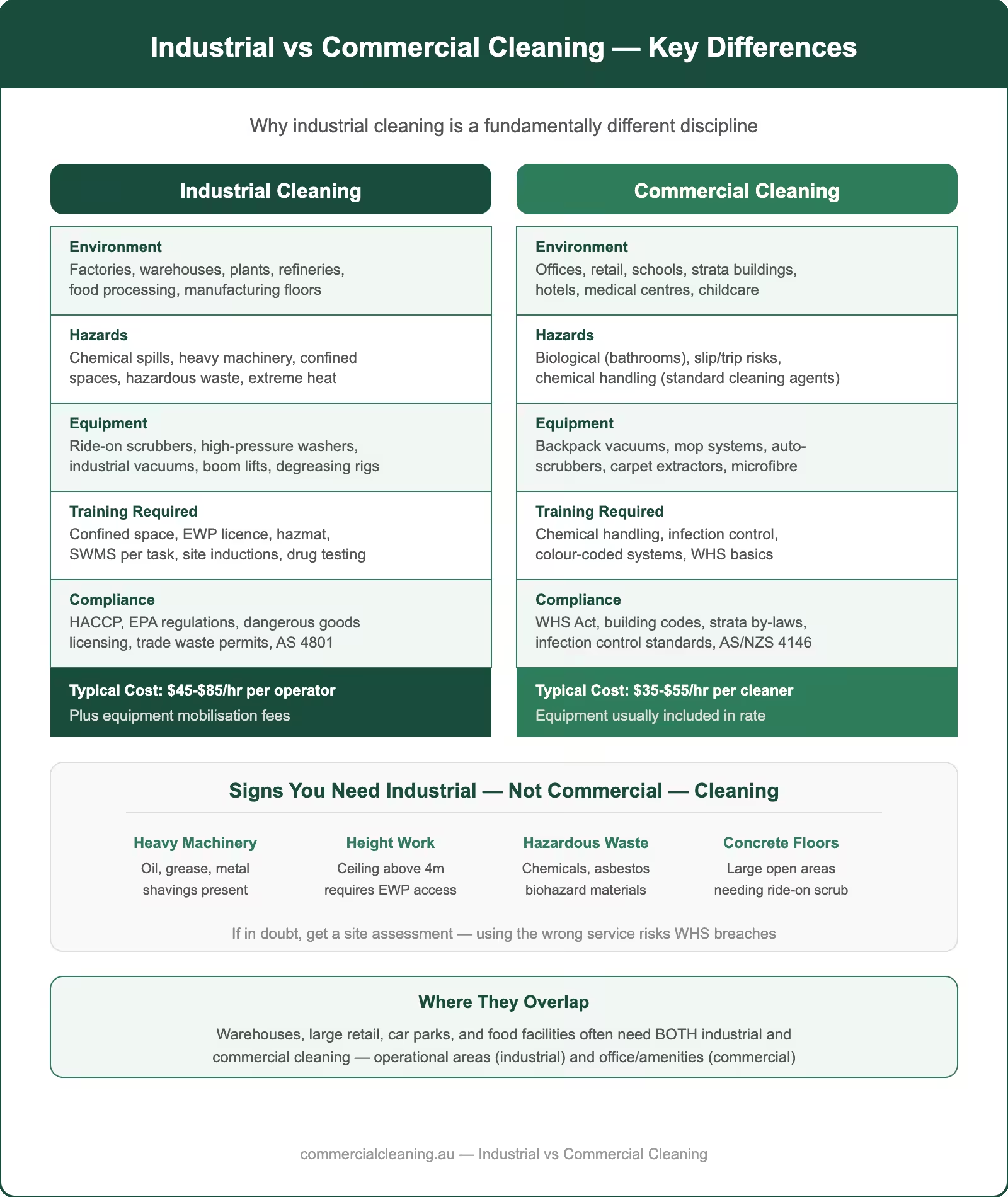
What Makes Industrial Cleaning Fundamentally Different From Commercial Cleaning
We explain to every prospective client that industrial cleaning operates at a completely different scale and risk level compared to office or retail environments. Our crews work with heavy machinery, hazardous chemicals, confined-space protocols, and surfaces that accumulate oil, grease, metal shavings, and chemical residues that require specialist extraction methods. We have seen well-meaning general cleaning companies attempt industrial jobs and leave sites in worse condition than they found them — spreading oil slicks across concrete floors with the wrong detergent, or damaging epoxy coatings with overly aggressive pressure-washing settings.
Our team at a Liverpool manufacturing plant documented the consequences of this mismatch when we were called in to remediate a floor that a previous contractor had stripped of its anti-slip epoxy coating by using a turbo nozzle at close range. The repair cost the plant manager over $18,000 and shut down the production line for three days. We have equipment calibrated for every substrate type we encounter — from bare concrete and sealed epoxy to stainless steel, aluminium, and rubber-matted walkways — and our technicians undergo practical training on pressure, chemical selection, and dwell-time management before they are cleared to work on any industrial site.
Concrete Floor Care and Degreasing Protocols for Industrial Environments
Concrete Floor Care and Degreasing Protocols for Industrial Environments involves specific protocols that we tailor to each facility based on its layout, traffic, and compliance requirements. We consider floor maintenance the backbone of any industrial cleaning program because the floor is where contaminants accumulate fastest and where slip-and-fall injuries occur. Our standard degreasing protocol for industrial concrete involves a pre-sweep with a ride-on sweeper to remove loose debris, followed by a hot-water pressure wash with an alkaline degreaser applied at the manufacturer’s recommended dilution and allowed to dwell for the specified contact time before extraction. We have tested dozens of degreaser formulations over the years and we select products based on the specific contaminant profile of each site — petroleum-based lubricants require a different chemistry than food-grade vegetable oils or water-soluble coolants.
Our crews at a Casula logistics warehouse maintain over 12,000 square metres of sealed concrete using this protocol on a fortnightly cycle, and the facility manager told us the slip-incident rate dropped to zero in the first year after we took over from a contractor who had been using a cold-water mop-and-bucket approach. We also apply anti-slip treatments to high-risk zones around loading docks, forklift charging stations, and pedestrian crossings, and we re-test the slip coefficient quarterly using a portable tribometer to confirm the surface stays within safe parameters.
Warehouse Cleaning Zone Guide
| Zone | Frequency | Method | Equipment | WHS Compliance |
|---|---|---|---|---|
| Loading Dock | Daily | Sweep + degrease spills | Ride-on sweeper | AS 4586 slip rating |
| Storage Aisles | Weekly | Machine sweep + scrub | Walk-behind scrubber | WHS clear aisle reg |
| Mezzanine/Office | Daily | Vacuum + wipe | Standard commercial | General duty of care |
| Washdown Bay | After each use | Pressure wash + drain clear | Pressure washer | EPA trade waste |
| External Hardstand | Monthly | Pressure wash | Industrial pressure unit | EPA stormwater |
Post-Construction and Demolition Site Clean-Up Standards
Warehouse Cleaning Zone Guide requires specific protocols that we tailor to each facility based on its layout, traffic, and compliance requirements. We reference AS 2601.1 when scoping post-demolition and post-construction clean-ups because this standard addresses the safe demolition of structures and the associated debris-management requirements that affect how we plan our cleaning operations. Our team has performed post-construction clean-ups at industrial sites across Liverpool, Moorebank, and the broader Western Sydney industrial corridor, and we have learned that the biggest risk in these engagements is not the visible rubble but the fine particulate — concrete dust, silica, fibrous insulation residue — that settles on every horizontal surface and infiltrates HVAC systems if not captured correctly.
Post-Construction and Demolition Site Clean-Up Standards includes specific protocols that we tailor to each facility based on its layout, traffic, and compliance requirements. Our post-construction protocol starts with a coarse debris removal using skid-steer loaders and industrial vacuum trucks, followed by a fine-dust pass with HEPA-filtered vacuum systems that capture particles down to 0.3 microns. We then perform a wet-wipe of all elevated surfaces — beams, ducting, light fittings, cable trays — before finishing with a final floor scrub. We developed this three-stage approach after a Moorebank warehouse handover where the builder’s cleaning crew had swept the floors but left a visible dust layer on every horizontal surface above eye level. The tenant refused to accept the space until our team performed a full remediation, and that experience convinced us that post-construction cleaning requires an industrial-grade methodology, not a broom and a mop.
High-Pressure Washing and External Maintenance for Industrial Facilities
We deploy high-pressure washing systems rated up to 5,000 PSI for external industrial cleaning tasks including building façades, loading-dock aprons, hardstand areas, and chemical-bund containment walls. Our team selects the pressure setting, nozzle angle, and water temperature based on the substrate and the contaminant — a painted Colorbond wall panel requires a completely different approach than a raw concrete retaining wall covered in tyre rubber and diesel soot. We have repaired damage caused by other contractors who used excessive pressure on coated surfaces, and we refuse to take shortcuts that save time at the expense of the building envelope.
Our external maintenance scope also includes gutter and downpipe clearance, roof-mounted plant cleaning, and stormwater-pit maintenance. We take environmental compliance seriously — all wash water from our industrial pressure-washing jobs is captured by portable bunding and either filtered on-site for sewer discharge under a trade-waste agreement or pumped into a tanker for off-site disposal at a licensed facility. A Casula food-processing plant we service had received an EPA warning for uncontrolled wash-water runoff before we took over, and our containment system resolved the issue completely within the first month of our contract.
What Industrial Cleaning Costs in Sydney and How We Structure Our Pricing
What Industrial Cleaning Costs in Sydney and How We Structure Our Pricing targets specific protocols that we tailor to each facility based on its layout, traffic, and compliance requirements. We price industrial cleaning based on total floor area, contaminant type, access complexity, and frequency of service. Our average detailed industrial maintenance contract for a mid-size Sydney facility sits around $3,810 per month, covering fortnightly floor degreasing, monthly high-pressure external washing, quarterly high-level dusting of structural steel and overhead services, and ad-hoc post-event clean-ups as required. We structure pricing transparently with a per-square-metre rate for each task category so the facility manager can see exactly what drives the cost and adjust the scope if budget constraints require it.
We also offer standalone project-based pricing for one-off engagements such as post-construction clean-ups, pre-audit deep-cleans, and shutdown maintenance cleans. Our project quotes include a detailed scope of works, a risk assessment, a waste-disposal plan, and a fixed price with no hidden surcharges. We have found that industrial clients in Liverpool and Moorebank appreciate this level of documentation because many operate under ISO quality-management systems that require contractor transparency as a procurement condition.
Building a Long-Term Industrial Maintenance Partnership
We approach every industrial cleaning engagement as a long-term partnership rather than a transactional service call. Our account managers conduct quarterly site reviews where we walk the facility with the operations team, review cleaning performance data, identify emerging maintenance issues, and adjust the scope of works to reflect any changes in production processes, tenancy layout, or compliance requirements. We have retained industrial clients for over a decade using this collaborative model because it prevents the cycle of contractor turnover that disrupts site knowledge and erodes cleaning quality.
We also invest in understanding each client’s operational rhythm so that our cleaning activities integrate seamlessly with production schedules. Our crews at a Casula manufacturing site coordinate with the night-shift supervisor to perform floor degreasing during the two-hour changeover window between shifts, eliminating any interference with production output. We have learned that the best industrial cleaning programs are the ones that the operations team barely notices because the work happens efficiently, safely, and without disruption — and that invisibility is something we take as a compliment rather than a criticism.
Frequently Asked Questions
What types of industrial facilities do you clean?
We service warehouses, manufacturing plants, food-processing facilities, logistics hubs, mechanical workshops, chemical-storage sites, and post-construction or post-demolition projects across the Sydney metropolitan area and Western Sydney industrial corridor.
How do you handle hazardous chemical spills during cleaning?
We carry spill-response kits rated for petroleum, acid, and caustic substances on every industrial job. Our technicians hold current hazardous-materials handling certificates and follow site-specific emergency response procedures provided during our induction.
Can you clean during production hours without disrupting operations?
We schedule our work around production cycles and coordinate with shift supervisors to minimise disruption. Our crews are experienced in working alongside active machinery and forklift traffic in compliance with site safety protocols.
What equipment do you use for industrial floor cleaning?
We deploy ride-on sweeper-scrubbers, industrial vacuum trucks, hot-water pressure washers rated up to 5,000 PSI, and HEPA-filtered dust-extraction systems. Equipment selection is matched to the specific substrate and contaminant profile of each site.
Do you provide environmental compliance documentation?
We issue waste-disposal certificates, wash-water containment records, and chemical Safety Data Sheets for every engagement. Our documentation meets the requirements of EPA trade-waste agreements and ISO quality-management audits.
How often should an industrial facility be professionally cleaned?
We recommend fortnightly floor degreasing for active manufacturing and logistics sites, monthly external pressure washing, and quarterly high-level structural cleaning. We adjust frequencies based on production intensity and seasonal factors.
Can you handle post-construction clean-ups for new industrial buildings?
We perform full post-construction clean-ups including coarse debris removal, fine-dust HEPA extraction, elevated surface wipe-down, and final floor scrubbing. We have completed handover cleans for warehouses exceeding 20,000 square metres.
What safety certifications do your industrial cleaning crews hold?
We require current White Card, Working at Heights, Confined Space Entry, and Hazardous Materials handling certifications for all industrial-assigned technicians, plus site-specific inductions for every facility we service.
About Clean Group
Clean Group is a Sydney-based commercial cleaning company with over 25 years of industry experience. Founded by Suji Siv, our team of 50+ trained professionals services offices, warehouses, medical centres, schools, childcare facilities, retail stores, gyms, and strata properties across Sydney, Melbourne, and Brisbane.
We are active members of ISSA and the Building Service Contractors Association of Australia (BSCAA). Our operations align with ISO 9001 (Quality Management), ISO 14001 (Environmental Management), and ISO 45001 (Workplace Health and Safety) standards. We hold membership with the Green Building Council of Australia and use eco-friendly, TGA-registered cleaning products wherever possible.
Every Clean Group cleaner is police-checked, fully insured, and trained in safe work procedures under SafeWork NSW guidelines. We operate 7 days a week, including after-hours and weekend services, to minimise disruption to your business.
About the Author

Suji Siv
/

Hi, I'm Suji Siv, the founder, CEO, and Managing Director of Clean Group, bringing over 25 years of leadership and management experience to the company. As the driving force behind Clean Group’s growth, I oversee strategic planning, resource allocation, and operational excellence across all departments. I am deeply involved in team development and performance optimization through regular reviews and hands-on leadership.
Read More About Suji 0291607469
 Get A Quote