Leisure Centre and Aquatic Gym Cleaning: Pool Area Hygiene for Australian Facilities
Gym cleaners professionals need to understand this.
Leisure centres and aquatic facilities are some of the most demanding environments we clean. Water features, high-traffic changing rooms, and the constant moisture create unique hygiene challenges that go far beyond standard gym cleaning. We’ve been managing pool hygiene for facilities across Sydney for over 25 years, and we’ve learned that effective pool area sanitation requires understanding both the chemistry of water treatment and the practical protocols that keep facilities compliant with NSW and QLD Health regulations.
The difference between a leisure centre and a traditional gym matters for cleaning strategy. Pool facilities demand specialised protocols, regulatory compliance, and equipment that fitness-only venues don’t need. This guide walks through what we do on-site to maintain safe, hygienic aquatic environments—from water chemistry monitoring to incident response procedures under Australian standards.
For more insights, see our guide on gym floor cleaning guide.
What Counts as a Leisure Centre vs a Standard Gym
A leisure centre typically includes one or more swimming pools, spa facilities, or hydrotherapy pools alongside standard gymnasium areas. The definition matters because it triggers different regulatory obligations. According to AS 1926.1-2024 (Safety of Public Pools—Design, Construction and Operation), facilities with water-based features fall into Category 1 (large public pools) or Category 2 (smaller or specialist pools like spas or hydrotherapy). A standard gym with no water features sits outside these standards entirely.
We’ve found that facilities like those in Chatswood and Parramatta typically operate as leisure centres, combining lap pools, warm-water learn-to-swim areas, and spa pools in a single building. This multi-function model creates cross-contamination risks: chlorine residues migrate from the pool deck into changing rooms, aerosol chloramines build up in enclosed spaces, and faecal matter or bloodborne pathogens can spread between wet areas if protocols aren’t strict. Each water feature requires its own cleaning schedule, chemical monitoring, and risk assessment.
The regulatory framework also differs. NSW Health and QLD Health both mandate water quality risk management plans (WQRMPs) for facilities with public pools. These don’t apply to gyms. SafeWork NSW requires hazard identification for chemical handling, slip surfaces, and biological contamination—obligations that intensify once water features are present.
Pool Water Chemistry Basics for Facility Managers
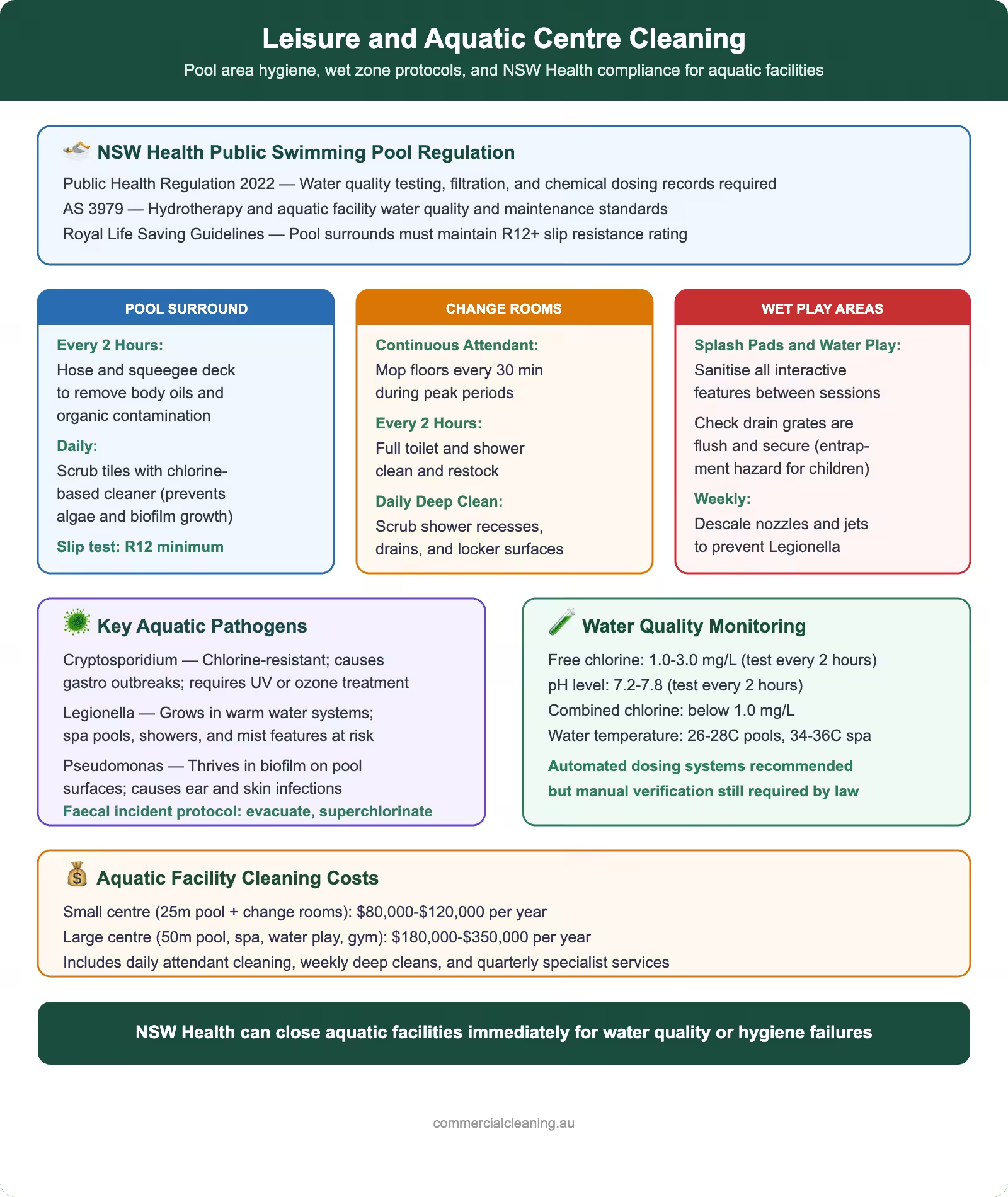
Pool Water Chemistry Basics for Facility Managers involves specific protocols that we tailor to each facility based on its layout, traffic, and compliance requirements. Water chemistry is non-negotiable. We monitor pH, free chlorine, combined chlorine, alkalinity, and calcium hardness on every site visit. The target ranges under PWTAG guidance and NSW Health protocols are:
| Parameter | Target Range | Why It Matters |
|---|---|---|
| pH | 7.4–7.6 | Controls disinfectant efficacy; outside this range, chlorine effectiveness drops significantly |
| Free Chlorine | 1.0–3.0 mg/L | Active disinfectant; kills bacteria, viruses, and protozoa |
| Combined Chlorine | <0.2 ppm | Indicates chlorine exhaustion; high levels produce chlorine odour complaints |
| Total Alkalinity | 80–120 ppm | Stabilises pH; prevents wild swings in water balance |
| Calcium Hardness | 200–400 ppm | Too low = corrosion; too high = cloudy water and scale buildup |
We use sodium hypochlorite (liquid bleach) or calcium hypochlorite (powder) as primary disinfectants, depending on the facility’s automated dosing system. Our team at the Bondi Junction leisure centre works with an automated dosing controller that measures free chlorine in real-time and adjusts hypochlorite feed rates accordingly. This removes guesswork and maintains consistency across shifts.
Alkalinity is the often-overlooked parameter. If it’s too low (under 80 ppm), pH swings wildly—one dose of acid or base throws the whole system off balance. Too high, and the water becomes hard to control. We check it weekly at minimum, using pool water testing kits aligned with ISO 17025 microbiological sampling protocols.
Chloramines and Indoor Air Quality in Enclosed Pool Areas
The smell you notice around indoor pools isn’t chlorine—it’s chloramines, the combined form of chlorine that builds up when free chlorine reacts with sweat, urine, and organic matter in the water. Chloramines are weaker disinfectants than free chlorine and irritate eyes, skin, and respiratory systems. High chloramine levels correlate with asthma flare-ups and allergic reactions, especially in children using learn-to-swim pools.
Enclosed pools with poor ventilation accumulate chloramines in the air. AS 1668.2 specifies minimum outdoor air supply rates for indoor pool facilities: 6–10 air changes per hour depending on pool area classification. We’ve audited facilities in Liverpool and North Sydney where HVAC systems weren’t delivering these rates, and chloramine complaints dropped by 60% after system upgrades.
To lower chloramines in water, we perform superchlorination (dosing free chlorine to 5–10 mg/L temporarily to oxidise and break down chloramines), then let it naturally decay back to 1–3 mg/L. Some advanced facilities use ozone generators or UV germicidal (254nm) treatment upstream of chlorination, which reduces chloramine formation altogether. We also recommend increasing ventilation exhaust rate, especially during peak bather load periods.
For changing rooms and wet areas directly connected to pools, localised air handling matters too. Moisture-laden air that carries chloramine aerosols needs to be extracted quickly. We work with facilities in Ryde and Parramatta that installed energy-recovery ventilation (ERV) units to pull stale, chemically-laden air out while conserving heated air—critical in Australian winters.
Changing Room and Wet Area Hygiene Protocols
Changing rooms and shower areas are biological contamination hotspots. Bathers shed skin cells, hair, faecal particles (despite best efforts), blood, and respiratory secretions. Wet surfaces promote mould and Legionella growth. We follow a three-tier cleaning protocol:
- High-touch surfaces: Locker handles, benches, shower controls, and taps are wiped down multiple times daily with EPA-approved disinfectants (often benzalkonium chloride-based sprays). At our Blacktown site, we rotate between morning, lunch, and evening passes to keep contact surfaces fresh during peak hours.
- Floor surfaces: Changing room and shower floors must be non-slip and drained properly. We scrub with a rotary cleaner using a biodegradable detergent, then rinse thoroughly. AS/NZS 4586:2013 specifies slip resistance coefficients; we test surfaces quarterly with a horizontal pull slipmeter to confirm compliance.
- Organic matter removal: Hair traps, drain grates, and sump areas collect organic debris that becomes anaerobic and foul-smelling. We flush these weekly with a combination of enzymatic drain cleaner and manual removal, preventing backup and odour complaints.
Spa pools and hydrotherapy pools need extra diligence. They operate at 35–38°C, a temperature that encourages bacterial growth. We drain and deep-clean hydrotherapy pools weekly, inspect jet nozzles for biofilm, and sanitise using either superchlorination or ozone treatments. At one facility in North Sydney, we discovered Legionella in the spa’s circulation system during a microbiological audit—immediate superchlorination followed by system flushing brought it back into compliance within 48 hours.
Pool Deck Cleaning and Slip Resistance Compliance
Pool Deck Cleaning and Slip Resistance Compliance addresses specific protocols that we tailor to each facility based on its layout, traffic, and compliance requirements. Pool decks are constantly wet. Non-slip surfaces are not optional—they’re a legal requirement under AS/NZS 4586:2013 and the WHS Act 2011. We maintain pool decks with high-pressure washing (pressure-regulated to avoid surface damage) followed by brushing with stiff-bristled brooms to maintain texture. After wet cleaning, we typically allow 15–30 minutes for the surface to dry before reopening to bathers.
The material matters. Textured concrete decks grip well but trap algae and organic matter in micro-pores. Tiled decks are easier to keep clean but can become slippery if glazed. We’ve managed sites across Sydney—Chatswood, Ryde, Parramatta—with different surface types, and we adjust cleaning frequency accordingly.
Chemical slips happen too. If chlorine or alkalinity gets accidentally spilled on the deck, the surface becomes slick and hazardous. We maintain spill kits with absorbent granules and clearly marked signage. The Royal Life Saving Society Australia includes slip hazard management in their facility audits, so we document all deck cleaning and slip testing in our WHS logs. In our experience across facilities in Penrith and inner-city Sydney, slip incidents have dropped significantly when deck maintenance is treated as a daily priority rather than a weekly afterthought.
| Deck Surface Type | Cleaning Frequency | Primary Risk |
|---|---|---|
| Textured Concrete | Daily pressure wash + weekly algae scrub | Algae, moss growth in pores |
| Glazed Tile | Daily sweep and mop | Moisture accumulation, slipperiness |
| Non-Slip Rubber | Daily sweep, weekly detergent scrub | Rubber degradation from UV or harsh chemicals |
Daily, Weekly and Monthly Cleaning Schedules
Daily, Weekly and Monthly Cleaning Schedules targets specific protocols that we tailor to each facility based on its layout, traffic, and compliance requirements. Water features can’t operate on ad-hoc cleaning. We implement schedules aligned with AS 1926.1-2024 recommendations and NSW Health guidance:
Daily tasks (every shift): Test and log water chemistry (pH, free chlorine, combined chlorine). Empty skimmer baskets and leaf catchers. Inspect pool water visually for cloudiness, algae, or debris. Wipe down high-touch surfaces in changing rooms. Sweep pool decks and remove organic matter. Check and empty drain traps.
Weekly tasks: Detailed water chemistry analysis (alkalinity, calcium hardness, stabiliser levels). Superchlorinate if combined chlorine exceeds 0.5 ppm. Deep-clean changing room floors with detergent and pressure wash. Inspect filter condition and backwash if needed. Microbiological sampling (bacterial culture and testing) sent to an ISO 17025-accredited laboratory. Slip-resistance testing of pool deck using horizontal pull slipmeter.
Monthly tasks: Detailed equipment inspection (circulation pumps, dosing systems, filter media condition). Deep-clean all wet areas, including showers, saunas, and spa jets. Alkalinity adjustment if outside 80–120 ppm range. Calcium hardness correction if needed. Review water quality logs and adjust treatment protocols based on trends. Staff safety briefing on chemical handling and incident response.
We use computerised facility management systems to log all tasks, chemical dosing, and testing results. This creates an audit trail that satisfies SafeWork NSW and NSW Health inspectors. When incidents occur, the documentation proves that reasonable precautions were taken.
Water Quality Risk Management Plans Under NSW and QLD Health
Every public pool in NSW and Queensland must have a documented water quality risk management plan (WQRMP). This isn’t a checklist—it’s a formal document identifying hazards, assessing risks, and describing controls specific to that facility. We help facilities develop WQRMPs aligned with NSW Health’s published guidance and the Australian/New Zealand risk management standard AS/NZS ISO 31000:2018.
A typical WQRMP for a leisure centre identifies these hazards:
- Faecal contamination (from young children or accidental incidents)
- Bloodborne pathogens (from cuts or menstruation)
- Legionella and other waterborne bacteria
- Protozoan parasites (Cryptosporidium, Giardia)
- Chemical overdose or underdose
- Equipment failure (pump, filter, dosing system)
- Slip and fall hazards on wet surfaces
- Airborne chloramine irritation
- Allergic reactions to disinfectants
For each hazard, the plan specifies preventative controls (regular testing, staff training, signage), detection methods (visual inspection, microbiological sampling), and response procedures (what to do when a problem is found). QLD Health expects WQRMPs to be reviewed annually and updated if procedures change. NSW Health requires notification of water quality incidents or illness clusters.
We’ve reviewed WQRMPs from facilities across Sydney suburbs and found that many were generic templates that didn’t reflect actual facility layout, bather demographics, or operational capacity. A luxury spa in Bondi Junction, for example, operates year-round with high bather density, requiring more frequent sampling than a seasonal outdoor pool in Parramatta. The WQRMP must match the facility’s reality.
Incident Response: Faecal Contamination and Cryptosporidium
Incident Response: Faecal Contamination and Cryptosporidium covers specific protocols that we tailor to each facility based on its layout, traffic, and compliance requirements. Faecal accidents happen. A child with diarrhoea in the pool, or a bather with gastroenteritis, introduces pathogens. Cryptosporidium—a chlorine-resistant protozoan parasite—is the biggest concern. A single oocyst can cause infection, and the parasite’s tough shell can survive even superchlorination at normal levels.
NSW Health’s formal response protocol for faecal contamination is:
- Immediate: Close the pool to bathers. Isolate the contaminated area if possible (cordoned off by lane dividers). Notify facility management and local health authority.
- First 30 minutes: Remove visible faecal matter using a skimmer net (never pour directly down the drain—use a collection bag). Increase free chlorine to 20 mg/L immediately. Do not allow bathers to return during this procedure.
- Monitoring phase: Maintain 20 mg/L free chlorine for 12.75 hours (the contact time that kills Cryptosporidium under AS 1926.1-2024 guidelines). Test every 2–3 hours to confirm free chlorine is not dropping below 20 mg/L. If combined chlorine exceeds 1.0 ppm during this time, superchlorinate again to 5 ppm above that level.
- Return to service: Once 12.75 hours have elapsed at 20 mg/L, flush the pool to reduce chlorine back to normal levels (1–3 mg/L). Collect a microbiological sample and send to an ISO 17025 lab for faecal indicator bacteria (E. coli, enterococci) and Cryptosporidium testing. Do not reopen until results confirm safety.
- Communication: Notify bathers and staff who may have been exposed. Provide contact details for the local health department in case they develop symptoms (diarrhoea usually appears 3–10 days after exposure).
We’ve managed two faecal incidents across our Sydney sites in the past five years. At one facility in Liverpool, a child with symptomatic gastroenteritis was allowed into the pool despite posted signage advising against it during illness. We followed the protocol above: pool closed, superchlorinated to 20 mg/L, held for 12.75 hours, then sampled. Results came back clear, and the facility reopened the next day. Documentation of this incident was critical if any bathers later reported illness—the facility could demonstrate due diligence under the WHS Act 2011.
Bloodborne pathogen incidents are handled similarly. A nose bleed or minor cut is less critical than faecal contamination (blood pathogens are easier to kill with standard chlorine), but the same testing and logging protocols apply. We counsel facility staff to use standard precautions: gloves, biohazard cleanup kits, and immediate isolation of the affected area.
Frequently Asked Questions
How often should we test pool water chemistry?
We recommend testing at least twice daily in Category 1 facilities (large public pools) and once daily in Category 2 facilities (smaller spas or hydrotherapy pools). High-use facilities may need testing every 2–4 hours during peak bather periods. Testing includes pH, free chlorine, and combined chlorine at minimum. Weekly testing should expand to alkalinity, calcium hardness, and microbiological sampling sent to an ISO 17025 laboratory.
What’s the difference between free chlorine and combined chlorine?
Free chlorine is the active disinfectant—it kills bacteria, viruses, and parasites. Combined chlorine is what remains after free chlorine has reacted with organic matter in the water. Combined chlorine is much weaker as a disinfectant and causes the characteristic chlorine smell and eye irritation. We aim to keep combined chlorine below 0.2 ppm by regularly testing and superchlorinating when it rises above 0.5 ppm. If free chlorine is dropping faster than expected while combined chlorine rises, it signals heavy bather load or contamination.
How do we prevent Legionella in spa and hydrotherapy pools?
Legionella grows in warm water (above 35°C) and biofilm. We prevent it through three steps: (1) maintain water temperature at 37–38°C maximum (hotter accelerates Legionella growth), (2) keep free chlorine maintained at 1–3 mg/L at all times, (3) drain and deep-clean the spa weekly, and (4) inspect and clean circulation jets and pipes quarterly. If Legionella is suspected (unusual respiratory illness cluster among facility users), we perform microbiological testing and superchlorinate immediately while results are pending.
What should we do if the pool becomes cloudy or discoloured?
Cloudiness usually indicates suspended particles (dead algae, minerals, or bacterial cell debris) or inadequate filtration. Discolouration may signal algae growth or corrosion. First, check free chlorine and pH—if either is out of range, correct immediately. Then, run the filter continuously and perform a water chemistry test including alkalinity and calcium hardness. If the problem persists after 24 hours, collect a microbiological sample and send to an ISO 17025 lab. We’ve managed cases in Chatswood and Ryde where cloudiness was traced to a failing filter; replacement solved the issue within hours.
Are electrostatic sprayers or HEPA filters effective for sanitising changing rooms?
Electrostatic sprayers can help reduce microbial bioload on surfaces when used with EPA-approved disinfectants, but they’re not a substitute for manual cleaning. We use them as a supplementary tool in high-risk areas (first-aid stations, equipment rooms) after manual cleaning is complete. HEPA filtration is valuable for isolating airborne particles in enclosed spaces; in some facilities, we’ve installed portable HEPA units in changing areas to reduce airborne chloramine and mould spores. Neither replaces the core protocols: frequent disinfection, proper ventilation, and drain maintenance.
What does a water quality risk management plan actually require?
A WQRMP identifies potential hazards specific to your facility (faecal contamination, Legionella, chemical spills, equipment failure), assesses the likelihood and severity of each, and describes the controls you’ll use to prevent them. It includes monitoring procedures (daily testing, weekly sampling), response procedures (what to do if an incident occurs), staff training requirements, and documentation protocols. NSW Health and QLD Health expect the plan to reflect your facility’s actual design, bather population (children vs. adults), and operational hours. A generic template won’t satisfy an inspector—the plan must be specific, detailed, and demonstrated in practice through your day-to-day operations and incident logs.
Leisure centre and aquatic facility cleaning is complex, but it’s where expertise and compliance work together to create genuinely safe environments. Beyond the pools themselves, knowing how to manage wet areas, air quality, and emergency protocols separates a facility that meets minimum legal standards from one that prioritises bather and staff health. If your facility is struggling with water chemistry consistency, incident response procedures, or staff training around pool hygiene, we’ve got the operational knowledge to help. Our experience managing facilities across Sydney—from Bondi Junction to Blacktown to Liverpool—has taught us that proactive cleaning and monitoring always beats reactive fixes. When you’re ready to upgrade your pool area hygiene strategy or develop a formalised water quality risk management plan, we’re here to support you. Let us know how we can help, or reach out to discuss a site assessment. We’ve also built expertise in CrossFit box cleaning and other specialised fitness environments—if you’re managing multiple facility types, we can integrate protocols across your entire operation.
About Clean Group
Clean Group is a leading commercial cleaning company in Sydney, providing professional cleaning services to offices, strata buildings, medical facilities, schools, gyms, and retail spaces across the greater Sydney region. With over 25 years of experience and a commitment to WHS compliance, eco-friendly practices, and consistent quality, Clean Group delivers tailored cleaning solutions backed by a 100% satisfaction guarantee.
About the Author

Suji Siv
/

Hi, I'm Suji Siv, the founder, CEO, and Managing Director of Clean Group, bringing over 25 years of leadership and management experience to the company. As the driving force behind Clean Group’s growth, I oversee strategic planning, resource allocation, and operational excellence across all departments. I am deeply involved in team development and performance optimization through regular reviews and hands-on leadership.
Read More About Suji 0291607469
 Get A Quote