Cleaning Guide For Gym Floors
Gym floors take more punishment than almost any other commercial flooring surface. Dropped dumbbells, Olympic barbells slamming into rubber platforms, sweat pooling in free-weight zones, spilled pre-workout, and hundreds of rubber-soled shoes grinding across the surface every day — the cleaning challenges are nothing like a standard office or retail space. We have built our gym floor cleaning methods through years of providing fitness facility cleaning services across Miranda, Caringbah, Sutherland, and Cronulla, and our crews handle every flooring type found in modern fitness centres including vulcanised rubber matting, timber sprung floors, vinyl sports surfaces, polished concrete, and carpet tile transition zones.
We treat gym floor cleaning as a surface-specific discipline. Using the wrong chemical or machine on the wrong floor type causes damage that costs thousands to reverse. Our crews in Miranda inherited a contract where the previous provider had used a standard alkaline degreaser on a Spotted Gum basketball court — the product ate through the polyurethane coating and created a slip hazard that required full sanding and three coats of Bona Sport finish to correct. That experience shaped our training program. Every crew member now learns surface identification, chemical compatibility, and pH testing before they touch a gym floor.
For more insights, see our guide on cleaning schedule for gym facilities.
Rubber Gym Floor Cleaning and Maintenance
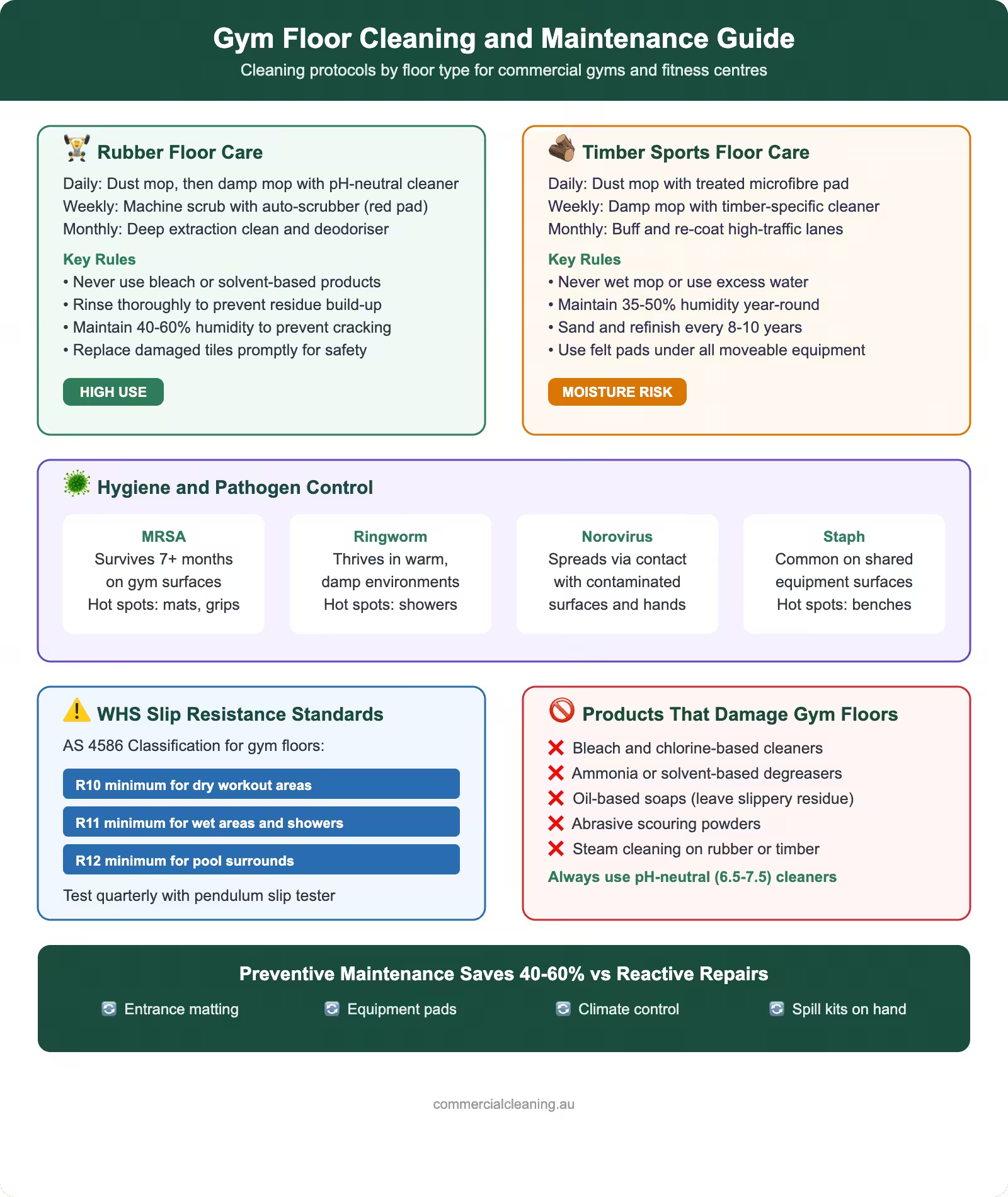
Rubber gym flooring comes in two main forms — interlocking tiles (typically 15mm to 50mm thick, made from vulcanised recycled rubber) and rolled sheet rubber (3mm to 8mm, often glued directly to the subfloor). We clean both types using pH-neutral detergent in the 6.5 to 7.5 pH range and mechanical scrubbing rather than alkaline or acidic chemicals that break down the styrene-butadiene rubber compound over time.
Our team runs auto-scrubbers fitted with medium-stiffness nylon brush heads across large open rubber floor areas. Around squat racks, Smith machines, and cable stations, we switch to hand scrubbing with stiff-bristled brushes because the auto-scrubber cannot reach into corners and against equipment bases where chalk dust, skin cells, and sweat residue accumulate. Weekly deep scrubbing paired with daily damp mopping keeps rubber floors performing well. Our Miranda gym clients have interlocking rubber tiles that are over eight years old and still pass slip resistance testing because the cleaning program has preserved material integrity throughout their service life.
Slip Resistance Monitoring on Rubber Surfaces
Slip resistance on rubber gym floors is a WHS concern we take seriously. Our team measures slip resistance on cleaned floors using methodology aligned with AS 4586 — the Australian standard for classification of pedestrian surface materials. We use a pendulum test rig to verify that our cleaning products and methods maintain a minimum P4 classification (wet pendulum value above 54) on high-traffic rubber areas. At a Caringbah 24-hour gym, we discovered that a particular lavender-scented mopping solution left a waxy film that dropped the pendulum reading from 62 to 41 — well below the safe threshold. We switched to a fragrance-free pH-neutral formula from Agar Cleaning Systems and retested at 59 within one cleaning cycle.
Timber and Vinyl Sports Floor Cleaning
We clean timber sports floors with minimal moisture using flat microfibre mops and sport-specific cleaning solutions that evaporate quickly and leave no residue. Our team never floods a timber floor. Moisture penetration through the polyurethane seal causes cupping, warping, and joint separation in Australian hardwoods like Spotted Gum and Blackbutt, and the repair bill on a typical 400m² basketball court runs between $12,000 and $25,000 for full sanding and refinishing.
At Sutherland fitness centres, we manage timber floors that have lasted well past their expected 15-year refinishing cycle because our low-moisture protocol preserves the protective coating. We apply Bona Sport Cleaner through a microfibre flat mop system — one damp pass followed by a dry pass — and the floor is walkable within 15 minutes. Our crews are trained never to use string mops, which hold too much water and distribute it unevenly.
Vinyl Sports Floor Restoration
Vinyl sports surfaces tolerate more moisture than timber but are vulnerable to chemical attack from solvent-based cleaners and physical damage from aggressive scrubbing pads. We use red or white pads (never black or green) on our auto-scrubbers and only manufacturer-recommended cleaning solutions. We schedule periodic application of sport-grade acrylic floor finish — usually Taski Jontec Sport or equivalent — to maintain surface sheen and protect the wear layer from scuffing.
We have restored vinyl gym floors at Caringbah facilities where years of incorrect cleaning had dulled the surface and driven dirt into the vinyl wear layer. Our restoration process starts with chemical stripping using an alkaline stripper (pH 12–13), followed by neutralisation with a mild acid wash, then application of three to four thin coats of sport-grade finish with 45-minute drying intervals between each coat. The total turnaround time is 8 to 10 hours overnight.
Gym Floor Hygiene and Pathogen Control
Gym floors harbour pathogens that survive for hours or days on warm, moist surfaces. We have swabbed gym flooring as part of our infection control auditing and found Staphylococcus aureus, Trichophyton rubrum (the fungus responsible for athlete’s foot and ringworm), and in one case methicillin-resistant Staphylococcus aureus (MRSA) on a rubber floor surface in a Cronulla gym changing area. These organisms transfer readily from bare feet to floor and back to the next person who walks through.
Our disinfection protocol follows the NHMRC Australian Guidelines for the Prevention and Control of Infection in Healthcare — adapted for fitness environments. We use TGA-registered hospital-grade disinfectant (quaternary ammonium compound at 800ppm dilution) on all floor surfaces in wet areas, stretching zones, and mat storage sections. The disinfectant requires a 10-minute contact time to achieve the claimed kill rate, so our crews apply it and move to another section rather than mopping it up immediately.
ATP Testing for Cleanliness Verification
We verify cleaning effectiveness using adenosine triphosphate (ATP) bioluminescence testing on gym floors after each deep clean. An ATP reading below 100 relative light units (RLU) is our pass threshold for gym flooring. Readings above 250 RLU trigger a re-clean. We started ATP testing across our gym contracts in 2022 after a Miranda gym operator asked us to prove that our cleaning was actually reducing biological contamination — the data convinced them to upgrade from three to five deep cleans per week in their group fitness studio.
WHS Compliance and Slip Resistance Standards for Gym Floors
WHS Compliance and Slip Resistance Standards for Gym Floors includes specific protocols that we tailor to each facility based on its layout, traffic, and compliance requirements. Under the Work Health and Safety Act 2011 (NSW), gym operators have a duty of care to maintain flooring in a condition that does not create a risk of injury. SafeWork NSW Code of Practice for Managing the Risk of Falls at Workplaces applies directly to gym environments — wet floors, worn surfaces, and chemical residue from cleaning are all foreseeable hazards that the operator (and their cleaning contractor) must manage.
We build WHS compliance into every gym floor cleaning scope of work. Our team documents slip resistance readings before and after every quarterly deep clean, photographs floor condition at each visit, and flags defects such as curling rubber tiles, delaminating vinyl edges, or worn polyurethane on timber courts. These records go into a shared register that the gym operator can produce during a SafeWork NSW inspection or in response to an injury claim.
AS 4586 Slip Classification in Practice
AS 4586 classifies floor surfaces by wet pendulum test value and oil-wet inclining platform test. For gym environments, we target a minimum P4 classification on rubber and vinyl (wet pendulum value above 54) and R10 or higher on wet-area tiles around pools and showers. Our team carries a portable pendulum tester and runs spot checks during routine cleaning visits — not just at quarterly deep cleans. If a reading drops below threshold, we investigate whether the cleaning product, application method, or floor wear is responsible before the area is cleared for use.
Cleaning Products That Damage Gym Floors
We keep a blacklist of products and chemical types that our crews never use on gym floors. This list exists because we have seen the damage these products cause firsthand across dozens of contracts.
Products to Avoid on Rubber Flooring
Bleach (sodium hypochlorite) degrades vulcanised rubber by attacking the sulphur cross-links that give the material its elasticity. We have seen rubber tiles turn brittle and crack within six months of regular bleach mopping at a Bankstown gym that we did not service. Pine oil cleaners (pine-o-cleen and similar) leave an oily residue that reduces slip resistance and attracts dirt. Solvent-based degreasers dissolve the bonding agents in interlocking rubber tiles, causing them to separate and curl at the edges. Vinegar (acetic acid) is sometimes recommended online as a natural cleaner for rubber — we avoid it because the acid attacks the calcium carbonate filler used in recycled rubber tiles and creates surface pitting over time.
Products to Avoid on Timber Floors
Steam mops are the single most damaging cleaning method for timber gym floors. The combination of heat and moisture forces water through the polyurethane seal and into the timber grain, causing irreversible swelling. We refuse to use steam mops on any timber surface. Oil-based cleaning products leave a film that interferes with future recoating — when the floor eventually needs a maintenance coat of polyurethane, the new finish will not bond to an oil-contaminated surface and will peel within weeks. Ammonia-based cleaners dull polyurethane finish and accelerate wear.
Equipment Selection for Commercial Gym Floor Cleaning
The right equipment makes gym floor cleaning faster and produces better results than manual methods alone. We have standardised our gym cleaning kit across all contracts after years of testing different machines and tools.
Auto-Scrubbers
We run Tennant T300 walk-behind auto-scrubbers on large open rubber and vinyl floor areas. The machine lays down cleaning solution, scrubs with a cylindrical brush head, and vacuum-recovers the dirty water in a single pass. On a 500m² gym floor, the auto-scrubber completes a deep scrub in roughly 40 minutes versus three hours for manual mopping. We fit medium-stiffness nylon brushes for rubber and soft white pad drivers for vinyl — never using the same pad or brush across different surface types.
Microfibre Flat Mop Systems
For daily maintenance and timber floor work, we use Vileda or Sabco microfibre flat mop systems with colour-coded pads. Blue pads for general damp mopping, red pads for wet-area sanitisation, and green pads for dry dust mopping. Flat mops distribute cleaning solution more evenly than string mops and use 90% less water — critical for moisture-sensitive timber and engineered flooring.
HEPA-Filtered Vacuums
Before any wet cleaning, our crews vacuum the entire floor with HEPA-filtered backpack vacuums (Pacvac Superpro 700 series). This removes chalk dust, hair, skin cells, and grit that would otherwise turn into abrasive slurry during mopping and scratch the floor surface. HEPA filtration captures particles down to 0.3 microns, preventing fine dust from being blown back into the gym air where members breathe it during exercise.
Humidity and Climate Control for Gym Floor Longevity
Sydney’s coastal humidity creates specific challenges for gym floors — particularly timber. Spotted Gum and Blackbutt expand and contract with moisture changes, and a gym floor that sits at 75% relative humidity through a Sutherland summer will develop gaps between boards when the HVAC system dries the air back to 40% in winter. We work with gym operators to maintain interior relative humidity between 40% and 55% year-round, which is the safe range for Australian hardwood sports floors according to the Timber Development Association of NSW.
Rubber and vinyl floors are less sensitive to humidity but still affected by condensation. In gyms with poor ventilation — particularly converted warehouse spaces in Mascot and Alexandria — we have seen condensation form on cold concrete under rubber tiles during humid mornings, creating a moisture layer that loosens adhesive and promotes mould growth beneath the flooring. Our recommendation in these situations is to run dehumidifiers overnight and check subfloor moisture levels with a pin-type moisture meter before each cleaning visit. A reading above 5.5% moisture content in the concrete slab triggers a ventilation review before we proceed with any wet cleaning.
Floor Type Cleaning Comparison
| Floor Type | Method | Frequency | Cost per m² | Drying Time |
|---|---|---|---|---|
| Rubber (Interlocking Tiles) | Auto-scrub + pH-neutral detergent | Weekly deep / daily damp mop | $3.50–$5.50 | 30–60 min |
| Rubber (Rolled Sheet) | Auto-scrub + degreaser (neutral pH) | Weekly deep / daily damp mop | $3.00–$5.00 | 30–60 min |
| Vinyl/Linoleum | Strip, seal & polish | Bi-annually | $5.50–$8.00 | 4–6 hrs |
| Timber (Spotted Gum / Blackbutt) | Low-moisture microfibre + buff and re-coat | Daily mop / annually re-coat | $7.00–$14.00 | 12–24 hrs (re-coat) |
| Polished Concrete | Diamond grind + densify | Annually | $8.00–$15.00 | 24–48 hrs |
| Ceramic Tile | Machine scrub + seal grout | Quarterly | $4.00–$6.50 | 2–4 hrs |
| Natural Stone | pH-neutral mop + reseal | Quarterly | $6.00–$12.00 | 1–2 hrs |
Preventive Floor Maintenance and Cost Management
Floor Type Cleaning Comparison covers specific protocols that we tailor to each facility based on its layout, traffic, and compliance requirements. We design preventive maintenance schedules for gym floors that stretch surface lifespan and cut long-term replacement costs. Our program has three layers: entrance matting systems to capture soil before it reaches the gym floor, scheduled deep cleaning and treatment cycles matched to each surface type, and annual condition assessments where we measure wear patterns, slip resistance, and coating thickness across the entire floor area.
Entrance Matting Systems
Preventive Floor Maintenance and Cost Management involves specific protocols that we tailor to each facility based on its layout, traffic, and compliance requirements. We install three-stage matting at every gym entrance — a coarse coir scraper mat outside the door, a medium-bristle brush mat in the vestibule, and a fine microfibre dust-capture mat inside. At a Miranda 24-hour gym, we measured a 68% reduction in soil reaching the rubber floor area after installing this system. Less soil means less abrasive wear, fewer deep cleans required, and a longer gap between expensive floor resurfacing jobs.
Quarterly and Annual Cost Breakdown
We budget approximately $1,590 per quarter for floor maintenance at a typical mid-sized gym (roughly 600m² of mixed flooring) — that covers daily cleaning labour, weekly deep scrubbing, quarterly seal and treatment applications, and all consumable products. The annual condition assessment adds roughly $450 and includes pendulum slip testing, coating adhesion checks, and a written report with photographs. Gym operators who follow our preventive schedule consistently spend 40% to 50% less on flooring over a five-year period compared to facilities that only clean reactively.
Our team tracks floor condition data across all our contracts and uses this information to predict when surfaces will need restoration or replacement. We have helped Miranda and Sutherland gym owners plan capital expenditure by forecasting floor replacement timelines based on usage intensity and maintenance condition trends. This prevents the shock of discovering a floor needs emergency replacement during January — the busiest trading month for most gyms. Facility operators looking for a broader overview of fitness centre cleaning should explore our next guide in our gym cleaning series for protocols covering every aspect of gym hygiene management.
Frequently Asked Questions About Gym Floor Cleaning
What is the best way to clean rubber gym flooring?
We use pH-neutral detergent in the 6.5 to 7.5 pH range with mechanical scrubbing using auto-scrubbers and stiff-bristled brushes. Our team pairs weekly deep scrubbing with daily damp mopping to maintain rubber floors without degrading the styrene-butadiene rubber compound. We avoid bleach, pine oil, and solvent-based products because they attack the rubber material and reduce slip resistance.
Can you use water on timber gym floors?
Only minimal moisture. We use flat microfibre mops with sport-specific solutions like Bona Sport Cleaner — one damp pass followed by a dry pass. Our team never applies excess water because moisture penetrating through the polyurethane seal causes cupping and warping in Australian hardwoods like Spotted Gum and Blackbutt. We have maintained timber floors in Sutherland that have lasted well past their expected 15-year refinishing cycle.
How do you test slip resistance on gym floors?
We carry a portable pendulum tester and measure wet pendulum values aligned with AS 4586 classification standards. For rubber and vinyl gym areas, we target a minimum P4 classification (pendulum value above 54). Our team runs spot checks during routine visits and documents readings before and after every quarterly deep clean for WHS compliance records.
How much does gym floor maintenance cost per quarter?
We budget approximately $1,590 per quarter for a typical mid-sized gym with around 600m² of mixed flooring. That covers daily cleaning, weekly deep scrubbing, quarterly treatments, and all consumable products. The annual condition assessment adds roughly $450 and includes slip testing, coating checks, and a written report.
How do you restore a damaged vinyl gym floor?
We strip old finish using an alkaline stripper at pH 12–13, neutralise with a mild acid wash, deep clean the bare surface, and apply three to four thin coats of sport-grade acrylic finish with 45-minute drying intervals between coats. Our team has restored vinyl floors at Caringbah facilities where years of incorrect cleaning had embedded dirt into the wear layer. Total turnaround time is 8 to 10 hours overnight.
What entrance matting systems work best for gyms?
We install three-stage matting — coarse coir scraper mat outdoors, medium brush mat in the vestibule, and fine microfibre dust-capture mat inside the door. At a Miranda 24-hour gym, we measured a 68% reduction in soil reaching the gym floor after installation. The system reduces abrasive wear and extends the interval between deep cleans.
How often should gym floors be deep cleaned?
We schedule weekly deep scrubbing for high-traffic rubber areas and quarterly deep cleaning with treatment for timber and vinyl surfaces. Group fitness studios with bare-foot traffic get five deep cleans per week. Our frequency recommendations are based on ATP testing data and contamination measurements collected across dozens of Sydney gym contracts.
Can floor cleaning products create slip hazards in gyms?
Absolutely. We have identified products — particularly fragranced mopping solutions and pine oil cleaners — that leave residues reducing grip on rubber surfaces. At a Caringbah gym, one product dropped the pendulum slip reading from 62 to 41, well below safe levels. Our team tests every new product on-site using a pendulum tester before full deployment and switches formulations immediately if readings drop.
What pathogens are found on gym floors?
We have swabbed gym floors and identified Staphylococcus aureus, Trichophyton rubrum (athlete’s foot fungus), and in one case MRSA on rubber flooring near a changing area. Our disinfection protocol uses TGA-registered hospital-grade quaternary ammonium compound at 800ppm dilution with a 10-minute contact time, aligned with NHMRC infection control guidelines adapted for fitness environments.
How does humidity affect gym floor maintenance?
Sydney’s coastal humidity causes timber floors to expand and contract, creating gaps between boards if relative humidity swings are not controlled. We work with gym operators to maintain interior RH between 40% and 55% year-round — the safe range for Australian hardwood sports floors per Timber Development Association of NSW guidelines. For rubber floors in poorly ventilated converted warehouses, we check subfloor moisture with a pin-type meter and flag readings above 5.5% for ventilation review.
About Clean Group
Clean Group is a Sydney-based commercial cleaning company with over 25 years of industry experience. Founded by Suji Siv, our team of 50+ trained professionals services offices, warehouses, medical centres, schools, childcare facilities, retail stores, gyms, and strata properties across Sydney, Melbourne, and Brisbane.
We are active members of ISSA and the Building Service Contractors Association of Australia (BSCAA). Our operations align with ISO 9001 (Quality Management), ISO 14001 (Environmental Management), and ISO 45001 (Workplace Health and Safety) standards. We hold membership with the Green Building Council of Australia and use eco-friendly, TGA-registered cleaning products wherever possible.
Every Clean Group cleaner is police-checked, fully insured, and trained in safe work procedures under SafeWork NSW guidelines. We operate 7 days a week, including after-hours and weekend services, to minimise disruption to your business.
About the Author

Suji Siv
/

Hi, I'm Suji Siv, the founder, CEO, and Managing Director of Clean Group, bringing over 25 years of leadership and management experience to the company. As the driving force behind Clean Group’s growth, I oversee strategic planning, resource allocation, and operational excellence across all departments. I am deeply involved in team development and performance optimization through regular reviews and hands-on leadership.
Read More About Suji 0291607469
 Get A Quote