Industrial Floor Sweeping: AS/NZS 4745 Combustible Dust, Forklift Zones, and Loading Dock Protocols
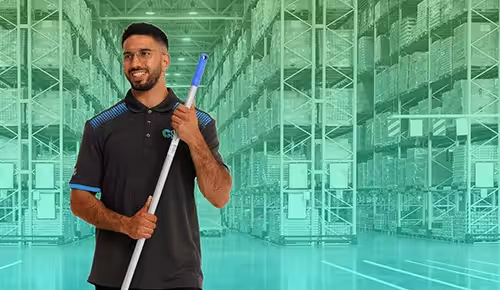
We have swept more warehouse floors than we can count, and the techniques we use in large facilities are nothing like what you would see in a standard commercial building. Our team at Clean Group delivers Sydney industrial cleaning services that include industrial floor sweeping for facilities across NSW, and we have developed our sweeping methods through years of hands-on work in distribution centres, manufacturing plants, and logistics hubs where the floor areas regularly exceed 10,000 square metres. When we first took on large-format warehouse sweeping contracts around Penrith in 2014, we learned quickly that manual sweeping is not just slow — it is fundamentally ineffective at removing the fine particulate contamination that accumulates in industrial environments.
For more insights, see our guide on industrial tank cleaning safety procedures.
Why Industrial Sweeping Requires Specialist Equipment
Why Industrial Sweeping Requires Specialist Equipment covers specific protocols that we tailor to each facility based on its layout, traffic, and compliance requirements. We invested in ride-on industrial sweepers because our experience in Emu Plains warehouses showed us that the dust generated by forklift traffic, cardboard handling, and freight movement is too fine for manual brooms to capture effectively. Our sweepers use a combination of rotating main brooms and side brushes that direct debris into a hopper, while a dust filtration system captures airborne particles that would otherwise resettle on clean surfaces. We have measured the difference — a manual sweep of a 5,000 square metre warehouse floor captures roughly 60 percent of visible debris, while our ride-on sweeper captures over 95 percent including fine dust that is invisible to the naked eye but contributes to respiratory irritation and equipment contamination.
Our fleet includes sweepers with different path widths because we have learned that one machine does not suit every warehouse layout. Our 1.5-metre-path sweepers work best in wide main aisles, while our 900-millimetre compact sweepers handle between racking legs and around staging areas where the larger machines cannot reach. We select the right machine for each zone during our site assessment, and our teams in St Marys industrial estates typically use both sizes during a single sweeping visit to achieve complete floor coverage. We confirm all our sweeping operations account for dust control requirements, including managing dust levels in accordance with AS 4254 for ductwork and air-handling systems, because airborne dust from sweeping can enter the building’s ventilation system and affect air quality throughout the facility.
Sweeping Techniques for Different Floor Types
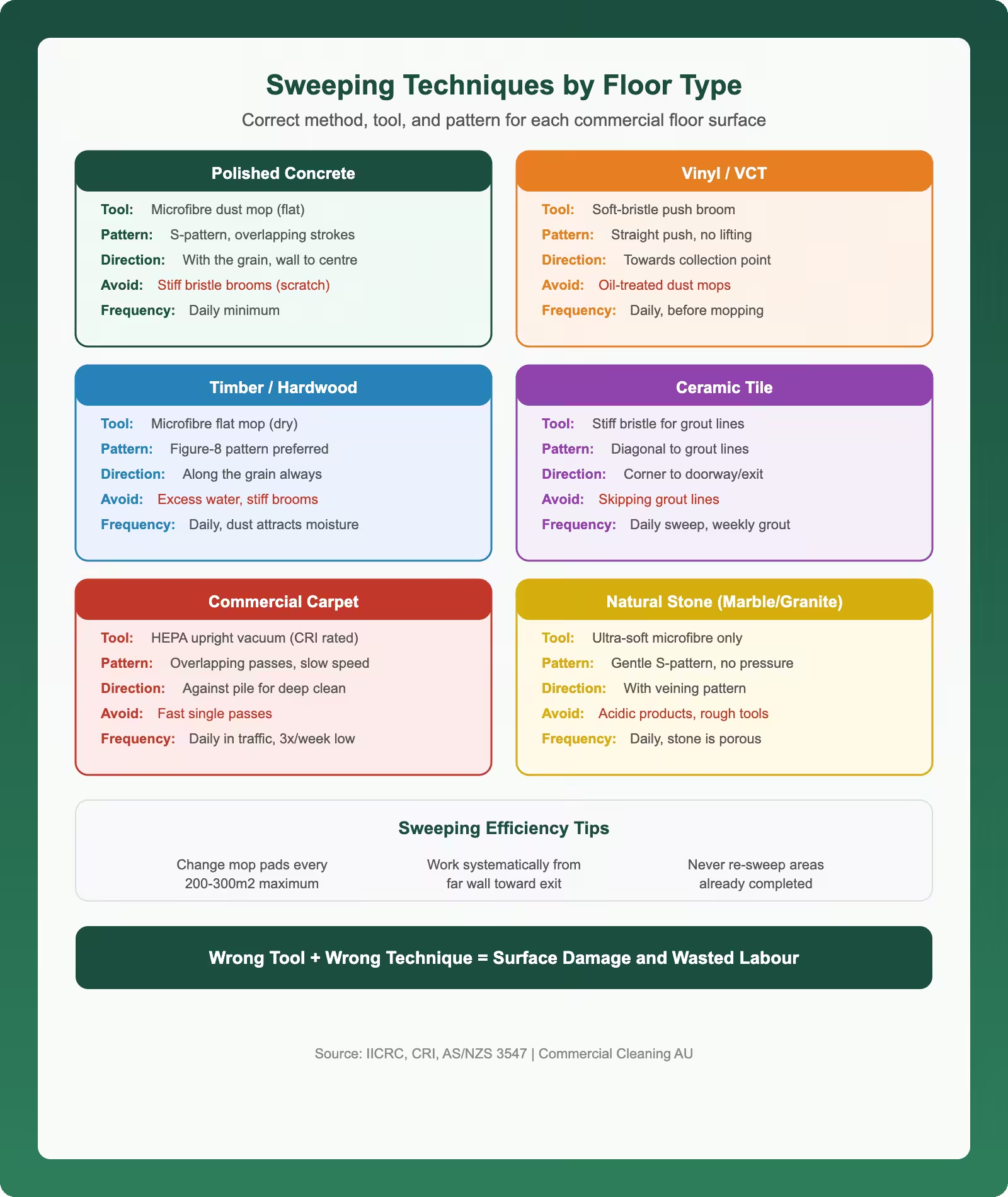
We adjust our sweeping technique based on the floor surface because we have found that the same approach does not work on every warehouse floor. Our teams in Penrith service warehouses with sealed concrete, unsealed concrete, epoxy-coated, and polyurethane-finished floors, and each surface requires different brush pressure, sweep speed, and dust suppression settings. We have documented that sealed concrete floors release the least dust during sweeping because the sealer prevents the concrete surface from breaking down under forklift traffic, while unsealed concrete generates significant fine dust that requires our highest filtration settings.
Our experience across Emu Plains logistics centres has taught us that the direction and pattern of sweeping matters more than most people realise. We sweep from the cleanest areas toward the dirtiest zones, which prevents contamination from being spread into already-clean areas. Our standard pattern starts at the far wall of the warehouse and works systematically toward the loading docks, which are always the most contaminated zone. We overlap each pass by 15 centimetres to verify no strips of unswepped floor remain between passes, and our operators maintain a consistent speed that balances thoroughness with efficiency.
Floor Type Cleaning Comparison
| Floor Type | Method | Frequency | Cost per m² | Drying Time |
|---|---|---|---|---|
| Ceramic Tile | Machine scrub + seal | Quarterly | $4.00–$6.50 | 2–4 hrs |
| Vinyl/Linoleum | Strip, seal & polish | Bi-annually | $5.50–$8.00 | 4–6 hrs |
| Polished Concrete | Diamond grind + densify | Annually | $8.00–$15.00 | 24–48 hrs |
| Natural Stone | pH-neutral mop + reseal | Quarterly | $6.00–$12.00 | 1–2 hrs |
| Timber | Buff and re-coat | Annually | $7.00–$14.00 | 12–24 hrs |
Managing Heavy Debris and Spill Contamination
Floor Type Cleaning Comparison requires specific protocols that we tailor to each facility based on its layout, traffic, and compliance requirements. We encounter heavy debris in warehouses far more frequently than in any other type of facility we service, and our sweeping protocol includes specific procedures for dealing with it. Our teams regularly sweep up broken pallet timber, stray nails and screws, shrink wrap remnants, strapping material, and even spilled product depending on what the warehouse stores. We have learned from our St Marys food distribution warehouse clients that product spills need to be addressed before mechanical sweeping because running a sweeper through a wet or sticky spill contaminates the brushes and reduces their effectiveness for the remainder of the clean.
Managing Heavy Debris and Spill Contamination includes specific protocols that we tailor to each facility based on its layout, traffic, and compliance requirements. Our spill response protocol starts with containment and manual removal of the bulk material, followed by spot cleaning of any residue, and then mechanical sweeping of the surrounding area once the spill zone is dry. We carry spill kits on every warehouse cleaning visit because our experience has shown that spills are unpredictable and delays in response lead to contamination spreading through forklift tyre tracks across the facility. We have tracked spill incidents across our Penrith portfolio and found that an average warehouse experiences two to three minor spills per week that require intervention before sweeping can proceed normally.
Cost and Frequency Considerations
Cost and Frequency Considerations addresses specific protocols that we tailor to each facility based on its layout, traffic, and compliance requirements. We price our industrial sweeping services based on floor area, frequency, and contamination level because a one-size-fits-all approach would either overcharge clean facilities or underservice dirty ones. Our pricing data from 2024 shows that a detailed sweeping program for a large warehouse in the Penrith, Emu Plains, or St Marys industrial areas costs approximately $2,410 per month for facilities of 5,000 to 10,000 square metres with daily sweeping of main traffic areas and weekly full-facility sweeping. We have found that daily sweeping of high-traffic zones prevents contamination from accumulating to levels that require more intensive and costly scrubbing.
We recommend daily sweeping for loading dock areas and main forklift aisles, three times weekly for secondary aisles and picking areas, and weekly for storage zones with minimal traffic. Our data shows this tiered approach delivers best results at the lowest cost because it directs the most frequent attention to the areas that need it most. We have compared outcomes between facilities on daily sweeping programs and those on three-times-weekly programs, and the daily-swept facilities consistently have lower floor restoration costs, fewer slip incidents, and better air quality measurements.
Dust Control and Environmental Compliance
We take dust control seriously in every warehouse we sweep because unmanaged dust creates health risks for workers and can trigger compliance issues under workplace health and safety regulations. Our sweepers are equipped with HEPA-grade filtration systems that capture particles down to 0.3 microns, and we empty and clean our filtration systems after every shift to maintain peak capture efficiency. We have found that neglecting filter maintenance reduces dust capture by up to 40 percent, which is why our preventive maintenance schedule for sweeping equipment is non-negotiable.
Our teams across the St Marys industrial precinct are particularly attentive to combustible dust management in warehouses that handle paper, cardboard, or food products. We understand that accumulated combustible dust is a serious explosion risk, and our sweeping frequencies in these facilities are calibrated to prevent dust accumulation from reaching hazardous levels. We document our dust management activities as part of the facility’s safety management system, and our records have been reviewed during SafeWork NSW inspections without issue. We believe this level of diligence demonstrates why professional sweeping is necessary for large warehouses, and we explore the complete warehouse transformation process in our next guide in our warehouse cleaning series.
Frequently Asked Questions
Why can’t manual sweeping work for large warehouses?
We have measured that manual sweeping captures roughly 60 percent of visible debris while ride-on sweepers capture over 95 percent including fine dust invisible to the naked eye. Manual methods cannot effectively remove the fine particulate contamination from forklift traffic and freight handling that contributes to respiratory issues and equipment contamination.
What size sweeper do you use for warehouse floors?
We use 1.5-metre-path sweepers for wide main aisles and 900-millimetre compact sweepers for between racking legs and staging areas. Our teams typically deploy both sizes during a single visit to achieve complete floor coverage across different warehouse zones.
How often should warehouse floors be swept?
We recommend daily sweeping for loading dock areas and main forklift aisles, three times weekly for secondary aisles and picking areas, and weekly for low-traffic storage zones. Our data shows this tiered approach delivers ideal results at the lowest cost by directing frequent attention where contamination accumulates fastest.
How much does industrial floor sweeping cost?
Our data shows approximately $2,410 per month for 5,000 to 10,000 square metre facilities with daily high-traffic sweeping and weekly full-facility sweeping. We price based on floor area, frequency, and contamination level rather than a one-size-fits-all rate.
How do you handle spills before sweeping?
We contain and manually remove bulk material, spot clean residue, then mechanically sweep surrounding areas once dry. We carry spill kits on every visit because spills are unpredictable and delays lead to contamination spreading through forklift tyre tracks across the facility.
Does sweeping affect air quality in warehouses?
We manage dust levels in accordance with AS 4254 for ductwork and air-handling systems because airborne dust from sweeping can enter ventilation systems. Our sweepers have HEPA-grade filtration capturing particles down to 0.3 microns, and we empty filtration systems after every shift to maintain peak capture efficiency.
What about combustible dust in warehouses?
We calibrate sweeping frequencies in facilities handling paper, cardboard, or food products to prevent dust accumulation reaching hazardous explosion risk levels. We document dust management activities as part of the facility’s safety management system, with records reviewed during SafeWork NSW inspections.
Does the floor type affect your sweeping method?
We adjust brush pressure, sweep speed, and dust suppression settings based on the floor surface. Sealed concrete releases the least dust during sweeping, while unsealed concrete generates significant fine dust requiring highest filtration settings. We sweep from cleanest areas toward dirtiest zones to prevent cross-contamination.
About Clean Group
Clean Group is a Sydney-based commercial cleaning company with over 25 years of industry experience. Founded by Suji Siv, our team of 50+ trained professionals services offices, warehouses, medical centres, schools, childcare facilities, retail stores, gyms, and strata properties across Sydney, Melbourne, and Brisbane.
We are active members of ISSA and the Building Service Contractors Association of Australia (BSCAA). Our operations align with ISO 9001 (Quality Management), ISO 14001 (Environmental Management), and ISO 45001 (Workplace Health and Safety) standards. We hold membership with the Green Building Council of Australia and use eco-friendly, TGA-registered cleaning products wherever possible.
Every Clean Group cleaner is police-checked, fully insured, and trained in safe work procedures under SafeWork NSW guidelines. We operate 7 days a week, including after-hours and weekend services, to minimise disruption to your business.
About the Author

Suji Siv
/

Hi, I'm Suji Siv, the founder, CEO, and Managing Director of Clean Group, bringing over 25 years of leadership and management experience to the company. As the driving force behind Clean Group’s growth, I oversee strategic planning, resource allocation, and operational excellence across all departments. I am deeply involved in team development and performance optimization through regular reviews and hands-on leadership.
Read More About Suji 0291607469
 Get A Quote