We have cleaned medical facilities across Sydney for over fifteen years, and one lesson stands out above everything else: the margin for error in healthcare hygiene is essentially zero. Our team handles clinics, dental surgeries, specialist consulting rooms, and day procedure centres where a missed surface can trigger an outbreak. When we first started providing medical cleaning services, we quickly learned that clinical environments follow a completely different logic compared to standard commercial work. Every protocol we use today comes from hard-won experience in real clinical environments, and we want to share that knowledge here.
Spaulding classification framework showing critical, semi-critical, and non-critical equipment categories with reprocessing requirements and examples
Spaulding Classification Framework and Equipment Risk Stratification
We rely on the Spaulding Classification system to sort every surface and instrument into one of three risk categories before we even pick up a cloth. Critical items like surgical tools that enter sterile tissue need sterilisation through autoclaving. Semi-critical items such as respiratory equipment that touch mucous membranes require high-level disinfection. Non-critical surfaces like bed rails and floors only need low-level disinfection because they contact intact skin. Our crews carry laminated Spaulding reference cards on every medical cleaning job so nobody has to guess which protocol applies.
We learned years ago that trying to apply a single cleaning strength across all surface categories wastes chemical, damages sensitive equipment, and actually lowers overall infection control standards. One of our supervisors discovered this the hard way at a physiotherapy clinic in Eastlakes when an overly concentrated disinfectant corroded the vinyl covering on a treatment table. Since then we have colour-coded our entire supply chain to match Spaulding risk levels, and our incident rate dropped to zero within six months.
Under AS 1807, which covers cleanroom garments and related contamination controls, we apply the principle that barrier integrity matters just as much in medical settings as it does in pharmaceutical manufacturing. Our teams wear designated scrubs and shoe covers when entering procedure rooms, switching out PPE between zones exactly as the standard requires. We brought this practice in after a GP clinic in Pagewood flagged particulate contamination in their minor surgery suite, and the root cause turned out to be fibres from our old uniform fabric.
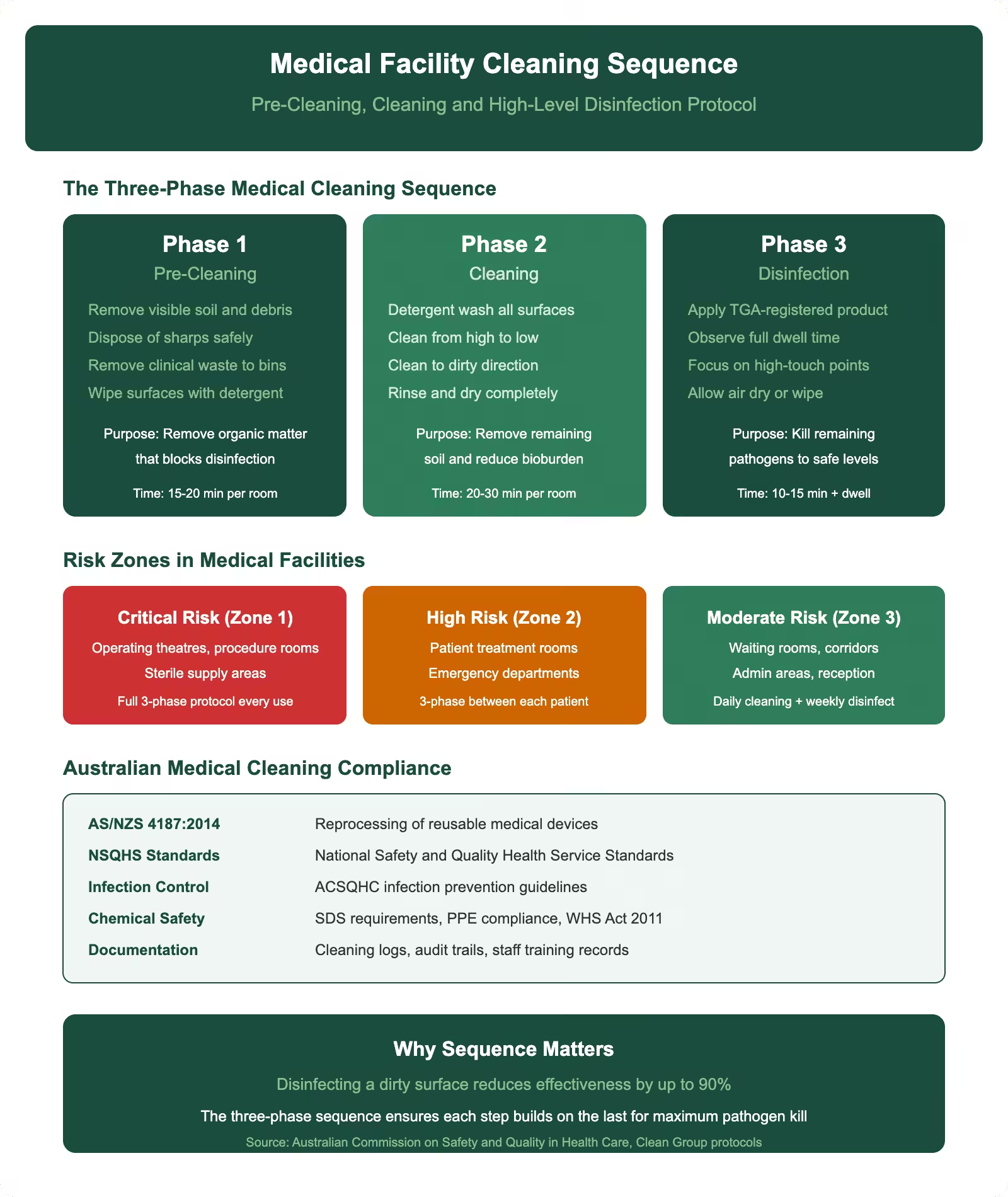
Medical facility cleaning sequence infographic showing three phase pre-cleaning cleaning and high-level disinfection protocol with risk zones and Australian compliance requirements
Pre-Cleaning, Cleaning, and High-Level Disinfection Sequence
Pre-Cleaning, Cleaning, and High-Level Disinfection Sequence involves specific protocols that we tailor to each facility based on its layout, traffic, and compliance requirements. We follow a strict three-stage process for every medical facility we service. Stage one is the dry sweep and debris removal, where our crew works from clean zones toward dirty zones to prevent cross-contamination. Stage two involves detergent cleaning to remove organic soil, because disinfectants cannot penetrate biofilm or dried blood effectively. Stage three applies the appropriate level of disinfectant based on the Spaulding category we assigned during our initial walkthrough. Skipping the detergent step is the single most common mistake we see when auditing other providers’ work.
Our pre-cleaning protocol matters more than most people realise. We have tested surfaces that looked visibly clean after a single-step wipe-down and found ATP bioluminescence readings above 500 RLU, which is well outside the acceptable range for clinical environments. Our standard is below 100 RLU on high-touch surfaces, and we hit that target consistently because the detergent step lifts the organic matter that shields pathogens. We calibrate our ATP meters monthly at our Rosebery depot, and every reading gets logged against the specific room and surface type for traceability.
For high-level disinfection of semi-critical items, we use peracetic acid solutions at concentrations between 0.2 and 0.35 percent, with a minimum contact time of five minutes. We moved away from glutaraldehyde three years ago after two of our team members developed respiratory sensitisation symptoms. The switch cost us roughly $1,260 per quarter in additional chemical expense across our medical contracts, but the safety improvement and faster processing time more than justified the investment. Our clients in Eastlakes and Rosebery noticed that turnaround between patient sessions actually improved because peracetic acid rinses faster than glutaraldehyde.
Healthcare Cleaning Risk Zone Comparison
Zone
Risk Level
Frequency
Disinfectant Grade
PPE Required
Operating Theatre
Critical
Between every case
Hospital-grade TGA
Full gown, gloves, mask
Patient Ward
High
2× daily + discharge
Hospital-grade TGA
Gloves, apron
Waiting Room
Medium
3× daily
Commercial-grade
Gloves
Admin Office
Low
Daily
General purpose
Gloves
Bathroom/Amenities
High
4× daily minimum
Hospital-grade TGA
Gloves, apron, eyewear
Restroom Disinfection and Biohazard Spillage Response
Healthcare Cleaning Risk Zone Comparison requires specific protocols that we tailor to each facility based on its layout, traffic, and compliance requirements. Medical facility restrooms carry a higher pathogen load than standard commercial bathrooms because patients with active infections use them throughout the day. We clean medical restrooms a minimum of three times per shift, and our team always starts with the least contaminated surface and works toward the toilet bowl and floor drain. We use hospital-grade disinfectants registered with the TGA, and we never dilute below the manufacturer’s recommended ratio. Our supervisors spot-check dilution ratios weekly with chemical test strips because over-dilution is one of the fastest ways to create a false sense of cleanliness.
Biohazard spills require a completely separate response protocol. We have trained every one of our medical cleaning staff to contain, neutralise, and remove blood and body fluid spills using a granular absorbent followed by a chlorine-based disinfectant at 10,000 parts per million. Our teams carry dedicated spill kits in sealed yellow containers that never get mixed with general cleaning supplies. We introduced this policy after attending a training session with the infection control nurse at a day surgery in Pagewood who showed us how quickly Hepatitis B can survive on a dry surface. That single session changed how our entire company approaches biohazard management.
We document every biohazard spill response on a dedicated incident form that records the time, location, type of material, cleaning agent used, and the name of the technician who performed the cleanup. These records sit in our cloud system for seven years. Our clients appreciate this level of documentation because it gives them an audit trail for their accreditation reviews, and it protects both parties if questions arise later.
Floor Cleaning Using Colour-Coded Mop Systems
Floor Cleaning Using Colour-Coded Mop Systems addresses specific protocols that we tailor to each facility based on its layout, traffic, and compliance requirements. We use a four-colour mop system across every medical facility we clean, and we enforce it without exception. Red mops handle bathroom floors only. Blue mops cover general ward and corridor areas. Green mops handle kitchen and break room floors. Yellow mops are reserved for isolation rooms and high-risk clinical areas. Each mop head goes into a separate laundry bag at the end of every shift and gets thermally disinfected at our wash facility. We have seen other cleaning companies try to save money by using a single mop across zones, and the cross-contamination risk is staggering.
Our floor cleaning method in clinical areas follows a figure-eight pattern rather than back-and-forth mopping, because the figure-eight technique ensures each pass deposits fresh solution rather than spreading soiled liquid across a wider area. We switched to microfibre flat mops five years ago after testing showed they remove 99 percent of microorganisms with just water, compared to around 30 percent removal with traditional cotton loop mops. The upfront cost was significant, but the reduction in chemical use and the improved cleaning outcomes made the investment worthwhile within the first quarter.
We also maintain strict rules about mop bucket changes. Our policy is one bucket per room in high-risk areas and one bucket per three rooms in low-risk corridors. We installed colour-coded bucket racks at our Rosebery warehouse so our teams can grab the right setup for each job type without thinking about it. Reducing decision points for frontline staff is one of the most effective quality improvements we have made in our medical cleaning division.
Restock Procedures and Final Verification
Restock Procedures and Final Verification targets specific protocols that we tailor to each facility based on its layout, traffic, and compliance requirements. We never consider a medical facility clean until the restocking is done and verified. Our checklist covers hand sanitiser dispensers at every entry point, paper towel holders in all restrooms and treatment rooms, soap dispensers, sharps container levels, and PPE station supplies including gloves, masks, and gowns. We photograph each restocked station at the end of every shift, and those images upload automatically to our client portal so facility managers can confirm completion without leaving their desk. Our team developed this system after a clinic manager in Eastlakes told us they were spending thirty minutes each morning checking supplies that should have been topped up the night before.
Our final verification step uses a twenty-point inspection checklist that covers every zone in the facility. The supervisor walks the building with a tablet, scoring each area and flagging anything below our threshold. Any score under 95 percent triggers an immediate re-clean of the affected zone before our team leaves the site. We have maintained an average score above 97 percent across our medical contracts for the past two years, and we share those aggregated scores with clients at our quarterly review meetings. Transparency in performance data is something we feel strongly about because it builds the trust that long-term medical cleaning contracts depend on.
We also run quarterly environmental swab testing in partnership with an independent laboratory. We swab twenty predetermined high-touch points including door handles, light switches, bed rails, and reception counters, then send the samples for microbial culture analysis. Our benchmark is fewer than 2.5 colony-forming units per square centimetre on clinical surfaces. When a result comes back above that threshold, we investigate root cause and adjust our protocol within 48 hours. This proactive approach has helped several of our clients in the Pagewood and Rosebery area maintain their NSQHS accreditation without any infection control findings during external audits.
We genuinely believe that medical facility cleaning is the most demanding and rewarding work in our industry. If you are looking for more detailed guidance on healthcare hygiene standards specific to Australian facilities, we encourage you to read our next guide in our medical cleaning series on compliance standards.
Frequently Asked Questions
What is the difference between cleaning and disinfection? Cleaning removes visible soil, dust, and organic matter from surfaces using detergent and water. Disinfection goes a step further by killing or inactivating microorganisms on a surface that has already been cleaned. We always clean before we disinfect because disinfectant chemicals cannot penetrate through layers of organic material to reach the pathogens underneath. In our experience, skipping the cleaning step reduces disinfection effectiveness by as much as 60 percent on heavily soiled surfaces.
How long should disinfectant contact surfaces? Contact time varies by product and concentration. Most hospital-grade disinfectants we use require between two and ten minutes of wet contact to achieve the kill claims on their label. We train our team to apply enough solution that the surface remains visibly wet for the full contact period. If a surface dries before the minimum contact time, the disinfection cycle is incomplete and the surface needs to be re-treated. Our standard products achieve a four-log reduction within five minutes when applied correctly.
When should occupied patient rooms be cleaned? We clean occupied rooms at least once daily, with high-touch surfaces addressed twice daily in acute care settings. Our teams schedule cleaning when patients are at meals or therapy sessions whenever possible to minimise disruption. Terminal cleaning occurs after every patient discharge, covering all surfaces from ceiling vents to floor drains. We coordinate timing with nursing staff to confirm the room is available for the next admission within our agreed turnaround window.
What ATP bioluminescence result indicates clean surfaces? We use a threshold of 100 relative light units for clinical surfaces and 250 RLU for non-clinical common areas. Readings above these thresholds trigger an immediate re-clean and re-test. Our ATP monitoring programme covers all high-touch points on a rotating weekly schedule, and we log every result digitally. Consistent ATP testing gives us an objective measure of cleaning quality that visual inspection alone cannot provide.
How should staff prevent cross-contamination between patient rooms? Our teams change gloves and perform hand hygiene between every room without exception. Cleaning cloths are single-use microfibre or disposable, never reused across rooms. Mop heads are swapped according to our colour-coded zone system. Equipment trolleys stay outside patient rooms, and only the supplies needed for that specific room enter the space. We reinforce these habits through monthly competency assessments and random observational audits by our supervisors.
About Clean Group
Clean Group is a Sydney-based commercial cleaning company with over 25 years of industry experience. Founded by Suji Siv, our team of 50+ trained professionals services offices, warehouses, medical centres, schools, childcare facilities, retail stores, gyms, and strata properties across Sydney, Melbourne, and Brisbane.
We are active members of ISSA and the Building Service Contractors Association of Australia (BSCAA) and our operations align with ISO 9001 (Quality Management), ISO 14001 (Environmental Management), and ISO 45001 (Workplace Health and Safety) standards. We hold membership with the Green Building Council of Australia and use eco-friendly, TGA-registered cleaning products wherever possible.
Every Clean Group cleaner is police-checked, fully insured, and trained in safe work procedures under SafeWork NSW guidelines. We operate 7 days a week, including after-hours and weekend services, to minimise disruption to your business.
Hi, I'm Suji Siv, the founder, CEO, and Managing Director of Clean Group, bringing over 25 years of leadership and management experience to the company. As the driving force behind Clean Group’s growth, I oversee strategic planning, resource allocation, and operational excellence across all departments. I am deeply involved in team development and performance optimization through regular reviews and hands-on leadership.