Melbourne Event Precinct Cleaning for MCG AAMI Park and Rod Laver Arena
Melbourne’s most iconic sporting and entertainment venues—the MCG, AAMI Park, and Rod Laver Arena—generate some of Australia’s largest crowd events, from Australian Football League finals to tennis tournaments and concerts. Each event leaves behind considerable cleaning and sanitation requirements. Our team at Clean Group specialises in post-event precinct cleaning across these high-capacity Melbourne venues, delivering rapid turnaround so venues are ready for the next booking. Whether you’re managing Melbourne office cleaning needs or running a major event space, professional cleaning protocols are non-negotiable for safety, compliance, and guest experience.
Why Melbourne Event Venues Need Professional Post-Event Cleaning
Large public events create specific challenges that standard cleaning routines cannot address. The MCG regularly hosts crowds exceeding 100,000; AAMI Park accommodates 30,000; Rod Laver Arena seats 15,000. After each event, thousands of patrons leave behind food waste, beverages, litter, and potential pathogenic residue across seating banks, concourses, food service areas, and facilities. In our experience cleaning Melbourne sporting venues, we’ve found that immediate post-event action prevents organic matter decomposition, reduces pest attraction, and maintains structural integrity of seating and flooring.
Venue managers face competing pressures: maximise venue availability by reducing turnaround time, meet health and safety obligations under the WHS Act 2011, and protect against liability for inadequate sanitation. Professional event cleaning crews bring trained personnel, specialised equipment, and documented procedures aligned with AS/NZS 4187:2014 (sterilisation and disinfection) and local Victorian regulations. Our team has cleaned precinct facilities hosting AFL Grand Final preliminaries, tennis tournaments, and major music festivals across the Olympic Park precinct.
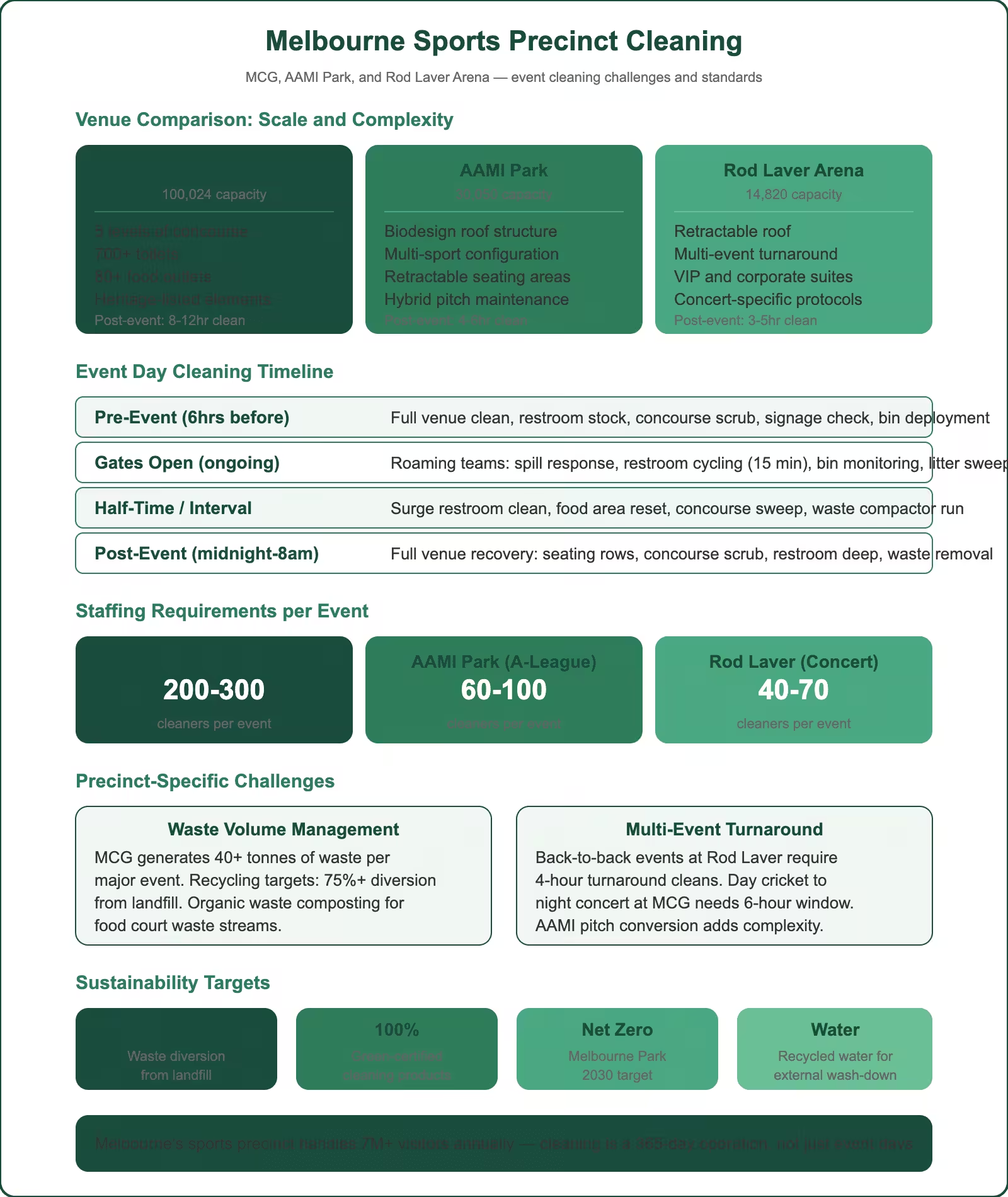
Melbourne sports precinct cleaning guide for MCG AAMI Park and Rod Laver Arena showing venue comparisons, event timelines, staffing, and sustainability targets
MCG, AAMI Park and Rod Laver Arena: Precinct-Specific Challenges
MCG, AAMI Park and Rod Laver Arena involves specific protocols that we tailor to each facility based on its layout, traffic, and compliance requirements. Each Melbourne venue presents distinct cleaning demands. The MCG, located at Olympic Park, features multi-level stadium seating across 100,024 seats, expansive concourse areas, and numerous change rooms and hospitality zones. Rod Laver Arena, part of Melbourne Park, combines indoor hard court flooring with stadium seating, requiring both floor care protocols and seat sanitisation. AAMI Park combines rugby league and union facilities with variable seating configurations. Common challenges across all three venues include debris scale (10–15 tonnes per major event), elevated work requiring safety-trained operators, heritage fixtures requiring gentle yet effective sanitisation, food contact surfaces requiring HACCP-compliant cleaning, high-touch points harbouring pathogenic load, and environmental control differences between climate-controlled facilities and open-air precincts.
Post-Event Turnaround Timing and SLA Standards
Post-Event Turnaround Timing and SLA Standards requires specific protocols that we tailor to each facility based on its layout, traffic, and compliance requirements. Event venues operate on tight scheduling. A Friday night AFL match at the MCG might be followed by a Saturday afternoon community match; Rod Laver Arena may host consecutive days of tournament play. Professional event cleaning operates against strict service-level agreements defining turnaround completion. International best practice targets 6–8 hour complete precinct sanitisation for 40,000–100,000 capacity venues, depending on event intensity and waste volume.
Our team at Clean Group plans post-event timelines working backward from venue re-opening hours. For MCG and Rod Laver events concluding at 10pm, we mobilise crews by 10:30pm to begin concurrent phase cleaning: rapid debris collection, seating rinse-down, concourse sweeping, and high-touch point disinfection occurring simultaneously across zones. Portable sanitation stations positioned at strategic points enable crews to access chemicals, PPE, and equipment without repeated site exits. Depending on venue configuration and event debris, complete MCG precinct sanitisation typically requires 12–16 labour-hours per 10,000 seats, executed by trained crews operating under SafeWork Victoria protocols.
Crowd-Scale Pathogen Control for High-Capacity Venues
Crowd-Scale Pathogen Control for High-Capacity Venues includes specific protocols that we tailor to each facility based on its layout, traffic, and compliance requirements. High-density events create elevated pathogenic load. Post-event environments feature respiratory droplet residue, norovirus-contaminated high-touch surfaces, and faecal-oral pathogen presence in restroom and food service areas. Crowd-scale pathogens include influenza, COVID-19 variants, gastroenteritis agents, and skin contact infections. Melbourne Park venues, particularly Rod Laver Arena, host international athletes and touring musicians, introducing pathogen strains with global epidemiology.
We employ a tiered disinfection hierarchy for AAMI Park, MCG, and Rod Laver facilities. Phase 1 involves physical removal: high-pressure water rinse and abrasive sweeping removes visible organic matter. Seating banks receive upward-angled rinse from lower deck toward drains, preventing water pooling. Phase 2 applies chemical disinfection using TGA-approved hospital-grade disinfectants applied via electrostatic spraying or manual wipe-down depending on surface material. High-touch points receive contact-time-sufficient application—typically 10-minute dwell for envelope viruses, 5 minutes for non-enveloped pathogens. Phase 3 involves verification: ATP bioluminescence swabs confirm disinfection efficacy on random high-touch samples, providing venue operators with objective microbial burden reduction evidence.
Equipment and Seating Sanitisation Beyond Surface Wipe-Down
Equipment and Seating Sanitisation Beyond Surface Wipe-Down addresses specific protocols that we tailor to each facility based on its layout, traffic, and compliance requirements. Industry-standard surface wipe cleaning addresses only 40% of post-event pathogenic residue. Seating fabric, fold-down cup holders, crevices in aluminium armrests, and internal seat mechanisms harbour protected microbial niches. We’ve found that thorough seating sanitisation requires extraction-based chemical application: injection-extraction units deliver disinfectant 2–3 cm below fabric surface, lifting embedded debris and pathogenic load, then extract liquid waste via vacuum recovery. Rod Laver Arena seats and MCG seating banks receive this deeper protocol, with particular attention to seats in front-row hospitality zones.
Electrostatic disinfection systems, using ionised droplets of hospital-grade disinfectant, achieve better coverage of complex geometric surfaces than manual spraying. For large seating volumes across AAMI Park and the MCG, electrostatic fogging reaches 95%+ surface coverage in 30–40 minutes per seating block, compared to 2–3 hours for contact-time-compliant manual application. We deploy these systems in final phase post-event cleaning, after visible debris removal and primary chemical wash.
Food Service Area Compliance at Sporting and Concert Venues
Food service at MCG, AAMI Park, and Rod Laver Arena spans catering kitchens, bar areas, vending stations, and temporary food stalls. Australian Food Safety Standards (aligned with FSANZ guidelines) require post-event cleaning of all food contact surfaces to prevent cross-contamination. Grease accumulation in kitchen exhaust systems, sugary beverage residue on bar counters, and allergen cross-contact in vending areas create compliance risk if not systematically addressed.
Our post-event food service protocols include dismantling and heat-sanitising removable food contact equipment at 80°C minimum, degreasing hood filters and extraction ducting, sanitising bar and counter surfaces with hypochlorite solution (100–200ppm) followed by potable water rinse, cleaning ice machines and soft-drink dispensers with contact-time-appropriate disinfectants, and waste auditing to segregate organic food waste. Documentation of post-event food service cleaning supports venue compliance audits and insurance liability claims.
Concurrent Event Planning and Rapid Redeployment
Concurrent Event Planning and Rapid Redeployment focuses on specific protocols that we tailor to each facility based on its layout, traffic, and compliance requirements. Melbourne’s major venues schedule back-to-back events throughout the week. An AFL match on Friday might be followed by a concert on Saturday, then a community sporting event Sunday—often at the same precinct (Olympic Park hosts MCG, AAMI Park, Rod Laver Arena, and additional training grounds). Cleaning crews must work concurrently across multiple zones and redeploy equipment rapidly.
International stadium cleaning operations use zone-based protocols to accelerate turnaround. Rather than cleaning the entire 100,000-seat MCG sequentially, crews divide the venue into 8–12 zones, assigning dedicated teams to each. Zone teams work in parallel, synchronising end-time through radio communication. Once a zone is cleared, certified clean, and documented, crews redeploy to adjacent areas. This concurrent approach reduces overall turnaround from estimated 20+ hours (sequential) to 10–14 hours (parallel zones).
Pre-event planning is critical. We conduct detailed walkthroughs 48 hours pre-event, identifying waste collection points, access restrictions, and equipment staging areas. Event-specific waste projections—based on estimated attendance, event type, and historical data—inform crew sizing and chemical pre-positioning. A rock concert at the MCG generates higher beverage-related sticky residue than an AFL match; a tennis tournament at Rod Laver Arena involves player facilities cleanup beyond spectator areas.
Waste Management at Scale for Melbourne Event Precincts
Waste Management at Scale for Melbourne Event Precincts covers specific protocols that we tailor to each facility based on its layout, traffic, and compliance requirements. Event venues generate 10–15 tonnes of mixed waste per major event at the MCG and up to 6 tonnes at Rod Laver Arena. Waste streams include recyclables (paper, cardboard, aluminium cans), compostables (food scraps, organic matter), general landfill (mixed contaminated items), and hazardous waste (broken glass, sharp objects, biohazard items). Victorian waste regulation, enforced by Environment Protection Authority Victoria, mandates waste segregation and appropriate disposal pathway.
We implement waste management hierarchy aligned with EPA guidance:
Waste Stream
Volume (MCG major event)
Disposal Pathway
Handling Protocol
Mixed litter & debris
6–8 tonnes
Landfill
Rapid collection into skip bins, compaction to minimise volume
Recyclables (cans, paper)
2–3 tonnes
Recycling contractor
Segregation in dedicated bins, contamination checks pre-handover
Food & compostables
1–2 tonnes
Organic composting
Collection in lined bins, rapid removal to prevent decomposition odour
Hazardous (broken glass, biohazard)
0.5–1 tonne
Specialised disposal
Segregation in sharps bins, documentation of hazardous item quantity and type
We coordinate with Melbourne event venue waste contractors pre-event, confirming skip bin placement, collection schedule, and contamination protocols. Our crews train on waste segregation, reducing contamination of recyclables and compostables, and confirming hazardous waste does not enter general landfill streams.
Frequently Asked Questions
How quickly can post-event cleaning crews mobilise to MCG or Rod Laver Arena?
Our team typically mobilises within 30–45 minutes of event conclusion. We pre-position equipment, PPE, and chemical supplies at venue staging areas before the event, and crews remain on-site during the event for final briefing and rapid deployment. For MCG and Rod Laver Arena, we aim to commence Phase 1 debris removal within 30 minutes of the final attendee departure. Initial debris clearance (10–20 tonnes of collected waste) typically completes within 3–4 hours, allowing venue facility teams to access concourses for secondary operations by midnight for evening events.
What disinfectants and sanitising protocols comply with Australian health and safety standards?
We use TGA-registered disinfectants listed on the ARTG (Australian Register of Therapeutic Goods) with demonstrated efficacy against enveloped and non-enveloped viruses. All disinfectants used in post-event cleaning comply with AS/NZS 1716:2012 (respiratory protection) and AS/NZS 4187 (sterilisation and disinfection standards). Concentration, contact time, and application method are documented and verified via ATP bioluminescence testing. For food service areas, we use FSANZ-compliant sanitisers with verified contact times, followed by potable water rinse to prevent chemical residue on subsequent food contact.
Does post-event cleaning include washroom and player facilities?
Yes. Post-event cleaning scope encompasses all patron-accessible areas (seating, concourses, exterior precincts) plus operational facilities (change rooms, medical rooms, hospitality suites). Washroom cleaning is critical post-event: high-traffic restrooms accumulate faecal-oral pathogens and respiratory droplet residue. We sanitise all toilets, urinals, handwashing stations, and high-touch points with hospital-grade disinfectants and verify efficacy via ATP swab testing. Player facilities and team change rooms require additional protocols: towel and linen removal, floor sanitisation, equipment surface wipe-down, and documentation of cleaning completion for team and event compliance records.
How do you confirm food service area cleaning meets WHS Act 2011 and food safety compliance?
Post-event food service cleaning integrates workplace health and safety requirements with food safety standards. Crew members receive training in both domains: chemical safety (PPE, application methods, hazard communication) and food safety fundamentals (HACCP principles, contact time compliance, surface material compatibility). We document chemical used, concentration, contact time, and ATP verification for each food service zone post-event. This documentation supports both WHS compliance audits and venue catering contractor food safety certifications.
About Clean Group
Clean Group is a leading commercial cleaning company in Sydney, providing professional cleaning services to offices, strata buildings, medical facilities, schools, gyms, and retail spaces across the greater Sydney region. With over 25 years of experience and a commitment to WHS compliance, eco-friendly practices, and consistent quality, Clean Group delivers tailored cleaning solutions backed by a 100% satisfaction guarantee. We specialise in large-scale event and precinct cleaning, working with venue operators, event managers, and hospitality contractors to deliver rapid turnaround without compromising safety or compliance. Our expertise extends across heritage building cleaning at iconic venues and precinct-scale operations at Australia’s premier sporting and entertainment destinations.
Hi, I'm Suji Siv, the founder, CEO, and Managing Director of Clean Group, bringing over 25 years of leadership and management experience to the company. As the driving force behind Clean Group’s growth, I oversee strategic planning, resource allocation, and operational excellence across all departments. I am deeply involved in team development and performance optimization through regular reviews and hands-on leadership.