We started cleaning escalators in Sydney shopping centres and commercial towers in 2011, and what struck us from the very first job was how little attention these machines receive despite being the most heavily used moving equipment in any building. Our strata cleaning team now services escalators across the Chatswood, St Leonards and Crows Nest commercial precincts, and we have refined our methods to the point where a full deep-clean takes under 25 minutes per escalator with results that consistently pass a post-clean ATP swab below 100 RLU. We treat escalator cleaning as precision mechanical maintenance, not just a cosmetic wipe-down, because grime build-up in step grooves and comb plates directly affects equipment lifespan and passenger safety.
Escalator Step and Comb-Plate Deep Cleaning Procedures
We clean escalator steps using a systematic approach that starts at the landing plate and works through every tread groove, riser face and step demarcation strip. Our Chatswood crews use a modified Karcher BR 40/10 with a stiff-bristle roller head that fits the standard 1,000-millimetre step width and delivers consistent agitation pressure across the full tread surface. We selected this machine after trialling five alternatives in 2019 because it achieved the highest soil-extraction rate per pass while keeping moisture below the 50-millilitre-per-step threshold that escalator manufacturers specify to protect the drive chain and truss components.
We pay particular attention to comb plates because debris trapped in the comb teeth is a leading cause of passenger entrapment incidents reported to SafeWork NSW. Our teams clear comb plates with compressed air followed by a vacuum pass before every deep-clean session, and we photograph the comb plates before and after to create a compliance record. We flagged a cracked comb plate at a St Leonards commercial tower during a routine clean in 2023, and the building manager confirmed that the defect would not have been detected until the next scheduled lift contractor inspection three months later. That early catch prevented a potential safety incident and reinforced why we consider escalator cleaning a safety-critical service.
We also clean the skirt panels on both sides of the escalator because grease and grime migration from the step chain creates a visible line that passengers associate with poor building maintenance. Our crews use a citrus-based degreaser applied with a microfibre pad and buffed dry within 60 seconds to prevent solvent migration into the gap between the skirt and the step edge. We learned that lesson in our first year of escalator work when a petroleum-based degreaser softened the nylon skirt-deflector strip on a Crows Nest escalator — we replaced the strip at our cost and immediately reformulated our product selection. We follow AS 1657 guidelines for fixed platforms and walkways adjacent to escalator landings because those standards define the slip-resistance and clearance requirements that our cleaning methods must not compromise.
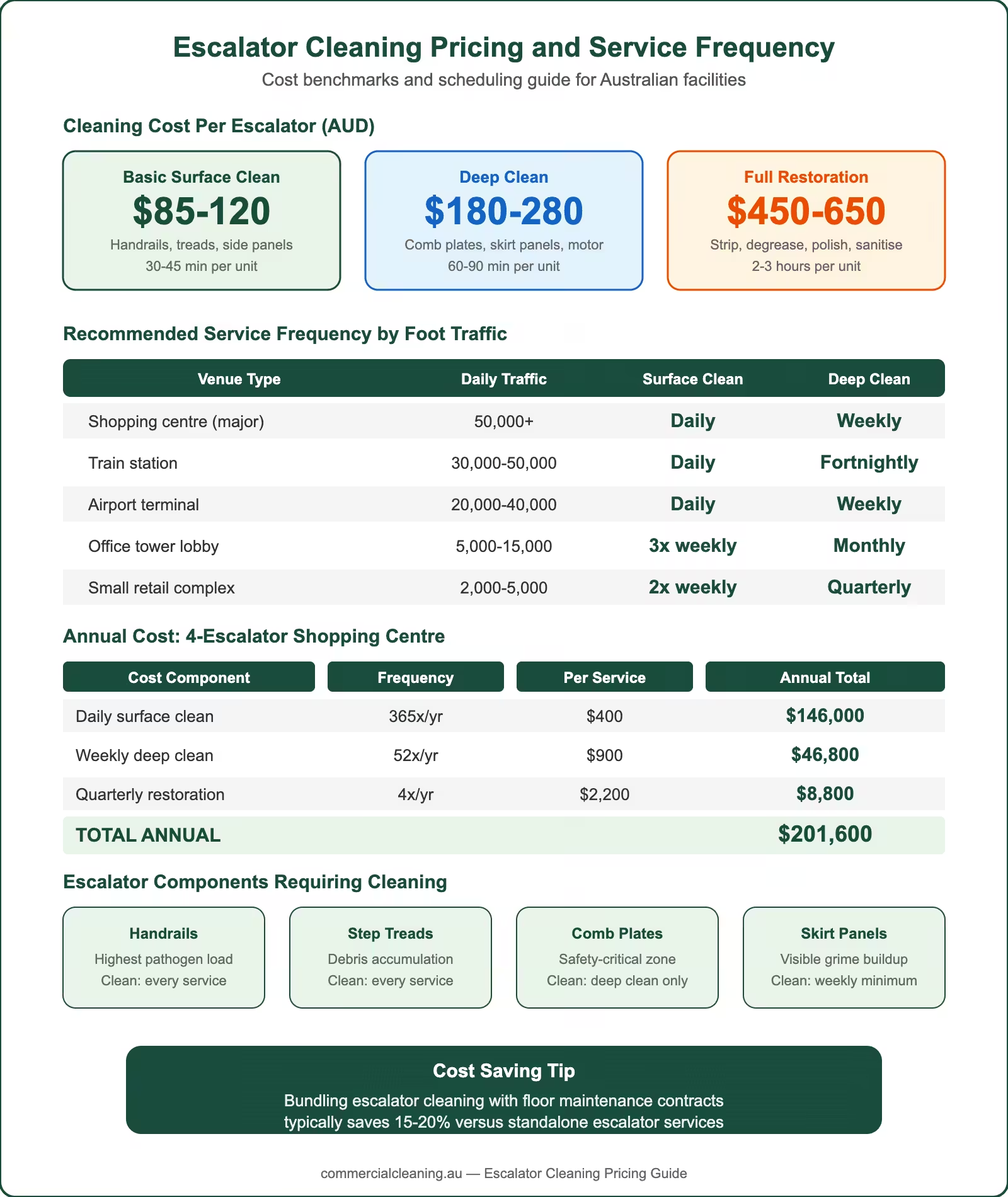
Escalator cleaning pricing and service frequency infographic showing cost tiers, traffic-based scheduling, annual budgets, and component guide
Escalator Cleaning Pricing and Service Frequency
We price escalator cleaning based on the number of units, step count and required frequency rather than a flat monthly rate, because a six-step entrance escalator in a Crows Nest retail strip has fundamentally different cleaning needs from a 40-step escalator bank in a Chatswood shopping centre. Our standard deep-clean for a single 30-step escalator runs between $320 and $480 per session depending on soil level and access constraints. For buildings with multiple escalators, we offer a monthly package that typically comes in around $1,900 for four to six units with weekly surface maintenance and monthly deep-cleans.
We have found that escalator cleaning frequency is the single biggest driver of long-term cost for building managers. Our St Leonards clients who moved from quarterly to monthly deep-cleans saw their annual escalator maintenance spend drop by 22 percent because the monthly schedule prevented the compacted grime build-up that requires labour-intensive manual detailing. We present a frequency-versus-cost analysis in every proposal so the client can see the total-cost-of-ownership impact of each option, and in our experience the monthly schedule delivers the best balance of cleanliness, equipment protection and cost.
We also include a handrail-conditioning service in every escalator package at no additional charge because neglecting the handrail creates a slip hazard that exposes the building owner to liability. Our non-silicone rubber conditioner restores the original grip coefficient of the handrail surface while removing accumulated hand oils and residue. We measure the grip coefficient with a portable tribometer before and after each treatment and include the readings in our service report. Our Chatswood clients have told us that those tribometer readings are the most useful metric in our entire reporting suite because they provide objective evidence of handrail safety that can be presented to insurers and body corporate committees.
Office Area Cleaning Frequency Guide
Area
Daily
Weekly
Monthly
Quarterly
Reception & Lobby
Vacuum, mop, wipe
Glass doors, furniture
Deep carpet clean
Window wash
Workstations
Surface wipe, bins
Monitor & keyboard
Drawer clean-out
Chair shampoo
Kitchen/Breakroom
Bench, sink, floor
Fridge, microwave
Deep degrease
Exhaust fan
Bathrooms
Full sanitise + restock
Grout scrub
Descale fixtures
Vent clean
Meeting Rooms
Table wipe, vacuum
AV equipment dust
Upholstery clean
Carpet extraction
Safety Compliance and Escalator Cleaning Documentation
Office Area Cleaning Frequency Guide requires specific protocols that we tailor to each facility based on its layout, traffic, and compliance requirements. We document every escalator cleaning session with a level of detail that satisfies both SafeWork NSW audit requirements and building insurance conditions. Each report includes pre-clean and post-clean photographs of step treads, comb plates, skirt panels and handrails, along with ATP swab readings from three sample points per escalator and tribometer grip-coefficient measurements on the handrail. Our St Leonards strata clients use these reports as annexures to their annual fire-safety and necessary-services compliance submissions, and two of our clients have received written commendation from their insurer for the quality of the documentation.
We train every escalator cleaning technician under a program that covers mechanical isolation procedures, chemical safety, slip-resistance testing and photographic documentation standards. Our induction takes eight hours and includes a practical assessment on a live escalator under supervision before the technician is cleared to work independently. We refresh the training every six months with a focus on any regulatory changes or equipment updates, and we keep training records for seven years in line with SafeWork NSW record-keeping obligations. Our technician retention rate for escalator work sits at 89 percent, which gives our clients the continuity and familiarity that comes from the same people cleaning the same escalators month after month.
We coordinate closely with the lift and escalator maintenance contractor on every site because our cleaning observations often reveal mechanical issues before they trigger an alarm or a breakdown. Our crews report any unusual vibration, noise, step-chain slack or misalignment to the building manager within one hour of detection using a standardised defect-notification form. We have issued 23 such notifications across our Chatswood and Crows Nest portfolio in the last two years, and the maintenance contractor confirmed that 19 of those would not have been detected at the next scheduled inspection. That collaborative approach is central to every garden maintenance tips we manage.
Frequently Asked Questions About Escalator Cleaning Services
How long does an escalator deep-clean take?
We complete a full deep-clean of a standard 30-step escalator in under 25 minutes using our modified Karcher machine. This includes step treads, comb plates, skirt panels and handrails. We schedule all deep-cleans during off-peak hours to minimise disruption to building occupants.
What does AS 1657 cover in relation to escalator cleaning?
AS 1657 sets requirements for fixed platforms, walkways and stairways, including slip-resistance and clearance standards for escalator landing areas. We follow these guidelines to confirm our cleaning methods do not compromise the safety of surfaces adjacent to escalator entries and exits.
How much does escalator cleaning cost per unit?
A standard deep-clean for a single 30-step escalator runs between $320 and $480 per session. Monthly packages for buildings with four to six escalators typically come in around $1,900, covering weekly surface maintenance and monthly deep-cleans with handrail conditioning included.
Do you test handrail grip after cleaning?
Yes. We measure the grip coefficient with a portable tribometer before and after each handrail treatment and include the readings in our service report. These objective measurements provide evidence of handrail safety for insurers and body corporate committees.
Can escalator cleaning detect mechanical issues?
Yes. Our crews report unusual vibration, noise, step-chain slack or misalignment to building management within one hour using a standardised defect-notification form. Across our portfolio, 19 of 23 notifications in two years flagged issues that would not have been detected at the next scheduled maintenance inspection.
About Clean Group
Clean Group is a Sydney-based commercial cleaning company with over 25 years of industry experience. Founded by Suji Siv, our team of 50+ trained professionals services offices, warehouses, medical centres, schools, childcare facilities, retail stores, gyms, and strata properties across Sydney, Melbourne, and Brisbane.
We are active members of ISSA and the Building Service Contractors Association of Australia (BSCAA). Our operations align with ISO 9001 (Quality Management), ISO 14001 (Environmental Management), and ISO 45001 (Workplace Health and Safety) standards. We hold membership with the Green Building Council of Australia and use eco-friendly, TGA-registered cleaning products wherever possible.
Every Clean Group cleaner is police-checked, fully insured, and trained in safe work procedures under SafeWork NSW guidelines. We operate 7 days a week, including after-hours and weekend services, to minimise disruption to your business.
Hi, I'm Suji Siv, the founder, CEO, and Managing Director of Clean Group, bringing over 25 years of leadership and management experience to the company. As the driving force behind Clean Group’s growth, I oversee strategic planning, resource allocation, and operational excellence across all departments. I am deeply involved in team development and performance optimization through regular reviews and hands-on leadership.