Floor cleaners professionals need to understand this. We have cleaned and maintained epoxy floors in workshops, warehouses, commercial kitchens and pharmaceutical facilities across Sydney and the one thing all these environments share is a need for a coating that performs under pressure. Our team works with facility managers in Marrickville, Dulwich Hill and Petersham who chose epoxy because of its durability and chemical resistance, but even the toughest coating needs proper care to last. If your epoxy floors need professional hard floor cleaning sydney from a team that understands this material inside out, we are ready to help.
We approach epoxy differently from every other floor type because the coating has unique strengths and vulnerabilities. Epoxy resists most chemicals, is virtually non-porous and creates a smooth surface with no grout lines for dirt to hide in. But it scratches under abrasive cleaning methods, yellows under UV exposure and can delaminate if moisture migrates through the concrete substrate. Our team has seen all of these failure modes in facilities across Marrickville and we know how to prevent them.
We follow AS 2150.1 guidelines for hot-dip galvanized coatings on ferrous articles, which may seem unrelated but the adhesion testing methodology in this standard gives us a reliable framework for assessing coating bond strength on epoxy floors. We use cross-hatch adhesion testing to check epoxy integrity before cleaning because aggressive methods on a weakly bonded coating will cause delamination that costs thousands to repair.
Our Epoxy Floor Cleaning Process
Every epoxy floor clean starts with a visual inspection and adhesion test. We look for chips, scratches, discolouration, bubbling and delamination. Our team documents the condition with photographs and scores each zone so the client has a baseline record. We have found that this initial assessment saves money because it identifies areas needing repair before cleaning makes them worse.
We then vacuum the entire surface with a HEPA-filtered vacuum to remove grit that would scratch during wet cleaning. Our team in Dulwich Hill never skips this step because even small particles of sand or metal shavings act like sandpaper under a scrubber pad. After vacuuming, we damp-mop with a pH-neutral cleaner diluted to manufacturer specifications. We use microfibre mops rather than cotton because microfibre lifts dirt without leaving lint that dulls the surface.
For heavily soiled epoxy floors, we use a walk-behind auto-scrubber with a soft polyester brush roll. We never use abrasive pads on epoxy because they scratch the surface and create a dull haze that is impossible to remove without recoating. Our team has refined this process over hundreds of epoxy floor jobs and we consistently deliver a clean, glossy finish that looks like the day the coating was applied.
Floor Type Cleaning Comparison
Floor Type
Method
Frequency
Cost per m²
Drying Time
Ceramic Tile
Machine scrub + seal
Quarterly
$4.00–$6.50
2–4 hrs
Vinyl/Linoleum
Strip, seal & polish
Bi-annually
$5.50–$8.00
4–6 hrs
Polished Concrete
Diamond grind + densify
Annually
$8.00–$15.00
24–48 hrs
Natural Stone
pH-neutral mop + reseal
Quarterly
$6.00–$12.00
1–2 hrs
Timber
Buff and re-coat
Annually
$7.00–$14.00
12–24 hrs
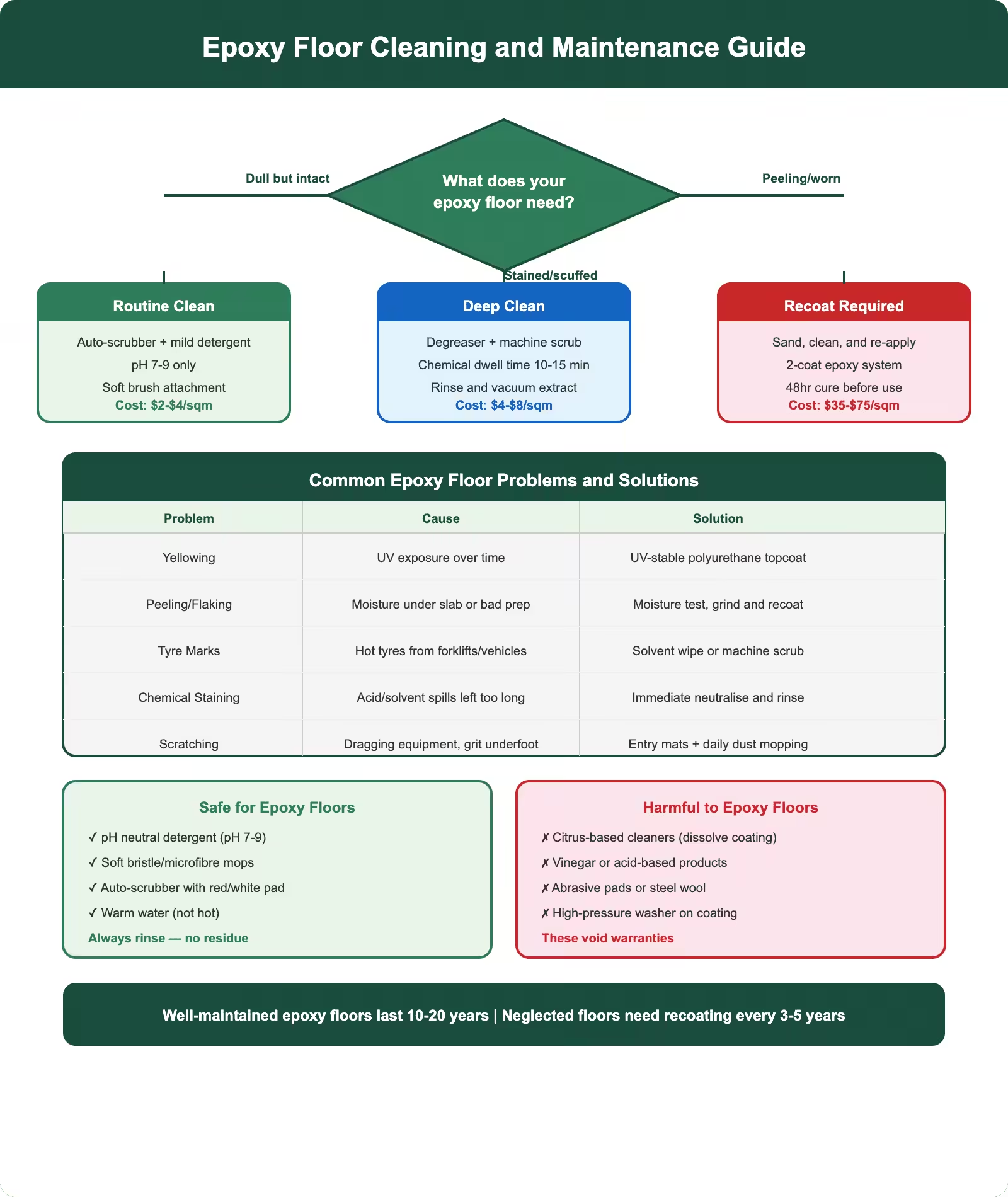
Epoxy floor cleaning and maintenance guide with decision flowchart, common problems and safe products
Common Problems We See With Epoxy Floors
Floor Type Cleaning Comparison requires specific protocols that we tailor to each facility based on its layout, traffic, and compliance requirements. We encounter the same issues repeatedly on epoxy floors across Sydney. Hot tyre pickup is the most common complaint in workshops and car parks. When vehicles park on epoxy in warm weather, the hot tyres soften the coating surface and pull it away when the vehicle moves. Our team treats this with a high-build topcoat that resists thermal transfer, and we have eliminated this problem for workshops in Petersham that had been dealing with it for years.
Common Problems We See With Epoxy Floors includes specific protocols that we tailor to each facility based on its layout, traffic, and compliance requirements. Chemical staining is the second most common issue. While epoxy resists most substances, prolonged exposure to certain solvents, hydraulic fluids and acidic cleaners can discolour the surface. We have found that the key is prompt spill cleanup and using only pH-neutral cleaners for routine maintenance. Our team provides spill response kits and training to facility staff so contamination is addressed within minutes rather than hours.
Cost of Professional Epoxy Floor Cleaning in Sydney
We price epoxy floor cleaning based on area, condition and the level of contamination. For a standard workshop or warehouse of around 300 square metres, our clients in Marrickville, Dulwich Hill and Petersham typically invest around $1,560 for a complete clean including inspection, HEPA vacuuming, machine scrubbing and surface treatment. Spot repairs for chips and delamination are quoted separately based on the affected area.
Our team has found that facilities on quarterly maintenance programs spend significantly less over the life of their epoxy coating because we catch wear and damage early. A fresh epoxy application costs $30 to $60 per square metre, so extending the life of existing coatings through proper maintenance represents a substantial saving for our clients.
When to Recoat vs When to Clean
We are always honest with our clients about whether cleaning will solve the problem or whether recoating is the better investment. If the epoxy has widespread delamination, deep scratching or UV yellowing that covers more than 30 percent of the floor, we recommend a full recoat. If the damage is localised and the surrounding coating passes our adhesion test, targeted repair and cleaning is the more cost-effective option.
Our team uses AS 2150.1 adhesion testing methodology to make this assessment objectively rather than guessing. We score the adhesion result and share it with the client so they can make an informed decision. We have found that this transparent approach builds trust and helps facility managers in Marrickville justify maintenance spending to their leadership teams.
Whether your epoxy floors need routine cleaning or a full restoration, our team delivers results that protect your investment and keep your facility looking professional. For more tips on maintaining commercial floor tiles, check out our next guide in our floor cleaning series.
Frequently Asked Questions About Epoxy Floor Cleaning
Can I use a pressure washer on my epoxy floor? We do not recommend it. High-pressure water can lift edges of epoxy coating and force moisture under the film, causing delamination. Our team uses low-pressure auto-scrubbers with soft brush rolls that clean effectively without risking coating damage.
How often should epoxy floors be professionally cleaned? We recommend quarterly deep cleaning for workshops and warehouses and monthly for commercial kitchens and food preparation areas. Facilities in Marrickville, Dulwich Hill and Petersham on these schedules consistently maintain better coating condition and longer recoat intervals.
Why is my epoxy floor turning yellow? UV exposure causes yellowing in standard epoxy coatings. We see this frequently in facilities with skylights or large windows. Our team recommends UV-stable polyurethane topcoats for areas with significant natural light exposure, which prevents yellowing and extends the coating life by years.
Can you repair small chips and scratches in epoxy floors? We repair localised damage by cleaning the affected area, lightly sanding the edges and applying a colour-matched epoxy patch. Our team blends repairs into the surrounding coating so they are virtually invisible. This is far more cost-effective than full recoating for minor damage.
How much does epoxy floor cleaning cost in Sydney? A standard 300-square-metre workshop or warehouse clean typically costs around $1,560 including inspection, HEPA vacuuming, machine scrubbing and surface treatment. Spot repairs are quoted separately. We provide fixed written quotes after on-site assessment.
What cleaning products are safe for epoxy floors? We use only pH-neutral cleaners diluted to manufacturer specifications. Acidic and alkaline products degrade epoxy coatings over time. Our team supplies approved cleaning products to clients and provides training on correct dilution ratios for daily maintenance.
How do you test if epoxy coating is still bonded properly? We use cross-hatch adhesion testing based on AS 2150.1 methodology. This involves scoring a grid pattern into the coating surface and applying adhesive tape to measure bond strength. We share the results with clients so they can make informed decisions about cleaning versus recoating.
Can you apply anti-slip treatment to epoxy floors? We add anti-slip aggregate to epoxy topcoats during recoating for areas requiring enhanced traction. For existing floors, we apply a clear anti-slip sealer that adds texture without significantly changing the appearance. We test slip resistance after every application.
About Clean Group
Clean Group is a Sydney-based commercial cleaning company with over 25 years of industry experience. Founded by Suji Siv, our team of 50+ trained professionals services offices, warehouses, medical centres, schools, childcare facilities, retail stores, gyms, and strata properties across Sydney, Melbourne, and Brisbane.
We are active members of ISSA and the Building Service Contractors Association of Australia (BSCAA). Our operations align with ISO 9001 (Quality Management), ISO 14001 (Environmental Management), and ISO 45001 (Workplace Health and Safety) standards. We hold membership with the Green Building Council of Australia and use eco-friendly, TGA-registered cleaning products wherever possible.
Every Clean Group cleaner is police-checked, fully insured, and trained in safe work procedures under SafeWork NSW guidelines. We operate 7 days a week, including after-hours and weekend services, to minimise disruption to your business.
Hi, I'm Suji Siv, the founder, CEO, and Managing Director of Clean Group, bringing over 25 years of leadership and management experience to the company. As the driving force behind Clean Group’s growth, I oversee strategic planning, resource allocation, and operational excellence across all departments. I am deeply involved in team development and performance optimization through regular reviews and hands-on leadership.