End-of-Lease Deep Cleaning Requirements in NSW

The final weeks of a commercial cleaning lease in NSW bring a set of obligations that can catch tenants off guard if they have not read the make-good clause in their agreement. We handle end-of-lease cleans for commercial tenants across Sydney every month — from single-level retail shops in Newtown to multi-floor corporate offices in the CBD — and the difference between getting your bond or bank guarantee returned smoothly versus a drawn-out dispute almost always comes down to preparation. This guide covers the cleaning requirements, legal framework, and practical steps that NSW commercial tenants need before handing back the keys.

For more insights, see our guide on emergency deep cleaning services.
Make-Good Clauses in NSW Commercial Leases
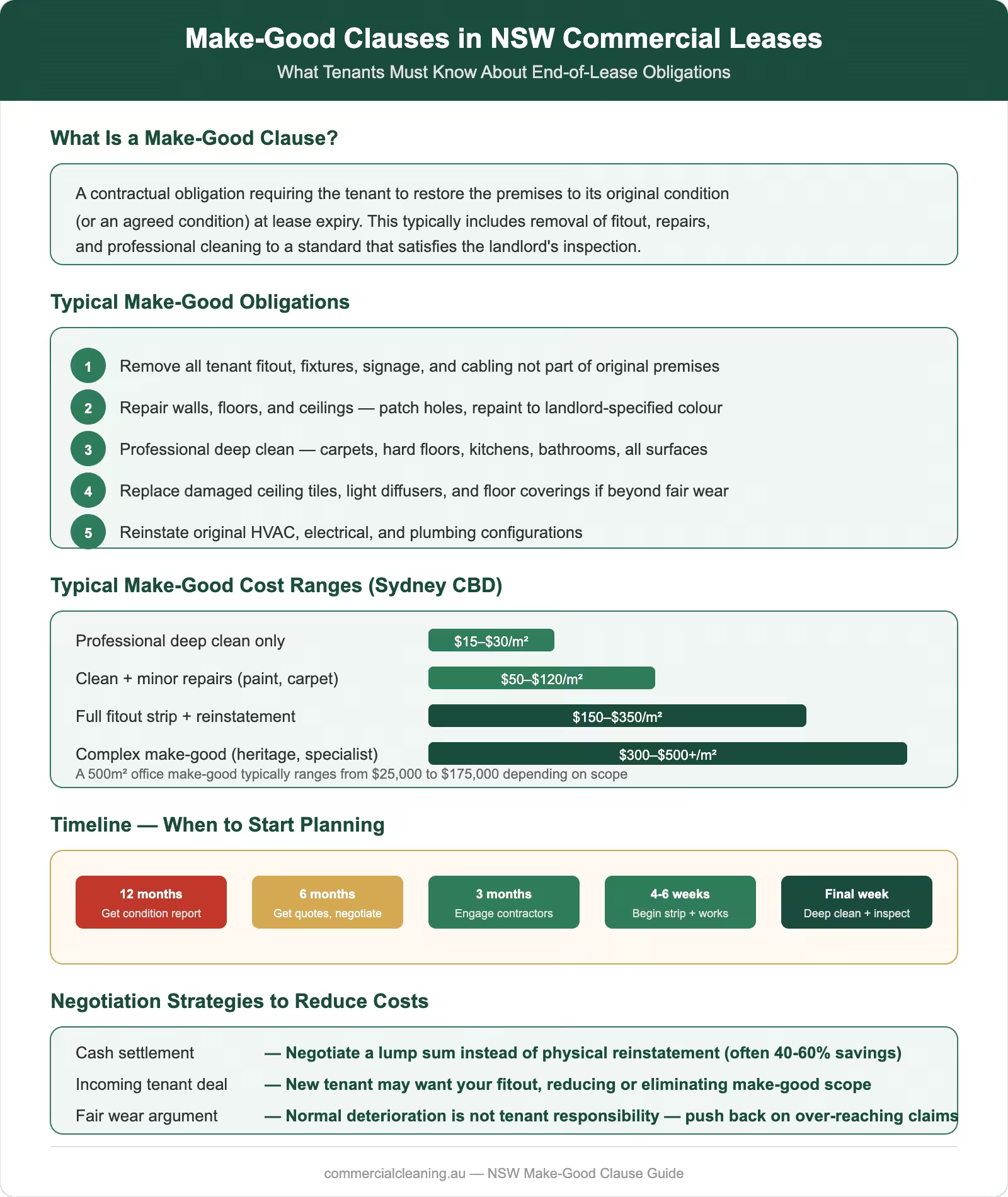
Almost every commercial lease in NSW includes a make-good clause that obligates the tenant to return the premises in a condition matching the original fitout — or as close to it as the lease specifies. We have worked with tenants and their solicitors on hundreds of end-of-lease transitions across the Sydney market, and the make-good requirement catches people off guard more often than it should. The clause typically references the condition report prepared at lease commencement, and any deterioration beyond “fair wear and tear” becomes the tenant’s financial responsibility.
Fair wear and tear is the phrase that causes the most arguments. Under the Retail Leases Act 1994 (NSW), which governs many commercial tenancies in shopping centres and mixed-use buildings, fair wear and tear is expected to be accepted by the landlord. But the Act does not define the term precisely, and in our experience, landlords and tenants almost always disagree on where normal ageing ends and neglect begins. A carpet that has faded evenly under fluorescent lighting is fair wear. A carpet with coffee stains around the kitchen and ground-in dirt in the main traffic lane is not. We have seen that distinction argued over on sites in North Sydney, Macquarie Park, and across the CBD.
What a Commercial End-of-Lease Clean Actually Covers
An end-of-lease clean for a commercial premises is not a maintenance clean and it is not a deep clean — it sits somewhere between the two, with a specific focus on restoring surfaces to the standard documented in the ingoing condition report. Our scope for end-of-lease work covers every surface, fixture, and system that the tenant is responsible for under the lease terms.
Floor-by-Floor Breakdown
| Area | Tasks Included | Common Fail Points |
|---|---|---|
| Carpet and flooring | Hot water extraction per AS/NZS 3733, spot treatment, edging | Stains under desks, traffic lanes not extracted, tile grout discolouration |
| Kitchen and breakroom | Appliance degrease inside and out, rangehood filter, splashback, sink descale | Inside microwave, behind fridge, grease on rangehood filters |
| Bathrooms | Tile scrub, grout bleach, fixture polish, mirror detail, exhaust vent clean | Limescale on tapware, mould in silicone seals, missed exhaust vents |
| Windows (internal) | Glass both sides, tracks, frames, sills | Window tracks clogged with dust, marks on glass partitions |
| General surfaces | Skirting boards, door frames, light switches, power points, air vents | Dust on top of door frames, yellowed light switches, blocked air return vents |
Areas Most Tenants Forget
The items that generate bond disputes are rarely the obvious ones. Tenants clean the carpets and wipe the bathrooms but forget the top of partition walls, the inside of light fittings, the cable risers behind workstations, and the interior surfaces of kitchen cupboards. We compiled a list of the twenty most commonly missed areas based on our own post-clean inspections, and we now use that as a pre-handback checklist on every end-of-lease job. The three most frequent oversights are exhaust fan grilles in kitchens and bathrooms, the tracks and seals on sliding glass partition doors, and marks on painted walls where furniture or whiteboards were mounted.
Server rooms or comms cupboards are another blind spot. Tenants assume the landlord does not care about a small utility room, but the condition report typically covers every room inside the tenancy, and a comms cupboard with dust-caked vents and cable debris on the floor will be flagged during a dilapidation assessment.
The Condition Report: Your Most Important Document
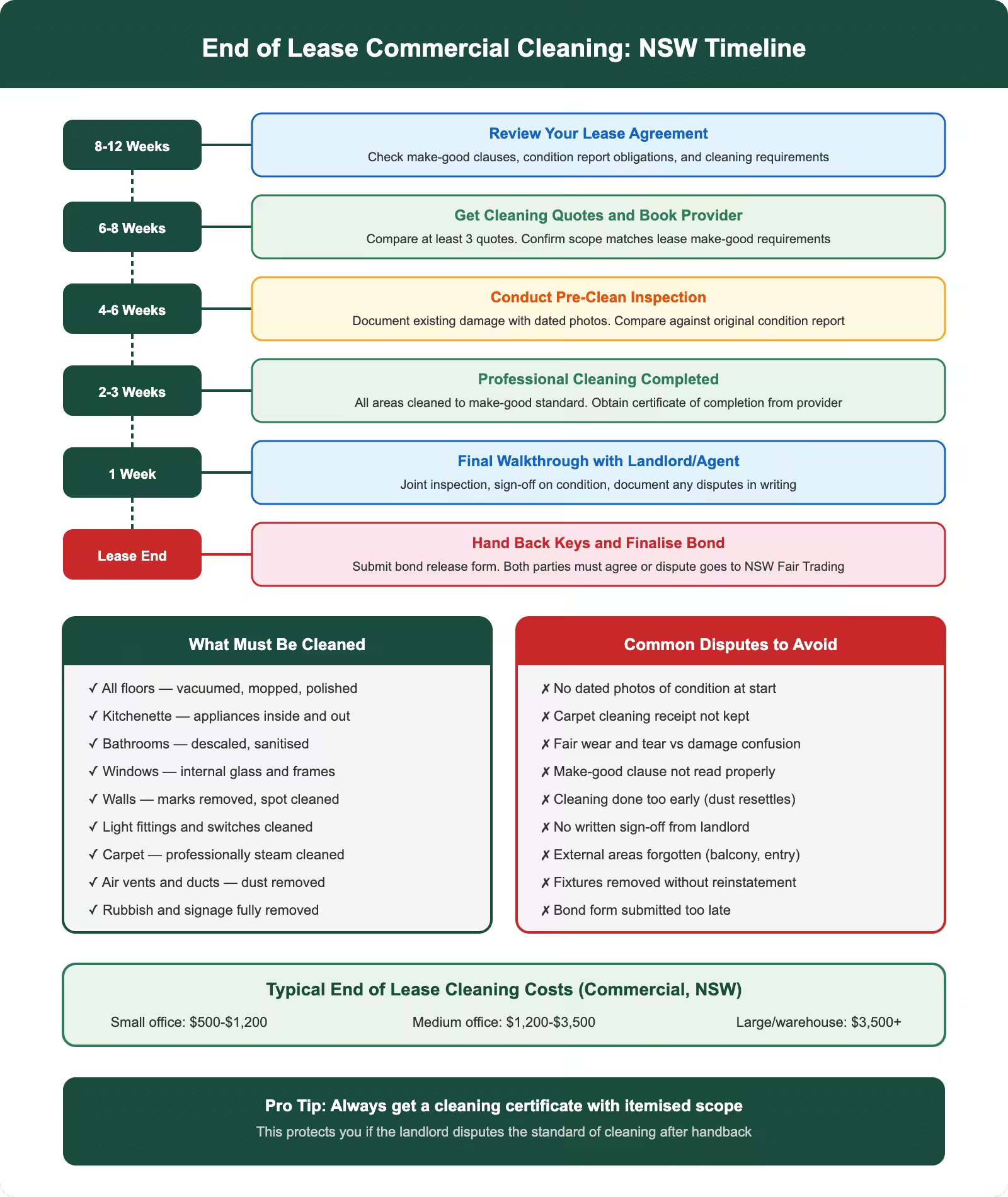
The single most useful thing you can do before your lease ends is find your ingoing condition report. This is the document — ideally with dated photographs — that records the state of the premises when you moved in. Every element of the landlord’s assessment at lease end will be measured against it.
If you do not have the original condition report, commission a dilapidation assessment from a building consultant or quantity surveyor before you start any cleaning or make-good work. We recommend this to every client who contacts us without an ingoing report, because without a baseline there is no objective standard to clean to — and the landlord’s building manager will apply their own subjective standard, which invariably costs the tenant more. A qualified assessor’s report costs between two and four thousand dollars for a standard commercial tenancy and gives both parties an agreed starting point for the make-good scope.
Timing Your End-of-Lease Clean
We schedule end-of-lease cleans to finish three to five business days before the handback date. This buffer exists for two practical reasons. First, it gives us time to address any items the landlord’s representative flags during their pre-handback inspection. Second, it allows the carpet extraction to dry fully — hot water extraction on commercial carpet needs a minimum of twenty-four hours in a ventilated space, and in winter that can stretch to forty-eight hours in poorly heated buildings.
The worst timing mistake we see tenants make is leaving the clean until after the furniture removal. That sounds logical — clean the empty space — but removalists scuff walls, scratch floors, and leave marks from trolley wheels and packing tape. We now recommend a two-stage approach for larger tenancies: a pre-move clean to handle the bulk of the scope while furniture is still in place, followed by a post-move touch-up to address removal damage. For a Pyrmont media company relocating from two floors last year, this approach saved them roughly four thousand dollars in wall repair costs because we were able to clean the marks before the paint was damaged rather than after.
Common Disputes and How to Avoid Them
Common Disputes and How to Avoid Them addresses specific protocols that we tailor to each facility based on its layout, traffic, and compliance requirements. Bond disputes over cleaning come down to documentation. If the landlord says the premises were not returned to an acceptable standard, your defence is photographic evidence showing that they were. Our team photographs every room at the completion of each end-of-lease clean — wide shots and close-ups of specific items like floor surfaces, bathroom grout, kitchen splashbacks, and window tracks. We compile these into a dated completion report that the tenant can present during the handback inspection.
The most common dispute we see involves carpet condition. A landlord will claim the carpet needs replacement when the tenant argues it only needed cleaning. Under NSW case law — and we always refer tenants to their solicitor on the specifics — a landlord generally cannot claim the full cost of carpet replacement if the carpet had reached the end of its useful life regardless of the tenant’s use. A professional clean with documented before-and-after photos demonstrates that the tenant took reasonable steps to restore the floor. That documentation has saved our clients from unfair claims on more than a few occasions.
What It Costs and What Affects the Price
What It Costs and What Affects the Price targets specific protocols that we tailor to each facility based on its layout, traffic, and compliance requirements. End-of-lease cleaning for a commercial premises in Sydney typically runs between six and fourteen dollars per square metre, with the final price depending on three variables: the size of the tenancy, the condition of the surfaces, and whether specialist treatments like hard floor stripping or high-level access work are required.
A standard five-hundred-square-metre office tenancy in reasonable condition — carpeted floors, standard kitchenette, two to three bathrooms — usually falls between three and four thousand dollars for a complete end-of-lease clean. Tenancies with heavy soiling, grease buildup in commercial kitchens, or years of deferred maintenance will sit at the higher end. We quote on a fixed-price basis after a site inspection, so there are no surprises on the invoice. Every line item is broken down by area and task, which also helps the tenant’s property manager verify the scope against the lease obligations.
For tenants approaching their lease expiry, our team can inspect the premises and provide a scope that aligns with your make-good obligations. Read more about janitorial duties checklists for ongoing building maintenance.
Frequently Asked Questions
Is end-of-lease cleaning a legal requirement for commercial tenants in NSW?
The cleaning obligation comes from the lease agreement, not from statute. Almost every commercial lease in NSW includes a make-good clause requiring the tenant to return the premises in a condition consistent with the ingoing condition report, adjusted for fair wear and tear. The Retail Leases Act 1994 (NSW) governs retail tenancies specifically and includes provisions around make-good obligations and dispute resolution, but the cleaning requirement itself is contractual rather than legislated.
Can a landlord reject my end-of-lease clean and hire their own cleaner at my expense?
A landlord can reject the clean if it does not meet the standard set out in the lease and condition report. If the shortfall is documented — with photographs and specific reference to the condition report — they can arrange rectification and recover the cost from the bond or as a claim against the tenant. Our completion report with dated photographs is specifically designed to prevent this scenario by providing evidence that every area was addressed to a professional standard.
How far in advance should I book an end-of-lease clean?
Three to four weeks is the minimum lead time we recommend. This gives us time to conduct a site inspection, prepare a fixed-price quote, schedule the work around your furniture removal timeline, and build in the three-to-five-day buffer before the handback date. During peak periods — January, June, and end of financial year — we suggest booking six weeks ahead because our calendar fills quickly with lease expiry work.
What happens if the landlord and I disagree about the cleaning standard?
The first step is a joint inspection where both parties walk the premises with the condition report in hand. If agreement cannot be reached, the dispute resolution mechanism depends on the lease type. Retail tenancies under the Retail Leases Act 1994 can be referred to the NSW Small Business Commissioner for mediation. Non-retail commercial leases typically require negotiation or civil proceedings. Our photographic completion report gives the tenant documented evidence to support their position in either process.
Does end-of-lease cleaning include external windows and common areas?
External windows and common areas such as lobbies, lifts, and shared bathrooms are the landlord’s responsibility in multi-tenant buildings — the tenant’s obligation covers only the surfaces inside their demised premises. However, if the lease includes a balcony, terrace, or dedicated external area, the tenant is usually responsible for those. We always confirm the tenancy boundary with the lease plan before quoting so the scope matches exactly what the tenant is obligated to restore.
About Clean Group
Clean Group is a leading commercial cleaning company in Sydney, providing professional cleaning services to offices, strata buildings, medical facilities, schools, gyms, and retail spaces across the greater Sydney region. With over 25 years of experience and a commitment to WHS compliance, eco-friendly practices, and consistent quality, Clean Group delivers tailored cleaning solutions backed by a 100% satisfaction guarantee.
About the Author

Suji Siv
/

Hi, I'm Suji Siv, the founder, CEO, and Managing Director of Clean Group, bringing over 25 years of leadership and management experience to the company. As the driving force behind Clean Group’s growth, I oversee strategic planning, resource allocation, and operational excellence across all departments. I am deeply involved in team development and performance optimization through regular reviews and hands-on leadership.
Read More About Suji 0291607469
 Get A Quote