What Is Medical Electrostatic Disinfection and How Does It Work in Sydney Australia?
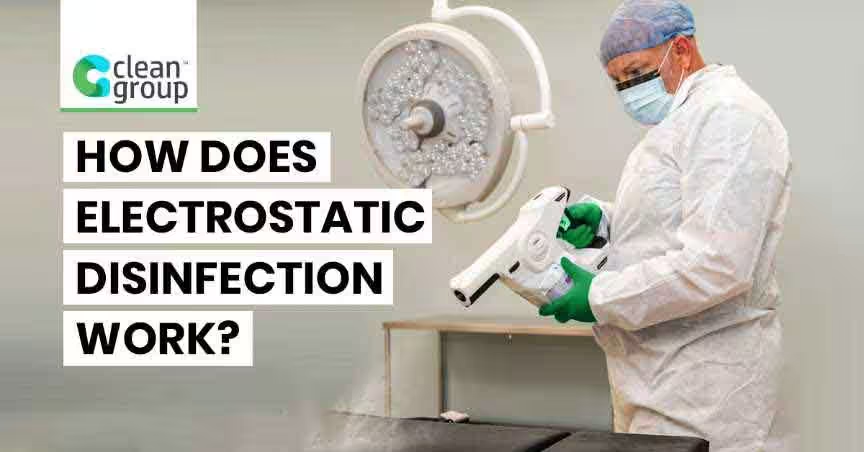
We have deployed electrostatic disinfection systems across Sydney workplaces since before most people had heard the term, and the technology has proven itself in hospitals, aged care facilities, childcare centres, and commercial offices where conventional spray-and-wipe methods simply cannot reach every surface. Our virus disinfection work is a core part of what our medical cleaning company delivers across Sydney, using electrostatic application as a core delivery method to achieve complete surface coverage in a fraction of the time manual application takes.
For more insights, see our guide on workplace disinfection services.
The Science Behind Electrostatic Disinfection
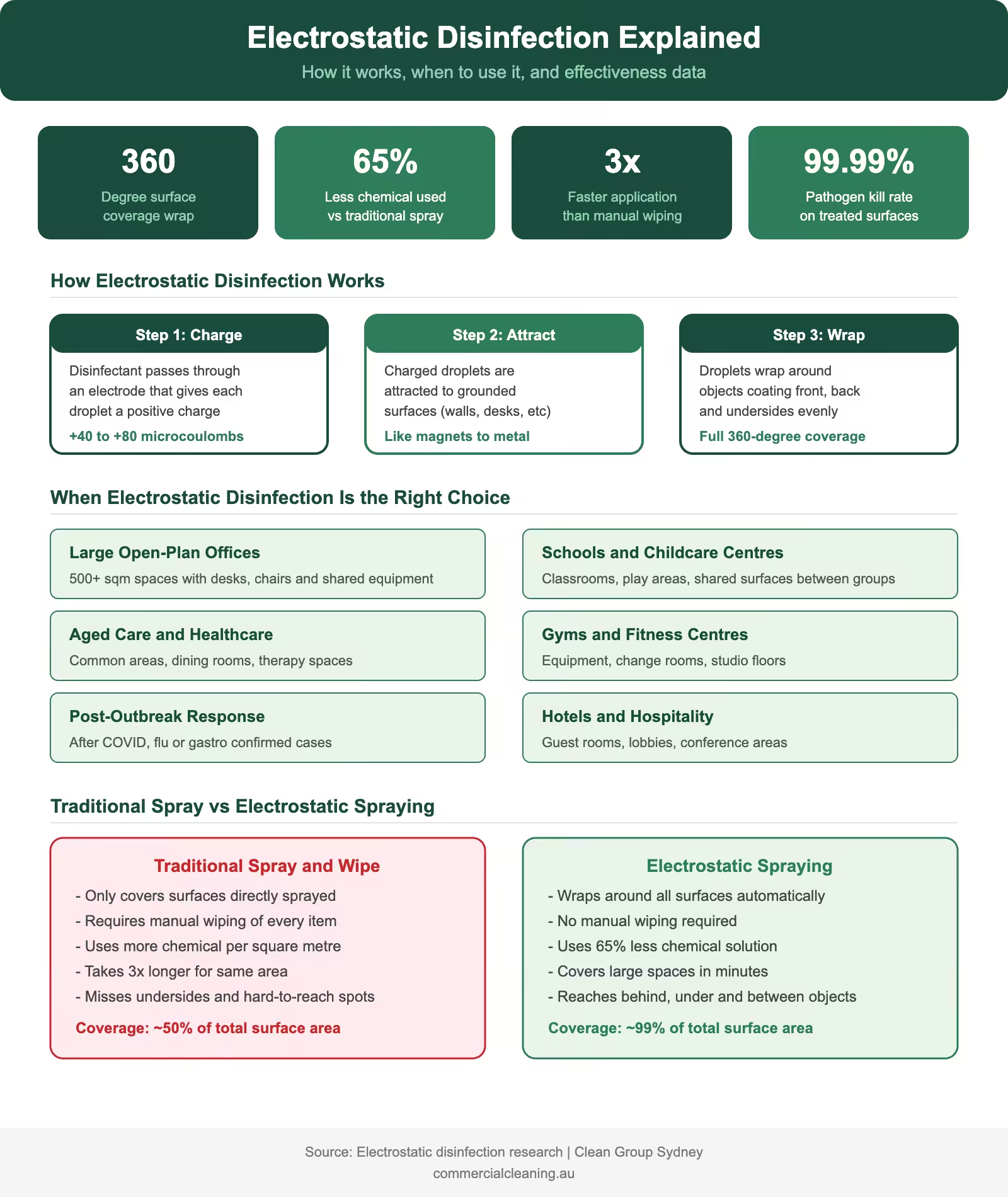
The Science Behind Electrostatic Disinfection covers specific protocols that we tailor to each facility based on its layout, traffic, and compliance requirements. Electrostatic sprayers work by imparting a positive electrical charge to disinfectant droplets as they leave the nozzle. Because most surfaces carry a neutral or slightly negative charge, the positively charged droplets are attracted to surfaces and wrap around them—coating the front, back, sides, and underside of objects in a uniform layer. This attraction effect means the disinfectant reaches surfaces that a manual wipe or conventional sprayer would miss entirely: the underside of desk edges, the back of chair arms, the inside of door handle recesses, and the gaps between keyboard keys.
We have tested the coverage difference between electrostatic application and conventional trigger spraying in controlled environments at our Mascot depot. Using fluorescent tracer dye mixed into the disinfectant solution, we sprayed a standard office workstation with both methods and inspected under UV light. The electrostatic application achieved over ninety-five per cent surface coverage including all hidden and recessed surfaces. The trigger spray achieved approximately sixty per cent, with significant gaps on vertical surfaces, undersides, and any area not directly in the operator’s line of sight. AS 4187.14, the Australian Standard for reprocessing reusable medical devices with specific reference to high-level disinfection, sets stringent contact requirements for disinfectant application. While that standard applies to medical instruments rather than environmental surfaces, we use its principles of complete surface contact and verified dwell time as our benchmark because the physics of microbial kill are the same regardless of the setting.
When Electrostatic Disinfection Is the Right Choice
Electrostatic disinfection is not a replacement for cleaning—it is an enhancement applied after cleaning to achieve a level of microbial reduction that manual methods cannot match alone. We recommend it for outbreak response situations where speed and coverage are critical, for high-traffic environments where touch-point density makes manual disinfection impractical within the available time window, and for routine maintenance programs in healthcare-adjacent facilities where infection control standards require documented surface coverage. In Alexandria medical suites and allied health clinics, we deploy electrostatic disinfection as part of a weekly program that supplements daily manual cleaning to maintain surface bioburden below detectable levels.
We do not recommend electrostatic disinfection as a standalone service for visibly dirty environments. The charged droplets will coat any soil present on the surface, sealing it under a layer of disinfectant rather than removing it. Our protocol always starts with a pre-clean to remove visible soil, followed by electrostatic application of the disinfectant to the clean surface. This two-stage approach ensures the disinfectant makes direct contact with the surface substrate rather than sitting on top of a soil layer where it cannot reach the microorganisms underneath.
Disinfection Method Effectiveness Comparison
| Method | Kill Rate | Coverage | Dwell Time | Best For |
|---|---|---|---|---|
| Electrostatic Spray | 99.99% | 360° wrap | 10 min | Large open areas |
| ULV Fogging | 99.9% | Airborne + surface | 30–60 min + ventilate | Whole-room treatment |
| Manual Wipe-Down | 99.9% | Direct contact only | Per product label | High-touch points |
| UV-C Light | 99.9% | Line of sight only | 15–30 min | Unoccupied rooms |
| Ozone Generator | 99.99% | Full room penetration | 2–4 hrs + ventilate | Severe contamination |
Our Equipment and Disinfectant Selection
Disinfection Method Effectiveness Comparison requires specific protocols that we tailor to each facility based on its layout, traffic, and compliance requirements. We use commercial-grade cordless electrostatic sprayers that produce a consistent droplet size of around 65 microns—small enough to achieve the wraparound effect but large enough to carry sufficient active ingredient to each surface. Our operators calibrate the flow rate and charging voltage at the start of every job and test the spray pattern on a sample surface to confirm coverage before proceeding to the full space. The disinfectant we use is a TGA-registered hospital-grade quaternary ammonium compound effective against a broad spectrum of bacteria, viruses including enveloped and non-enveloped types, and fungi. It is low-odour, non-corrosive to common office and healthcare materials, and does not require rinsing after application on non-food-contact surfaces.
In Zetland commercial offices, where sensitive electronic equipment is present on every desk, we select disinfectants with rapid dry times and no residue formation to avoid damage to screens, keyboards, and phone handsets. We have treated over three thousand individual workstations with electrostatic disinfection across our inner-south portfolio without a single damage claim, which reflects both the quality of the disinfectant product and the training our operators receive in controlling spray volume and direction around sensitive equipment.
Verification and Documentation
Verification and Documentation addresses specific protocols that we tailor to each facility based on its layout, traffic, and compliance requirements. We verify the effectiveness of every electrostatic disinfection treatment with ATP bioluminescence testing before and after application. Pre-treatment swabs establish the baseline bioburden on selected high-touch surfaces—door handles, light switches, lift buttons, shared kitchen benchtops, and bathroom taps. Post-treatment swabs taken after the disinfectant’s required contact time confirm that bioburden levels have dropped below our target threshold. We photograph every swab reading with a time-stamped image and compile the results into a digital report delivered to the client within twenty-four hours. This documentation gives facility managers in Mascot and Alexandria evidence-based assurance that the treatment achieved its intended outcome, not just a visual impression of cleanliness.
For outbreak response engagements, we also provide a certificate of disinfection that the facility manager can present to staff, tenants, or regulatory bodies as evidence that a professional treatment has been carried out. This certificate details the disinfectant used, its TGA registration number, the application method, the surfaces treated, and the verified ATP results. We have issued over two hundred of these certificates across our Sydney portfolio and they have proven invaluable for clients managing staff anxiety and return-to-work communications after confirmed illness events in their workplace.
What Electrostatic Disinfection Costs in Sydney
We price electrostatic disinfection on a per-square-metre basis for routine programs and a per-engagement basis for outbreak response callouts. Routine weekly or fortnightly programs benefit from lower per-treatment rates because we can schedule crew allocation and disinfectant procurement efficiently. Emergency callouts carry a premium because they require immediate crew mobilisation, often outside normal business hours. Across the electrostatic disinfection services we provide in Mascot, Alexandria, and Zetland, our average treatment cost sits around $3,650 for a mid-sized commercial office of between five hundred and one thousand square metres including pre-clean, electrostatic application, ATP verification, and digital reporting.
Clients who bundle electrostatic disinfection with their regular cleaning contract receive priority response times for outbreak situations and a reduced per-treatment rate because we are already familiar with their site layout, access procedures, and surface materials. We have found that bundled clients also achieve better long-term bioburden control because the daily cleaning and periodic disinfection programs are coordinated by the same team rather than managed by separate providers with different standards and schedules.
To complete the cycle of comprehensive medical facility cleaning protocols, explore our detailed guide on pathology lab contamination control and the specialized cleaning procedures required for sensitive laboratory environments.
Frequently Asked Questions
Is electrostatic disinfection safe for electronics?
Yes. We use low-residue, quick-drying disinfectants and control spray volume carefully around screens, keyboards, and phone handsets. We have treated over three thousand workstations without a single damage claim.
How long does the disinfectant take to work?
Our hospital-grade quaternary ammonium disinfectant achieves its claimed kill rate within ten minutes of application. We confirm the surface remains wet for the full contact time before any staff re-enter the treated area.
Can you disinfect while staff are in the building?
We recommend treating spaces when they are unoccupied to verify proper dwell time and avoid disrupting work. For occupied buildings, we can treat zone by zone during breaks or after hours, rotating staff out of each area as it is treated.
What viruses does the disinfectant kill?
Our TGA-registered disinfectant is effective against a broad spectrum of enveloped and non-enveloped viruses, bacteria, and fungi. Specific pathogen claims are listed on the product’s TGA registration and we can provide this documentation on request.
How often should electrostatic disinfection be done?
Routine programs typically run weekly or fortnightly depending on the facility type and risk profile. Healthcare-adjacent settings benefit from weekly treatment while standard offices may only need fortnightly or monthly application.
Do you still need to clean surfaces before disinfecting?
Yes. Electrostatic disinfection works on clean surfaces. Visible soil must be removed first so the disinfectant makes direct contact with the surface substrate. Our protocol always includes a pre-clean before electrostatic application.
How do you prove the disinfection worked?
We take ATP bioluminescence swabs before and after treatment on selected high-touch surfaces. The results are photographed with timestamps and compiled into a digital report showing the bioburden reduction achieved.
How quickly can you respond to an outbreak?
We maintain on-call crews for emergency disinfection and can typically have a team on site within four hours of a callout across the Sydney metro area. Emergency treatments follow the same verification protocols as scheduled services.
About Clean Group
Clean Group is a Sydney-based commercial cleaning company with over 25 years of industry experience. Founded by Suji Siv, our team of 50+ trained professionals services offices, warehouses, medical centres, schools, childcare facilities, retail stores, gyms, and strata properties across Sydney, Melbourne, and Brisbane.
We are active members of ISSA and the Building Service Contractors Association of Australia (BSCAA). Our operations align with ISO 9001 (Quality Management), ISO 14001 (Environmental Management), and ISO 45001 (Workplace Health and Safety) standards. We hold membership with the Green Building Council of Australia and use eco-friendly, TGA-registered cleaning products wherever possible.
Every Clean Group cleaner is police-checked, fully insured, and trained in safe work procedures under SafeWork NSW guidelines. We operate 7 days a week, including after-hours and weekend services, to minimise disruption to your business.
About the Author

Suji Siv
/

Hi, I'm Suji Siv, the founder, CEO, and Managing Director of Clean Group, bringing over 25 years of leadership and management experience to the company. As the driving force behind Clean Group’s growth, I oversee strategic planning, resource allocation, and operational excellence across all departments. I am deeply involved in team development and performance optimization through regular reviews and hands-on leadership.
Read More About Suji 0291607469
 Get A Quote