We have cleaned commercial ductwork across Sydney for over a decade, and the difference between a building with maintained ventilation and one that has been neglected is something our technicians can smell the moment they walk through the front door. Our team services offices, retail spaces, restaurants, and medical facilities in Pyrmont, Ultimo, and Haymarket where the density of buildings and the age of many fit-outs create conditions that demand regular duct attention. Grease-laden kitchen exhausts, dust-choked supply ducts in older office towers, and mould growth behind ceiling tiles in poorly ventilated strata buildings are problems we encounter every week. As a trusted office cleaning team with specialist HVAC hygiene capabilities, we approach duct cleaning as a core part of indoor air quality management rather than a one-off task that only gets done when something goes wrong.
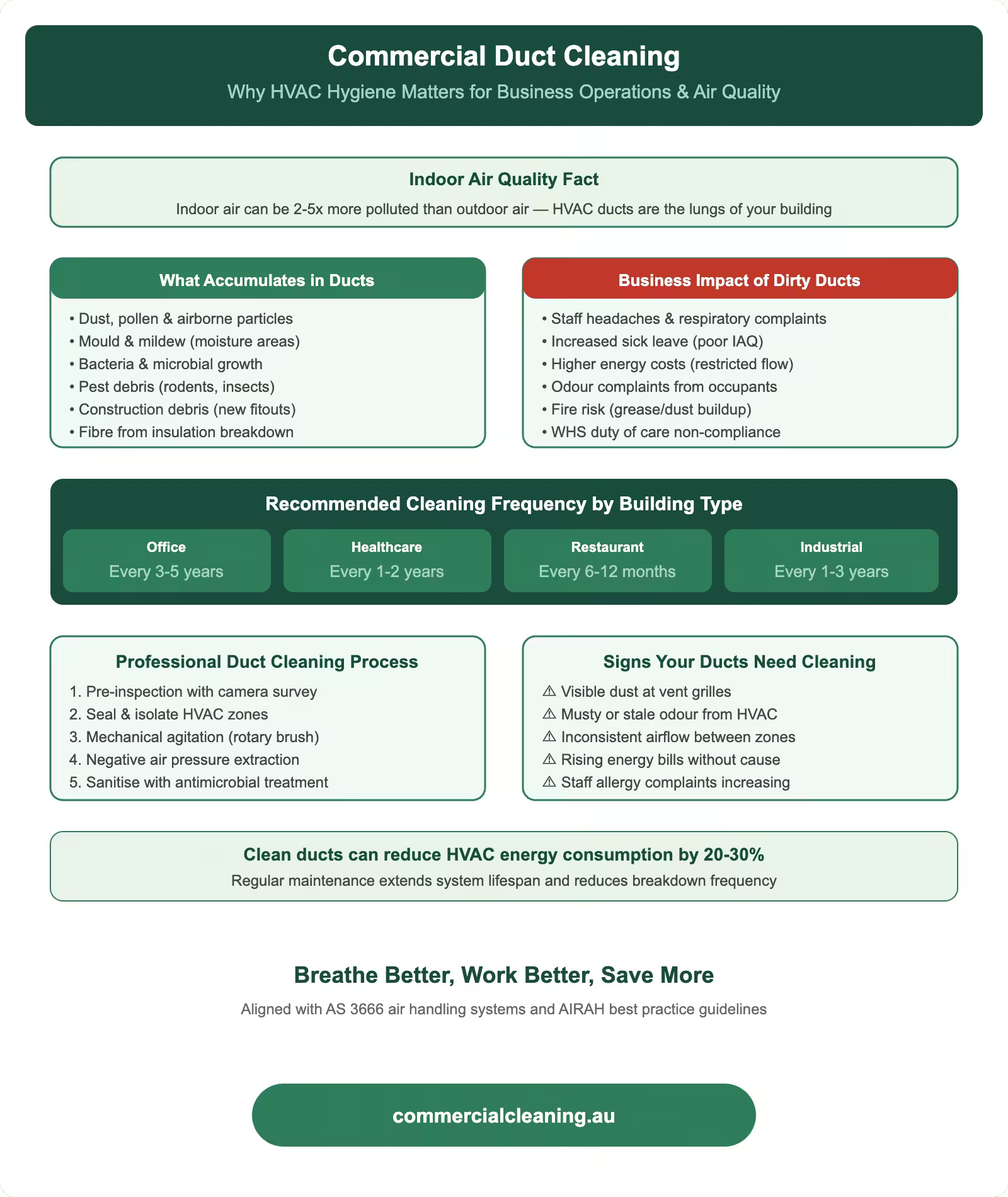
Commercial duct cleaning guide showing contaminant types, business impact, cleaning frequency by building type, professional process, and warning signs
Why Office Duct Cleaning Matters for Business Operations
Why Commercial Duct Cleaning Matters for Business Operations covers specific protocols that we tailor to each facility based on its layout, traffic, and compliance requirements. We tell every new client the same thing: your air conditioning system is circulating whatever is inside your ductwork into the lungs of everyone in the building. That might be accumulated dust, fibreglass insulation particles from deteriorated duct lining, mould spores that colonised a condensation point months ago, or grease residue that migrated from a kitchen exhaust into the return air plenum. Our inspections in Pyrmont office buildings routinely find duct interiors coated with a visible grey film that tenants never see because the ducts sit behind ceiling tiles. When we show facility managers the before-and-after photos from a robotic camera inspection, the reaction is almost always the same: they had no idea the system was that dirty. The health implications are real, and we have seen businesses in Ultimo reduce staff sick leave by measurable amounts after we completed a full duct cleaning program.
Beyond health, dirty ducts reduce the efficiency of HVAC systems because accumulated debris restricts airflow and forces the fan to work harder to maintain the thermostat setpoint. We measured a fourteen per cent improvement in supply air volume at the diffuser after cleaning the main trunk duct in a three-storey Haymarket commercial building last year. The building manager told us the air conditioning had always felt weak on the top floor, and the duct cleaning resolved the issue without any mechanical repair. That kind of measurable performance gain makes the investment in professional duct cleaning easy to justify on energy savings alone, before even factoring in the indoor air quality benefits.
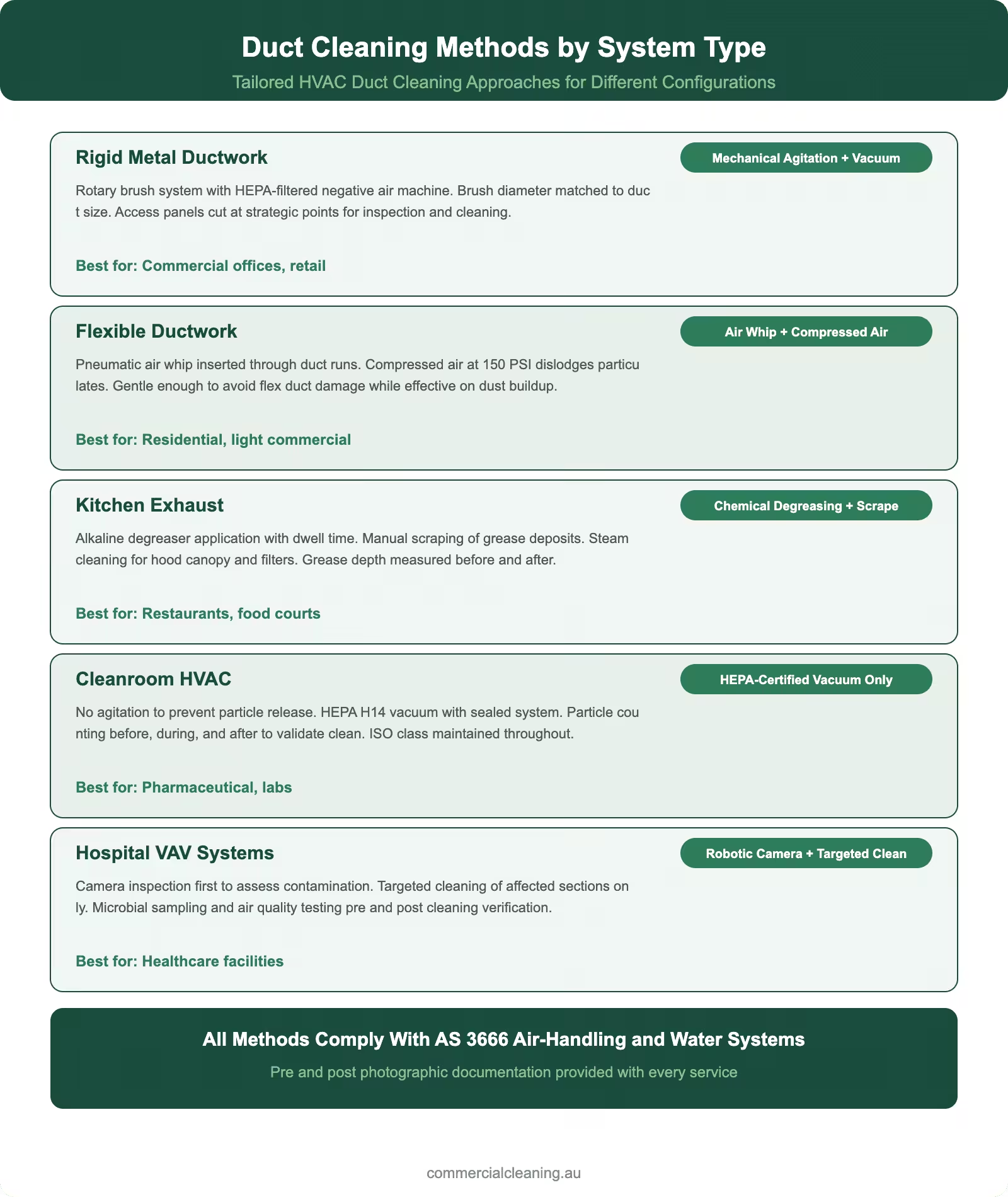
Duct cleaning methods infographic showing five system-specific approaches from mechanical agitation to robotic camera cleaning
Duct Cleaning Methods We Use for Different Systems
We select our cleaning method based on the duct material, system configuration, and the type of contamination present. For standard galvanised steel supply and return ducts in office buildings, we use a negative air machine connected to the main trunk line that creates continuous suction while our technicians work forward through the system with rotary brush tools and compressed air whips. The negative air machine captures dislodged debris in a three-stage HEPA filtration unit so that nothing re-enters the occupied space during cleaning. We invested in two Nikro Industries negative air machines specifically rated for commercial duct cleaning because the consumer-grade equipment we trialled early on could not maintain adequate suction across the long duct runs typical of multi-storey buildings in Pyrmont and Ultimo.
For kitchen exhaust systems, our approach changes completely. Grease accumulation in commercial kitchen ducts is governed by AS 1668.1, which sets requirements for fire safety in ventilation systems. We hand-scrape heavy grease deposits from the interior of the exhaust duct, canopy hood, and fan housing using stainless steel scrapers, then follow up with a hot-water pressure wash using a degreasing agent approved for food-contact environments. Our technicians photograph the interior of the duct at metre intervals before and after cleaning so we can provide the building owner or insurer with documented evidence that the system meets the fire safety requirements. A grease fire in a kitchen exhaust duct can spread through an entire building in minutes, which is why we treat every kitchen duct clean as a life-safety service rather than a routine maintenance task.
Office Area Cleaning Frequency Guide
Area
Daily
Weekly
Monthly
Quarterly
Reception & Lobby
Vacuum, mop, wipe
Glass doors, furniture
Deep carpet clean
Window wash
Workstations
Surface wipe, bins
Monitor & keyboard
Drawer clean-out
Chair shampoo
Kitchen/Breakroom
Bench, sink, floor
Fridge, microwave
Deep degrease
Exhaust fan clean
Bathrooms
Full sanitise + restock
Grout scrub
Descale fixtures
Vent clean
Meeting Rooms
Table wipe, vacuum
AV equipment dust
Upholstery clean
Carpet extraction
Pre-Cleaning Inspection and Condition Assessment
Office Area Cleaning Frequency Guide requires specific protocols that we tailor to each facility based on its layout, traffic, and compliance requirements. We never start a duct cleaning job without a thorough inspection because the condition of the ductwork determines which tools and methods are safe to use. Our inspection protocol begins with a visual check of accessible sections through existing access panels, followed by a robotic camera survey of the concealed runs. We use a Pan-and-Tilt camera system on a flexible push rod that gives us real-time video of the duct interior on a tablet screen. Our technicians look for five things during every inspection: the type and severity of contamination, the condition of internal duct lining or insulation, the presence of moisture or standing water, evidence of pest activity, and any structural damage such as collapsed sections or unsealed joints. We document everything with timestamped photos that become part of the client report.
Pre-Cleaning Inspection and Condition Assessment includes specific protocols that we tailor to each facility based on its layout, traffic, and compliance requirements. We discovered during an inspection at a Haymarket strata office building that the flexible duct connections between the main trunk and the ceiling diffusers had deteriorated to the point where fibreglass insulation was shedding directly into the supply airstream. The tenants had been breathing those fibres for months without knowing the source. Our inspection report prompted the building manager to replace all sixty-three flex connections before we proceeded with the duct cleaning, because cleaning would have dislodged even more fibrous material. That is exactly the kind of finding that justifies a proper inspection rather than just connecting a vacuum and hoping for the best.
Mould Remediation in Commercial Ductwork
We encounter mould inside ductwork far more often than most building owners expect, particularly in older buildings across Pyrmont and Ultimo where the original insulation was installed without adequate vapour barriers. Condensation forms on the cold side of the duct wall when humid air meets the chilled metal surface, and if that moisture is not managed, mould colonies establish within days. Our remediation process starts with containment: we seal the affected duct section with polyethylene sheeting and run a negative air machine with HEPA filtration to prevent spore dispersal during cleaning. We then remove visible mould growth using mechanical agitation and a biocide registered with the APVMA for HVAC applications. After cleaning, we apply an antimicrobial coating to the interior duct surface that provides residual protection against re-colonisation for up to twelve months.
We always investigate the root cause of mould growth rather than simply cleaning it and moving on. In one Ultimo co-working space, we traced recurrent mould in the return air duct to a leaking chilled water pipe that was dripping onto the duct exterior and wicking through an unsealed joint. We reported the leak to the mechanical contractor, who repaired it, and we then cleaned and coated the affected section. Six months later at the next scheduled inspection, the duct was still clean. Our approach is to treat mould in ductwork the same way a doctor treats an infection: address the symptoms, but find and fix the underlying cause so it does not come back.
Duct Cleaning Costs for office Buildings
We quote duct cleaning based on the total linear metres of ductwork, the number of diffusers and grilles, the system type, and the level of contamination found during inspection. A standard supply and return duct cleaning for a single-floor office of around 300 square metres in Pyrmont or Haymarket typically costs $2,200 including robotic camera inspection, HEPA-filtered negative air extraction, rotary brush cleaning of all accessible runs, and a post-clean verification report with before-and-after photos. Kitchen exhaust duct cleaning is priced separately because the labour intensity and chemical requirements are substantially higher than standard HVAC duct work. We provide fixed-price quotes after every inspection so there are no surprises on the invoice.
We recommend annual duct cleaning for most commercial office environments and six-monthly cleaning for kitchen exhaust systems, food processing facilities, and any building where the HVAC system runs continuously. Our clients on annual maintenance contracts receive priority scheduling and a reduced per-visit rate because we can plan our crew allocation months in advance. The businesses in Ultimo and Haymarket that have followed our recommended schedule consistently report better indoor air quality feedback from occupants and fewer reactive maintenance callouts for their mechanical contractors. That long-term cost saving is something we can demonstrate with data from our inspection reports year over year.
Compliance Documentation and Reporting
Compliance Documentation and Reporting focuses on specific protocols that we tailor to each facility based on its layout, traffic, and compliance requirements. We produce a detailed cleaning report for every duct cleaning job that includes the scope of work completed, photographic evidence of duct condition before and after cleaning, air quality test results where applicable, and a compliance statement referencing AS 1668.1 for kitchen exhaust systems or the relevant indoor air quality guidelines for general HVAC systems. Our reports are formatted for inclusion in building compliance registers and are accepted by insurers, councils, and food safety auditors. We have seen building managers in Pyrmont save hours of administrative work during annual fire safety inspections simply by presenting our kitchen exhaust cleaning reports, which contain all the photographic evidence the inspector needs to confirm the system meets the fire safety standard.
Our documentation also supports our clients during lease negotiations and tenant fitout approvals. When a building owner in Haymarket needed to demonstrate to a prospective medical tenant that the HVAC system met healthcare ventilation standards, our most recent duct inspection and cleaning report provided the evidence the tenant required. We take pride in the quality of our reporting because we know it serves a purpose beyond just recording what we did on the day. For businesses that also need their premises kept to a high standard day to day, our types of cleaners outlines the rigorous approach we bring to sensitive commercial environments. For related cadence guidance, see our restroom frequency standards.
Frequently Asked Questions
How often should commercial ducts be cleaned?
We recommend annual cleaning for standard office HVAC systems and six-monthly cleaning for kitchen exhaust ducts, food processing facilities, and high-occupancy buildings. Systems in areas with elevated dust or pollution may benefit from more frequent service. We base our recommendations on what we find during inspection rather than applying a one-size-fits-all schedule.
Can duct cleaning be done while the building is occupied?
Yes. We use HEPA-filtered negative air machines that capture all dislodged debris during cleaning, so there is no dust release into occupied spaces. We typically schedule duct cleaning during off-peak hours or weekends to minimise disruption, but the process is safe to perform while people are working in adjacent areas of the building.
What is the difference between duct cleaning and duct sanitising?
Duct cleaning physically removes dust, debris, and biological growth from the interior surfaces of the ductwork. Duct sanitising is an additional step where we apply an antimicrobial treatment to the cleaned surfaces to inhibit future mould and bacterial growth. We recommend sanitising after every clean in buildings with a history of mould issues or where the HVAC system serves healthcare or food preparation areas.
Do you clean the air conditioning unit as well as the ducts?
We clean the components that the ductwork connects to, including the return air grille, filter housing, and the first section of the air handling unit. Full mechanical servicing of the compressor, evaporator coil, and refrigerant system falls outside our scope and should be performed by a licensed refrigeration mechanic. We coordinate with our clients mechanical contractors to align our duct cleaning with their scheduled maintenance visits for best results.
How do I know if my ducts need cleaning?
Common signs include visible dust around supply diffusers, musty or stale odours when the system starts up, inconsistent airflow between rooms, and increased allergy symptoms among building occupants. We offer a free visual inspection through existing access panels that takes about thirty minutes and gives you a clear picture of your duct condition without any commitment to proceed with cleaning.
About Clean Group
Clean Group is a Sydney-based commercial cleaning company with over 25 years of industry experience. Founded by Suji Siv, our team of 50+ trained professionals services offices, warehouses, medical centres, schools, childcare facilities, retail stores, gyms, and strata properties across Sydney, Melbourne, and Brisbane.
We are active members of ISSA and the Building Service Contractors Association of Australia (BSCAA). Our operations align with ISO 9001 (Quality Management), ISO 14001 (Environmental Management), and ISO 45001 (Workplace Health and Safety) standards. We hold membership with the Green Building Council of Australia and use eco-friendly, TGA-registered cleaning products wherever possible.
Every Clean Group cleaner is police-checked, fully insured, and trained in safe work procedures under SafeWork NSW guidelines. We operate 7 days a week, including after-hours and weekend services, to minimise disruption to your business.
Hi, I'm Suji Siv, the founder, CEO, and Managing Director of Clean Group, bringing over 25 years of leadership and management experience to the company. As the driving force behind Clean Group’s growth, I oversee strategic planning, resource allocation, and operational excellence across all departments. I am deeply involved in team development and performance optimization through regular reviews and hands-on leadership.