We have pressure-cleaned commercial driveways and car parks across Sydney’s southern suburbs for over fifteen years, removing oil stains, tyre marks, chewing gum, and years of ground-in grime from concrete, asphalt, and paved surfaces. Our team provides professional commercial pressure cleaning services in Sydney that restore hardscape surfaces to a standard that improves property presentation, reduces slip hazards, and extends the life of the surface coating or sealer.
Why Commercial Driveways and Car Parks Need Regular Cleaning
Why Commercial Driveways and Car Parks Need Regular Cleaning covers specific protocols that we tailor to each facility based on its layout, traffic, and compliance requirements. Commercial hardscapes cop a beating that residential driveways never experience. Hundreds of vehicles per day deposit tyre rubber, brake dust, engine oil drips, and transmission fluid onto the surface. Pedestrians track in chewing gum, cigarette ash, and food waste from nearby retail strips. Rainwater washes organic matter into low points where it decomposes and creates dark, slippery biofilm. In Hurstville shopping centre car parks, we have measured slip resistance values that dropped below the safe threshold within six months of the last clean simply because of oil and biofilm accumulation on sealed concrete.
Regular pressure cleaning is not just cosmetic—it is a duty-of-care issue. AS 3727.1, the Australian Standard providing guidance on residential and commercial concrete pavements, sets out performance expectations for concrete surfaces including slip resistance, drainage, and surface integrity. When we clean a commercial driveway or car park, we are resetting the surface condition so it continues to meet the slip resistance and drainage requirements the pavement was designed to deliver. A car park in Kogarah that fails a slip test because management deferred cleaning is a liability waiting to happen, and we have helped property managers in the St George area avoid exactly that scenario by implementing scheduled cleaning programs.
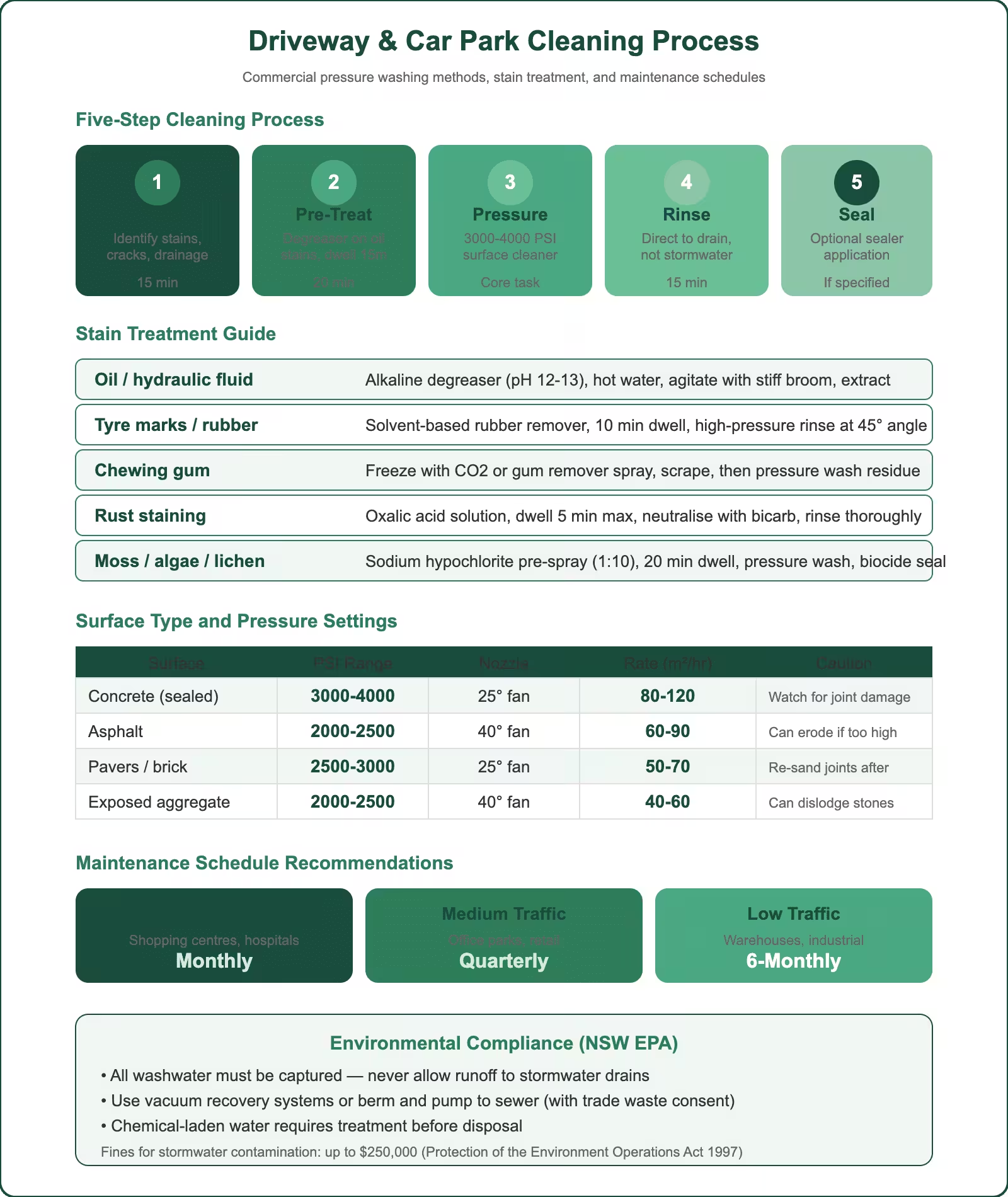
Driveway and car park cleaning process showing five-step method, stain treatment guide, surface pressure settings, maintenance schedules, and EPA compliance
Our Cleaning Process for Driveways and Car Parks
Our Cleaning Process for Driveways and Car Parks involves specific protocols that we tailor to each facility based on its layout, traffic, and compliance requirements. We start every hardscape clean with a sweep and debris removal pass. Loose gravel, leaf litter, cigarette butts, and large rubbish items are cleared before any water hits the surface because blasting debris at high pressure turns it into a projectile hazard and can scratch sealed surfaces. Once the surface is clear, we pre-treat oil stains and chewing gum deposits with targeted chemicals—alkaline degreasers for petroleum-based oil, citrus-based solvents for food-grade grease, and freeze-and-scrape for chewing gum. These pre-treatments need a dwell time of five to ten minutes before the pressure wash stage to break the bond between the contaminant and the surface.
The main wash uses a surface cleaner attachment—a rotating dual-nozzle head enclosed in a flat housing that delivers uniform cleaning across a wide strip without the zebra-stripe pattern that a handheld lance leaves on flat surfaces. We run the surface cleaner in overlapping passes at a consistent walking speed so every square metre receives the same pressure and dwell time. In Rockdale commercial complexes, where car parks are built with coloured concrete or exposed aggregate finishes, we adjust pressure down to avoid dislodging aggregate or fading coloured sealers. The surface cleaner also contains the spray pattern within its housing, which reduces overspray onto vehicles, shopfronts, and pedestrians—a significant advantage over open-lance cleaning in busy commercial environments.
Office Area Cleaning Frequency Guide
Area
Daily
Weekly
Monthly
Quarterly
Reception & Lobby
Vacuum, mop, wipe
Glass doors, furniture
Deep carpet clean
Window wash
Workstations
Surface wipe, bins
Monitor & keyboard
Drawer clean-out
Chair shampoo
Kitchen/Breakroom
Bench, sink, floor
Fridge, microwave
Deep degrease
Exhaust fan clean
Bathrooms
Full sanitise + restock
Grout scrub
Descale fixtures
Vent clean
Meeting Rooms
Table wipe, vacuum
AV equipment dust
Upholstery clean
Carpet extraction
Oil Stain Removal on Concrete and Asphalt
Office Area Cleaning Frequency Guide requires specific protocols that we tailor to each facility based on its layout, traffic, and compliance requirements. Oil stains are the most common and most stubborn contamination on commercial car park surfaces. Fresh oil sits on top of the sealer and responds to a standard alkaline degreaser and hot-water pressure wash. Old oil that has penetrated through a degraded sealer into the concrete pore structure requires a different approach—we apply a poultice-style drawing agent that pulls the oil up out of the substrate over several hours, then pressure-wash the residue away. In Hurstville underground car parks, where oil drips from parked vehicles accumulate in the same spots week after week, we have found that monthly hot-water pressure cleaning prevents the oil from penetrating the sealer in the first place, which keeps the surface cleanable with standard methods and avoids the expense of poultice treatments.
Asphalt surfaces present a different challenge because the bitumen binder itself is petroleum-based, which means aggressive solvents that dissolve oil stains can also soften the asphalt surface. We use water-based degreasers at moderate temperature on asphalt and rely on mechanical agitation from the surface cleaner rather than chemical strength to lift the contamination. Our team cleaned a six-hundred-bay asphalt car park in Kogarah last year without a single instance of surface damage—a result that came from knowing the material’s limits and respecting them throughout the job.
Wastewater Management and Environmental Compliance
Wastewater Management and Environmental Compliance addresses specific protocols that we tailor to each facility based on its layout, traffic, and compliance requirements. Pressure cleaning a commercial car park generates a large volume of wastewater containing oil, heavy metals, detergent residues, and suspended solids that cannot legally enter the stormwater system. We deploy ground-level bunding around drain inlets before we start and use vacuum recovery equipment to capture all wash water as it flows across the surface. The recovered water goes into our on-board holding tank and is disposed of through a licensed liquid waste facility with a disposal certificate provided to the property manager for their environmental compliance records.
In Rockdale and Hurstville, where several of our car park clients sit within the Georges River catchment, council environmental officers have become increasingly active in monitoring pressure cleaning operations. We have been audited twice in the past three years and passed both inspections without any non-compliance findings because our containment and recovery systems meet the requirements set out in the local council’s stormwater management guidelines. Property managers who engage operators without proper wastewater controls are putting themselves at risk of fines that can run into tens of thousands of dollars—a cost that dwarfs the difference between a compliant cleaning service and a cheap one.
What Driveway and Car Park Cleaning Costs in Sydney
What Driveway and Car Park Cleaning Costs in Sydney targets specific protocols that we tailor to each facility based on its layout, traffic, and compliance requirements. We price hardscape cleaning on a per-square-metre basis with the rate depending on surface type, contamination severity, and any pre-treatment requirements for oil stains or chewing gum. A straightforward pressure wash of a sealed concrete car park in Rockdale with light contamination costs less per square metre than a heavily oil-stained asphalt car park in Kogarah requiring hot-water treatment and wastewater recovery. Across the driveway and car park projects we have completed in Hurstville, Kogarah, and Rockdale over the past twelve months, our average project value sits around $3,590 for a mid-sized commercial car park of between one hundred and two hundred bays including wastewater containment and disposal.
Quarterly cleaning contracts represent the best value for commercial properties because they prevent contamination from building up to the point where it requires intensive treatment. We have clients in Hurstville whose per-clean cost dropped by fifteen per cent between their first and fourth quarterly session because the surface now responds to a single pass rather than the double pass with pre-treatment their neglected car park required on day one.
For property managers looking for a broader pressure cleaning scope beyond driveways and car parks, our team has put together a detailed pressure cleaning guide for commercial sites that covers facades, footpaths, loading docks, and other hardscape areas.
Frequently Asked Questions
Can you clean a car park while it is in use? We section the car park into zones and clean one zone at a time while traffic continues in the remaining areas. Temporary signage and cones redirect vehicles around the active cleaning zone. For busy shopping centre car parks, we schedule cleaning overnight or during early-morning hours to minimise disruption.
Will pressure cleaning damage my sealed concrete? Not when done at the correct pressure. We adjust settings based on the surface type and sealer condition. Sealed concrete typically tolerates our surface cleaner at moderate pressure without sealer degradation. We test a small area first on every job to confirm the settings are safe.
How do you remove old oil stains that have soaked into concrete? We apply a poultice-style drawing agent that pulls embedded oil up out of the concrete pore structure over several hours, then pressure-wash the residue away. For extremely old stains, multiple treatments may be needed to achieve full removal.
Do you handle wastewater disposal? Yes. We capture all wash water with bunding and vacuum recovery equipment, transport it in our on-board holding tank, and dispose of it through a licensed liquid waste facility. A disposal certificate is provided to the property manager for compliance records.
How often should a commercial car park be pressure cleaned? We recommend quarterly cleaning for high-traffic car parks and six-monthly for lower-traffic sites. Quarterly cleaning prevents contamination build-up and keeps per-clean costs lower by reducing the intensity of treatment required at each session.
Can you remove chewing gum from concrete? Yes. We use a freeze-and-scrape method that solidifies the gum with a cryogenic spray and then removes it mechanically before the pressure wash. This method removes the gum cleanly without damaging the surface or leaving chemical residues.
Do you clean line markings as well? We clean around and over existing line markings without damaging them. If markings are faded and due for renewal, we can coordinate with line-marking contractors to schedule repainting immediately after our clean so the new lines adhere to a pristine surface.
What about underground car parks with limited drainage? Underground car parks require additional wastewater management because drainage often routes to sewer rather than stormwater. We adjust our containment setup accordingly and confirm all captured water meets the discharge requirements for the property’s trade waste agreement.
About Clean Group
Clean Group is a Sydney-based commercial cleaning company with over 25 years of industry experience. Founded by Suji Siv, our team of 50+ trained professionals services offices, warehouses, medical centres, schools, childcare facilities, retail stores, gyms, and strata properties across Sydney, Melbourne, and Brisbane.
We are active members of ISSA and the Building Service Contractors Association of Australia (BSCAA). Our operations align with ISO 9001 (Quality Management), ISO 14001 (Environmental Management), and ISO 45001 (Workplace Health and Safety) standards. We hold membership with the Green Building Council of Australia and use eco-friendly, TGA-registered cleaning products wherever possible.
Every Clean Group cleaner is police-checked, fully insured, and trained in safe work procedures under SafeWork NSW guidelines. We operate 7 days a week, including after-hours and weekend services, to minimise disruption to your business.
Hi, I'm Suji Siv, the founder, CEO, and Managing Director of Clean Group, bringing over 25 years of leadership and management experience to the company. As the driving force behind Clean Group’s growth, I oversee strategic planning, resource allocation, and operational excellence across all departments. I am deeply involved in team development and performance optimization through regular reviews and hands-on leadership.