We have selected, tested, and deployed disinfectants and sanitisers across hundreds of Sydney commercial facilities, and as a provider of bulk cleaning supplies guidance, our team has developed deep expertise in matching the right disinfection product to the right application. Our experience covers everything from general office surface sanitisers to hospital-grade disinfectants for healthcare environments, and we’ve learned that choosing the wrong product is both wasteful — it can leave surfaces inadequately disinfected while giving a false sense of security. We share this guide because proper disinfectant selection is one of the most important decisions any business makes for its hygiene program.
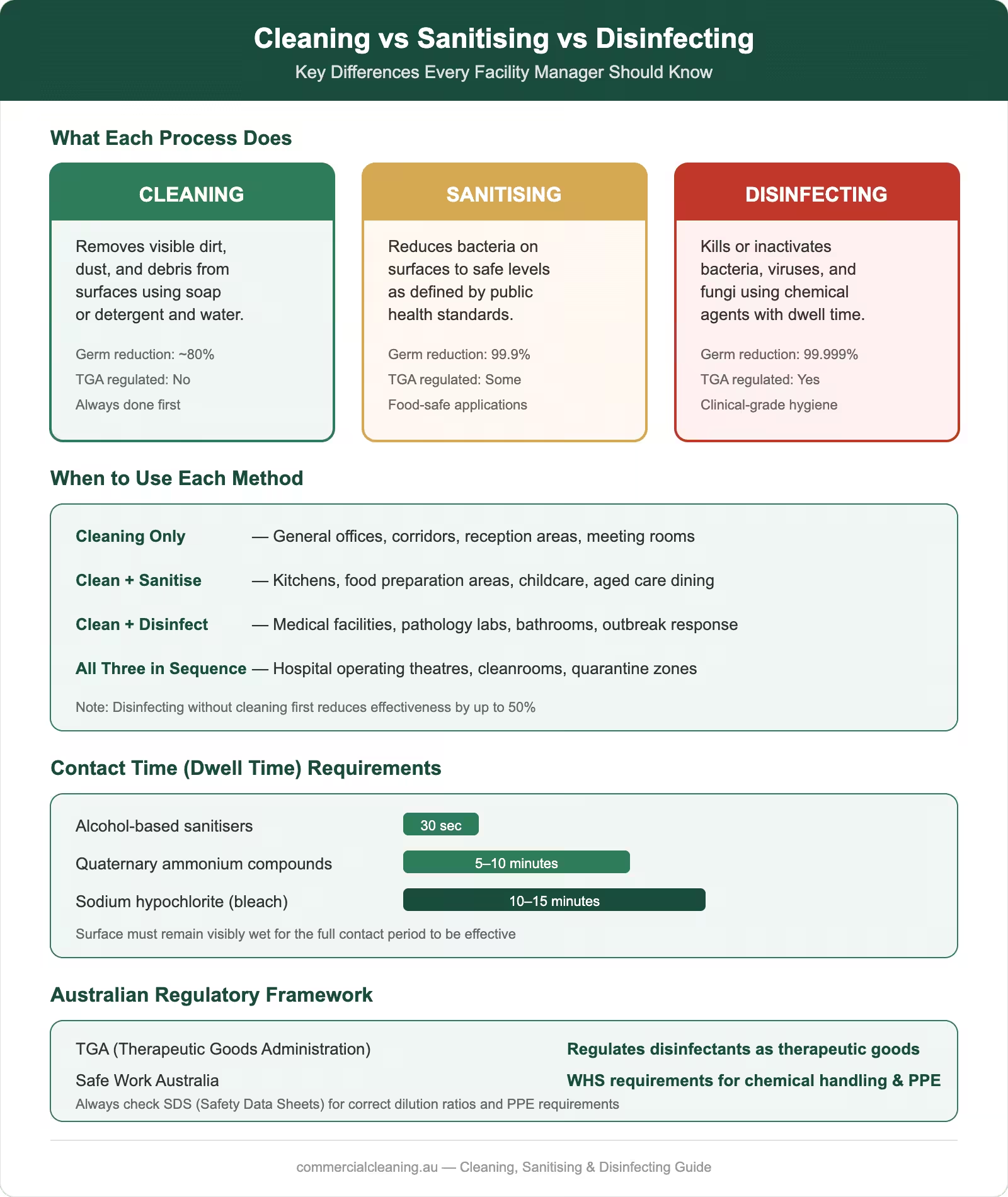
Comparison chart showing the differences between cleaning, sanitising, and disinfecting including germ reduction rates, when to use each method, and contact time requirements
Understanding the Difference Between Cleaning, Sanitising, and Disinfecting
Understanding the Difference Between Cleaning, Sanitising, and Disinfecting covers specific protocols that we tailor to each facility based on its layout, traffic, and compliance requirements. We find that many of our clients use these terms interchangeably, but they describe fundamentally different processes with different outcomes. Our team defines cleaning as the physical removal of soil, dust, and organic matter from surfaces — this is necessary as a first step but doesn’t kill microorganisms. Sanitising reduces microbial contamination to safe levels as defined by public health standards, typically achieving a 99.9 percent reduction. Disinfecting eliminates virtually all pathogenic microorganisms on surfaces, achieving a higher level of microbial kill than sanitising.
We always clean before we disinfect because our experience has shown that applying disinfectant to a visibly dirty surface dramatically reduces its effectiveness. Organic matter like food residue, body fluids, or general grime creates a barrier that prevents disinfectant from contacting the microorganisms on the surface. Our team has tested disinfectant effectiveness on pre-cleaned versus uncleaned surfaces using ATP testing, and the difference is dramatic — uncleaned surfaces consistently show ten times higher residual contamination even after disinfectant application compared to surfaces that were cleaned first.
Types of Disinfectants We Use and Recommend
Types of Disinfectants We Use and Recommend involves specific protocols that we tailor to each facility based on its layout, traffic, and compliance requirements. We work with four main categories of commercial disinfectant, each suited to different applications and environments. Quaternary ammonium compounds are our workhorse products for general commercial cleaning — they’re effective against a broad range of bacteria, relatively safe for users, and compatible with most surfaces. We use hydrogen peroxide-based disinfectants where we need stronger antimicrobial action without the residue concerns of chlorine products. Chlorine-based disinfectants, primarily sodium hypochlorite solutions, are our choice for high-level disinfection in healthcare and food service environments. And alcohol-based sanitisers serve as rapid-dry options for hand-touch surfaces where quick turnaround is needed.
Our team selects products based on the target organisms, the surface material, the contact time available, the safety profile for building occupants, and the environmental impact. We’ve found that no single disinfectant is ideal for every situation, which is why we maintain a range of products rather than relying on one all-purpose solution. In healthcare environments, our disinfection protocols align with principles from AS 4187.13 regarding cleaning and disinfection standards, ensuring that our product selection and application methods meet the rigorous requirements of clinical settings. One facility in Smithfield was using a single quaternary ammonium product for all disinfection tasks including clinical areas — our audit identified that this product wasn’t rated for the pathogen spectrum required, and we implemented a tiered disinfection protocol using appropriate products for each risk level.
Disinfection Method Effectiveness Comparison
Method
Kill Rate
Coverage
Dwell Time
Best For
Electrostatic Spray
99.99%
360° wrap
10 min
Large open areas
ULV Fogging
99.9%
Airborne + surface
30–60 min + ventilate
Whole-room treatment
Manual Wipe-Down
99.9%
Direct contact only
Per product label
High-touch points
UV-C Light
99.9%
Line of sight only
15–30 min
Unoccupied rooms
Ozone Generator
99.99%
Full room penetration
2–4 hrs + ventilate
Severe contamination
TGA Registration and Product Selection
Disinfection Method Effectiveness Comparison requires specific protocols that we tailor to each facility based on its layout, traffic, and compliance requirements. We only use disinfectants that are registered with the Therapeutic Goods Administration for their claimed antimicrobial activity. Our team has encountered products marketed as “hospital grade” or “kills 99.9% of germs” that lack TGA registration, which means their efficacy claims haven’t been independently verified. We consider TGA registration non-negotiable for any disinfectant used in our operations because our clients trust us to use products that actually work as claimed.
We verify TGA registration through the Australian Register of Therapeutic Goods and maintain records of registration numbers for every disinfectant in our product inventory. Our procurement team reviews these registrations annually to confirm products remain current, as registrations can be suspended or cancelled if manufacturers fail to maintain compliance. We’ve rejected products from sales representatives who couldn’t provide valid TGA registration numbers, regardless of how attractive the pricing was. We believe that using unregistered disinfectants in commercial environments creates unacceptable liability for both the cleaning provider and the facility manager.
Contact Time: The Most Overlooked Factor
We consider contact time the most commonly misunderstood aspect of disinfectant use. Our team educates our clients and our cleaning staff that every disinfectant requires a minimum contact time — the period the surface must remain wet with the product — to achieve its claimed antimicrobial activity. Most commercial disinfectants require between 30 seconds and 10 minutes of wet contact time, and wiping the product off before this time elapses significantly reduces its effectiveness.
We’ve observed cleaning staff at facilities we’ve taken over spraying disinfectant and immediately wiping it off — essentially turning a disinfection step into nothing more than damp dusting. Our training program emphasises correct contact time for every product we use, and our supervisors check compliance during quality audits. We select products with shorter contact times where rapid turnaround is operationally necessary, accepting that these products often cost more per litre but deliver genuine disinfection within the time available. In high-traffic facilities around the Wetherill Park industrial area, we use rapid-action disinfectants with 30-second contact times because the operational environment doesn’t allow surfaces to remain wet for extended periods.
Dilution Accuracy and Product Performance
We use automated dilution systems across our operations because we’ve found that manual dilution is the single biggest source of product performance variability. Our team has tested manually diluted solutions from cleaning staff across multiple sites and found that concentration varied by up to 300 percent — some solutions were far too weak to be effective, while others were dangerously concentrated. Automated dilution systems deliver consistent concentration every time, which ensures both effectiveness and safety.
We’ve invested in wall-mounted dilution units at every facility where we store concentrate, and portable dilution systems for sites where permanent installation isn’t practical. The cost of these systems is modest compared to the waste and risk associated with incorrect manual dilution. Our team in the Bossley Park area manages dilution for over 30 commercial sites from a central system that tracks product usage against expected consumption — any significant deviation flags a potential dilution error that our supervisors investigate. This systematic approach has reduced our product waste by approximately 20 percent while ensuring every surface receives the correct concentration for effective disinfection, saving us roughly $1,750 annually in product costs alone.
Environmental and Health Considerations
We balance disinfection effectiveness against environmental and health impacts in our product selection. Our team prefers hydrogen peroxide-based products where possible because they break down into water and oxygen, leaving no harmful residue. We reserve chlorine-based products for situations where their stronger antimicrobial activity is genuinely required, and we use them at the lowest effective concentration to minimise environmental impact and occupational exposure.
We verify all our staff have appropriate PPE for the disinfectants they handle, and we monitor for any health effects through our workplace health surveillance program. Our team has encountered staff at other companies experiencing skin irritation, respiratory symptoms, and headaches from disinfectant exposure — invariably due to inadequate PPE, poor ventilation during use, or incorrect product concentration. We prevent these issues through proper training, correct dilution, appropriate PPE, and adequate ventilation during application. We believe that effective disinfection should never come at the cost of worker health.
If your business needs guidance on selecting the right disinfectants and sanitisers, our team can audit your current products, assess your disinfection requirements, and recommend a custom product range that delivers genuine protection. We bring evidence-based product knowledge and practical application experience. Contact us to discuss your needs alongside our advice on cleaning supplies and toiletries budgeting for office spaces.
Frequently Asked Questions
What is the difference between sanitising and disinfecting? We define sanitising as reducing microbial contamination to safe levels with 99.9 percent reduction. Disinfecting achieves a higher kill level, eliminating virtually all pathogenic microorganisms. Our team selects the appropriate level based on the environment — offices typically need sanitising, while healthcare and food service areas require disinfection.
Why must surfaces be cleaned before disinfecting? We always clean first because organic matter creates a barrier preventing disinfectant from contacting microorganisms. Our ATP testing shows uncleaned surfaces retain ten times higher contamination after disinfection compared to pre-cleaned surfaces, making the cleaning step required for effective disinfection.
How do I know if a disinfectant is genuinely effective? We only use products registered with the Therapeutic Goods Administration, which independently verifies antimicrobial claims. We verify registration through the Australian Register of Therapeutic Goods and reject products lacking valid TGA numbers regardless of marketing claims or pricing.
What is contact time and why does it matter? We educate that contact time is the minimum period a surface must remain wet with disinfectant to achieve claimed antimicrobial activity, typically 30 seconds to 10 minutes. Wiping off before this time significantly reduces effectiveness. We select products with appropriate contact times for each operational environment.
Why do you use automated dilution systems? We found manual dilution varies concentration by up to 300 percent, creating either ineffective or dangerously concentrated solutions. Our automated systems deliver consistent concentration every time, reducing product waste by 20 percent while ensuring effective disinfection across all sites.
Which disinfectant type is best for offices? We recommend quaternary ammonium compounds for general office disinfection — they’re effective against common bacteria, safe for users, and compatible with most office surfaces. For healthcare or food service environments, we use hydrogen peroxide or chlorine-based products with stronger antimicrobial activity.
Are chemical disinfectants safe for building occupants? We select low-odour, low-irritant products and make sure proper ventilation during application. Our staff use appropriate PPE, and we prefer hydrogen peroxide-based products where possible because they break down into water and oxygen. Correct dilution and application prevent the health issues associated with improper disinfectant use.
What disinfection standards apply to healthcare cleaning? We align healthcare disinfection with principles from AS 4187.13 regarding cleaning and disinfection standards. This means selecting products rated for the specific pathogen spectrum required, using correct contact times, and implementing tiered protocols with different products for different risk levels within the facility.
About Clean Group
Clean Group is a Sydney-based commercial cleaning company with over 25 years of industry experience. Founded by Suji Siv, our team of 50+ trained professionals services offices, warehouses, medical centres, schools, childcare facilities, retail stores, gyms, and strata properties across Sydney, Melbourne, and Brisbane.
We are active members of ISSA and the Building Service Contractors Association of Australia (BSCAA). Our operations align with ISO 9001 (Quality Management), ISO 14001 (Environmental Management), and ISO 45001 (Workplace Health and Safety) standards. We hold membership with the Green Building Council of Australia and use eco-friendly, TGA-registered cleaning products wherever possible.
Every Clean Group cleaner is police-checked, fully insured, and trained in safe work procedures under SafeWork NSW guidelines. We operate 7 days a week, including after-hours and weekend services, to minimise disruption to your business.
Hi, I'm Suji Siv, the founder, CEO, and Managing Director of Clean Group, bringing over 25 years of leadership and management experience to the company. As the driving force behind Clean Group’s growth, I oversee strategic planning, resource allocation, and operational excellence across all departments. I am deeply involved in team development and performance optimization through regular reviews and hands-on leadership.