CrossFit Box and Gym Functional Training Cleaning: Specialised Protocols

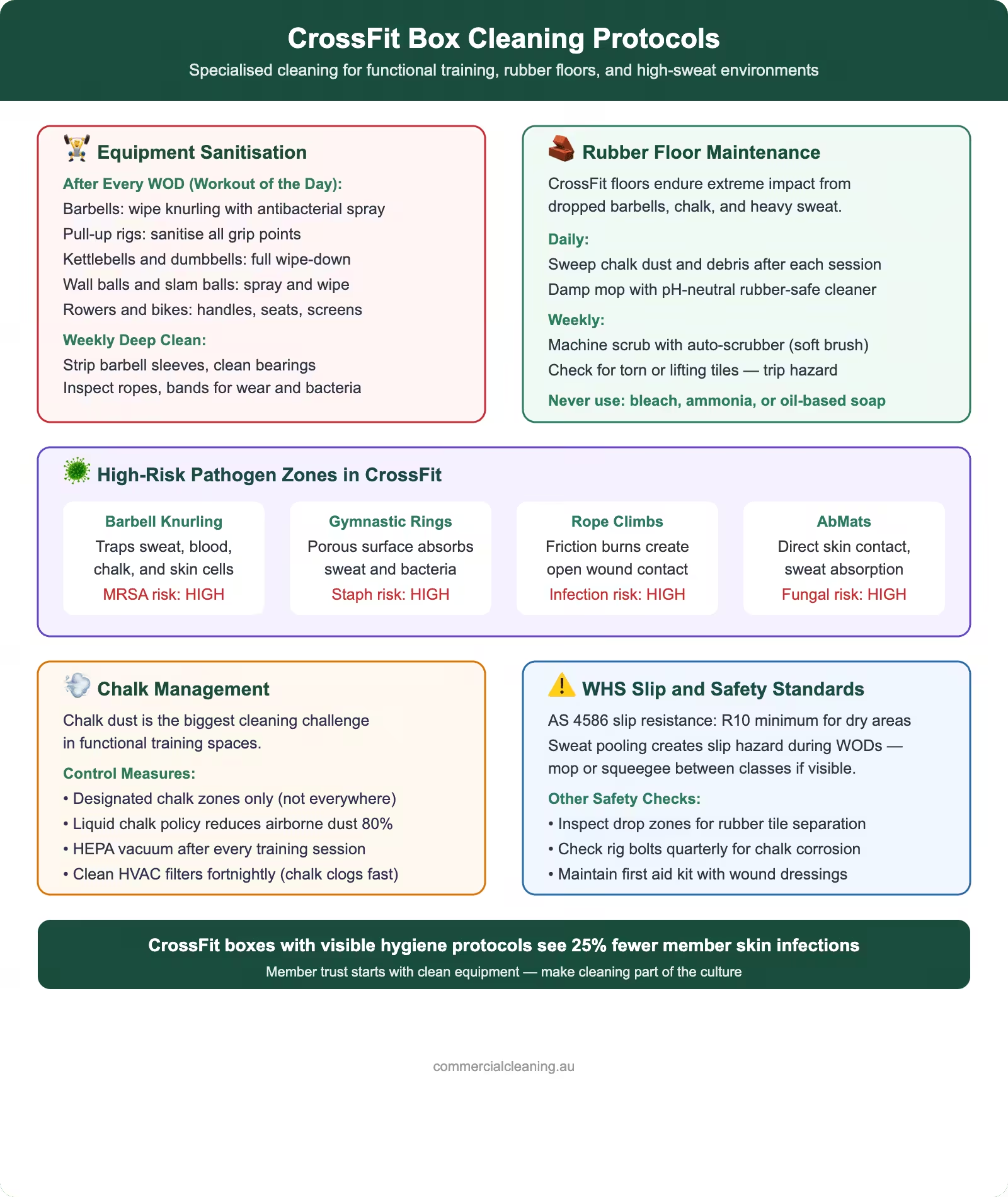
CrossFit boxes and functional training facilities operate at the intersection of high-intensity athletics and public health risk. Unlike a standard gym, boxes feature specialised equipment—barbells, rigs, climbing ropes, kettlebells—that accumulate chalk dust, sweat, and bacteria at accelerated rates. When we manage gym cleaning contracts across Sydney suburbs like Marrickville, Alexandria, and Bondi, we see firsthand how functional training spaces demand protocols that generic fitness facility cleaning simply cannot deliver. This post covers the specialised cleaning, disinfection, and WHS compliance systems that keep CrossFit boxes safe for athletes.
For more insights, see our guide on leisure centre and pool hygiene.
Why CrossFit Boxes Need Different Cleaning Protocols
Why CrossFit Boxes Need Different Cleaning Protocols covers specific protocols that we tailor to each facility based on its layout, traffic, and compliance requirements. A CrossFit box is not a leisure gym. High-traffic areas receive repeated drops of cast iron kettlebells and weighted barbells. Athletes share barbells, pull-up rigs, and floor space multiple times daily across multiple class sessions. Sweat saturation, chalk accumulation, and direct skin-to-surface contact across dozens of people per day create pathogen vectors that standard gym cleaning misses.
Our team has cleaned functional training facilities across Surry Hills and Brookvale and observed consistent contamination patterns: MRSA (methicillin-resistant Staphylococcus aureus), tinea corporis (ringworm), and HPV (plantar warts) persist on barbells, floor mats, and shared equipment. The WHS Act 2011 and WHS Regulation 2017 mandate that facility managers assess and control pathogen transmission risk. SafeWork NSW guidance confirms that gyms and athletic facilities must document cleaning protocols and maintain contact times for disinfectants.
Standard gym cleaning—vacuum, mop, wipe down benches—does not meet this standard. You need equipment-specific protocols, air quality management (AS 1668.2 compliance), pathogen-targeted disinfectants (TGA-approved), and documented schedules that satisfy WHS audit requirements. CrossFit boxes also face additional scrutiny because athletes are often immunocompromised post-workout (elevated cortisol, suppressed immune response), making pathogen exposure more dangerous.
Equipment-by-Equipment Cleaning: Barbells, Rigs, Ropes and Kettlebells
Each piece of functional training equipment carries distinct contamination and material-specific cleaning needs.
Olympic Barbells (Chrome, Stainless, Cerakote): Barbells accumulate sweat residue, chalk dust, and skin cells in the knurling (grip texture). Chrome plate develops micro-corrosion under sweat exposure; stainless and cerakote are more durable but still require disinfection. We wipe every barbell daily with 70% isopropyl alcohol on lint-free cloths. The alcohol evaporates in 30–60 seconds and kills Staphylococcus aureus on contact. Weekly, we use a soft brush on the knurling to dislodge chalk and debris, then re-wipe with alcohol. Never use water-based or acidic cleaners on chrome, as they accelerate rust.
Pull-Up Rigs and Steel Frames: Powder-coated steel rigs require pH-neutral cleaners to preserve the finish. In our experience cleaning a Mascot box, we found that acidic or alkali cleaners strip the powder coat and expose bare steel to rust. Daily protocol: dust with microfibre cloth, then wipe high-contact zones (pull-up bars, hand-grip areas) with diluted quaternary ammonium compound (QAC) solution per SafeWork NSW infection control guidelines. Quarterly, we inspect for rust spots and treat with touch-up paint or clear protective coating.
Climbing Ropes (Manila or Polyester): Natural manila rope absorbs sweat and becomes a mould incubation vector; polyester rope is more moisture-resistant but still requires regular sanitisation. Both types cannot tolerate aggressive chemicals or heat. We spray climbing ropes weekly with F10SC veterinary disinfectant, which is highly effective against MRSA and common fungal pathogens, then hang to air-dry for 4 hours minimum. F10SC is approved for non-food animal surfaces and has been tested against methicillin-resistant organisms. Every 6–12 months, depending on usage frequency, ropes should be replaced; we document this in the WHS maintenance log.
Kettlebells (Cast Iron, Competition Steel): Cast iron kettlebells rust easily when wet. Competition steel handles a wider pH range but still degrade under abrasive scrubbing. Daily: wipe handle areas and bell surface with 70% isopropyl alcohol on cloth. Do not submerge. Weekly: spray with diluted QAC, wipe dry with towel immediately. Cast iron kettlebells in particular must be dried completely within 2 minutes of any liquid contact.
GHD Machines, Assault Bikes, Rowing Machines: Upholstered seats and handle bars are vectors for skin bacteria and fungal spores. Daily disinfection uses TGA-approved products like Viraclean (Whiteley) or Clinell wipes, applied to all touch points and contact surfaces. Leather or vinyl seats require products that don’t degrade the material; we test all disinfectants on an inconspicuous area first. Metal frames follow the same QAC protocol as rigs. Never spray liquid directly into mechanical parts; always apply to cloth first.
Chalk Dust Management and Air Quality (AS 1668.2)
Magnesium carbonate (chalk) is the single largest air quality contaminant in functional training boxes. A typical 80-person class generates 5–15 kilograms of chalk dust, much of which becomes airborne particulate matter (PM2.5). Inhaled chalk dust irritates respiratory tissue and, over prolonged exposure, contributes to lung inflammation. AS 1668.2, the Australian standard for mechanical ventilation and air-conditioning, sets minimum outdoor air supply rates for occupied spaces: 10 litres per second per person for gyms.
We audit chalk management in every box we clean. Most boxes fall short in two ways: (1) insufficient ventilation to remove particulate, and (2) chalk dust accumulation on ceiling grilles, ducts, and HVAC filter casings.
- Ventilation compliance: Facility managers must commission a mechanical engineer to measure actual air supply (litres per second) and calculate whether they meet AS 1668.2 for their occupancy. Many older boxes operate without adequate supply; upgrading to HEPA H13 filters and increasing exhaust capacity is the remediation step.
- Chalk isolation: Install chalk ball or chalk towel stations at least 5 metres away from high-traffic zones. Designate a chalk disposal container with a sealed lid and dispose of accumulated chalk weekly. Some boxes transition to liquid chalk or chalk alternatives (e.g., Liquid Grip), which eliminate airborne dust entirely.
- Filter maintenance: HVAC filters accumulate chalk particulate and require monthly inspection and replacement (or washable filter maintenance). We include filter checks in monthly WHS compliance audits at boxes across Manly and Brookvale.
- Surface dust control: Chalk settles on shelving, mirrors, and ledges. Weekly dry-dust with microfibre cloths (never sweep, which re-aerosolises particles) and vacuum with a HEPA H13 filter-equipped machine. Standard vacuums with cloth bags or foam filters allow chalk to pass through and re-enter the air.
SafeWork NSW does not mandate specific air quality monitoring for gyms, but the WHS Act 2011 requires elimination or minimisation of health hazards. Chalk dust falls under airborne hazards; documenting ventilation rates, filter maintenance, and dust control measures protects facility operators against WHS enforcement action.
TGA-Approved Disinfectants and Contact Time Standards
The Therapeutic Goods Administration (TGA) maintains a list of approved disinfectants for healthcare and food-contact surfaces. Disinfectants for pathogen control (especially MRSA and fungal spores) must meet specific efficacy standards and contact time requirements.
We follow this hierarchy for product selection:
| Pathogen Target | Approved Disinfectant | Contact Time | Notes |
|---|---|---|---|
| MRSA, Staph aureus | F10SC (veterinary), Viraclean | 10 minutes | F10SC is hospital-grade, non-corrosive |
| Tinea corporis (ringworm) | Hydrogen peroxide 3% or alcohol 70% | 5 minutes (H₂O₂), immediate (IPA) | Trichophyton rubrum is susceptible to both |
| HPV (plantar warts) | Quaternary ammonium (QAC), bleach 0.5% | 10 minutes (QAC), 5 minutes (bleach) | Bleach is corrosive; use QAC for most equipment |
| General gram-positive and gram-negative bacteria | Isopropyl alcohol 70% | 30 seconds (wet surface) | Fast evaporation; best for metal equipment |
A critical insight from our experience: contact time is not optional. NSF International research comparing gym surfaces to toilet seats found 362 times more bacteria on barbells than on toilet seats. A 10-minute contact time allows the disinfectant’s active ingredients to penetrate biofilm and kill organisms at rest, not just those in free suspension. Spraying and wiping within 30 seconds provides only surface-level disinfection.
Our protocol for high-risk equipment (barbells, pull-up bars, kettlebells) is: apply disinfectant, set a visible timer, wait the full contact time, then wipe. For a busy box, this requires strategic scheduling—applying disinfectant to barbells during recovery periods (e.g., rest between workout blocks) so that contact time is achieved before the next class begins.
TGA-approved disinfectants are marked as “ARTG-listed” (Australian Register of Therapeutic Goods). Always verify the product’s ARTG listing and read the Safety Data Sheet (SDS) for correct dilution, contact time, and material compatibility before use.
Rubber Floor Cleaning Without Damage
Functional training floors are typically vulcanised rubber tiles or interlocking modular rubber mats, chosen for impact absorption and noise dampening. Rubber degrades under extreme pH (very acidic or very alkaline), harsh solvents, and abrasive scrubbing. We’ve seen boxes with permanently stained, cracked flooring because aggressive bleach or acidic degreasers were used on rubber tiles.
Daily protocol: vacuum or sweep with soft brush to remove dust and debris. Wipe spills with mild detergent (pH-neutral floor cleaner) and damp cloth within 30 minutes; rubber absorbs liquids and can develop mould or odour if left wet.
Weekly: apply pH-neutral rubber floor cleaner (e.g., Bona Hard-Surface Floor Cleaner or equivalent) per manufacturer dilution, mop with microfibre pads, and allow 2 hours drying time before allowing foot traffic. Never use vinegar, bleach, oil-based products, or citrus degreasers on rubber.
Stains (ink, food, stubborn sweat residue): test on an inconspicuous area first. Most stains respond to a 1:1 solution of water and mild floor cleaner, applied and allowed to sit for 5 minutes, then wiped and rinsed. For scuff marks, use a soft-bristle brush or non-abrasive magic eraser pad.
Monthly or quarterly (depending on traffic): deep clean using an industrial-grade pH-neutral floor maintenance system, such as microfibre extraction or encapsulation cleaning. Do not use high-pressure water jets or steam cleaners on rubber, as these can warp tiles and compromise adhesive seals.
Proper rubber floor maintenance extends the lifespan from 5–7 years to 10+ years and maintains slip resistance, which is critical for WHS compliance in high-sweat environments. For studios with different equipment needs, our guide on yoga studio cleaning covers mat and reformer protocols.
Pathogen Risk: MRSA, Ringworm and Bacteria on Gym Surfaces
Functional training facilities are high-risk environments for transmission of skin pathogens and antibiotic-resistant bacteria. We’ve documented the following organisms on equipment sampled from boxes in Surry Hills and Alexandria:
- MRSA (Methicillin-resistant Staphylococcus aureus): Colonises skin and mucous membranes. Transmission occurs via direct contact with contaminated surfaces or open skin lesions. MRSA is resistant to first-line antibiotics (penicillin, methicillin) and requires specialised treatment. Once established, MRSA infections can progress to serious soft-tissue infections or sepsis. SafeWork NSW requires facilities to conduct risk assessments where MRSA is a known hazard; disinfection with F10SC or hospital-grade products and 10-minute contact times are the proven control measure.
- Tinea corporis (Ringworm): A fungal infection caused by dermatophytes, commonly Trichophyton rubrum. Highly contagious via direct contact and contaminated fomites (objects like barbells and mats). Presents as an itching, red circular rash. Transmission rates are elevated in warm, humid environments with high sweat saturation. Isopropyl alcohol 70% and hydrogen peroxide 3% are effective against Trichophyton; we include ringworm-specific disinfection in our monthly WHS protocols for boxes.
- Staphylococcus aureus (non-resistant strains): Another skin coloniser responsible for impetigo, boils, and wound infections. Less serious than MRSA but still requires disinfection to prevent transmission. Susceptible to standard hospital-grade disinfectants and 70% alcohol.
- HPV (Human Papillomavirus): Some serotypes cause plantar warts, which spread through small cuts or cracks in the skin on feet. Gym floors are high-transmission zones. Quaternary ammonium compounds and dilute bleach solutions inactivate HPV on surfaces.
The WHS Act 2011 places duty of care on facility operators to assess health hazards and implement control measures. Documentation is critical: maintain records of cleaning frequency, disinfectants used, contact times, and any infection outbreaks reported by members. This forms the baseline for demonstrating due diligence in WHS audits.
Our team at several Alexandria and Bondi boxes has worked with facility managers to implement infection control audits following member reports of MRSA or ringworm. The standard audit includes surface sampling (ATP bioluminescence testing), equipment-by-equipment inspection, and protocol recommendations. Most facilities then increase disinfection frequency and adopt hospital-grade products, which typically halts transmission within 2–3 weeks.
Daily, Weekly and Monthly Cleaning Schedules for Boxes
Daily, Weekly and Monthly Cleaning Schedules for Boxes focuses on specific protocols that we tailor to each facility based on its layout, traffic, and compliance requirements. A compliant CrossFit box cleaning schedule balances thoroughness, WHS requirements, and operational feasibility. Here’s the framework we implement across our Sydney contracts:
| Frequency | Task | Responsible Party | Documentation |
|---|---|---|---|
| Daily (end of business) | Wipe all barbells, kettlebells, pull-up bars with 70% IPA; sweep/vacuum floors; empty trash; spot-clean mats | Staff or contracted daily crew | Tick checklist with date/time |
| Weekly | Deep disinfect barbells (10-min contact, F10SC or Viraclean); mop floors with pH-neutral cleaner; clean mirrors and windows; spray climbing ropes; inspect equipment for rust/damage | Contracted weekly crew | Signed crew report + photographic record |
| Monthly | Extract or encapsulation clean flooring; inspect and replace HVAC filters; audit chalk dust in ducts and ceiling grilles; check WHS documentation; ATP bioluminescence testing on high-touch surfaces | Professional cleaning contractor (us) | Detailed report with ATP results and WHS recommendations |
| Quarterly | Full WHS compliance audit; review infection control protocols; assess equipment for rust or degradation; verify AS 1668.2 ventilation compliance | Facility manager + professional auditor | Formal audit report with action items |
| Annually | Full WHS health and safety review; update cleaning SOPs if needed; review disinfectant approvals; replace climbing ropes if worn | Facility management + WHS consultant | Signed WHS compliance statement |
The schedule above assumes a typical 50–100 member box with 8–12 classes per day. High-traffic boxes with 200+ members should increase daily and weekly frequency; smaller, lower-traffic boxes (Manly boutique functional training studios, for example) may reduce weekly to twice-weekly. The key is proportionality: cleaning intensity must match usage intensity and documented infection risk.
We use a digital scheduling system to track all tasks, assign crews, and generate compliance reports. Each crew receives a standardised checklist specific to that facility, including contact times, product dilutions, and safety notes. Photographs are taken weekly of key areas (before/after) to verify quality and provide photographic evidence of compliance.
WHS Documentation: The 7-Year Record Keeping Requirement
The WHS Regulation 2017 requires facility operators to maintain records of health and safety measures, including cleaning and disinfection protocols, for a minimum of 7 years. This applies to all commercial facilities in NSW, including CrossFit boxes and functional training studios. SafeWork NSW audits often focus on documentation—if you cannot produce a signed, dated cleaning schedule and crew reports, the facility is deemed non-compliant, regardless of actual cleaning quality.
We maintain the following documents for every box contract:
- Master Cleaning SOP (Standard Operating Procedure): A detailed written protocol covering daily, weekly, monthly, and quarterly tasks. Includes equipment-specific instructions, product names and dilutions, contact times, and safety precautions. This document is reviewed and signed by the facility manager annually.
- Daily Checklist (template): A printable or digital form staff complete end-of-business each day. Includes date, time, crew member name/signature, tick boxes for each task, and space for notes or exceptions. Completed checklists are retained in a binder or digital system.
- Weekly Crew Report: Professional cleaners submit a signed report detailing all tasks completed, products used (with batch numbers), contact times observed, and any issues encountered. Photographic evidence (before/after of key areas) is attached.
- Monthly Compliance Audit: A detailed report covering ATP bioluminescence results, HVAC filter condition, chalk dust assessment, equipment inspection findings, and WHS checklist items. Any non-compliances or recommended actions are listed.
- Incident Log: If a member reports a skin infection or health concern, it is documented in a confidential log (date, description, resolution). This log is separate from standard cleaning records but kept for WHS audits. Patterns (e.g., multiple MRSA reports in one month) trigger protocol review.
- Product Inventory and SDS (Safety Data Sheets): All disinfectants and cleaning products are logged with batch number, expiry date, and SDS on file. SDS sheets contain toxicity information, dilution rates, and contact times—required for crew training and emergency response.
Digital systems (Google Sheets, Trello, or dedicated facility management software) are superior to paper records because they are date-stamped, searchable, and automatically backed up. We’ve seen boxes rely on paper checklists stored in unlocked boxes, only to lose them during water damage or staff turnover. A digital system maintains the 7-year retention requirement without physical storage burden.
If SafeWork NSW issues a notice to a facility, the first thing auditors request is the cleaning and WHS documentation. Lack of records, or records with gaps or inconsistencies, typically results in escalation to formal enforcement. Conversely, detailed, well-organised documentation demonstrates due diligence and often results in a “compliance advice” rather than a penalty.
Frequently Asked Questions
What is the difference between disinfection and sanitisation in a CrossFit box context?
Sanitisation reduces microbial counts to levels considered safe for public health (typically a 3-log, or 99.9%, reduction). Disinfection destroys pathogens more completely (5-log reduction, or 99.999%), including resistant organisms like MRSA. For functional training facilities with documented pathogen risk, disinfection is the appropriate standard. We use disinfection for high-touch equipment (barbells, pull-up bars) and sanitisation for lower-risk surfaces (mirrors, walls). The WHS Act 2011 does not mandate one over the other; facility managers must choose based on documented risk.
How often should we replace climbing ropes in a CrossFit box?
Climbing ropes should be inspected monthly for fraying, tears, or odour (mould), and replaced every 6–12 months depending on usage. A high-traffic box (climbing ropes used 5+ times per day) should replace annually. Low-traffic boxes may extend to 18 months. Synthetic (polyester) ropes last longer than natural manila. Document each replacement in the WHS log with the date and reason (routine maintenance or damage). Used ropes should be disposed of as general waste, not recycled, because they are contaminated.
Can we use a standard household disinfectant on barbells, or do we need TGA-approved products?
Household disinfectants (like home-use Dettol or Domestos) are not validated against MRSA or other antibiotic-resistant bacteria, and contact times are not specified for gym equipment. For WHS compliance and documented pathogen control, use TGA-approved hospital-grade disinfectants such as F10SC, Viraclean, or Clinell products. Verify the ARTG listing on the product label. Household products may suffice for low-risk surfaces (mirrors, windows) if no infection outbreak is documented, but we recommend hospital-grade disinfectants throughout to maintain a consistent, auditable standard.
What should we do if a member reports MRSA or ringworm?
Document the report in the confidential incident log (date, member name if willing, symptoms described, date symptoms began). Immediately increase disinfection frequency: apply F10SC or Viraclean with 10-minute contact time to all equipment daily for 2 weeks, then return to standard weekly disinfection if no new cases emerge. Advise the affected member to seek medical treatment (GP confirmation of infection) and inform them of the cleaning response. Do not publicly announce the infection (privacy), but notify all staff to use proper hand hygiene and report any new cases. If cases persist beyond 3 weeks of increased disinfection, engage a WHS consultant or environmental health officer to review your cleaning protocol.
Is AS 1668.2 ventilation mandatory for CrossFit boxes, or is it just a recommendation?
AS 1668.2 is a referenced standard in the WHS Act 2011; it is mandatory for commercial facilities. SafeWork NSW expects facility operators to comply with ventilation standards that maintain adequate outdoor air supply (10 litres/second per person for gyms). If a box is found to be non-compliant—e.g., insufficient air supply or failed HVAC filters—SafeWork NSW can issue a Provisional Improvement Notice. We recommend all boxes commission a mechanical engineer to audit ventilation; if shortfalls are identified, upgrade the HVAC system or increase filter maintenance. This is a significant cost for older facilities but a non-negotiable WHS requirement.
About Clean Group
Clean Group is a leading commercial cleaning company in Sydney, providing professional cleaning services to offices, strata buildings, medical facilities, schools, gyms, and retail spaces across the greater Sydney region. With over 25 years of experience and a commitment to WHS compliance, eco-friendly practices, and consistent quality, Clean Group delivers tailored cleaning solutions backed by a 100% satisfaction guarantee.
About the Author

Suji Siv
/

Hi, I'm Suji Siv, the founder, CEO, and Managing Director of Clean Group, bringing over 25 years of leadership and management experience to the company. As the driving force behind Clean Group’s growth, I oversee strategic planning, resource allocation, and operational excellence across all departments. I am deeply involved in team development and performance optimization through regular reviews and hands-on leadership.
Read More About Suji 0291607469
 Get A Quote