We have cleaned concrete dust from hundreds of renovation sites across the northern beaches over the past eight years, and the fine silica-laden particulate that grinding, cutting, and polishing concrete generates is one of the most persistent and potentially hazardous types of construction dust our team encounters. Our crews service properties in Dee Why, Narrabeen, and Collaroy where coastal humidity can cause concrete dust to bond with surfaces even faster than in drier inland environments, making prompt and thorough removal necessary. We approach concrete dust removal as a health and safety task first and a cosmetic task second, because respirable crystalline silica particles smaller than ten microns pose a real inhalation risk to anyone occupying the space if the dust is not captured and removed properly. As trusted commercial cleaners with dedicated construction cleaning expertise, we bring HEPA-filtered equipment, trained technicians, and a systematic methodology that addresses both airborne and settled concrete dust across every surface in the building.
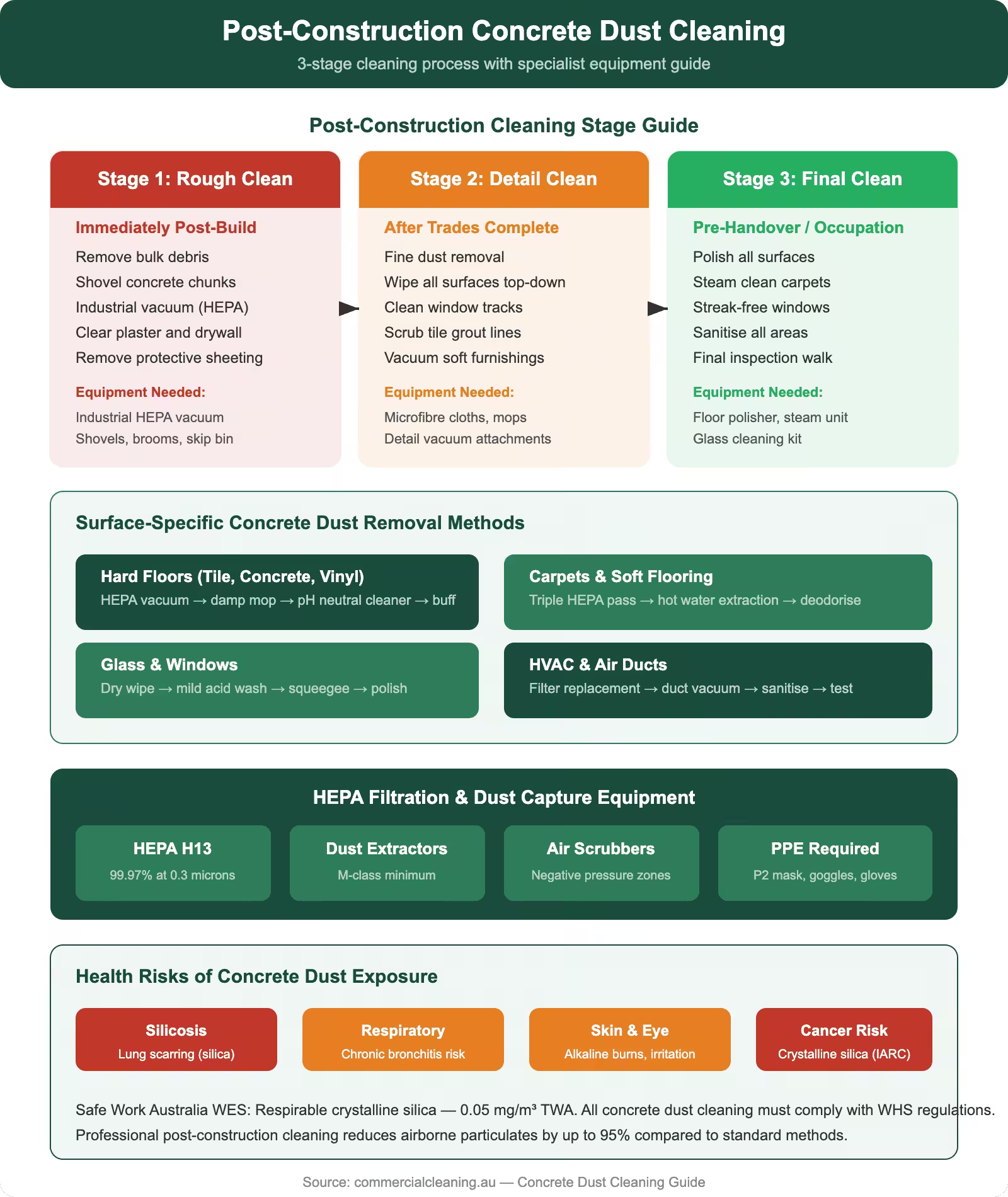
Post-construction concrete dust cleaning 3-stage process showing rough clean, detail clean, and final clean with HEPA filtration equipment guide
Why Concrete Dust Requires Specialist Cleaning
We explain to every client that concrete dust is fundamentally different from ordinary household or construction dust because of its silica content and particle size distribution. When concrete is cut, ground, or polished, the process fractures quartz crystals within the aggregate into particles that are fine enough to remain airborne for hours and small enough to penetrate deep into the lungs if inhaled without respiratory protection. The aggregate composition matters, and we reference the testing methods described in AS 1141 when assessing the type of concrete dust present on a site, because different aggregate sources produce different proportions of respirable silica. A renovation in Dee Why using locally sourced concrete with high quartz aggregate content generates more hazardous dust than one using manufactured aggregate with lower crystalline silica levels, and our cleaning approach adjusts accordingly.
We have also learned that concrete dust behaves differently on different surface materials. On sealed hardwood floors, the fine particles sit on top and can be captured effectively with HEPA vacuuming followed by damp mopping. On unsealed timber, porous tiles, and fabric upholstery, the particles embed into the surface texture and require multiple passes with increasingly targeted cleaning methods to achieve full removal. At a Narrabeen beachfront apartment where the builder had polished a concrete slab without adequate containment, we found concrete dust embedded in the weave of linen curtains, inside the tracks of aluminium sliding doors, and coating the interior of every kitchen cabinet. That job took our four-person crew two full days to complete because the dust had migrated into every conceivable space during the weeks it sat before we were called in.
HEPA Filtration and Dust Capture Equipment
We use HEPA-filtered vacuum cleaners rated to capture particles down to 0.3 microns with 99.97 per cent efficiency on every concrete dust cleaning job. Our fleet includes both upright units for open floor areas and backpack models with crevice tools for detailed work inside joinery, window tracks, and electrical switchboards. We chose the Nilfisk S3B safety vacuum as our primary unit because it meets the H-class filtration standard required for hazardous dust collection and its sealed construction prevents any leakage of captured material back into the room. Standard vacuum cleaners, even those marketed as having HEPA filters, often have poor housing seals that allow fine particles to escape through the motor exhaust, which simply redistributes the dust rather than removing it.
We supplement our vacuum cleaning with negative air scrubbing in enclosed spaces where airborne concrete dust levels are elevated. Our air scrubbers pull room air through a pre-filter and HEPA filter at a rate of up to 2,000 cubic feet per minute, capturing suspended particles that are too fine and too light to settle onto surfaces within a reasonable timeframe. We run the air scrubbers continuously during the cleaning process and for a minimum of two hours after we finish vacuuming and mopping, because the physical disturbance of cleaning itself re-suspends particles that were resting on surfaces. At a Collaroy renovation site where the builder had been grinding a concrete slab for three days, our air quality monitoring showed that it took four hours of continuous air scrubbing after our surface cleaning was complete before the airborne particle count dropped to acceptable levels.
Post-Construction Cleaning Stage Guide
Stage
When
Scope
Equipment
Time per 100 m²
Rough Clean
During build
Debris, rubble, dust
Skip bins, brooms, shovels
2–4 hrs
Builders Clean
After fit-out
Plaster dust, paint spots, labels
Scrapers, HEPA vac, chemicals
4–8 hrs
Final / Sparkle Clean
Pre-handover
All surfaces to move-in standard
Full commercial kit
6–12 hrs
External Clean
Pre-handover
Fascia, windows, paths, car park
Pressure washer, cherry picker
3–6 hrs
Defect Rectification
Post-inspection
Touch-ups, missed areas
As needed
1–3 hrs
Surface-Specific Concrete Dust Removal Methods
Post-Construction Cleaning Stage Guide requires specific protocols that we tailor to each facility based on its layout, traffic, and compliance requirements. We follow a top-down cleaning sequence on every concrete dust job, starting with ceilings and working down through walls, fixtures, joinery, and finally floors. This approach ensures that dust dislodged from upper surfaces is captured when we clean the level below rather than contaminating surfaces we have already finished. Our ceiling cleaning involves HEPA vacuuming all flat surfaces including the tops of beams and bulkheads, followed by damp wiping with a microfibre cloth and a pH-neutral cleaning solution. We avoid using spray bottles near electrical fittings and instead apply the solution to the cloth directly to control moisture placement. Walls receive the same vacuum-then-damp-wipe treatment, with particular attention to textured paint finishes and feature tiles where concrete dust lodges in the surface profile and resists simple wiping.
Surface-Specific Concrete Dust Removal Methods includes specific protocols that we tailor to each facility based on its layout, traffic, and compliance requirements. Floor cleaning is the final and most intensive stage. We HEPA vacuum the entire floor area at least twice, changing direction between passes to capture dust from different angles within the texture of the flooring material. We then wet-mop hard floors using a flat microfibre mop with clean solution changed every 30 square metres to prevent redepositing dissolved dust. For timber floors in Dee Why and Narrabeen homes where concrete dust has settled into the grain, we use a damp microfibre mop followed by a dry buff to lift residual particles without leaving moisture marks. Carpeted areas receive HEPA vacuuming followed by hot water extraction cleaning, because the fine concrete particles work their way down through carpet fibres and into the backing where vacuuming alone cannot reach them. We have found that two passes of extraction cleaning are necessary on carpet that has been exposed to concrete dust for more than a week.
HVAC and Ductwork Cleaning After Concrete Work
We always check the HVAC system during a post-renovation concrete dust clean because any system that was running during the grinding or cutting work will have drawn concrete particles into the ductwork, filter housing, and potentially the evaporator coil. Even if the system was switched off, the pressure differentials created by wind and stack effect in a building can pull fine dust into the return air pathway through gaps around grilles and ceiling penetrations. Our standard protocol includes removing and inspecting all return air filters, HEPA vacuuming the accessible sections of ductwork from each grille location, and cleaning the supply diffusers and return air grilles which are often visibly coated with concrete dust after a renovation.
At a Collaroy apartment renovation where the builder had left the split system running during two days of slab grinding, we found the evaporator coil completely choked with concrete dust to the point where airflow was reduced by over sixty per cent. The unit was struggling to cool the apartment and would have failed mechanically within weeks if we had not cleaned it. We removed the coil housing, HEPA vacuumed the fins, and then used a coil cleaning foam to dissolve the bonded dust before rinsing with low-pressure water and allowing the unit to dry completely before restarting. That level of HVAC attention is not something most post-renovation cleaning companies offer, but we include it because we know the dust has to come out of the system eventually and it is far cheaper to do it as part of the post-renovation clean than as an emergency air conditioning repair three months later.
Concrete Dust Cleaning Costs
We price concrete dust cleaning based on the affected floor area, the number of rooms, the severity of dust contamination, and whether HVAC cleaning is required. A standard two-bedroom apartment in the Dee Why or Narrabeen area where concrete grinding or polishing has occurred costs approximately $870 for a detailed clean including HEPA vacuuming of all surfaces, wet mopping of hard floors, extraction cleaning of carpeted areas, air scrubbing, and HVAC filter replacement. Larger properties and commercial spaces are quoted after a site inspection because the scope can vary significantly depending on how well the builder contained the dust during the concrete work and how long the dust has been sitting before we are engaged.
We always recommend that builders engage us as early as possible after concrete work is finished, because the cost of cleaning increases the longer dust is left to settle and bond with surfaces. A job we quoted for a Collaroy townhouse that called us the day after slab grinding came in at thirty per cent less than a comparable property in the same street where the dust had been sitting for three weeks, simply because the bonding and migration of particles over that period significantly increased the labour hours required. We provide transparent, fixed-price quotes so there are no surprises, and we guarantee our result with a post-clean inspection that confirms every surface meets our quality standard before we leave the site. For practical guidance on how we restore glazing to a flawless finish after a dusty renovation, read our guide on window glass cleaning following construction.
Frequently Asked Questions
Is concrete dust dangerous to breathe?
Yes. Concrete dust contains crystalline silica particles that are small enough to penetrate deep into the lungs when inhaled. Prolonged exposure to respirable silica dust is a known cause of silicosis, a serious and irreversible lung disease. We treat every concrete dust cleaning job as a health and safety task and use HEPA-filtered equipment and respiratory protection to confirm both our team and the building occupants are protected.
Can I clean concrete dust myself with a regular vacuum?
We do not recommend using a standard household vacuum for concrete dust because most consumer vacuums lack adequate filtration to capture particles smaller than ten microns. The fine dust passes through the filter and is exhausted back into the room, effectively redistributing it rather than removing it. A HEPA-filtered vacuum rated to capture particles down to 0.3 microns is the minimum standard for safe and effective concrete dust removal.
How long does concrete dust cleaning take?
A standard two-bedroom apartment typically takes one full day for a single crew. Larger properties or those with severe contamination may require two days. We also run air scrubbers for a minimum of two hours after surface cleaning is complete to capture any remaining airborne particles, so the total time on site is longer than the active cleaning period alone.
Will concrete dust damage my air conditioning system?
Yes, if left uncleaned. Concrete dust clogs filters rapidly, coats evaporator coils reducing heat transfer efficiency, and accumulates in ductwork where it continues to recirculate into the living space every time the system operates. We include HVAC inspection and filter replacement in our standard concrete dust cleaning scope and recommend a full duct clean if the system was running during the concrete work.
Do you clean concrete dust from curtains and soft furnishings?
Yes. We HEPA vacuum curtains, blinds, and upholstered furniture as part of our standard scope. For heavily contaminated soft furnishings, we remove them from the property and have them professionally laundered or dry cleaned at our cost if the contamination cannot be adequately removed on site. We assess each item individually and discuss replacement options with the client if cleaning is not feasible.
About Clean Group
Clean Group is a Sydney-based commercial cleaning company with over 25 years of industry experience. Founded by Suji Siv, our team of 50+ trained professionals services offices, warehouses, medical centres, schools, childcare facilities, retail stores, gyms, and strata properties across Sydney, Melbourne, and Brisbane.
We are active members of ISSA and the Building Service Contractors Association of Australia (BSCAA). Our operations align with ISO 9001 (Quality Management), ISO 14001 (Environmental Management), and ISO 45001 (Workplace Health and Safety) standards. We hold membership with the Green Building Council of Australia and use eco-friendly, TGA-registered cleaning products wherever possible.
Every Clean Group cleaner is police-checked, fully insured, and trained in safe work procedures under SafeWork NSW guidelines. We operate 7 days a week, including after-hours and weekend services, to minimise disruption to your business.
Hi, I'm Suji Siv, the founder, CEO, and Managing Director of Clean Group, bringing over 25 years of leadership and management experience to the company. As the driving force behind Clean Group’s growth, I oversee strategic planning, resource allocation, and operational excellence across all departments. I am deeply involved in team development and performance optimization through regular reviews and hands-on leadership.