Common Area Cleaning for Strata Buildings: Lobby, Lift and Corridor Protocols
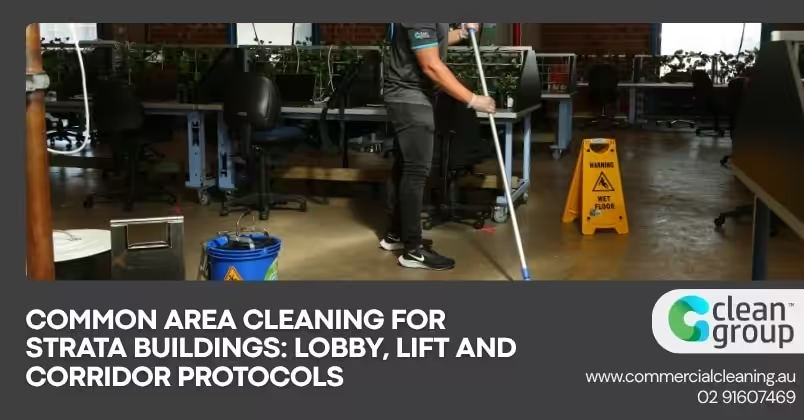
Common areas define the character of a strata building. When lobbies are bright, lifts are clean, and corridors smell fresh, residents feel their property is well-maintained. When they’re not, complaints flood in—and strata managers bear the brunt. That’s why strata cleaning requires protocols as precise as the laws governing them. NSW Strata Schemes Management Act 2015 defines common property, and your maintenance plan must align with those definitions while meeting WorkSafe standards. Our team has serviced over 300 strata buildings across Sydney, Parramatta, and the North Shore, and we’ve learned that lobby, lift, and corridor cleaning is far more technical than most property managers expect.
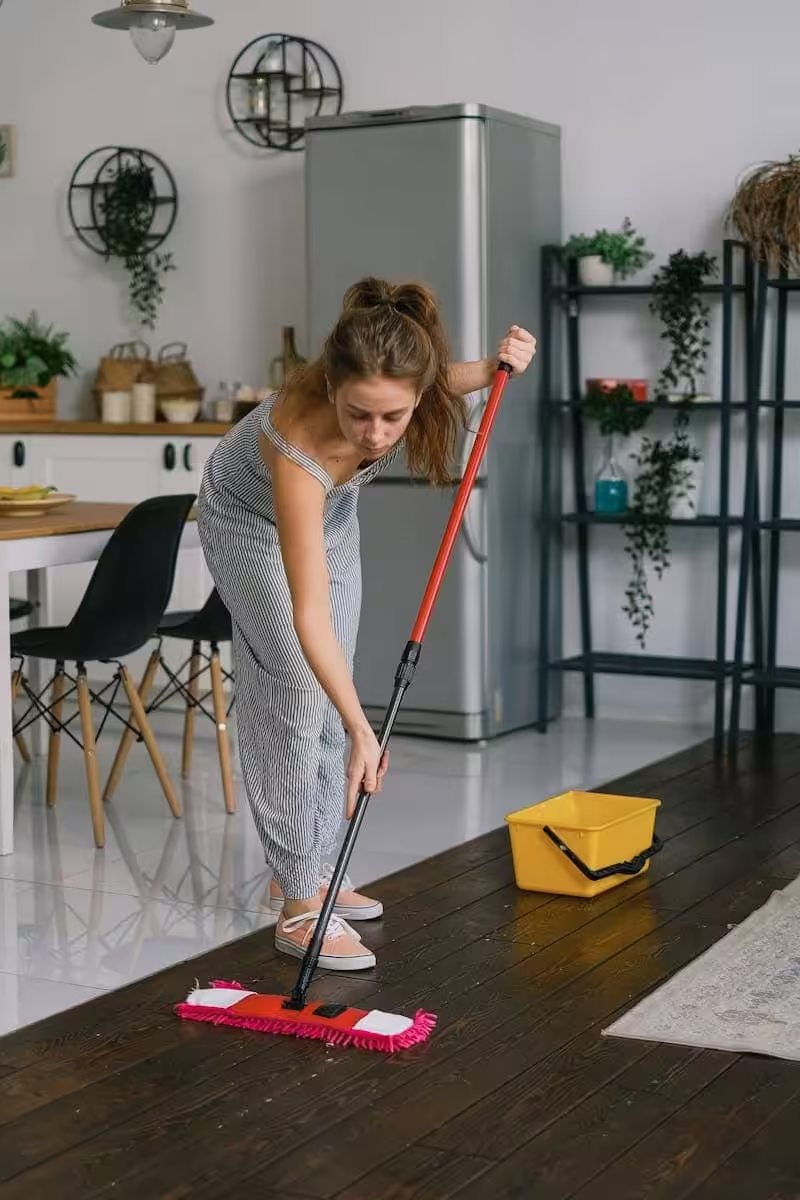
What Counts as a Common Area Under NSW Strata Law
The Strata Schemes Management Act 2015 defines common property as any part of a strata scheme not comprised in a lot. For most buildings, this includes lobbies, lift cabins, corridors, stairwells, car parks, gardens, bin rooms, and mail rooms. Understanding this legal boundary is critical—because the owners corporation is legally responsible for maintaining common property to a standard that’s safe and accessible.
The by-laws of each building determine *how* this maintenance happens and who pays. Some by-laws require the owners corporation to fund cleaning directly. Others impose levies on lot owners. Our experience managing strata properties in Bondi Junction, Surry Hills, and Barangaroo shows that clear definitions prevent disputes. When a cleaning spec document cites the Strata Schemes Management Act 2015, it carries legal weight during disputes or when tendering new services.
Common areas must also comply with the WHS Act 2011 and SafeWork NSW guidelines. Slip hazards in lobbies, poor lighting on stairs, and unsanitised lifts create liability. Documenting your cleaning schedules and protocols—what we call a “cleaning specification document”—proves you’ve taken reasonable care to eliminate hazards.
Lobby Cleaning: Daily, Weekly, and Seasonal Protocols
We implement daily, weekly, and seasonal lobby cleaning protocols tailored to traffic patterns and resident expectations. It’s also a high-traffic zone where dirt accumulates fastest. We recommend a three-tier cleaning strategy: daily spot-checks, weekly deep cleans, and seasonal refresh.
Daily Lobby Maintenance
Entry matting is your first line of defence. In our experience, quality entrance mats—at least 2 metres long—reduce floor soiling by 40%. Check mats every morning, replace them if they’re saturated, and vacuum underneath. Floor type matters enormously. A marble lobby demands different care than polished concrete, which we’ll cover in depth below.
Glass doors and glass panels require daily attention. Fingerprints, smudges, and dust accumulate within hours. Use a microfibre cloth and diluted window cleaner—never squeegees on marble, as they can cause streaking. Furniture in lobbies (seating, side tables) should be dusted and any spillages addressed immediately. Signage—building directory, visitor logbook, rules—should be wiped down daily.
Weekly Deep Clean
Once per week, strip, clean, and re-protect the lobby floor according to floor type. For polished concrete, this might mean a damp mop with pH-neutral cleaner and a microfibre system. For marble, use a marble-specific cleaner and soft mop. Scrub grout lines if applicable. Clean baseboards, light fittings, and air vents. Pressure-wash exterior entrance areas if the building design allows.
Seasonal Refresh
Quarterly, deep-clean glass, repaint or touch up scuffs on walls, and refresh any lobby soft furnishings (rugs, cushions). Spring and autumn are ideal for this work, as they fall between high-traffic holiday periods.
Lift Cabin Cleaning and Sanitisation
We deliver lift cabin cleaning and sanitisation on a schedule that matches peak usage periods. A lift cabin may be used 200+ times per day, yet receives cleaning only once weekly at many properties. Post-pandemic, residents expect higher standards.
Daily Spot-Check Protocol
Each morning, visually inspect the lift. Look for visible soiling, spills, debris, or damage. If the lift smells, requires urgent cleaning, or has a malfunction, isolate it and clean before returning to service. This takes 15 minutes per lift but prevents complaints and maintains resident satisfaction. Our team at strata buildings in Chatswood and Epping performs these spot-checks during early-morning facility tours.
Stainless Steel Panel Maintenance
Stainless steel lift interiors show fingerprints, dust, and water marks constantly. Use a microfibre cloth and stainless-steel-specific cleaner—never general-purpose products, which leave streaks. Wipe panels from top to bottom, following the grain. For stubborn marks, use a diluted vinegar solution (1:3 ratio with water). Dry immediately to prevent water spots.
Button and Control Panel Sanitising
Lift buttons are high-touch contamination points. Sanitise buttons daily with a TGA-approved disinfectant. We use hospital-grade quaternary ammonium solutions that kill 99.9% of pathogens and dry quickly. Spray the cloth, not the button—excess moisture can damage electronics. For control panels, use the same approach but avoid spraying directly into gaps.
Floor Mats and Flooring
Lift floor mats accumulate dirt, moisture, and debris. Vacuum or shake out the mat daily and replace it weekly. Lift flooring itself—usually vinyl or stainless steel—should be mopped daily with a neutral pH cleaner. Don’t oversaturate; excess water is a slip hazard in a confined space. The AS 4586 slip resistance classification means your chosen cleaner shouldn’t reduce floor grip.
Mirror and Glass Surfaces
Many lift cabins include mirrors. Clean these daily with a microfibre cloth and diluted glass cleaner. Streaks and smudges are immediately visible and affect perception of overall cleanliness. Glass panels (if fitted) receive the same treatment as lobby glass doors.
Ventilation and Air Quality
Lifts must have functioning ventilation. Check that air vents are dust-free. If your building has lift ventilation units, have them serviced quarterly. A stuffy, stale-smelling lift—even if visually clean—creates poor resident experience. HEPA filtration in any recirculated air system helps, though most lifts rely on passive ventilation when doors open.
Deep Clean Schedule
Once monthly, perform a full deep clean: remove and wash the floor mat, degrease all surfaces, sanitise every touchpoint, polish stainless steel, and detail the ceiling. This typically takes 30–45 minutes per lift and requires the lift to be out of service or scheduled during low-traffic periods (which we’ll address below).
Floor-Type-Specific Cleaning Protocols
We apply floor-type-specific cleaning protocols for tile, timber, concrete, and polished stone surfaces. A single cleaning specification—”mop and sanitise”—fails to account for vastly different flooring materials, each requiring different products, techniques, and frequency.
Marble Lobbies: Elegance with Strict Protocols
Marble is porous and reactive to acidic products. Never use vinegar, bleach, or standard floor cleaners. Marble demands pH-neutral cleaners specifically formulated for natural stone. Our preferred product is a non-ionic surfactant-based cleaner at a 1:10 dilution ratio. Always use a soft mop, never a hard bristle brush or scouring pad, as these scratch the polished surface. Dry immediately after mopping to prevent water spots, which are permanent on sealed marble. For high-traffic marble lobbies in properties like those in Waterloo and Barangaroo, we recommend weekly re-sealing with a premium marble sealer (every 12–18 months professionally).
Terrazzo: Durability Meets Complexity
Terrazzo is a composite of marble chips in a cement or resin matrix. It’s more durable than solid marble but equally reactive to acids. Use the same pH-neutral stone cleaner. Terrazzo can tolerate light scrubbing with a soft-bristle brush for embedded dirt. Never pressure-wash. The cost of cleaning terrazzo sits between marble and concrete—approximately 50% more than concrete, 20% less than marble. As with marble, annual professional sealing extends the floor’s life.
Engineered Timber: Moisture Control is Critical
Engineered timber in modern strata lobbies adds warmth but demands careful moisture management. Never wet-mop. Instead, use a damp microfibre cloth with a timber-specific cleaner (diluted to minimal saturation). Excess moisture swells the wood and causes cupping or buckling. Daily dry-dust or vacuum, weekly damp-cloth clean, and quarterly spot-recoat with a timber-safe sealant. Engineered timber costs less to clean than marble (standard rate applies) but requires more frequent preventive maintenance—essentially a “cheap upfront, pay-for-care” model.
Polished Concrete: Affordable and Versatile
Polished concrete is increasingly popular in Sydney strata buildings because it’s durable, cost-effective, and aesthetically neutral. Clean with a pH-neutral cleaner and a microfibre mop system. The AS 4674 hard floor maintenance standard applies. Polished concrete can tolerate light scrubbing and is forgiving of most cleaning products—but avoid high-pH alkaline cleaners, which dull the polish. Deep-clean monthly with a crystallizing treatment (topical hardener) to maintain sheen. This is the most economical flooring option, averaging 25–30% cheaper to maintain than marble or engineered timber.
Comparison: Material, Cost, and Maintenance Burden
| Floor Type | Daily Cleaning Cost (per 100m²) | Product Type | Maintenance Frequency |
|---|---|---|---|
| Marble | $180–220 | pH-neutral stone cleaner, soft mop | Daily clean, annual seal |
| Terrazzo | $140–180 | pH-neutral stone cleaner, soft brush | Daily clean, annual seal |
| Engineered Timber | $120–160 | Timber-specific cleaner, microfibre cloth | Daily dry-dust, quarterly recoat |
| Polished Concrete | $90–130 | pH-neutral hard floor cleaner | Daily clean, monthly crystallize |
The takeaway: flooring choice directly impacts both cleaning cost and the skill required. Polished concrete is cost-effective but demands knowledge of crystallizing treatments. Marble is expensive to maintain but commands premium perception. Most strata buildings in Surry Hills and Edgecliff favour marble or terrazzo; inner-west buildings increasingly favour polished concrete.
Elevator Cleaning Timing Strategy
We develop elevator cleaning timing strategies that minimise resident disruption while maintaining sanitisation standards. Clean at the wrong time and you face disruption and resident complaints. Clean at the right time and the work is efficient and unnoticed.
Understanding Building Traffic Patterns
Most residential strata buildings have two peak periods: 7–9 AM (residents leaving for work) and 5–7 PM (residents returning). Commercial buildings peak 8–10 AM. Mixed-use buildings may have continuous demand. Identify your building’s pattern by reviewing lift usage logs—most modern lifts record usage data.
Spot-Check Timing
We recommend a 10-minute morning spot-check between 6–7 AM, before peak traffic. This identifies any overnight damage or soiling. A second 15-minute check at 4 PM, before the evening peak, catches any midday accumulation without disrupting access.
Deep Clean Scheduling
Schedule monthly deep cleans during the lowest-traffic window. For residential buildings, this is typically 2–4 PM on weekdays (post-lunch, pre-return-from-work). For commercial buildings, early morning (6–7 AM) or late evening (6–7 PM) works best. Avoid lunch hours (12–1 PM), early mornings (7–9 AM), and evening peaks (5–7 PM). Some buildings allow brief lift closures (15–30 minutes) if residents are notified 48 hours in advance.
Seasonal Demand Peaks
Winter and spring require more frequent lift cleaning due to increased moisture (wet shoes, umbrellas) and floor marks. Summer sees less soiling but more sticky residue (ice cream, beverages). Adjust frequency accordingly—weekly deep cleans become fortnightly in summer, but stick to weekly in winter.
Corridor and Stairwell Maintenance
We conduct corridor and stairwell maintenance weekly to prevent slip hazards and maintain hygiene standards. Yet they’re frequently overlooked because they’re out of sight and not revenue-generating spaces. This is a mistake. Poor stairwell maintenance creates safety risks and communicates neglect.
Fire Stair Cleaning—The Neglected Priority
Fire stairs are often grimy, dusty, and unkempt. This is partly because they’re rarely used, partly because many cleaning contractors exclude them from their scope. Don’t allow this. Fire stairs must be cleaned as thoroughly as main stairs—more so, because if an evacuation occurs, residents will use them and poor air quality or slip hazards become critical.
Our team at properties in Mascot and Rhodes now deep-cleans fire stairs monthly. This includes vacuuming treads and risers, wiping handrails, sweeping landings, and removing any debris from corners. Fire extinguishers mounted on stairs should be checked for dust accumulation and wiped clean (without obscuring safety labels).
Carpet vs Hard Floor Corridors
Most residential strata buildings use carpet in corridors. Carpet should be vacuum-cleaned daily and professionally steam-cleaned (hot-water extraction per AS/NZS 3733) quarterly. Spot-clean any spills within 24 hours to prevent permanent staining. High-traffic paths show wear faster—expect to re-carpet or patch worn sections every 5–7 years in busy buildings.
Hard floor corridors (timber, polished concrete, or vinyl) require daily mopping with appropriate products (pH-neutral for timber/stone, standard hard floor cleaner for vinyl). Weekly damp-buffing restores sheen. Baseboards accumulate dust and cobwebs—wipe down fortnightly.
High-Touch Surfaces: Handrails and Door Handles
Handrails are critical for accessibility and also high-contamination zones. Sanitise daily with a hospital-grade disinfectant. We’ve found that many strata buildings still use bleach (ineffective against many pathogens) or generic wipes. Switch to a TGA-approved quaternary ammonium solution, which dries quickly and leaves no residue. Door handles at corridor entries, bathroom doors, and fire exit doors receive the same treatment.
Lighting and Air Quality
Check corridor lighting daily—burnt-out bulbs create dark zones that feel unsafe and hide cleanliness issues. Wipe down light fixtures monthly to remove dust, which reduces light output by 10–15%. For air quality, verify that corridor HVAC is functioning. Stale-smelling corridors suggest poor ventilation or trapped moisture—investigate and remediate promptly.
Cleaning Specification Documents for Strata Managers
Formal cleaning specification documents are standard in UK housing associations but rare in Australian strata management. This is a competitive gap. A detailed spec document eliminates ambiguity, protects both manager and contractor, and provides a benchmarks against which to audit performance.
What a Spec Document Should Include
A formal specification should contain numbered sections covering:
1. Scope and Definitions: List all common areas (by location and square meterage). Define “clean”, “sanitised”, and “deep clean” with measurable criteria.
2. Frequency: Daily, weekly, seasonal—broken down by area and task. For example:
- Lift: daily spot-check (10 min), daily sanitise buttons (5 min), weekly deep clean (45 min)
- Lobby: daily sweep and spot-clean (15 min), weekly mop (30 min), seasonal refresh (half-day)
- Corridors: daily vacuum/sweep (20 min), weekly damp-mop baseboards (15 min)
3. Products and Standards: Specify product types, not brand names (so contractors can price competitively). Reference AS/NZS standards, WHS Act 2011, and SafeWork NSW guidelines. Require TGA-approved disinfectants for sanitisation.
4. Quality Standards: Define acceptable outcomes (e.g., “No visible dust on high shelves within 1.5m of floor”, “Lift buttons sanitised daily with no visible smudges”, “Carpet free of loose debris and spot-stains”).
5. Safety and Compliance: Reference the Strata Schemes Management Act 2015, WHS Act 2011, and site-specific by-laws. Require contractors to maintain public liability insurance and provide SafeWork NSW compliance documentation.
6. Reporting and Audits: Specify how the contractor will report completion (daily checklists, weekly sign-offs). Detail your audit process (monthly inspections, quarterly resident surveys).
7. Pricing: Break costs down by task and frequency, so you understand value. Example: “Lift daily spot-check: $15 per lift. Lift weekly deep clean: $60 per lift. Lobby daily clean: $45. Lobby weekly deep: $80.”
Why This Matters for Strata Managers
When disputes arise—and they do—a detailed spec document is your legal shield. If a resident complains about dirty lifts, you can demonstrate that your contractor was instructed to deep-clean weekly and can provide photographic evidence of compliance. If a contractor bids, you have objective criteria to compare proposals. If you change contractors, the new contractor inherits clear expectations, not vague handshakes.
We’ve seen strata managers in Chatswood, Bondi Junction, and North Sydney save 15–20% on annual cleaning costs simply by putting specifications in writing. It allows contractors to bid accurately, eliminates scope creep, and creates accountability.
Common area cleaning isn’t just about aesthetics—it’s about compliance, safety, and creating an environment where residents feel cared for. By following the protocols we’ve outlined, alongside a detailed cleaning specification document aligned with the Strata Schemes Management Act 2015, you protect both your building and your residents. The next step is making sure these standards extend to specialist facilities. Our guide on pool and gym cleaning for strata covers the hygiene protocols that specialists require.
Frequently Asked Questions
How often should lifts be deep-cleaned in a strata building?
We recommend monthly deep cleans for residential buildings with 5+ lifts and weekly for buildings with higher occupancy or mixed-use (retail ground floor). Buildings in high-traffic areas like Barangaroo or Macquarie Park often benefit from fortnightly deep cleans. This timing prevents the accumulation of grime that becomes expensive to remove and maintains resident satisfaction year-round.
Can marble lobbies be cleaned with standard floor cleaner?
No. Standard floor cleaners (especially those with vinegar or bleach) etch marble and leave permanent damage. Always use a pH-neutral cleaner specifically formulated for natural stone. We use a non-ionic surfactant cleaner at 1:10 dilution. Dry immediately after mopping. Annual professional sealing adds a protective layer and costs $1,200–2,000 for a typical lobby but extends the floor’s life by years.
What’s the best time to clean lift cabins without disrupting residents?
The best window is 2–4 PM on weekdays for residential buildings (post-lunch, pre-evening rush). For commercial buildings, 6–7 AM or 6–7 PM works best. Avoid 7–9 AM, 12–1 PM, and 5–7 PM. Always notify residents 48 hours in advance if a brief lift closure is needed. In our experience, residents accept 15–30 minute closures if notified early, and you’ll get 85–90% cooperation.
Are fire stairs required to be cleaned as regularly as main stairs?
Fire stairs must be cleaned to the same standard as main stairs—more so, since poor air quality or slip hazards become critical during evacuation. The WHS Act 2011 and by-laws typically require common areas (including fire stairs) to be maintained in a safe, clean state. Monthly deep cleaning of fire stairs is standard best practice, with daily sweeping of debris.
What cleaning products should I specify in a tender document to avoid non-compliance?
Specify product *type*, not brand. Example: “TGA-approved quaternary ammonium disinfectant” rather than “Brand X”. This allows contractors to source competitively while ensuring quality. For floors, specify “pH-neutral stone cleaner for marble” or “hard floor cleaner compliant with AS 4674” rather than naming a specific product. Reference WHS Act 2011 and SafeWork NSW guidelines. Require contractors to declare all products used and provide Safety Data Sheets (SDS) for your records.
About Clean Group
Clean Group is a Sydney-based commercial cleaning company with over 20 years of industry experience. Founded by Suji Siv, our team of 50+ trained professionals services offices, warehouses, medical centres, schools, childcare facilities, retail stores, gyms, and strata properties across Sydney, Melbourne, and Brisbane.
We are active members of ISSA and the Building Service Contractors Association of Australia (BSCAA). Our operations align with ISO 9001 (Quality Management), ISO 14001 (Environmental Management), and ISO 45001 (Workplace Health and Safety) standards. We hold membership with the Green Building Council of Australia and use eco-friendly, TGA-registered cleaning products wherever possible.
Every Clean Group cleaner is police-checked, fully insured, and trained in safe work procedures under SafeWork NSW guidelines. We operate 7 days a week, including after-hours and weekend services, to minimise disruption to your business.
About the Author

Suji Siv
/

Hi, I'm Suji Siv, the founder, CEO, and Managing Director of Clean Group, bringing over 25 years of leadership and management experience to the company. As the driving force behind Clean Group’s growth, I oversee strategic planning, resource allocation, and operational excellence across all departments. I am deeply involved in team development and performance optimization through regular reviews and hands-on leadership.
Read More About Suji 0291607469
 Get A Quote