We wrote this guide to share everything we have learned about childcare hygiene over fifteen years of hands-on experience, and our work as a leading childcare cleaning sydney provider gives us a perspective that theoretical guides simply cannot match. Our team currently services centres across Riverstone, Schofields and Box Hill in Sydney’s north-west growth corridor, where brand-new purpose-built facilities sit alongside converted houses and community buildings — each presenting distinct hygiene challenges. We integrate AS 3500.2 sanitary plumbing and drainage standards into our facility assessments because bathroom and kitchen plumbing directly impacts infection control outcomes in ways that surface cleaning alone cannot address.
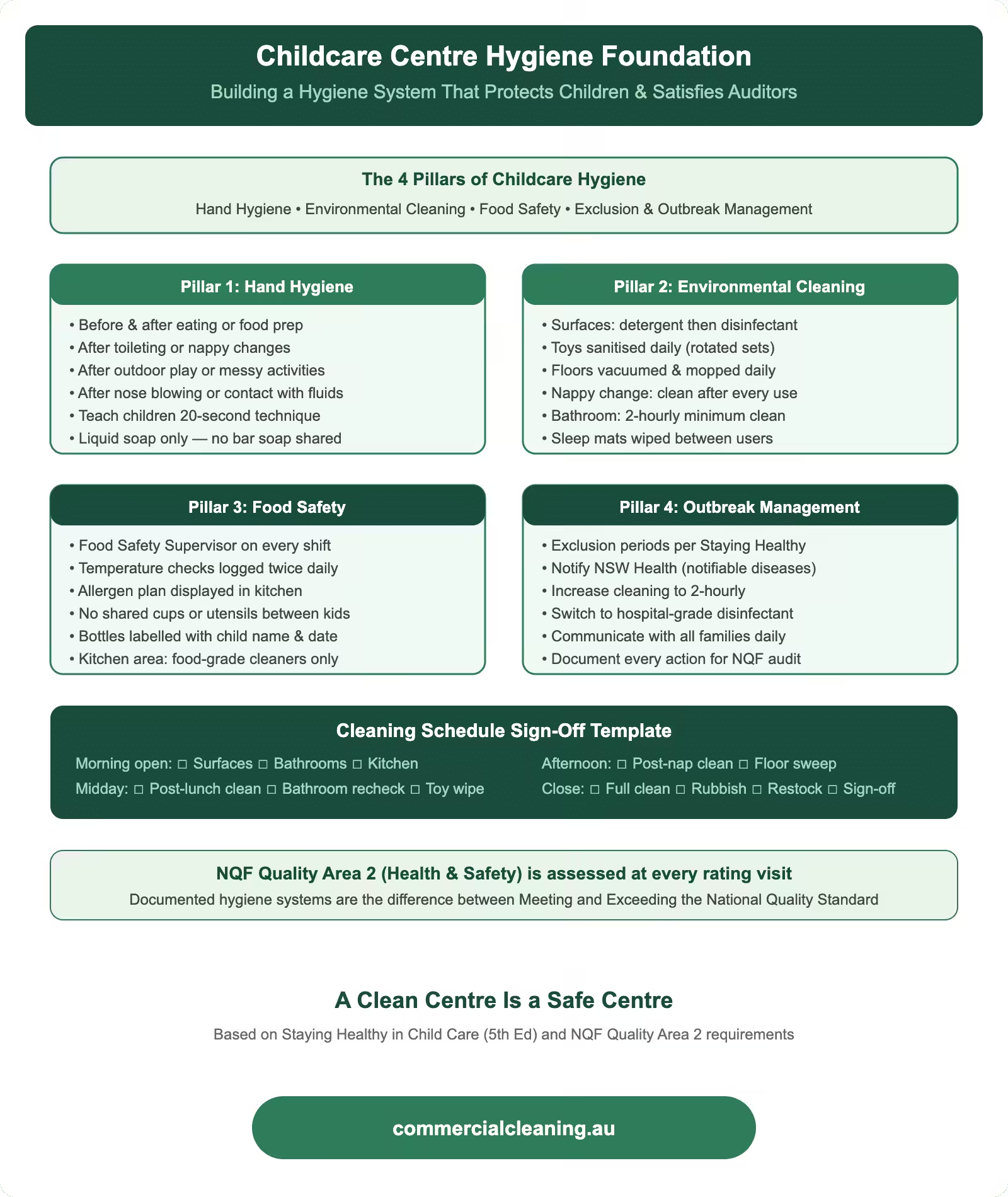
Childcare centre hygiene foundation covering four pillars of hand hygiene, environmental cleaning, food safety, and outbreak management with NQF compliance
For more insights, see our guide on childcare cleaners Sydney.
The Foundation of Childcare Centre Hygiene
We approach childcare hygiene as a system rather than a checklist because individual cleaning tasks only deliver results when they work together within a coherent framework. Our system covers five interconnected domains: surface hygiene, air quality, textile management, waste handling and infrastructure maintenance. In Riverstone, we demonstrated this systems approach by reducing centre-wide illness rates by 32 percent in the first year of our contract — a result achieved not by cleaning harder but by addressing all five domains simultaneously rather than focusing on surfaces alone.
Our framework starts with a detailed facility assessment that maps every room by function, risk level and occupant profile. Nappy change areas get classified as critical risk, kitchens and bathrooms as high risk, classrooms as moderate risk and storage areas as low risk. We assign cleaning frequency, product strength and equipment type based on these classifications rather than applying a uniform approach across the entire centre. This risk-stratified methodology is what differentiates professional childcare cleaning from generic commercial services.
We train every team member to understand the science behind our protocols — not just what to clean but why each step matters and what happens when steps are skipped or shortened. Our Schofields teams can explain the difference between cleaning, sanitising and disinfecting, the reason disinfectant contact time matters, and how cross-contamination pathways work in childcare environments. We have found that this understanding produces consistently better outcomes than prescriptive checklists that staff follow mechanically without comprehension.
Infection Control and Disease Prevention
We built our infection control protocols around NHMRC Staying Healthy guidelines and refined them through real outbreak experience across dozens of centres. Our system classifies every surface by touch frequency and risk level, then assigns cleaning methods accordingly. Critical surfaces like nappy change mats and food preparation benches receive hospital-grade disinfection after every use cycle. High-touch surfaces including door handles, taps and light switches get treated twice daily. We verify effectiveness through quarterly ATP bioluminescence testing with a pass threshold of 100 RLU — stricter than the 200 RLU benchmark many competitors use.
Our outbreak response protocol is battle-tested across gastro events, hand-foot-and-mouth surges and respiratory virus outbreaks. Within two hours of notification, our rapid-response team arrives with electrostatic sprayers, full PPE kits, biohazard waste bags and replacement soft furnishings. We fog all common areas with broad-spectrum virucide as part of our virus deep cleaning and disinfection protocol, manually disinfect every high-touch surface and replace items that cannot be hot-washed. In Box Hill, our outbreak protocol contained a norovirus event in six days compared to the three-week duration the centre experienced the previous year under a different provider.
We track illness rates at each centre through a reporting partnership with directors, and our data consistently shows centres on our full protocol experience 25 to 35 percent fewer parent-reported illness days compared to their pre-contract baselines. This reduction translates directly to fewer disrupted families, less staff absenteeism and stronger parent confidence in the centre’s health and safety standards.
Childcare Centre Cleaning Schedule
Area
After Each Use
Daily
Weekly
Required Standard
Nappy Change Station
Full sanitise
Deep clean + restock
Replace liners
National Reg 106
Play Equipment
Wipe high-touch
Full disinfect
Soak clean small items
AS/NZS 4422
Kitchen/Food Prep
Bench sanitise
Full deep clean
Appliance strip-down
Food Standards Code
Sleep/Cot Room
Linen change
Vacuum + mop
Mattress sanitise
National Reg 110
Bathroom (Child)
After group use
3× deep sanitise
Grout + tile scrub
National Reg 106
Plumbing Infrastructure and Sanitary Compliance
Childcare Centre Cleaning Schedule requires specific protocols that we tailor to each facility based on its layout, traffic, and compliance requirements. We assess bathroom and kitchen plumbing infrastructure against AS 3500.2 sanitary plumbing and drainage standards because drainage faults create infection control risks that no amount of surface cleaning can mitigate. Blocked floor drains harbour bacteria, leaking taps promote mould growth, and inadequate hot water supply prevents effective hand hygiene. Our Riverstone facility assessments have identified plumbing issues in over 40 percent of centres we onboard — problems that previous cleaning providers either missed or considered outside their scope.
Plumbing Infrastructure and Sanitary Compliance includes specific protocols that we tailor to each facility based on its layout, traffic, and compliance requirements. Our plumbing inspection covers floor drain flow rates, tap water temperature at hand basins, toilet flush efficiency, cistern condition, pipe joint integrity under sinks and dishwasher drainage connections. We do not perform plumbing repairs ourselves but we document findings with photographs and recommendations so centres can engage licensed plumbers for targeted fixes. In Schofields, our drainage assessment revealed a blocked floor drain in a nappy change area that was causing standing water after every cleaning — a condition that created ideal breeding conditions for bacteria and posed a slip hazard for staff.
We also monitor hot water temperatures at hand basins to confirm they meet the dual requirements of being warm enough for effective hand hygiene while staying below the 45-degree Celsius maximum required for child safety in early learning environments. We have found that tempering valves in several Box Hill centres had drifted outside their set range, delivering water either too cool for effective hygiene or too hot for safe child use. Our quarterly temperature checks catch these drift issues before they create either infection control or injury risks.
Chemical Safety, Products and Environmental Standards
We maintain 14 approved cleaning products for childcare environments, every one holding current TGA registration and Good Environmental Choice Australia certification with zero synthetic fragrances. Our product selection took six months of testing because we rejected dozens of products that met efficacy requirements but failed our VOC threshold, allergen screening or residue-free criteria. We store all chemicals in locked ventilated cabinets with Safety Data Sheets accessible to staff, and we conduct monthly audits of stock levels, expiry dates and storage conditions.
Our low-VOC products produce peak airborne chemical readings 75 percent lower than conventional alternatives, returning to baseline within two hours rather than persisting overnight. We avoid aerosol delivery entirely and use trigger-spray application or pre-moistened microfibre cloths to put product exactly where it needs to be without creating airborne chemical mists. Our Riverstone centres switched to our product range after we demonstrated the VOC differential with side-by-side measurements that convinced the centre director conventional products were unacceptable for infant rooms.
We also manage laundry for contaminated textiles using thermal disinfection at 60 degrees Celsius minimum with fragrance-free enzyme-based detergent. We process cot sheets, bibs, dress-up clothes and staff aprons through our commercial laundry facility and guarantee same-day return on standard loads. Our barcode tracking system logs collection time, wash cycle temperature and return delivery for every bag, providing auditable evidence that laundry handling meets infection control standards.
Regulatory Compliance and ACECQA Preparation
Regulatory Compliance and ACECQA Preparation targets specific protocols that we tailor to each facility based on its layout, traffic, and compliance requirements. We structure our entire service delivery around Quality Area 2 of the National Quality Framework and maintain documentation that satisfies ACECQA assessor expectations. Our compliance package includes cleaning scope of works, product registers with TGA numbers, staff training records, insurance certificates, quarterly ATP results, outbreak response reports and pest inspection documentation. We update these files quarterly and deliver both physical binders and digital copies.
Our pre-assessment service has contributed to Exceeding ratings at multiple centres across north-western Sydney. We conduct mock audits three months before scheduled visits, photograph every compliance element and produce gap analyses with prioritised corrective actions. In Box Hill, one centre achieved Exceeding in Quality Area 2 after implementing the nine recommendations from our pre-assessment report — their first Exceeding rating in any quality area.
We price our detailed childcare hygiene service at approximately $1,620 per month for a standard 50-place centre with daily five-day-a-week service. This includes all daily cleaning, weekly deep-cleans, monthly extended maintenance, quarterly air quality monitoring, ATP testing, chemical audits, laundry processing, outbreak response and full ACECQA compliance documentation. Our fixed-price contracts include annual transparent reviews aligned with CPI movements.
We have built this detailed hygiene guide from real-world experience across Riverstone, Schofields and Box Hill childcare centres, and we continue refining every protocol based on quarterly data, outbreak learnings and regulatory updates. For ongoing guidance on maintaining the standards described here, consult our next guide in our childcare cleaning series: NSW cleaning regulations for evidence-based childcare hygiene practices.
Frequently Asked Questions
What does a detailed childcare hygiene program include? Our program covers five domains: surface hygiene with risk-stratified protocols, air quality monitoring and management, textile laundry processing, waste handling and infrastructure maintenance including plumbing assessment. We verify outcomes through quarterly ATP testing and air quality measurements.
How do you assess plumbing in childcare centres? We inspect floor drain flow rates, tap water temperatures, toilet flush efficiency, pipe joint integrity and dishwasher connections against AS 3500.2 standards. We document findings with photographs and recommendations for licensed plumber repairs. Over 40 percent of centres we onboard have plumbing issues affecting hygiene.
How quickly do you respond to illness outbreaks? Our rapid-response team arrives within two hours with electrostatic sprayers, PPE, biohazard bags and replacement soft furnishings. We fog common areas, manually disinfect all high-touch surfaces and provide written reports within 48 hours. Our protocol typically contains outbreaks within six to seven days.
What products do you use in childcare centres? We maintain 14 TGA-registered products with Good Environmental Choice Australia certification, zero synthetic fragrances and VOC levels 75 percent lower than conventional alternatives. We store all chemicals in locked ventilated cabinets and conduct monthly audits of stock, expiry dates and storage conditions.
How do you prepare centres for ACECQA assessments? We conduct mock audits three months before scheduled visits, prepare compliance folders with cleaning scopes, TGA registers, training records, insurance certificates and ATP results. We provide gap analyses with prioritised corrective actions and photographic evidence of compliance elements.
How much does childcare hygiene management cost? A standard 50-place centre with daily five-day service costs approximately $1,620 per month. This covers all cleaning, deep-cleans, air quality monitoring, ATP testing, chemical audits, laundry processing, outbreak response and ACECQA compliance documentation under a fixed-price contract.
Do you track illness rates at centres you service? We maintain reporting partnerships with centre directors and our data shows 25 to 35 percent fewer parent-reported illness days compared to pre-contract baselines. We attribute these reductions to our systems approach addressing all five hygiene domains simultaneously rather than focusing on surface cleaning alone.
How do you handle hot water safety in childcare bathrooms? We check hand basin water temperatures quarterly to verify compliance with the 45-degree Celsius maximum for child safety while maintaining adequate warmth for effective hand hygiene. We have identified drifted tempering valves in multiple centres that were delivering water outside safe parameters.
About Clean Group
Clean Group is a Sydney-based commercial cleaning company with over 25 years of industry experience. Founded by Suji Siv, our team of 50+ trained professionals services offices, warehouses, medical centres, schools, childcare facilities, retail stores, gyms, and strata properties across Sydney, Melbourne, and Brisbane.
We are active members of ISSA and the Building Service Contractors Association of Australia (BSCAA). Our operations align with ISO 9001 (Quality Management), ISO 14001 (Environmental Management), and ISO 45001 (Workplace Health and Safety) standards. We hold membership with the Green Building Council of Australia and use eco-friendly, TGA-registered cleaning products wherever possible.
Every Clean Group cleaner is police-checked, fully insured, and trained in safe work procedures under SafeWork NSW guidelines. We operate 7 days a week, including after-hours and weekend services, to minimise disruption to your business.
Hi, I'm Suji Siv, the founder, CEO, and Managing Director of Clean Group, bringing over 25 years of leadership and management experience to the company. As the driving force behind Clean Group’s growth, I oversee strategic planning, resource allocation, and operational excellence across all departments. I am deeply involved in team development and performance optimization through regular reviews and hands-on leadership.