Strata Car Park Maintenance Guide for Sydney Buildings
We have maintained car parks in commercial and retail buildings across Sydney for over a decade, and the reality that most building managers overlook is that a car park is the first and last impression every visitor has of the property. Our strata cleaners sydney team manages car-park maintenance programs for shopping centres, office towers and mixed-use developments in Penrith, Emu Plains and Kingswood where high vehicle turnover, tyre marks, oil drips and concrete dust combine to create a maintenance challenge that standard cleaning methods cannot address. We treat car parks as critical infrastructure rather than afterthought spaces because neglected car parks create slip hazards, accelerate structural deterioration and drive tenants to competitors with cleaner facilities.
Car Park Cleaning Methods and Surface Treatments
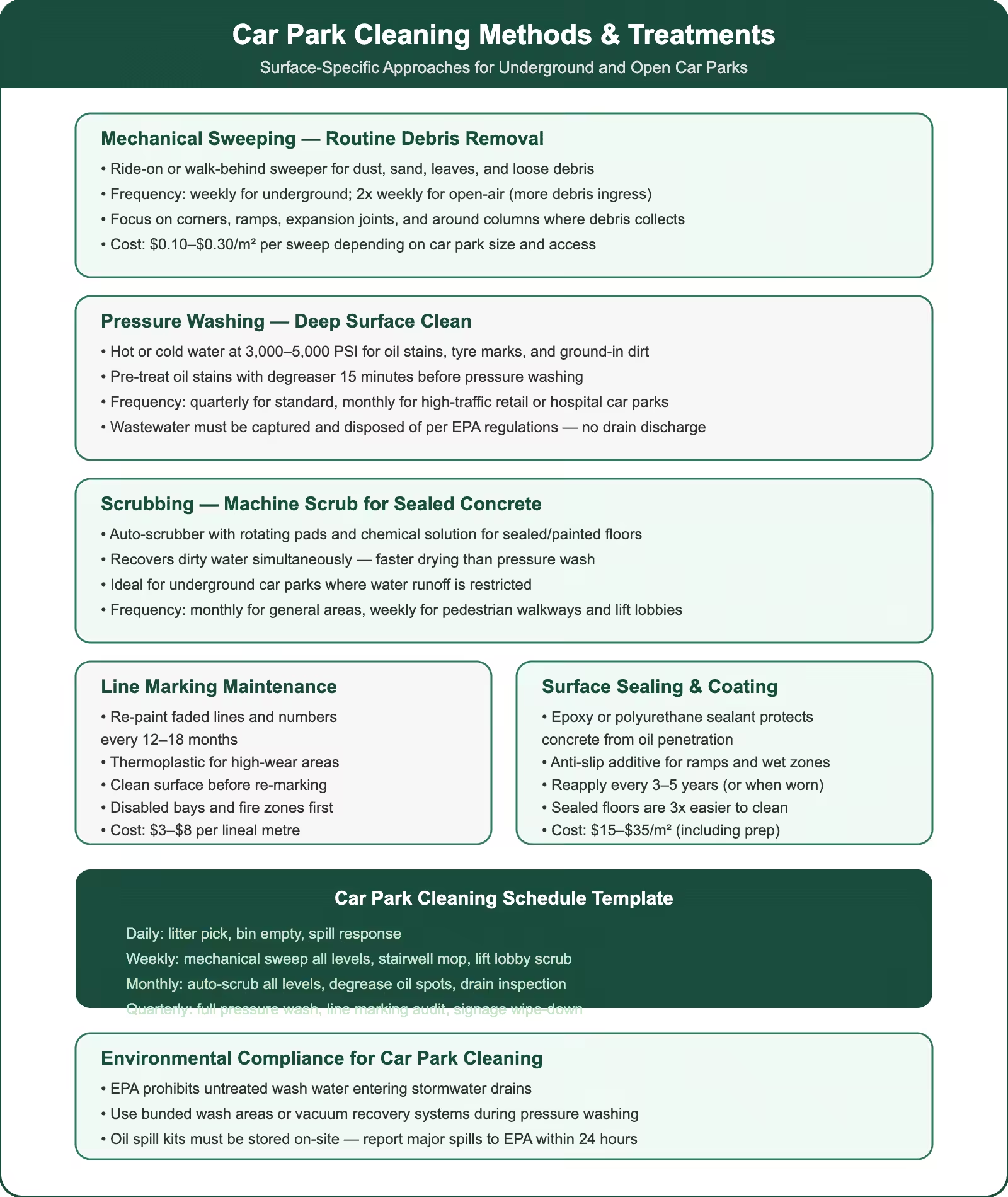
Car Park Cleaning Methods and Surface Treatments covers specific protocols that we tailor to each facility based on its layout, traffic, and compliance requirements. We clean car park floors using ride-on scrubber-dryers fitted with diamond-impregnated pads that remove tyre marks, oil stains and embedded grime from sealed and unsealed concrete in a single pass. Our Penrith crews operate a Karcher B 150 R with a 150-centimetre scrub path that covers a standard 200-bay car park level in under 90 minutes — roughly half the time a walk-behind machine takes. We selected the B 150 R after trialling four machines across our Kingswood portfolio because it delivered the highest soil-pickup rate per pass while keeping water usage below the 2-litre-per-square-metre threshold that prevents ponding on car park floors with poor drainage fall.
We pay particular attention to oil-stain remediation because petroleum hydrocarbons are classified contaminants under the NSW Protection of the Environment Operations Act, and wash water containing oil cannot be discharged to stormwater without treatment. Our crews apply a bio-remediation granule to fresh oil spills that encapsulates the hydrocarbon and converts it to a non-hazardous residue within 24 hours. We introduced this product after one of our Emu Plains clients received an EPA notice for oil-contaminated wash water entering a stormwater drain — a compliance issue we have since prevented across every site we manage.
We also assess car park floor coatings as part of our maintenance program because delaminated or worn coatings create slip hazards and allow chloride ingress into the concrete substrate. We reference AS 4997, which covers structural strengthening and rehabilitation of existing structures, because it provides guidance on coating condition assessment and substrate preparation that applies directly to car park floor maintenance. Our Penrith retail clients have used our coating-condition reports to schedule cost-effective recoating before the substrate deterioration reaches a point where full concrete remediation becomes necessary.
Car Park Maintenance Costs and Contract Structures
We price car park maintenance based on the number of bays, floor levels and service frequency rather than a flat monthly rate, because a 50-bay single-level basement has fundamentally different needs from a 600-bay multi-storey retail car park. A typical maintenance contract for a 300-bay commercial car park in the Penrith area runs about $1,550 per month, covering weekly mechanical scrubbing, fortnightly pressure washing of ramps and stairwells, monthly line-marking inspection and quarterly deep-clean of expansion joints and drain grates. We reviewed our 2024 portfolio and found that the monthly-contract model costs clients roughly 22 percent less than ad-hoc booking because our crews can maintain a consistent schedule that prevents the build-up that requires intensive intervention.
We structure our contracts with transparent line items so building managers can see the cost breakdown for each service component and adjust frequency if their budget changes. Our Kingswood clients reduced their pressure-washing frequency from fortnightly to monthly during a budget review, and we modelled the impact before they made the decision. We showed them that monthly pressure washing would allow algae colonisation on the ramp surfaces during summer, creating a slip hazard that could expose them to public-liability claims. They reversed the decision within one cycle, and we took that experience as validation that data-driven advice is as valuable as the cleaning itself.
We also include a structural-observation service in every car park contract at no additional charge because our crews are in the car park more often than anyone else in the building and they see cracking, spalling, water ingress and reinforcement corrosion before it becomes visible to a quarterly building inspection. Our Emu Plains clients received three structural-observation alerts from our team in the last financial year, and two of those flagged issues that required remediation costing less than $2,000 each — a fraction of what they would have cost if left for another 12 months.
Office Area Cleaning Frequency Guide
| Area | Daily | Weekly | Monthly | Quarterly |
|---|---|---|---|---|
| Reception & Lobby | Vacuum, mop, wipe | Glass doors, furniture | Deep carpet clean | Window wash |
| Workstations | Surface wipe, bins | Monitor & keyboard | Drawer clean-out | Chair shampoo |
| Kitchen/Breakroom | Bench, sink, floor | Fridge, microwave | Deep degrease | Exhaust fan clean |
| Bathrooms | Full sanitise + restock | Grout scrub | Descale fixtures | Vent clean |
| Meeting Rooms | Table wipe, vacuum | AV equipment dust | Upholstery clean | Carpet extraction |
Safety, Compliance and Environmental Management
Office Area Cleaning Frequency Guide requires specific protocols that we tailor to each facility based on its layout, traffic, and compliance requirements. We manage car park cleaning as a confined-space and traffic-management exercise because our crews work alongside moving vehicles during operating hours and in enclosed spaces with limited ventilation. Our traffic management plans include exclusion zones around scrubber-dryers, high-visibility signage on every access ramp and a spotter stationed at blind corners during deep-clean sessions. We coordinate with the building security team to schedule high-noise activities outside peak entry and exit times, and our Penrith retail clients have approved a standing schedule that routes our machines through each level in sequence to avoid conflicting with shopper traffic patterns.
Safety, Compliance and Environmental Management includes specific protocols that we tailor to each facility based on its layout, traffic, and compliance requirements. We treat all car park wash water as a regulated waste stream because it typically contains petroleum hydrocarbons, heavy metals from brake dust and fine particulate from tyre wear. Our crews direct all wash water to the car park oil-water separator or, where no separator exists, contain it with portable bunding and remove it via a wet-vacuum system for off-site disposal. We provide waste-tracking documentation for every deep-clean that building managers can present to the EPA or their environmental auditor. Our Kingswood clients operate under a licensed environmental-management plan, and our documentation has satisfied every audit review since we took over the car park maintenance contract in 2021.
We invest in crew training that covers traffic management, confined-space awareness, chemical handling and structural-defect identification. Every car park maintenance technician completes a six-hour induction before working independently, and we refresh the training annually with a practical assessment. Our retention rate for car park crews sits at 87 percent, which gives our clients continuity and familiarity from the same team month after month. We bring that same commitment to safety and structural awareness to every schedule template we manage.
Frequently Asked Questions About Car Park Maintenance
How often should a commercial car park be cleaned?
We recommend weekly mechanical scrubbing for high-traffic car parks, with fortnightly pressure washing of ramps and stairwells. Quarterly deep-cleans should cover expansion joints and drain grates. Monthly contracts cost roughly 22 percent less than ad-hoc booking.
What does AS 4997 cover for car park maintenance?
AS 4997 covers structural strengthening and rehabilitation of existing structures, including guidance on coating condition assessment and substrate preparation that applies directly to car park floor maintenance and recoating decisions.
How much does commercial car park maintenance cost?
A typical contract for a 300-bay commercial car park runs about $1,550 per month, covering weekly scrubbing, fortnightly pressure washing, monthly line-marking inspection and quarterly deep-cleans.
How do you handle oil spills in car parks?
We apply bio-remediation granules that encapsulate petroleum hydrocarbons and convert them to non-hazardous residue within 24 hours. All wash water is directed to oil-water separators or contained for off-site disposal to prevent stormwater contamination.
Do you check for structural issues during car park cleaning?
Yes. Our crews report cracking, spalling, water ingress and reinforcement corrosion through structural-observation alerts included in every contract at no additional charge. Early detection typically saves thousands in remediation costs.
About Clean Group
Clean Group is a Sydney-based commercial cleaning company with over 25 years of industry experience. Founded by Suji Siv, our team of 50+ trained professionals services offices, warehouses, medical centres, schools, childcare facilities, retail stores, gyms, and strata properties across Sydney, Melbourne, and Brisbane.
We are active members of ISSA and the Building Service Contractors Association of Australia (BSCAA). Our operations align with ISO 9001 (Quality Management), ISO 14001 (Environmental Management), and ISO 45001 (Workplace Health and Safety) standards. We hold membership with the Green Building Council of Australia and use eco-friendly, TGA-registered cleaning products wherever possible.
Every Clean Group cleaner is police-checked, fully insured, and trained in safe work procedures under SafeWork NSW guidelines. We operate 7 days a week, including after-hours and weekend services, to minimise disruption to your business.
About the Author

Suji Siv
/

Hi, I'm Suji Siv, the founder, CEO, and Managing Director of Clean Group, bringing over 25 years of leadership and management experience to the company. As the driving force behind Clean Group’s growth, I oversee strategic planning, resource allocation, and operational excellence across all departments. I am deeply involved in team development and performance optimization through regular reviews and hands-on leadership.
Read More About Suji 0291607469
 Get A Quote