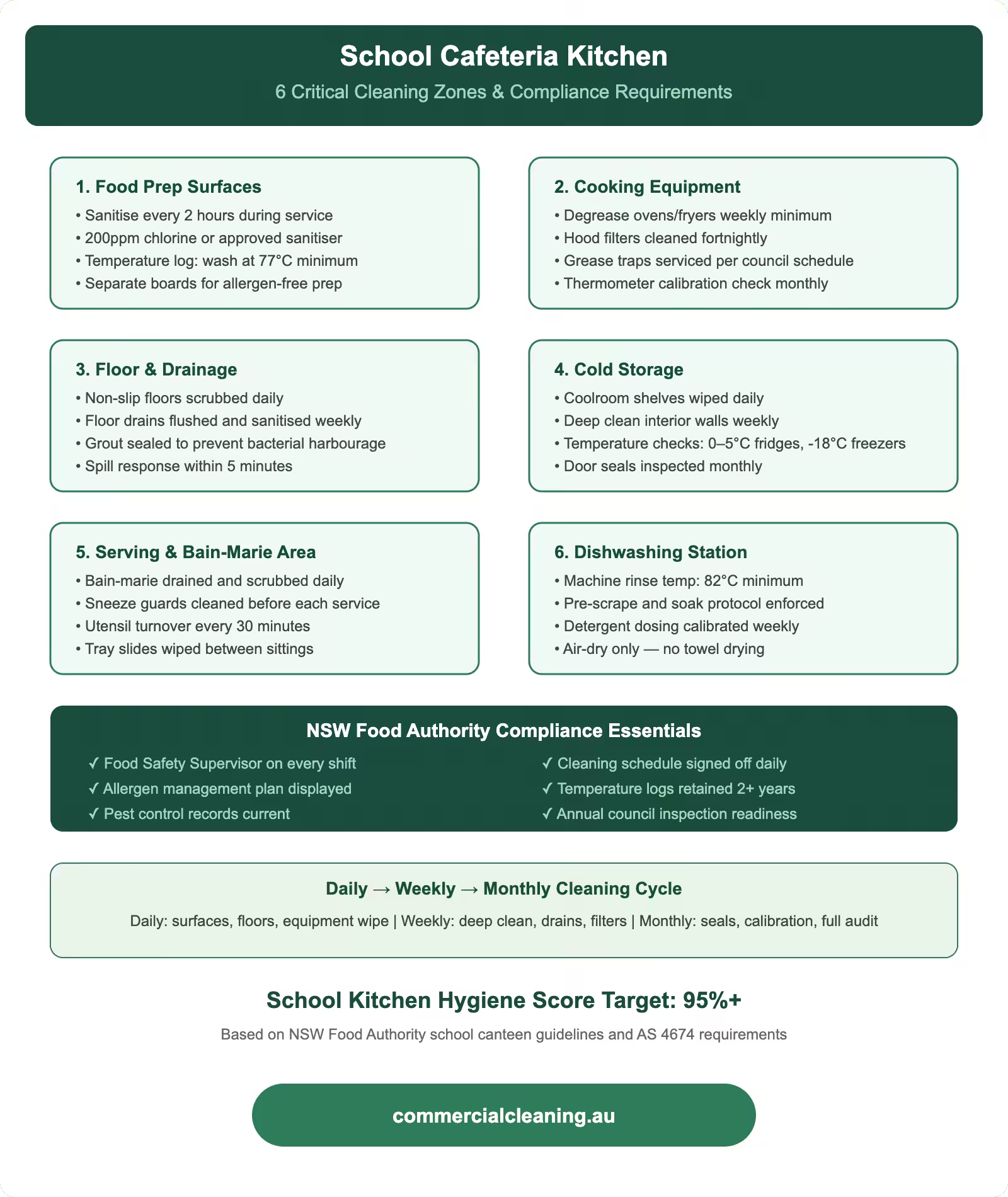
We have cleaned school cafeterias and kitchens across Sydney for years, and our experience as a classroom cleaning provider extends naturally into these high-demand food preparation areas. Our team knows that a school kitchen isn’t just another commercial kitchen — it feeds children, which means the hygiene stakes are higher than almost any other food service environment. We take that responsibility seriously because we’ve seen what happens when school kitchen cleaning falls below standard, and we never want our clients to face those consequences.
School cafeteria kitchen cleaning zones covering food prep surfaces, cooking equipment, floors, cold storage, serving areas, and dishwashing compliance
Understanding the Unique Demands of School Kitchens
Understanding the Unique Demands of School Kitchens covers specific protocols that we tailor to each facility based on its layout, traffic, and compliance requirements. We approach school cafeteria cleaning differently from restaurant or corporate kitchen work because the operational realities are distinct. School kitchens typically prepare hundreds of meals within a compressed two-hour window, with minimal staff compared to commercial restaurants. Our team has observed that this pressure creates cleaning challenges — food preparation surfaces get used continuously without the between-service resets that restaurant kitchens enjoy. We’ve adapted our protocols to work within these tight operational windows, ensuring that our cleaning supports rather than disrupts the food service schedule.
We also understand that school kitchens must comply with NSW Food Authority requirements alongside general food safety standards. Our work aligns with AS 4674.1 construction standards for commercial kitchen equipment, which means we know how commercial-grade equipment is designed and where contamination risks hide. We’ve found that many school kitchens operate with equipment that’s older than the current standards, and our cleaning approach accounts for the additional attention these legacy installations need. In one Croydon Park primary school, we identified grease accumulation behind a commercial oven that hadn’t been pulled out for cleaning in over two years — the buildup represented a genuine fire risk that our thorough approach eliminated.
Our Daily Kitchen Cleaning Protocol
We structure our school kitchen cleaning around the meal service schedule. Our team arrives after lunch service concludes and works through a systematic process that covers every surface, appliance, and fixture. We start with waste removal and bin sanitisation because leaving food waste in the kitchen while we clean other areas just spreads contamination. Our crew then moves to food preparation surfaces, using colour-coded cloths to prevent cross-contamination — red for raw meat areas, blue for general surfaces, green for salad and fruit zones, and yellow for wash-up areas.
We deep clean cooking equipment daily rather than leaving it for weekly sessions because we’ve learned that school kitchen equipment accumulates residue faster than commercial restaurants due to the compressed cooking schedule. Our team dismantles removable parts from ovens, bain-maries, and serving counters for thorough cleaning, and we degrease rangehood filters at every visit. We use food-safe degreasers that are effective on baked-on residue without leaving chemical traces that could transfer to food. Our experience across dozens of school kitchens has taught us exactly which products work best on the equipment commonly found in education food service environments.
School Cleaning Area Priority Matrix
Area
Risk Level
Frequency
Method
Key Concern
Classrooms
Medium
Daily after hours
Vacuum, wipe desks, sanitise
Cross-contamination
Bathrooms
High
3× daily
Hospital-grade disinfect
Gastro outbreaks
Canteen/Kitchen
High
After each service
Degrease + food-safe sanitise
Food safety compliance
Playground
Medium
Daily check + weekly wash
Pressure wash, inspect
Needle stick, hazards
Library/Hall
Low–Medium
Daily vacuum + weekly detail
Dust, vacuum, mop
Dust & allergens
Cafeteria Dining Area Maintenance
School Cleaning Area Priority Matrix requires specific protocols that we tailor to each facility based on its layout, traffic, and compliance requirements. We treat the cafeteria dining area as an extension of the kitchen because food contamination doesn’t stop at the servery counter. Our team cleans all dining tables and bench seats after every lunch service, paying particular attention to the underside of tables where students inevitably stick food remnants and other debris. We mop floors with a food-safe sanitising solution and we clean the servery counter, tray return area, and any self-serve stations thoroughly. In schools around Enfield, we’ve noticed that outdoor dining areas connected to cafeterias create additional challenges because wind blows debris into the food service zone, and we include perimeter cleaning as part of our standard cafeteria protocol.
We also manage the cleaning of food display areas, vending machines, and water stations that are typically located within or adjacent to school cafeterias. Our team wipes down all external surfaces of these installations daily and conducts deeper cleans weekly. We’ve found that water fountain hygiene is often overlooked by other cleaning companies, but our experience shows that these high-touch fixtures are significant potential transmission points for illness in school settings.
Grease Management and Fire Prevention
We take grease management in school kitchens extremely seriously because grease buildup is the leading cause of commercial kitchen fires in Australia. Our team inspects and cleans grease traps, rangehood ducting access points, and all grease-accumulating surfaces at every visit. We maintain cleaning logs that document grease trap condition and cleaning dates, which helps schools demonstrate compliance during council and fire safety inspections. We’ve saved our clients significant stress by ensuring this documentation is always current and accessible.
Our deep grease cleaning involves dismantling rangehood baffle filters for soaking in industrial degreaser, scraping and cleaning ducting access points, and degreasing all wall surfaces behind cooking equipment. In a Burwood Heights school kitchen, our quarterly deep grease clean removed enough accumulated grease from behind the commercial fryer unit to fill two industrial waste bags. The facilities manager estimated that addressing the grease damage to the wall behind that unit would have cost approximately $1,620 if it had been left to deteriorate further. Our preventive cleaning approach eliminated that risk entirely.
Food Safety Documentation and Compliance Support
We provide our school kitchen clients with detailed cleaning records that support their food safety management plans. Our team logs every cleaning task completed, notes any equipment issues identified, and records the products and concentrations used. We understand that schools need this documentation for their HACCP plans and for inspections by the NSW Food Authority. We’ve helped several schools pass food safety audits by ensuring that cleaning records are detailed, current, and demonstrate a consistent cleaning program rather than reactive spot-cleaning.
Our supervisors also conduct monthly hygiene assessments using ATP testing — a scientific method that measures biological contamination on surfaces. We swab food preparation surfaces, equipment handles, and high-touch areas, and provide schools with quantified hygiene scores. We’ve found that this data-driven approach gives school principals and canteen managers confidence that cleaning standards are being maintained, and it helps us identify any areas where our protocols need adjustment before contamination becomes a problem.
Working Around Canteen Volunteers and Staff
We recognise that many school canteens rely on parent volunteers alongside paid staff, and our team works respectfully alongside these community members. Our cleaners understand that canteen volunteers may not be familiar with commercial food safety practices, and we confirm that our cleaning setup — clearly labelled chemical storage, colour-coded equipment, and safe product handling — supports a safe environment for everyone working in the kitchen. We’ve received feedback from several school P&C committees that our professional presence in the kitchen has actually improved overall food safety awareness among volunteer staff.
We also coordinate our cleaning schedule with canteen managers to avoid conflicts with food preparation, delivery times, and special event catering. Our team is flexible enough to adjust our timing when schools have working bees, fundraising BBQs, or cultural food events that change the normal kitchen usage pattern. We believe that being a good cleaning partner means adapting to the school’s needs rather than insisting on rigid schedules that don’t account for the reality of how school communities operate.
If your school needs a reliable cafeteria and kitchen cleaning partner who understands food safety compliance and the unique demands of education food service, our team is here to help. We bring the right expertise, the right products, and a genuine commitment to keeping your students safe. Contact us to discuss your needs alongside your school holiday cleaning requirements.
Frequently Asked Questions
How often should a school kitchen be professionally cleaned? We recommend daily professional cleaning after each lunch service, with enhanced deep cleans weekly and detailed grease management quarterly. Our team has found that this frequency is the minimum needed to maintain food safety standards in high-volume school kitchen environments.
What food safety standards do you follow for school kitchen cleaning? We align our work with NSW Food Authority requirements and AS 4674.1 commercial kitchen equipment standards. Our protocols support schools’ HACCP food safety management plans, and we provide detailed cleaning documentation that demonstrates compliance during food safety audits.
Do you use food-safe cleaning products in school kitchens? We exclusively use food-safe, TGA-approved cleaning products in all kitchen areas. Our degreasers, sanitisers, and surface cleaners are specifically formulated for food preparation environments and leave no chemical residue that could transfer to food. We maintain safety data sheets for all products used on-site.
How do you prevent cross-contamination during kitchen cleaning? We use a strict colour-coded system — red cloths for raw meat areas, blue for general surfaces, green for salad and fruit zones, and yellow for wash-up areas. Our team never mixes equipment between zones, and all reusable materials are laundered at temperatures exceeding 60 degrees between uses.
Can you help with food safety audit preparation? We provide detailed cleaning logs that document every task completed, products used, and concentrations applied. Our monthly ATP testing provides quantified hygiene scores for food preparation surfaces. Schools using our service consistently pass NSW Food Authority inspections with strong cleaning compliance records.
How do you handle grease management in school kitchens? We clean grease traps, rangehood baffle filters, and ducting access points at every visit, with quarterly deep grease cleans that include dismantling equipment and degreasing wall surfaces behind cooking appliances. We maintain documented grease trap cleaning logs for fire safety compliance.
Do you clean the cafeteria dining area as well as the kitchen? We treat the dining area as an extension of the kitchen. Our team cleans all tables, bench seats, floors, servery counters, tray return areas, and self-serve stations after every lunch service. We also maintain water fountains, vending machines, and outdoor dining areas connected to the cafeteria.
How do you work around canteen volunteers and special events? We coordinate our schedule with canteen managers and adjust timing for food preparation, deliveries, working bees, and special events. Our team works respectfully alongside parent volunteers and ensures our cleaning setup supports a safe environment for everyone in the kitchen.
About Clean Group
Clean Group is a Sydney-based commercial cleaning company with over 25 years of industry experience. Founded by Suji Siv, our team of 50+ trained professionals services offices, warehouses, medical centres, schools, childcare facilities, retail stores, gyms, and strata properties across Sydney, Melbourne, and Brisbane.
We are active members of ISSA and the Building Service Contractors Association of Australia (BSCAA). Our operations align with ISO 9001 (Quality Management), ISO 14001 (Environmental Management), and ISO 45001 (Workplace Health and Safety) standards. We hold membership with the Green Building Council of Australia and use eco-friendly, TGA-registered cleaning products wherever possible.
Every Clean Group cleaner is police-checked, fully insured, and trained in safe work procedures under SafeWork NSW guidelines. We operate 7 days a week, including after-hours and weekend services, to minimise disruption to your business.
Hi, I'm Suji Siv, the founder, CEO, and Managing Director of Clean Group, bringing over 25 years of leadership and management experience to the company. As the driving force behind Clean Group’s growth, I oversee strategic planning, resource allocation, and operational excellence across all departments. I am deeply involved in team development and performance optimization through regular reviews and hands-on leadership.