Business Cleaning Go Green? How Does It Work
We have helped businesses across Sydney transition to green cleaning Sydney practices, and the question we hear most often is whether going green means compromising on results. Eco friendly cleaning is something our team has championed for years, and we can say with absolute confidence that modern green cleaning methods deliver results that match or exceed traditional approaches. Our clients in Newtown, Enmore, and Marrickville have seen this firsthand, and their feedback consistently confirms that the switch was easier and more effective than they expected.
For more insights, see our guide on green certification for facilities.
What Does Green Cleaning Actually Mean for a Business?
We define green cleaning as a detailed approach that reduces the environmental and health impacts of cleaning activities without sacrificing hygiene or appearance. Our team goes beyond simply swapping chemical products for eco-labelled alternatives. We consider the entire cleaning ecosystem including equipment energy consumption, water usage, waste generation, indoor air quality impact, and the lifecycle of every product and material we use. We have found that this complete approach delivers far better environmental outcomes than product substitution alone.
We have also learned that green cleaning means different things to different businesses, and our team tailors every program accordingly. A Newtown cafe has different priorities than an Enmore creative agency or a Marrickville warehouse. Our approach starts with understanding what matters most to each client and designing a cleaning program that addresses those specific concerns while meeting our own environmental standards. We have found that this personalised approach drives higher satisfaction and better long-term compliance than a one-size-fits-all green cleaning policy.

The Business Case for Green Cleaning
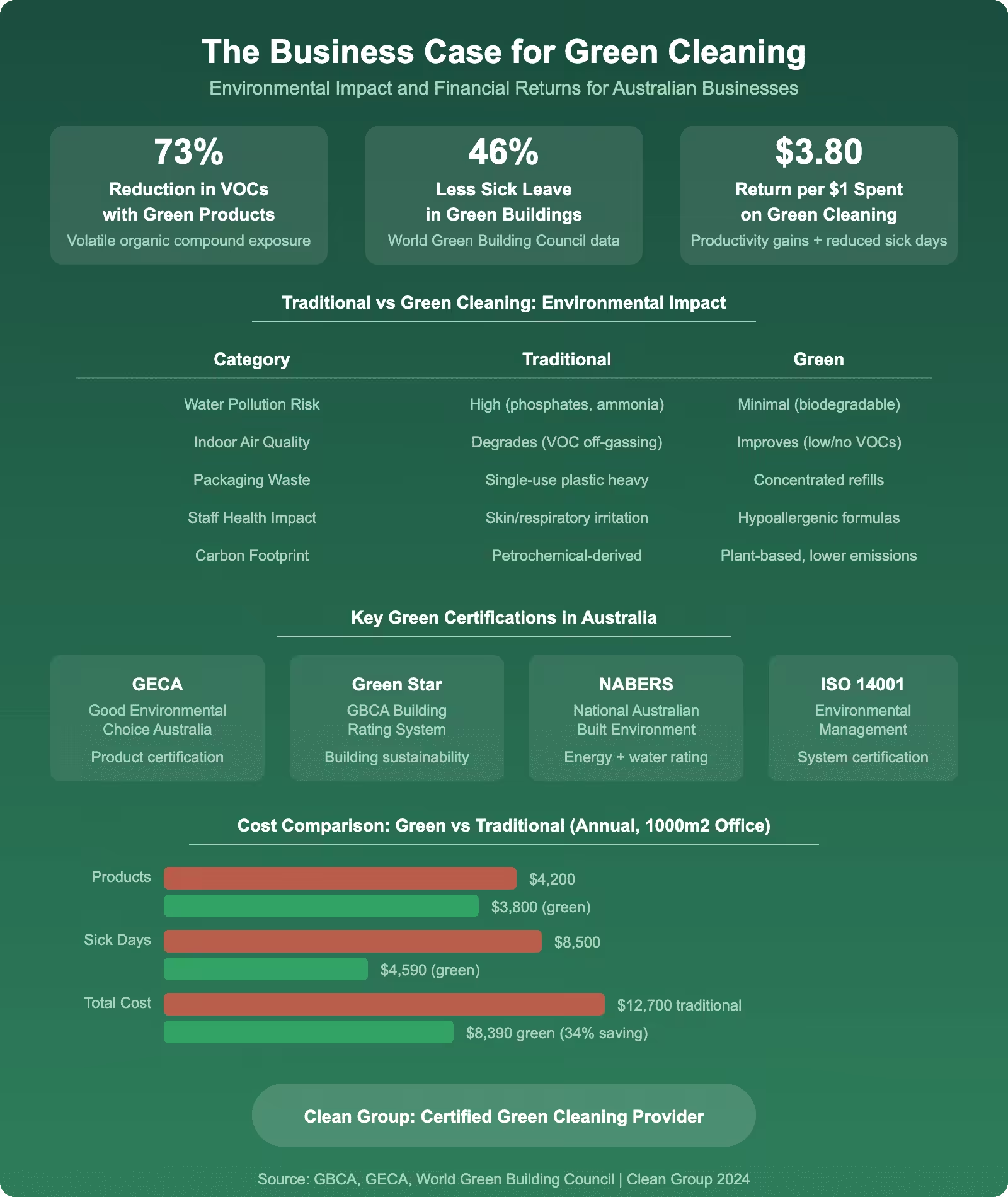
We always present the business case for green cleaning because we have found that environmental motivation alone rarely sustains a long-term commitment. Our data from hundreds of client transitions shows that green cleaning typically reduces overall cleaning costs by 10 to 20 percent once the program is fully implemented. We helped a Marrickville distribution centre save $2,190 in their first year through reduced chemical purchasing, lower water consumption, and decreased waste disposal fees. These savings are real, measurable, and recurring.
We have also documented significant improvements in staff wellbeing at businesses that switch to green cleaning. Our clients report fewer complaints about chemical odours, reduced instances of skin and respiratory irritation among both cleaning staff and building occupants, and improved indoor air quality measurements. We take air quality seriously because we know that the products and methods we use directly affect the people who work in the spaces we clean. Buildings maintained under AS 3666.2 air-handling standards show measurably better air quality when green cleaning products replace high-VOC conventional chemicals.
Our team has also seen green cleaning credentials become a competitive advantage for our clients. We have provided documentation and compliance evidence that businesses in Newtown have used in their own marketing, tenant attraction strategies, and corporate sustainability reporting. We find that the reputational benefits of demonstrable environmental commitment increasingly influence customer and employee decisions, making green cleaning an investment that pays dividends beyond direct cost savings.
Eco-Friendly vs Traditional Cleaning Comparison
| Factor | Eco-Friendly | Traditional Chemical | Impact Difference |
|---|---|---|---|
| VOC Emissions | Near zero | 15–45 g/L | 95% lower indoor pollution |
| Waterway Impact | Biodegradable in 7 days | Persistent 30–90 days | Safer for marine life |
| Cleaning Power | 85–95% vs traditional | Baseline 100% | Negligible for routine tasks |
| Cost per Litre | $8–$15 (concentrated) | $4–$9 | 15–25% higher upfront |
| Staff Health | No PPE for routine use | Gloves + ventilation needed | 60% fewer skin reactions |
Implementing Green Cleaning Products and Equipment
Eco-Friendly vs Traditional Cleaning Comparison requires specific protocols that we tailor to each facility based on its layout, traffic, and compliance requirements. We have tested and evaluated hundreds of cleaning products over the years, and our team maintains a curated approved product list that balances environmental credentials with proven cleaning performance. Our selection criteria include biodegradability, VOC content, aquatic toxicity, packaging recyclability, and third-party environmental certifications. We have rejected products with impressive marketing claims that failed our performance testing, and we have found excellent products from smaller manufacturers that lack the marketing budget of major brands but deliver superior results.
Our equipment choices reflect the same green principles. We use HEPA-filtered vacuum cleaners that capture fine particles rather than redistributing them into the air, microfibre systems that reduce water and chemical consumption, and energy-efficient machines where motorised equipment is required. Our team maintains all equipment to manufacturer specifications because we have learned that poorly maintained green equipment quickly becomes less effective than well-maintained conventional alternatives, undermining the entire program.
We also consider the supply chain and packaging when selecting products. Our team has actively sought out Australian-manufactured cleaning products to reduce transport emissions, and we prioritise suppliers who offer concentrated refill options to minimise packaging waste. We have built relationships with suppliers who share our environmental values and who are willing to work with us on packaging reduction initiatives that benefit both parties.
Water Conservation in Commercial Cleaning
We have made water conservation a foundation of our green cleaning approach because the volumes involved in commercial cleaning are larger than most people realise. Our team has measured water usage across our operations and implemented systematic reductions that save thousands of litres per month without compromising cleaning quality. We use trigger-spray nozzles on all hoses, damp mopping instead of wet mopping wherever possible, and microfibre systems that require a fraction of the water that traditional methods consume.
Our experience in Enmore and surrounding inner-west suburbs has shown us that water conservation resonates strongly with environmentally conscious business owners and their customers. We provide water usage data as part of our regular reporting, and several of our clients display this information as part of their sustainability communications. We have found that transparency about resource consumption builds trust and demonstrates that our green cleaning commitments are backed by measurable actions rather than empty claims.
Waste Reduction and Recycling in Cleaning Operations
We generate waste through our cleaning activities, and our team takes responsibility for minimising that waste just as we help our clients minimise theirs. Our approach includes using refillable product containers, recycling all packaging materials, extending the usable life of cleaning cloths and mop heads through proper care, and choosing equipment designed for longevity rather than disposability. We have reduced our operational waste per client site by over 40 percent over the past five years through these initiatives.
We have also eliminated single-use cleaning items from our standard kit wherever practical. Our team uses washable microfibre cloths instead of disposable wipes, reusable mop covers instead of disposable pads, and refillable spray bottles instead of aerosol cans. We wash and sanitise our reusable items using commercial laundry equipment with eco-friendly detergents, and we track the lifecycle of each item to confirm replacements happen at the right time for both hygiene and environmental reasons.
Measuring and Reporting Green Cleaning Performance
We believe that green cleaning without measurement is just marketing, and our team has developed a detailed reporting framework that gives our clients verifiable data on the environmental performance of their cleaning program. Our reports cover chemical usage volumes, water consumption, waste generation, energy use, and indoor air quality indicators. We have found that businesses that receive regular data are more committed to their green cleaning programs because they can see the tangible impact of their investment.
Our team uses this data internally to drive continuous improvement across our operations. We benchmark each site against similar properties in our portfolio and identify opportunities to reduce environmental impact further. We have found that the sites generating the best environmental outcomes share common characteristics: strong management support, engaged staff, well-maintained facilities, and a cleaning provider that takes measurement seriously. We are proud that our commitment to data-driven green cleaning helps our clients in Marrickville, Newtown, and across the inner west achieve genuinely sustainable outcomes.
Building a green routine that works specifically for your business type and facility is the natural next step after understanding the fundamentals. We have developed practical guidance for establishing green cleaning habits that stick, and our next guide in our green cleaning series walks through the specific steps our team recommends for creating an effective and sustainable cleaning routine.
For more practical advice, read our guide on green routine switch.

Frequently Asked Questions
Does green cleaning cost more than traditional cleaning?
We have found that green cleaning typically reduces overall costs by 10 to 20 percent once fully implemented. Lower chemical purchasing, reduced water consumption, and decreased waste disposal fees create ongoing savings. One client saved $2,190 in their first year of green cleaning.
Will green cleaning products clean as effectively as conventional ones?
We have tested hundreds of products and our curated approved list includes only those that match or exceed conventional cleaning performance. Our independent hygiene testing confirms that green methods deliver professional results across all commercial cleaning applications.
How does green cleaning improve indoor air quality?
Green cleaning eliminates high-VOC chemicals that contribute to poor indoor air. Buildings maintained under AS 3666.2 air-handling standards show measurably better air quality when green products replace conventional chemicals. Staff report fewer headaches, less respiratory irritation, and improved comfort.
Can any business switch to green cleaning?
We have successfully transitioned businesses of every type and size. Our approach tailors the green cleaning program to each business, accounting for their specific cleaning needs, facility type, and environmental priorities. The transition is typically smoother than clients expect.
How do you measure the environmental impact of green cleaning?
We track chemical usage volumes, water consumption, waste generation, energy use, and indoor air quality indicators. Our regular reports provide verifiable data that shows the tangible environmental performance of each cleaning program.
What certifications should I look for in green cleaning products?
We prioritise products with third-party environmental certifications that verify claims around biodegradability, VOC content, and aquatic toxicity. Our team evaluates both marketing claims and actual performance before adding any product to our approved list.
How much water does green cleaning save?
Our microfibre mopping systems use approximately 90 percent less water than traditional methods. Combined with trigger-spray nozzles and damp mopping techniques, we save thousands of litres per month across our commercial cleaning operations.
How long does it take to transition to green cleaning?
We typically complete the transition within one to two months depending on the size and complexity of the facility. Our phased approach ensures cleaning quality is maintained throughout the transition with no disruption to business operations.
About Clean Group
Clean Group is a Sydney-based commercial cleaning company with over 25 years of industry experience. Founded by Suji Siv, our team of 50+ trained professionals services offices, warehouses, medical centres, schools, childcare facilities, retail stores, gyms, and strata properties across Sydney, Melbourne, and Brisbane.
We are active members of ISSA and the Building Service Contractors Association of Australia (BSCAA). Our operations align with ISO 9001 (Quality Management), ISO 14001 (Environmental Management), and ISO 45001 (Workplace Health and Safety) standards. We hold membership with the Green Building Council of Australia and use eco-friendly, TGA-registered cleaning products wherever possible.
Every Clean Group cleaner is police-checked, fully insured, and trained in safe work procedures under SafeWork NSW guidelines. We operate 7 days a week, including after-hours and weekend services, to minimise disruption to your business.
About the Author
Stephen Matthews
Hi, my name is Steve. I have been working as a Regional Operations Manager in Sydney Clean Group for almost four years now and manage a team of 10. I have more than three decades of experience in the commercial cleaning industry. My responsibilities include the day-to-day management of cleaning operations, planning, online quotation to clients, managing cleaners’ performance, collecting clients\' feedback, and ensuring proper & regular maintenance of cleaning equipment. Get in touch for a quick chat about your cleaning needs.
Read More About Stephen
